On This Page
Description
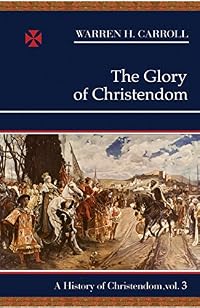
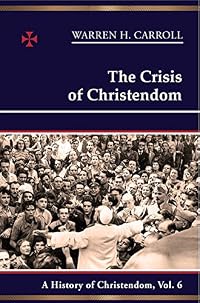
This series is the only comprehensive narration of Western history written from the orthodox Catholic perspective still in print. How would a historical narrative read if the author began with these first principles: Truth exists; the Incarnation happened? This series is essential reading for those who consider the West worth defending.Tags
Recommendations



Member Reviews
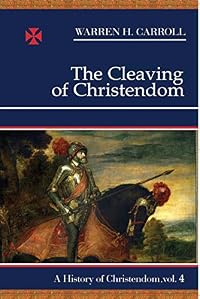
A long, comprehensive, and engrossing account of the Middle Ages, from about 1100 AD to Martin Luther. Carroll's very strongly, sometimes excessively, Catholic perspective is probably least unusual here of anywhere in which he wrote. Best read as a complement to Durant's _The Age of Faith_, with a heavier focus on war and specific events where Durant focuses on the arts and social trends.
The one large criticism I'd make, now that I think about it, is that Carroll sort of jumps from major episode to major episode, so that the book reads like a sequence of shorter histories rather than a unified whole. That said, I've never read a history of the Middle Ages that tries to present a narrative of the whole era (two such narratives suggest show more themselves: the Hohenstaufens versus the Papacy, and the Normans versus the world), so I'm not criticizing him too strongly for it. Suffice it to say that Chesterton was right, though: the medieval ideal "was not tried and found wanting, but found difficult, and left untried." The Middle Ages were _much_ shorter than we imagine they were: only about 450 years, about the same length of time as the Han Dynasty, passed between the Norman Conquest and the Protestant Reformation. show less
The one large criticism I'd make, now that I think about it, is that Carroll sort of jumps from major episode to major episode, so that the book reads like a sequence of shorter histories rather than a unified whole. That said, I've never read a history of the Middle Ages that tries to present a narrative of the whole era (two such narratives suggest show more themselves: the Hohenstaufens versus the Papacy, and the Normans versus the world), so I'm not criticizing him too strongly for it. Suffice it to say that Chesterton was right, though: the medieval ideal "was not tried and found wanting, but found difficult, and left untried." The Middle Ages were _much_ shorter than we imagine they were: only about 450 years, about the same length of time as the Han Dynasty, passed between the Norman Conquest and the Protestant Reformation. show less
Ratings
Members
- Recently Added By
Author Information

27+ Works 1,963 Members
Awards and Honors
Notable Lists
Series

Common Knowledge
- Canonical title
- The Glory of Christendom
Classifications
- Genres
- Nonfiction, Religion & Spirituality, History, General Nonfiction
- DDC/MDS
- 270.4 — Religion History of Christianity History, geographic treatment, biography of Christianity Hildebrand; Roman supremacy (1054-1200)
- LCC
- BR252 .C38 — Philosophy, Psychology and Religion Christianity Christianity History By period Early and medieval
- BISAC
Statistics
- Members
- 216
- Popularity
- 150,627
- Reviews
- 1
- Rating
- (4.45)
- Languages
- English
- Media
- Paper
- ISBNs
- 2
- ASINs
- 2