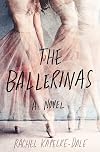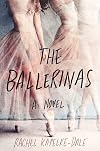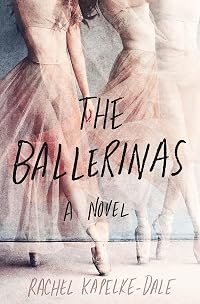
The Ballerinas
by Rachel Kapelke-Dale
On This Page
Description
"Dare Me meets Black Swan and Luckiest Girl Alive in a captivating, voice-driven debut novel about a trio of ballerinas who meet as students at the Paris Opera Ballet School. Fourteen years ago, Delphine abandoned her prestigious soloist spot at the Paris Opera Ballet for a new life in St. Petersburg--taking with her a secret that could upend the lives of her best friends, fellow dancers Lindsay and Margaux. Now 36 years old, Delphine has returned to her former home and to the legendary show more Palais Garnier Opera House, to choreograph the ballet that will kickstart the next phase of her career--and, she hopes, finally make things right with her former friends. But Delphine quickly discovers that things have changed while she's been away...and some secrets can't stay buried forever. Moving between the trio's adolescent years and the present day, Rachel Kapelke-Dale's The Ballerinas explores the complexities of female friendship, the dark drive towards physical perfection in the name of artistic expression, the double-edged sword of ambition and passion, and the sublimated rage that so many women hold inside--all culminating in a twist you won't see coming, with magnetic characters you won't soon forget"-- show lessTags
Recommendations


































Member Reviews
The Ballerinas is an exploration of female friendships set within the world of professional ballet where competition is a fierce motivator. The story features three dancers: Delphine, Lindsay and Margaux, who all began studying at the Paris Opera Ballet when they were young girls. Over the years, they are intensely focused on the careers to which they aspire. As they mature, they might secure spots as members of the ballet company or, if they are good enough, become soloists or principal dancers, featured in productions. The path to becoming a principal dancer is long and fraught, requiring not just superior talent, dedication, and tireless preparation, but the ability to navigate the politics of getting noticed and championed by the show more ballet company's teachers, choreographers, and artistic directors. For debut author Rachel Kapelke-Dale, little research was required, aside from learning about the workings of the Paris Opera Ballet because she trained intensively in ballet as child. "My training allowed me to sketch in the background action for various scenes without too much trouble, as the format of those classes is so deeply ingrained in my memory," she relates.
For Delphine Léger, dance is a family matter. Her mother was a star ballerina whose career was cut short by her unplanned pregnancy. Delphine feels pressure not just to live up to her mother's example, but her expectation that Delphine will avoid making the same mistake she did and enjoy a long, successful career. Lindsay and Margaux also struggle with the stressors that challenge young dancers as they mature, including the never-ending effort to maintain an ideal body even as natural changes threaten to render perfection unattainable, the harsh criticisms of instructors ("You start out a whole and then you break," Delphine observes), expectations of parents and family members, and the destruction and debilitating effects of self-doubt and competition that can drive fragile adolescents to behave in harshly shocking ways.
It is 2018, and Delphine has decided that "Paris is always a good idea." After a thirteen-year absence, she has returned to Paris to choreograph Rasputin, a ballet she wanted to stage the entire time she was in St. Petersburg working as a choreographer at the Mariinsky Ballet with her romantic partner. And she has definite ideas about who she wants to star in the production: her old friend Lindsay, who has been a soloist for years. But Lindsay is now thirty-five years old – the company has a mandatory retirement age of forty-two -- and not a good partner. But Delphine is convinced that her staging of the classic, with Lindsay as the tsarina, will revitalize the company . . . as well as her friends' careers. Nathalie Dorival, the artistic director, reluctantly agrees to give Delphine one month to determine if Lindsay is up to the challenge. But she must name an understudy -- an insult to a ballerina of Lindsay's status. Delphine must accept Nathalie's condition because the production will be mounted as part of the opera's three hundred and fiftieth anniversary season, she desperately wants to make the most of the opportunity Nathalie has given her by agreeing to take her back into the company, . . . and she is intent on giving Lindsay "something that would change her life. Fourteen years after I had ruined it." Delphine's one true love, Jock (formerly Jacques), will be Lindsay's co-star, and there will be a role for Margaux, as well. While Lindsay is eager to take on the role Delphine is customizing for her, Margaux is resentful and suspicious, given that Delphine has been out of there lives for so many years and failed to make an effort to maintain their friendship. Kapelke-Dale says Margaux is “disillusioned,” but do not have any training to pursue a different career and has “taken her frustration and turned it in on herself.”
Delphine's first-person narration moves back to 1995, when Delphine, Lindsay, and Margeaux are students . . . and competitors. Kapelke-Dale notes that it was her editor who recommended adding the second timeline in order to fully reveal the characters’ pasts. She immerses readers in the girls' world, providing insight into the grueling physical demands of ballet, their emotional struggles, the imbalance of power in their relationship, and the machinations it inspires, including one particularly stunning betrayal. As the narrative moves incrementally forward in time, Kapelke-Dale reveals the characters' secrets at deftly-timed intervals, providing context for their behavior and illuminating their motivations.
The Ballerinas is a taut, evenly-paced, and absorbing glimpse into the world of ballet. Delphine would be easy to dismiss as unlikable and, therefore, irredeemable. But that misses the point. Delphine is a product of the world into which she was born, and all the people and events that influence her. She is self-centered, selfish, driven, and vengeful. But she also cares about her friends and colleagues, and eventually returns to Paris intent on making up for her mistakes. But is it too late?
The themes Kapelke-Dale delves into through her characters resonate against the ballet backdrop, they are universal. Female friendships are complicated, but their complexity is magnified in Kapelke-Dale's convincing portrayal of women facing consequential choices about reproduction, work-life balance, and workplace harassment and abuse in an industry where men have, for centuries, been the powerbrokers and women have been vulnerable to and dependent upon their desires, whims, and approval. Kapelke-Dale says that as she was writing the book, she thought deeply about an institution that “purportedly celebrate femininity in some ways also reinforce draconian standards,” and wanted to impart the sense of urging that Delphine feels as her fortieth birthday looms and she wonders if her best professional years are behind her. Ultimately, her characters must decide how they will shape their futures, what matters most to them, and what kind of people they want to be. Kapelke-Dale delivers an entertaining story with a conclusion that is nothing less than jaw-dropping, despite early foreshadowing because so much transpires in succeeding chapters.
Thanks to NetGalley for an Advance Reader's Copy of the book. show less
For Delphine Léger, dance is a family matter. Her mother was a star ballerina whose career was cut short by her unplanned pregnancy. Delphine feels pressure not just to live up to her mother's example, but her expectation that Delphine will avoid making the same mistake she did and enjoy a long, successful career. Lindsay and Margaux also struggle with the stressors that challenge young dancers as they mature, including the never-ending effort to maintain an ideal body even as natural changes threaten to render perfection unattainable, the harsh criticisms of instructors ("You start out a whole and then you break," Delphine observes), expectations of parents and family members, and the destruction and debilitating effects of self-doubt and competition that can drive fragile adolescents to behave in harshly shocking ways.
It is 2018, and Delphine has decided that "Paris is always a good idea." After a thirteen-year absence, she has returned to Paris to choreograph Rasputin, a ballet she wanted to stage the entire time she was in St. Petersburg working as a choreographer at the Mariinsky Ballet with her romantic partner. And she has definite ideas about who she wants to star in the production: her old friend Lindsay, who has been a soloist for years. But Lindsay is now thirty-five years old – the company has a mandatory retirement age of forty-two -- and not a good partner. But Delphine is convinced that her staging of the classic, with Lindsay as the tsarina, will revitalize the company . . . as well as her friends' careers. Nathalie Dorival, the artistic director, reluctantly agrees to give Delphine one month to determine if Lindsay is up to the challenge. But she must name an understudy -- an insult to a ballerina of Lindsay's status. Delphine must accept Nathalie's condition because the production will be mounted as part of the opera's three hundred and fiftieth anniversary season, she desperately wants to make the most of the opportunity Nathalie has given her by agreeing to take her back into the company, . . . and she is intent on giving Lindsay "something that would change her life. Fourteen years after I had ruined it." Delphine's one true love, Jock (formerly Jacques), will be Lindsay's co-star, and there will be a role for Margaux, as well. While Lindsay is eager to take on the role Delphine is customizing for her, Margaux is resentful and suspicious, given that Delphine has been out of there lives for so many years and failed to make an effort to maintain their friendship. Kapelke-Dale says Margaux is “disillusioned,” but do not have any training to pursue a different career and has “taken her frustration and turned it in on herself.”
Delphine's first-person narration moves back to 1995, when Delphine, Lindsay, and Margeaux are students . . . and competitors. Kapelke-Dale notes that it was her editor who recommended adding the second timeline in order to fully reveal the characters’ pasts. She immerses readers in the girls' world, providing insight into the grueling physical demands of ballet, their emotional struggles, the imbalance of power in their relationship, and the machinations it inspires, including one particularly stunning betrayal. As the narrative moves incrementally forward in time, Kapelke-Dale reveals the characters' secrets at deftly-timed intervals, providing context for their behavior and illuminating their motivations.
The Ballerinas is a taut, evenly-paced, and absorbing glimpse into the world of ballet. Delphine would be easy to dismiss as unlikable and, therefore, irredeemable. But that misses the point. Delphine is a product of the world into which she was born, and all the people and events that influence her. She is self-centered, selfish, driven, and vengeful. But she also cares about her friends and colleagues, and eventually returns to Paris intent on making up for her mistakes. But is it too late?
The themes Kapelke-Dale delves into through her characters resonate against the ballet backdrop, they are universal. Female friendships are complicated, but their complexity is magnified in Kapelke-Dale's convincing portrayal of women facing consequential choices about reproduction, work-life balance, and workplace harassment and abuse in an industry where men have, for centuries, been the powerbrokers and women have been vulnerable to and dependent upon their desires, whims, and approval. Kapelke-Dale says that as she was writing the book, she thought deeply about an institution that “purportedly celebrate femininity in some ways also reinforce draconian standards,” and wanted to impart the sense of urging that Delphine feels as her fortieth birthday looms and she wonders if her best professional years are behind her. Ultimately, her characters must decide how they will shape their futures, what matters most to them, and what kind of people they want to be. Kapelke-Dale delivers an entertaining story with a conclusion that is nothing less than jaw-dropping, despite early foreshadowing because so much transpires in succeeding chapters.
Thanks to NetGalley for an Advance Reader's Copy of the book. show less
Hace trece años, Delphine Léger abandonó su prestigioso puesto como solista en el Ballet de la Ópera de París para empezar una nueva vida en San Petersburgo. Se llevó consigo un secreto que podría poner patas arriba la vida de sus mejores amigas y compañeras de ballet, Lindsay y Margaux. Ahora, a los treinta y seis años, Delphine ha regresado a su antiguo hogar y al legendario Palacio Garnier para coreografiar la obra de ballet que hará despegar la siguiente fase de su carrera y que, espera, conseguirá que se arreglen las cosas con sus antiguas amistades. Sin embargo, Delphine no tarda en descubrir que las cosas han cambiado durante su ausencia y que algunos secretos no pueden permanecer enterrados para siempre.
Las bailarinas show more se mueve entre el pasado, cuando las tres eran todavía adolescentes, y el presente. Explora las complejidades de la amistad entre mujeres, la enfermiza voluntad por conseguir un físico perfecto en nombre de la expresión artística, el arma de doble filo que representan la ambición y la pasión, y la rabia sublimada que tantas personas guardan en su interior. Todo ello culmina con un giro inesperado y unos personajes que no serán fáciles de olvidar. show less
Las bailarinas show more se mueve entre el pasado, cuando las tres eran todavía adolescentes, y el presente. Explora las complejidades de la amistad entre mujeres, la enfermiza voluntad por conseguir un físico perfecto en nombre de la expresión artística, el arma de doble filo que representan la ambición y la pasión, y la rabia sublimada que tantas personas guardan en su interior. Todo ello culmina con un giro inesperado y unos personajes que no serán fáciles de olvidar. show less
So dark and sad. I picked this one kind of haphazardly on Libby because I needed something available right away for a drive. I do not know or have experience with the ballet world, but this depiction of it makes me feel the same as when I hear stories of child models/pageant girls. The pressures are so unique to the setting and must hit on the very dark side of competition, body dysmorphia, expectations, and mental health. I can’t really say I recommend this book, but at the same time, I would love to hear others’ opinions on it. Do what you will with that review!
Fieldnotes:
Paris Opera Ballet (& to a small extent St. Petersburg, Russia), 13 years ago & Contemporary (p.2021)
3 Dedicated and Ambitious Ballet Students
Complicated Female Friendships
1 "Shocking" Secret Betrayal
Truly Epic Amounts of Self-Centredness
So Many Terrible Romantic Decisions
1 Career Change
Revenge Porn
#MeToo
Cancer
The Short Version:
As the daughter of an etoile at the Paris Opera Ballet, Delphine has always danced. She grew up at the POB school with her friends and rivals, Margaux and Lindsay (an American transplant). The novel goes back and forth between their school / early career days and the present-day, 13 years later. After a long stint in St. Petersburg learning, Delphine is now seeking to make her way as a choreographer show more - and she intends to make up for a darkly-hinted-at betrayal by casting her friend Lindsay (whose career has stalled) as the lead.
But everything isn't so easily mended, nor is the fraught world of dance and Company politics so easily navigated. All our three leads are falling apart, and our narrator is too self-centred to bother paying attention to the impact she is having on everyone around her.
But it isn't her deep-seated self-centredness that made this book more of a "meh" for me (though it certainly didn't help). It was the ominous sign-posting of THE BIG BETRAYAL THAT RUINED EVERYTHING. It took ages to get to. It was underwhelming at best. All of the resolutions to the issues raised seemed underwhelming - no fierce satisfaction at the #MeToo moment. Just betrayal and terrible men and a weird and ugly final 50 pages that brought in a whole different plot that also resolved in an unsatisfying fizzle. Just meh.
I see some tags/characterisations as a thriller. I am forced to disagree. It is a women's fiction/drama. Tricky for me - I find myself drawn to books set in the world of dance, especially ballet, but I don't tend to care much for this kind of plot and this kind of character. The author clearly is familiar with the dance world and the contradictions between its emphasis on the feminine while being incredibly oppressive and patriarchal, excusing terrible behavior, harassment and abuse in the interest of appeasing male administrators and company members - after all, female dancers are a dime a dozen. Its search for beauty as it enforces strict (unhealthy) standards and punitive impacts of reproductive choices. There are some real issues the characters grapple with - and they cannot be neatly resolved in real life. But I prefer a narrative that feels a bit less messy and a bit less like it is ignoring its loose ends in favor of a big dramatic final set piece to make you forget them.
Not for me. show less
Paris Opera Ballet (& to a small extent St. Petersburg, Russia), 13 years ago & Contemporary (p.2021)
3 Dedicated and Ambitious Ballet Students
Complicated Female Friendships
1 "Shocking" Secret Betrayal
Truly Epic Amounts of Self-Centredness
So Many Terrible Romantic Decisions
1 Career Change
Revenge Porn
#MeToo
Cancer
The Short Version:
As the daughter of an etoile at the Paris Opera Ballet, Delphine has always danced. She grew up at the POB school with her friends and rivals, Margaux and Lindsay (an American transplant). The novel goes back and forth between their school / early career days and the present-day, 13 years later. After a long stint in St. Petersburg learning, Delphine is now seeking to make her way as a choreographer show more - and she intends to make up for a darkly-hinted-at betrayal by casting her friend Lindsay (whose career has stalled) as the lead.
But everything isn't so easily mended, nor is the fraught world of dance and Company politics so easily navigated. All our three leads are falling apart, and our narrator is too self-centred to bother paying attention to the impact she is having on everyone around her.
But it isn't her deep-seated self-centredness that made this book more of a "meh" for me (though it certainly didn't help). It was the ominous sign-posting of THE BIG BETRAYAL THAT RUINED EVERYTHING. It took ages to get to. It was underwhelming at best. All of the resolutions to the issues raised seemed underwhelming - no fierce satisfaction at the #MeToo moment. Just betrayal and terrible men and a weird and ugly final 50 pages that brought in a whole different plot that also resolved in an unsatisfying fizzle. Just meh.
I see some tags/characterisations as a thriller. I am forced to disagree. It is a women's fiction/drama. Tricky for me - I find myself drawn to books set in the world of dance, especially ballet, but I don't tend to care much for this kind of plot and this kind of character. The author clearly is familiar with the dance world and the contradictions between its emphasis on the feminine while being incredibly oppressive and patriarchal, excusing terrible behavior, harassment and abuse in the interest of appeasing male administrators and company members - after all, female dancers are a dime a dozen. Its search for beauty as it enforces strict (unhealthy) standards and punitive impacts of reproductive choices. There are some real issues the characters grapple with - and they cannot be neatly resolved in real life. But I prefer a narrative that feels a bit less messy and a bit less like it is ignoring its loose ends in favor of a big dramatic final set piece to make you forget them.
Not for me. show less
he good and the horribly bad in the life of a dancer
The opening sentence of “The Ballerinas” hints at the entire book. “You start out as potential energy and then you fall.” Delphine Léger narrates, and readers know immediately that unusual events will be recounted because she states that many things happened “before I killed anyone.” What did she do so long ago that changed lives? The past hangs ominously over everything, every action, every encounter, every moment. Readers find out bit by compelling bit as the narrative goes back and forth in time between 1995 and 2018.
Delphine is a dancer because her mother was a dancer, not just any dancer, but a star ballerina with the Paris Opera Ballet. Delphine has also been part show more of the P.O.B. since she was a child. Through her first-person narrative, readers learn that she was not just one of the little dancers; she was so much more. Gradually Delphine’s past advances as her role changes from student to corps member, quadrille, principal dancer, solo dancer, star étoile, and finally to a choreographer in the present. The full impact of those years becomes evident as details of impact of what happened emerge. Ballerinas are like pointe shoes — you have to break them down before they are of any use.
“The Ballerinas” is a startling story of both the good and the horribly bad in the life of a dancer. It is about both the purpose of life and what defines it. I received a review copy of “The Ballerinas” from Rachel Kapelke-Dale and St. Martin’s Press. As Delphine so aptly states, “Dancers are like violins. Handcrafted, unbelievably beautiful, their whole bodies joined only by fine slivers of wood. Likely to crack at any time.” As a bonus, readers get a chance to imagine a ballet to the music of Janis Joplin show less
The opening sentence of “The Ballerinas” hints at the entire book. “You start out as potential energy and then you fall.” Delphine Léger narrates, and readers know immediately that unusual events will be recounted because she states that many things happened “before I killed anyone.” What did she do so long ago that changed lives? The past hangs ominously over everything, every action, every encounter, every moment. Readers find out bit by compelling bit as the narrative goes back and forth in time between 1995 and 2018.
Delphine is a dancer because her mother was a dancer, not just any dancer, but a star ballerina with the Paris Opera Ballet. Delphine has also been part show more of the P.O.B. since she was a child. Through her first-person narrative, readers learn that she was not just one of the little dancers; she was so much more. Gradually Delphine’s past advances as her role changes from student to corps member, quadrille, principal dancer, solo dancer, star étoile, and finally to a choreographer in the present. The full impact of those years becomes evident as details of impact of what happened emerge. Ballerinas are like pointe shoes — you have to break them down before they are of any use.
“The Ballerinas” is a startling story of both the good and the horribly bad in the life of a dancer. It is about both the purpose of life and what defines it. I received a review copy of “The Ballerinas” from Rachel Kapelke-Dale and St. Martin’s Press. As Delphine so aptly states, “Dancers are like violins. Handcrafted, unbelievably beautiful, their whole bodies joined only by fine slivers of wood. Likely to crack at any time.” As a bonus, readers get a chance to imagine a ballet to the music of Janis Joplin show less
This is a book about more than ballerinas. It's about friends, secrets, and how powerful time can be.
The book wasn't extremely surprising, but it was entertaining none-the-less. We've all heard the stories of what ballerinas are willing to do to be the best. The women in this book are no different. Things are never the same when you return home. You cannot visit the past, but the past is always applicable in the present. I think this is painfully obvious in this book. I enjoyed the characters as well as the plot twist. Looking forward to seeing what comes next.
If you enjoy dancing and dark books, this is perfect for you.
The book wasn't extremely surprising, but it was entertaining none-the-less. We've all heard the stories of what ballerinas are willing to do to be the best. The women in this book are no different. Things are never the same when you return home. You cannot visit the past, but the past is always applicable in the present. I think this is painfully obvious in this book. I enjoyed the characters as well as the plot twist. Looking forward to seeing what comes next.
If you enjoy dancing and dark books, this is perfect for you.
I received a free copy of this ebook (via Netgalley) in exchange for an honest review.
A story about ballet dancers studying at the Palais Garnier in Paris? Yes, please! (Even though I'm not much of a thriller reader.) This story is about ballet, friendships, feminism and body autonomy. I'm not sure this falls into the thriller category, but I'm okay with that. Yes, there is a mystery involving some sort of horrible thing one of the characters has done. When we find out what happened with this supposedly huge plot element, the response is a bit underwhelming."Meh, I knew you did it. No big deal."
I found later events even twistier than the original mystery, so that was quite interesting. The final twist was a bit too much for me.I'm show more sorry, you murdered a guy because he had broken his wife's foot? I get that her feet are her life in ballet, but you had to push him out a window? And the wife's not really made about it? And you suffer no legal consequences? Okay. . .
Aside from that, I really did enjoy getting to follow the three man characters as they move through the Paris Opera Ballet School. And I loved the character of Stella. She's just awesome.
If you're into ballet this would probably be a good pick, but I'm not sure it is thriller enough to captivate the thriller enthusiasts. show less
A story about ballet dancers studying at the Palais Garnier in Paris? Yes, please! (Even though I'm not much of a thriller reader.) This story is about ballet, friendships, feminism and body autonomy. I'm not sure this falls into the thriller category, but I'm okay with that. Yes, there is a mystery involving some sort of horrible thing one of the characters has done. When we find out what happened with this supposedly huge plot element, the response is a bit underwhelming.
I found later events even twistier than the original mystery, so that was quite interesting. The final twist was a bit too much for me.
Aside from that, I really did enjoy getting to follow the three man characters as they move through the Paris Opera Ballet School. And I loved the character of Stella. She's just awesome.
If you're into ballet this would probably be a good pick, but I'm not sure it is thriller enough to captivate the thriller enthusiasts. show less
Members
- Recently Added By
Lists

Books Read in 2022
5,166 works; 112 members

Dance!
41 works; 1 member
Author Information
4 Works 742 Members
Awards and Honors
Distinctions
Common Knowledge
- Canonical title
- The Ballerinas
- People/Characters
- Delphine Leger; Lindsay Price; Margaux Bisset; Jacques (Jock) Gerard (Jock); Nathalie Dorival; Camille d'Ivoire (show all 7); Daniel
- Important places
- Paris Opera Ballet, Paris, France; St Petersburg, Russia
- Epigraph
- You don't understand the humiliation of it - - to be tricked out of the single assumption which makes our existence viable - - that somebody is watching.
- - Tom Stoppard, Rosencrantz and Guildenstern are Dead - Dedication
- For Jess
- First words
- You start out as potential energy and then you fall.
Classifications
Statistics
- Members
- 385
- Popularity
- 81,418
- Reviews
- 22
- Rating
- (3.48)
- Languages
- English, Spanish
- Media
- Paper, Audiobook, Ebook
- ISBNs
- 8
- ASINs
- 2