On This Page
Description
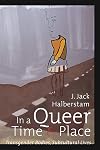
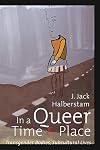
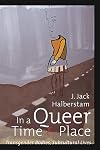
Examines the significance of the transgender body in a provocative collection of essays on queer time and space. She presents a series of case studies focused on the meanings of masculinity in its dominant and alternative forms, especially female and trans-masculinities as they exist within subcultures, and are appropriated within mainstream culture. In a Queer Time and Place opens with a probing analysis of the life and death of Brandon Teena, a young transgender man who was brutally show more murdered in small-town Nebraska. After looking at mainstream representations of the transgender body as exhibited in the media frenzy surrounding this highly visible case and the Oscar-winning film based on Brandon's story, Boys Don’t Cry, Halberstam turns her attention to the cultural and artistic production of queers themselves. She examines the “transgender gaze,” as rendered in small art-house films like By Hook or By Crook, as well as figurations of ambiguous embodiment in the art of Del LaGrace Volcano, Jenny Saville, Eva Hesse, Shirin Neshat, and others. She then exposes the influence of lesbian drag king cultures upon hetero-male comic films, such as Austin Powers and The Full Monty, and, finally, points to dyke subcultures as one site for the development of queer counterpublics and queer temporalities. show lessTags
Recommendations














































Member Reviews
Some notes:
In A Queer Time and Place (2005), Judith Halberstam offers an analysis of temporality and geography regarding queer texts. She offers that we should "try to think about queerness as an outcome of strange temporalities, imaginative life schedules, and eccentric economic practices," in order to "detach queerness from sexual identity and come closer to understanding Foucault's comment in 'Friendship as a Way of Life' that 'homosexuality threatens people as a 'way of life' rather than as a way of having sex'" (1). Using "queer" to refer to "nonnormative logics," Halberstam understands queer temporality as imagining futures outside of the logics of "family, inheritance, and child rearing" (6, 2).
Halberstam also understands show more transgender bodies "as a contradictory site in postmodernism," which is situated in postmodern and neoliberal notions of flexible bodies (18). She explores the archive around Brandon Teena to explore notions of space and locality, questioning traditional queer narratives of progress from homophobic rural settings to open and safe urban settings. Brandon's story helps to "reveal the desire shared by many midwestern queers for a way of staying rather than leaving" (27). She also explores images of transgender people in film.
Chapter Five explores "technotopias," where Halberstam "trace[s:] the collision of postmodern space and postmodern embodiment in a technotopic aesthetic, or one that tests technological potentialities against the limits of the human body anchored in time and space, and that powerfully reimagines the relations between the organic and the machine, the toxic and the domestic, the surgical and the cosmetic" (103). Technotopic images, Halberstam argues, "resist idealizations of bodily integrity, on the one hand, and rationalizations of its disintegration, on the other; instead, they represent identity through decay, detachability, and subjectivity" (124).
Chapter Seven returns to queer temporality, arguing that queer subcultures question the conventional narratives of adulthood, breaking down lines between adolescent and adulthood and extending adolescence longer (152-153). She argues that "Queer subcultures encourage blurred boundaries between archivists and producers" (162) and that archives are not just repositories, but also constructions of memory and theories of relevance (169-170). show less
In A Queer Time and Place (2005), Judith Halberstam offers an analysis of temporality and geography regarding queer texts. She offers that we should "try to think about queerness as an outcome of strange temporalities, imaginative life schedules, and eccentric economic practices," in order to "detach queerness from sexual identity and come closer to understanding Foucault's comment in 'Friendship as a Way of Life' that 'homosexuality threatens people as a 'way of life' rather than as a way of having sex'" (1). Using "queer" to refer to "nonnormative logics," Halberstam understands queer temporality as imagining futures outside of the logics of "family, inheritance, and child rearing" (6, 2).
Halberstam also understands show more transgender bodies "as a contradictory site in postmodernism," which is situated in postmodern and neoliberal notions of flexible bodies (18). She explores the archive around Brandon Teena to explore notions of space and locality, questioning traditional queer narratives of progress from homophobic rural settings to open and safe urban settings. Brandon's story helps to "reveal the desire shared by many midwestern queers for a way of staying rather than leaving" (27). She also explores images of transgender people in film.
Chapter Five explores "technotopias," where Halberstam "trace[s:] the collision of postmodern space and postmodern embodiment in a technotopic aesthetic, or one that tests technological potentialities against the limits of the human body anchored in time and space, and that powerfully reimagines the relations between the organic and the machine, the toxic and the domestic, the surgical and the cosmetic" (103). Technotopic images, Halberstam argues, "resist idealizations of bodily integrity, on the one hand, and rationalizations of its disintegration, on the other; instead, they represent identity through decay, detachability, and subjectivity" (124).
Chapter Seven returns to queer temporality, arguing that queer subcultures question the conventional narratives of adulthood, breaking down lines between adolescent and adulthood and extending adolescence longer (152-153). She argues that "Queer subcultures encourage blurred boundaries between archivists and producers" (162) and that archives are not just repositories, but also constructions of memory and theories of relevance (169-170). show less
queer temporality, queer temporality, queer temporality! i am glad somebody wrote about le tigre hot topic.
In this provocative collection of essays, Judith Halberstam explores the significance of the transgender body. In a queer time and place reads the story of Brandon Teena alongside examples of the cultural and artistic production of queers themselves as rendered in film and visual art. Halberstam examines the "transgender gaze", typified by art-house films like "By Hook or by Crook", as well as figurations of ambigious embodiment in the art of Del LaGrace 'Volcano, Jenny Saville, Eva Hesse and others. She then exposes the influence of DRAG-King Cultures upon mainstream film like "Austin Powers" and inclosing, points of dyke subcultures as one site for the development of queer counterpublics.
Mar 11, 2010German
Ratings
Members
- Recently Added By
Author Information

24+ Works 2,389 Members
Jack Halberstam is Professor of English and Comparative Literature at Columbia University and the author of several books, including The Queer Art of Failure and SKIN Shows: Gothic Horror and the Technology of Monsters, both also published by Duke University Press.
Awards and Honors
Awards
Series

Common Knowledge
- Canonical title
- In a Queer Time and Place: Transgender Bodies, Subcultural Lives
Classifications
- Genres
- Sexuality and Gender Studies, Nonfiction, LGBTQ+, General Nonfiction, Literature Studies and Criticism
- DDC/MDS
- 306.768 — Society, government, & culture Social sciences, sociology & anthropology Social Behavior - Dating, Marriage, Divorce Sexual relations Sexual orientation, transgender identity, intersexuality Transgender identity and intersexuality
- LCC
- HQ75.5 .H335 — Social sciences The family. Marriage, Women and Sexuality The Family. Marriage. Women Sexual life Homosexuality. Lesbianism
- BISAC
Statistics
- Members
- 431
- Popularity
- 71,625
- Reviews
- 3
- Rating
- (3.83)
- Languages
- English
- Media
- Paper, Ebook
- ISBNs
- 4
- ASINs
- 2