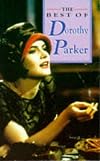
The Best of Dorothy Parker
by Dorothy Parker
On This Page
Description
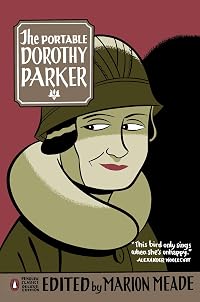
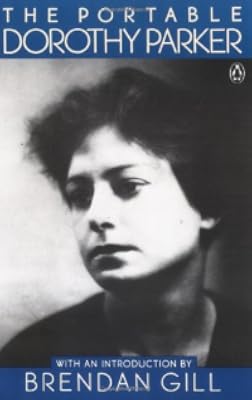
This is a collection of Dorothy Parker's poems, stories and sketches. Parker was a famed wit, writer and member of the Algonquin Round Table, the group of New York critics in the heyday of the 1920s.Tags
Recommendations

















Member Reviews
A collection of poetry and short stories. Parker can pin down an inner dialog, the struggles of unrequited love, the frustrations and defensiveness of personality. She writes a perfect picture of how passive racism works and sounds, and a precise example of manipulative, passive-aggressiveness between some couples. Honestly, I tire of reading it. I do not tire of her wit and clarity.
The poem Sanctuary must be written for every introvert who needs a break from extroverts. I never knew she was the one who penned, "Men seldom make passes at girls who wear glasses." So many of her poems call out her pain and anguish. They make me want to cry.
I am glad to have read it, I appreciate her craft and talent with words, her insight into human show more nature especially as regards many interactions between men and women. I am not eager to pick up anything else of hers to read. It is so, so, very sad. show less
The poem Sanctuary must be written for every introvert who needs a break from extroverts. I never knew she was the one who penned, "Men seldom make passes at girls who wear glasses." So many of her poems call out her pain and anguish. They make me want to cry.
I am glad to have read it, I appreciate her craft and talent with words, her insight into human show more nature especially as regards many interactions between men and women. I am not eager to pick up anything else of hers to read. It is so, so, very sad. show less
Dorothy Parker, Dotty to her friends and the journalists, died in 1967 but is still popularly referred to as ~the immortal D.P.'. She had a lamentably disordered life-three times married (twice to the same man), abortion, attempted suicide, and progressive reliance on the Scotch bottle, which, as we all know, is apt to take away quite quickly whatever pleasures it gives. Her health can hardly have been improved by having to drink bootleg through the whole period of Prohibition in America, 1920-33, the years of her peak creativity.
None of her prose stories exceeds ten thousand words (the length of the average Sherlock Holmes stort story), none of her poems forty lines (and some of the best are less than ten); but somehow her forlorn, show more querulous little voice is still to be heard when those of her robuster more chest-thumping contemporaries are silent for ever. She was a kind of female Housman, her speciality unrequited or misdirected love, her tone generally despondent, her vehicle verse of unfailing neatness, crying out to be read aloud and making an instant effect in that form. In addition to her original work, which is even more exiguous in extent than it sounds, a full third of this collection being taken up with her ephemeral book and theatre reviews, a hard core of her spoken remarks has been handed down in biographies and elsewhere, and in these the black diamonds of her wit coruscate as intensely as ever.
"Scratch an actor and find an actress."
"I like to think of my shining tombstone. It gives me, as you might
say, something to live for."
To a New York cabby who said he was engaged: "Then be happy!"
"As far as I am concerned, the most beautiful word in the English
language is ~cellar-door'."
To a woman in the theatre who asked her: ~Are you Dorothy
Parker?': "Yes, do you mind?"
Taken to task by Harold Ross, her New Yorker editor, for not
coming to the office to write her usual piece: "Someone else
was using the pencil".
In Monte Carlo, in 1926, the Casino refused her admittance because
she didn't wear stockings. "So I went and found my stockings
and then came back and lost my shirt".
Asked what she did for fun: "Everything that isn't writing is fun".
Returning in 1938 from ten days in Spain: "The crossing was so
rough that the only thing I could keep on my stomach was
the First Mate".
"Life is terrible!"
~Don't you enjoy anything?'
"Certainly. Flowers, French fries and a good cry."
In Hollywood Sam Goldwyn asked her: ~Do you really say all those
things the papers report that you say?' "Do you?"
Working in Hollywood. "Unless someone comes near my office, I'm
going to write MEN' on the door."
~How do you do it?' women often asked her. "See your analyst; he
might have a word with your ovaries."'
"Oh I said it alright. You know how it is. A joke. When people
expect you to say things, you say things. Isn't that the way it
is?"
"Did I enjoy the party? One more drink and I'd have been under
the host."
Asked if she knew Hemingway's age: "All writers are either 29 or
Thomas Hardy."
She spent some time in the company of a handsome sun-burnt
young film star in Hollywood: "Ah yes, his is the hue of
availability."
Under interrogation by the FBI in 1952: "Listen, I can't even get
my dog to stay down. Do I look like someone who could overthrow
the government?"
"Wit has truth in it. Wise-cracking is simple calisthenics with
words."
"As I was saying to the landlord only this morning: You can't
have everything'."
"Lilly, promise me that my gravestone will carry only these words: 'If you can read this, you're too close'." show less
None of her prose stories exceeds ten thousand words (the length of the average Sherlock Holmes stort story), none of her poems forty lines (and some of the best are less than ten); but somehow her forlorn, show more querulous little voice is still to be heard when those of her robuster more chest-thumping contemporaries are silent for ever. She was a kind of female Housman, her speciality unrequited or misdirected love, her tone generally despondent, her vehicle verse of unfailing neatness, crying out to be read aloud and making an instant effect in that form. In addition to her original work, which is even more exiguous in extent than it sounds, a full third of this collection being taken up with her ephemeral book and theatre reviews, a hard core of her spoken remarks has been handed down in biographies and elsewhere, and in these the black diamonds of her wit coruscate as intensely as ever.
"Scratch an actor and find an actress."
"I like to think of my shining tombstone. It gives me, as you might
say, something to live for."
To a New York cabby who said he was engaged: "Then be happy!"
"As far as I am concerned, the most beautiful word in the English
language is ~cellar-door'."
To a woman in the theatre who asked her: ~Are you Dorothy
Parker?': "Yes, do you mind?"
Taken to task by Harold Ross, her New Yorker editor, for not
coming to the office to write her usual piece: "Someone else
was using the pencil".
In Monte Carlo, in 1926, the Casino refused her admittance because
she didn't wear stockings. "So I went and found my stockings
and then came back and lost my shirt".
Asked what she did for fun: "Everything that isn't writing is fun".
Returning in 1938 from ten days in Spain: "The crossing was so
rough that the only thing I could keep on my stomach was
the First Mate".
"Life is terrible!"
~Don't you enjoy anything?'
"Certainly. Flowers, French fries and a good cry."
In Hollywood Sam Goldwyn asked her: ~Do you really say all those
things the papers report that you say?' "Do you?"
Working in Hollywood. "Unless someone comes near my office, I'm
going to write MEN' on the door."
~How do you do it?' women often asked her. "See your analyst; he
might have a word with your ovaries."'
"Oh I said it alright. You know how it is. A joke. When people
expect you to say things, you say things. Isn't that the way it
is?"
"Did I enjoy the party? One more drink and I'd have been under
the host."
Asked if she knew Hemingway's age: "All writers are either 29 or
Thomas Hardy."
She spent some time in the company of a handsome sun-burnt
young film star in Hollywood: "Ah yes, his is the hue of
availability."
Under interrogation by the FBI in 1952: "Listen, I can't even get
my dog to stay down. Do I look like someone who could overthrow
the government?"
"Wit has truth in it. Wise-cracking is simple calisthenics with
words."
"As I was saying to the landlord only this morning: You can't
have everything'."
"Lilly, promise me that my gravestone will carry only these words: 'If you can read this, you're too close'." show less
I have this book in a weighty Folio Society edition, elegantly illustrated. It is ages since I've read any Parker and I was surprised and impressed. This relatively small collection contains over half her published work, and every page cries out to be quoted.
The collection is a mixture of poems and short stories. The poems are interesting, most people know Parker for her short, clever and funny rhymes like :
By the time you swear you're his,
Shivering and sighing,
And he vows his passion is
Infinite, undying -
Lady, make a note of this:
One of you is lying.
But there are many poems in this volume that are more serious, although still generally dealing with the misery and hopelessness of love, they remind of Houseman:
Tonight my love is show more sleeping cold
Where none may see and none shall pass.
The daisies quicken in the mould,
And richer fares the meadow grass.
Her short stories mainly consist of internal dialogues and dialogues between two people. She skewers the dishonesty at the heart of relationships, One of you is lying again, the pretences that we all use to get through life, and she does this with admirably few strokes.
To write such perfect short stories must take an extraordinary amount of effort and I suppose that explains a her small output - that along with the partying, affairs, drugs, alcohol and depression. show less
The collection is a mixture of poems and short stories. The poems are interesting, most people know Parker for her short, clever and funny rhymes like :
By the time you swear you're his,
Shivering and sighing,
And he vows his passion is
Infinite, undying -
Lady, make a note of this:
One of you is lying.
But there are many poems in this volume that are more serious, although still generally dealing with the misery and hopelessness of love, they remind of Houseman:
Tonight my love is show more sleeping cold
Where none may see and none shall pass.
The daisies quicken in the mould,
And richer fares the meadow grass.
Her short stories mainly consist of internal dialogues and dialogues between two people. She skewers the dishonesty at the heart of relationships, One of you is lying again, the pretences that we all use to get through life, and she does this with admirably few strokes.
To write such perfect short stories must take an extraordinary amount of effort and I suppose that explains a her small output - that along with the partying, affairs, drugs, alcohol and depression. show less
I know Parker's writing is highly praised, but I just can't get interested in her subject matter. Though Parker is poking fun at the upper class, she's firmly entrenched in it and speaks a voice that I just can't warm up to. I read the first story or two and was left with absolutely no interest in continuing, so I never finished this book.
Os.
Os.
Ratings
Members
- Recently Added By
Lists

Folio Society
831 works; 49 members
Author Information

147+ Works 10,284 Members
Poet and short story writer Dorothy Parker was born in New Jersey on August 22, 1893. When she was 5, her mother died and her father, a clothes salesman, remarried. Parker had a great antipathy toward her stepmother and refused to speak to her. She attended parochial school and Miss Dana's school in Morristown, New Jersey, for a brief time before show more dropping out at age 14. A voracious reader, she decided to pursue a career in literature. She began her career by writing verse as well as captions for a fashion magazine. During the years of her greatest fame, Dorothy Parker was known primarily as a writer of light verse, an essential member of the Algonquin Round Table, and a caustic and witty critic of literature and society. She is remembered now as an almost legendary figure of the 1920s and 1930s. Her reviews and staff contributions to three of the most sophisticated magazines of this century, Vanity Fair, the New Yorker, and Esquire, were notable for their put-downs. For all her highbrow wit, however, Dorothy Parker was liberal, even radical, in her political views, and the hard veneer of brittle toughness that she showed to the world was often a shield for frustrated idealism and soft sensibilities. The best of her fiction is marked by a balance of ironic detachment and sympathetic compassion, as in "Big Blonde," which won the O. Henry Award for 1929 and is still her best-remembered and most frequently anthologized story. The best of Dorothy Parker is readily and compactly accessible in The Portable Dorothy Parker. Her own selection of stories and verse for the original edition of that compilation, published in 1944, remains intact in the revised edition, but included also are additional stories, reviews, and articles. Parker died of a heart attack at the age of 73 in 1967. In her will, she bequeathed her estate to the Dr. Martin Luther King, Jr. foundation. Following King's death, her estate was passed on to the NAACP. (Bowker Author Biography) show less
All Editions
Classifications
Statistics
- Members
- 411
- Popularity
- 75,368
- Reviews
- 4
- Rating
- (3.91)
- Languages
- English
- Media
- Paper
- ISBNs
- 4
- ASINs
- 16