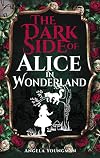
The Dark Side of Alice in Wonderland
by Angela Youngman
On This Page
Description
"The Dark Side of Alice in Wonderland" is the first time anyone has investigated the vast range of darker, more threatening aspects of this famous story and the way Alice has been transformed over the years. Although the children's story "Alice in Wonderland" has been in print for over 150 years, the mysteries and rumors surrounding the story and its creator Lewis Carroll have continued to grow. "The Dark Side of Alice in Wonderland" is the first time anyone has investigated the vast range show more of darker, more threatening aspects of this famous story and the way Alice has been transformed over the years. This is the Alice of horror films, Halloween, murder and mystery, spectral ghosts, political satire, mental illnesses, weird feasts, Lolita, Tarot, pornography and steampunk. The Beatles based famous songs such as "Lucy in the Sky with Diamonds" and "I am the Walrus" on "Alice in Wonderland", while she has even attracted the attention of world-famous artists including Salvador Dali. Take a look at why the Japanese version of Lolita is so different to that of novelist Vladimir Nabokov, yet both are based on Alice. This is "Alice in Wonderland" as you have never seen her before: a dark, sometimes menacing, and threatening character. Was Carroll all that he seemed? The stories of his child friends, nude photographs and sketches affect the way modern audiences look at the writer. Was he just a lonely academic, closet pedophile, brilliant puzzle maker or even Jack the Ripper? For a book that began life as a simple children's story, it has resulted in a vast array of dark concepts, ideas and mysteries. So, step inside the world of "Alice in Wonderland" and discover a dark side you never knew existed!. show lessTags
Member Reviews
The Dark Side of Alice in Wonderland by Angela Youngman is a well-researched and clearly presented account of, mostly, the making and responses to the stories as well as how the imagery has been (mis)appropriated over the years.
I would suggest that any reader bracket their 21st century sensibilities while reading and assessing the person of Carroll/Dodgson. The easy and lazy way to understand him is to pretend he didn't exist in the time in which he did. It is also the most unfair. That said, there are still a lot of questions even when assessed within his own time, particularly because the time was very much a transitory time with respect to how society understood children/adult relations and childhood itself. What seemed appropriate show more was, within a decade or so, deemed questionable and, now, will make people believe they know enough to condemn a human being. So read within the historical context of the time.
As for the many ways the images and scenes of the books have been appropriated over time, I think the format of the book helped to keep these separate. yes, it leads to a small bit of repetition, largely because each chapter, presenting a different Alice, reads like a self contained essay. If each chapter is taken as such, the repetition does not hinder the flow and instead helps to make the presentation of each chapter/essay more compelling.
Reviewed from a copy made available by the publisher via NetGalley. show less
I would suggest that any reader bracket their 21st century sensibilities while reading and assessing the person of Carroll/Dodgson. The easy and lazy way to understand him is to pretend he didn't exist in the time in which he did. It is also the most unfair. That said, there are still a lot of questions even when assessed within his own time, particularly because the time was very much a transitory time with respect to how society understood children/adult relations and childhood itself. What seemed appropriate show more was, within a decade or so, deemed questionable and, now, will make people believe they know enough to condemn a human being. So read within the historical context of the time.
As for the many ways the images and scenes of the books have been appropriated over time, I think the format of the book helped to keep these separate. yes, it leads to a small bit of repetition, largely because each chapter, presenting a different Alice, reads like a self contained essay. If each chapter is taken as such, the repetition does not hinder the flow and instead helps to make the presentation of each chapter/essay more compelling.
Reviewed from a copy made available by the publisher via NetGalley. show less
I feel like this is not a completed book. Each chapter starts out with some history and lore that was already stated in earlier chapters. It feels like a collection of articles a rather then a book. There is no continuity in the narrative. I couldn't see how the chapters tied together. The chapters didn't seem to build on each other. The facts from chapter to chapter do not feed into each other. Again the issue is the repetition of facts, it made feel as if the author thought I was too stupid to remember something she had told me only a few pages earlier. The was no new insight to Charles Dodgson aka Lewis Carroll, just all the sexual connotations that resulted from the story, most of which I already knew. I kept reading hoping for show more something to tie it all together. Sadly it never came. It all feels very disorganized, I can't find a flow from one topic/chapter to the next. And I don't feel like anything was answered...all the questions and mysteries were still as unanswered at the end as at the beginning.
*I received this book as an Advanced Reader's Copy (ARC) through NetGalley. I received this copy free in exchange for my honest review.* show less
*I received this book as an Advanced Reader's Copy (ARC) through NetGalley. I received this copy free in exchange for my honest review.* show less
Ratings
Members
- Recently Added By
Author Information
15 Works 49 Members
Classifications
Statistics
- Members
- 12
- Popularity
- 1,873,357
- Reviews
- 2
- Rating
- (2.67)
- Languages
- English
- Media
- Paper, Ebook
- ISBNs
- 4
- ASINs
- 1