On This Page
Description
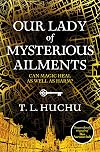
Desperate for money to look after her family, Ropa Moyo accepts a job at the magical private hospital Our Lady of Mysterious Ailments, but when her investigation into a coma patient leads her to the Edinburgh Ordinary School for Boys, she learns a long-dormant and malevolent entity has taken hold in this world.Tags
Recommendations







Member Reviews
Originally posted on Just Geeking by.
Content warnings:
There are ongoing themes of racism, prejudice, death and grief throughout the novel. There is a scene with drug use. There are scenes of violence and several scenes that are particularly gory, including one where a body is pinned to a ceiling. A lot of people are suffer burns in this book, many of which are fatal which may be triggering. As the book synopsis suggests the topic of illness is present throughout, and patients are comatose. While there are some medical scenes they are mixed with magical practices rather than being akin to those you would see in a medical drama, for example. The attitudes of doctors, however, do not change regardless of magic being introduced.
Returning show more to the Edinburgh Nights series was a joy, Ropa’s unique dialogue and infectious thirst for knowledge a breath of fresh air as it was the first time I cracked open The Library of the Dead. I always feel at home when reading in Ropa’s voice. As a 30 something Londoner living in Glasgow her dialogue reminds me of the late 90s and 00s because she’s picked up bits from TV and other pop culture sources that have survived from before the catastrophe. She sits down with her family to watch Diagnosis: Murder, something I used to do when I was her age (albeit, minus the family).
The way she blends words is reminiscent of that time in my life too, of slang from high school and college where we were all making up our own words to express ourselves. This was especially noticeable to me growing up in south-east London where so many young people from different cultures were merging together, everyone trying to understand each other and themselves. I remember one day in religious studies when a group of girls came in and started loudly talking about “The Power”. “Have you got The Power?” they asked me, like it was some huge secret, and no they weren’t talking She-Ra. This was their secret code for a woman’s period. Funny enough it didn’t catch on. I remember shaking my head because we were sixteen at that point, and I’d started mine at age ten, way before most of my classmates. By that point it had long ago lost its mystery to me.
So the way that Ropa and her pals talk, creating new language on the spot is wonderfully familiar. The way that Jomo always has a new “Ropa-” name for her every time he greets her always makes me smile. I get the feeling that he doesn’t know what he’s going to say until she appears and that’s a feeling that Huchu conveys throughout the dialogue in Our Lady of Mysterious Ailments. He’s very good at making it feel natural, of making his character’s responses feel just like something you, or I would do rather than something constructed which is a danger when they’re quite literally created characters.
As to be expected in the second book a lot of things progress in terms of overall story and character development. We start to find out more details about individual characters. The Library of the Dead was primarily focused on Ropa and introducing us to her and her world, Our Lady of Mysterious Ailments is more about introducing Ropa to the world of magic and in doing so we learn more about her friends and associates. Naturally, this means Priya and Jomo. Priya is hell on wheels again, and Huchu doesn’t hold back with the realistic wheelchair representation. We learn more about Priya’s past and present, where she went to school and where she works. I appreciated that Huchu was candid with the animosity between Edinburgh and Glasgow, and funnelled it into the magical academic institutes in the Edinburgh Nights series. With Pryia representing Glasgow as a graduate of the Lord Kelvin Institute in Glasgow, we learn via her about that school and during Ropa’s investigation of Max Wu, Priya’s patient, we learn about the Edinburgh Ordinary School for boys. Additionally, we learn that there are two other schools; St Andrews College in St Andrews and the Aberdeen School of Magic and Esoterica.
In the first book Jomo felt quite underused, and in this one we see a lot more of him, and learn more about what he does in the Library. Huchu is peeling back the layers slowly, throwing us bones of information here and there which feeds our thirst for knowledge but also conjures so many more questions. We get to see more of what Jomo does inside the Library, and what his career as a librarian is going to lead to eventually. It’s both fascinating and creepy as hell, in the same way that Huchu served up in book one. It’s morbidly interesting, despite the way your mind is telling you that you shouldn’t be that interested in it. That something about this situation isn’t quite right. It’s a hugely morally grey area that you just know wouldn’t and shouldn’t be allowed to happen, except, you know; secret world of magic.
If you’re familiar with the first book in the series you’ll recall a rather dramatic chase across the city, and if you enjoyed that I’m happy to tell you there’s another fabulous chaotic scene in this book involving Priya and Ropa. It’s as wild as their first adventure, but in a totally different way, and it’s magnificent. Jomo fans, don’t worry; he and Ropa have one of their own too although in a much more Jomo-like fashion.
It’s not just Ropa’s relationship with her pals that are developing in this book, it’s their relationships with each other and growth isn’t always sunshine and roses. While their friendships are strong, they’re still in the early stages and it was so nice to see an author realise this. Too often I see characters become besties and then never disagree, or they have huge bust ups and melodramatics over trivial things. In Ropa’s world there’s no time for that, and when there’s a disagreement it’s over something important, two people just seeing things from a different perspective. Additionally, we see some other relationships happening, some that are sweet and some that are a wee bit of a shock that you’re going to need to read the book to find out about. Huhcu is making us work for every scrap of information, every secret, just like Ropa has to. This isn’t a book where we, the reader, know things. We’re on an equal playing field with Ropa when it comes to the secrets that people are hiding.
There are a lot of different perspectives in Our Lady of Mysterious Ailments. As Ropa steps into the magic world she’s prepared to do what it takes to make a good impression, and it quickly becomes evident that there will always be people who don’t care what she can do, just who she is and where she’s from. She’s constantly made to feel as though she isn’t good enough, doesn’t know enough and is taking up a spot as Sir Callander’s apprentice that should have gone to a more experienced magician. Ropa takes it on the nose, shrugs it off and dazzles them with a smile that often terrifies them because they don’t know what to make of her. Now that Ropa is “in” their world we get to learn alongside her and I adored the way Huchu tied in Scottish history.
Ropa continues to talk about the catastrophe that happened as known fact, and I’m even more convinced that Huchu has chosen not to give the reader details about what happened as a way to keep the reader focused on the here and now. The past isn’t important, it’s Ropa’s life and the present that matters. Huchu is gradually giving us more information about the King, a terrifying figure who rules from London (the parallel between this and modern day Westminster is neatly done) and I think in the next book we’ll find out even more especially as dark events have been foretold.
In Our Lady of Mysterious Ailments we see more of the world post-catastophe, and it was chilling to find out that that so many people live as we do now with all the mod-cons. The focus of the first book was much smaller, character wise and geographically, and in book two the full reality of life after the catastrophe becomes clear. Namely, that the majority of people have just gone on with their lives and turn their backs on the people and families struggling to survive in the slums, like Ropa and her family. It reminded me of how people are just moving on from the pandemic and how so many of us do it with disasters worldwide. We don’t see it, so it’s not our problem. It was a very humbling reminder that we all need to be more aware.
For me, Our Lady of Mysterious Ailments was a four-star read compared to The Library of the Dead being a very clear five stars. It is difficult to compare the two books as they feel very different to me, and that’s not a bad thing. Book one was very dark with a horror flick essence at points, while this second outing with Ropa is about her starting her journey. At one point during Our Lady of Mysterious Ailments she says to her gran that she can’t stay in the caravan doing the same thing all her life. That is what this book is about. Yet at the heart of it, it’s still Ropa being Ropa and making her own reputation despite people pulling her down. As she battles racism and classism, sometimes casual and other times without shame, Ropa is doing what she does best and that is solving a mystery that no one else can solve. While the overall storyline is very different from The Library of the Dead all the same elements I love from book one are here. Ropa with a mystery, following clues while trying to make ends meet, doing her own thing and finding her place in the world.
Library of the Dead was about Ropa’s journey to the magic world, whereas Our Lady of Mysterious Ailments is the start of Ropa’s journey within it. We walk alongside her as she’s opening her eyes to the magic world and the idea that the grass isn’t always greener on the other side. It’s just as messy and complicated, with bad stuff as the world she has come from, just people think they’re better. But there are some good apples too, and even as people try to keep her down there are people looking to give her a helping hand. The way Huchu chooses to end this one is a reminder that there’s always a way to triumph over people who stand in the way; sometimes you just have to be a bit sneaky about it ;)
For more of my reviews please visit my blog! show less
Content warnings:
Returning show more to the Edinburgh Nights series was a joy, Ropa’s unique dialogue and infectious thirst for knowledge a breath of fresh air as it was the first time I cracked open The Library of the Dead. I always feel at home when reading in Ropa’s voice. As a 30 something Londoner living in Glasgow her dialogue reminds me of the late 90s and 00s because she’s picked up bits from TV and other pop culture sources that have survived from before the catastrophe. She sits down with her family to watch Diagnosis: Murder, something I used to do when I was her age (albeit, minus the family).
The way she blends words is reminiscent of that time in my life too, of slang from high school and college where we were all making up our own words to express ourselves. This was especially noticeable to me growing up in south-east London where so many young people from different cultures were merging together, everyone trying to understand each other and themselves. I remember one day in religious studies when a group of girls came in and started loudly talking about “The Power”. “Have you got The Power?” they asked me, like it was some huge secret, and no they weren’t talking She-Ra. This was their secret code for a woman’s period. Funny enough it didn’t catch on. I remember shaking my head because we were sixteen at that point, and I’d started mine at age ten, way before most of my classmates. By that point it had long ago lost its mystery to me.
So the way that Ropa and her pals talk, creating new language on the spot is wonderfully familiar. The way that Jomo always has a new “Ropa-” name for her every time he greets her always makes me smile. I get the feeling that he doesn’t know what he’s going to say until she appears and that’s a feeling that Huchu conveys throughout the dialogue in Our Lady of Mysterious Ailments. He’s very good at making it feel natural, of making his character’s responses feel just like something you, or I would do rather than something constructed which is a danger when they’re quite literally created characters.
As to be expected in the second book a lot of things progress in terms of overall story and character development. We start to find out more details about individual characters. The Library of the Dead was primarily focused on Ropa and introducing us to her and her world, Our Lady of Mysterious Ailments is more about introducing Ropa to the world of magic and in doing so we learn more about her friends and associates. Naturally, this means Priya and Jomo. Priya is hell on wheels again, and Huchu doesn’t hold back with the realistic wheelchair representation. We learn more about Priya’s past and present, where she went to school and where she works. I appreciated that Huchu was candid with the animosity between Edinburgh and Glasgow, and funnelled it into the magical academic institutes in the Edinburgh Nights series. With Pryia representing Glasgow as a graduate of the Lord Kelvin Institute in Glasgow, we learn via her about that school and during Ropa’s investigation of Max Wu, Priya’s patient, we learn about the Edinburgh Ordinary School for boys. Additionally, we learn that there are two other schools; St Andrews College in St Andrews and the Aberdeen School of Magic and Esoterica.
In the first book Jomo felt quite underused, and in this one we see a lot more of him, and learn more about what he does in the Library. Huchu is peeling back the layers slowly, throwing us bones of information here and there which feeds our thirst for knowledge but also conjures so many more questions. We get to see more of what Jomo does inside the Library, and what his career as a librarian is going to lead to eventually. It’s both fascinating and creepy as hell, in the same way that Huchu served up in book one. It’s morbidly interesting, despite the way your mind is telling you that you shouldn’t be that interested in it. That something about this situation isn’t quite right. It’s a hugely morally grey area that you just know wouldn’t and shouldn’t be allowed to happen, except, you know; secret world of magic.
If you’re familiar with the first book in the series you’ll recall a rather dramatic chase across the city, and if you enjoyed that I’m happy to tell you there’s another fabulous chaotic scene in this book involving Priya and Ropa. It’s as wild as their first adventure, but in a totally different way, and it’s magnificent. Jomo fans, don’t worry; he and Ropa have one of their own too although in a much more Jomo-like fashion.
It’s not just Ropa’s relationship with her pals that are developing in this book, it’s their relationships with each other and growth isn’t always sunshine and roses. While their friendships are strong, they’re still in the early stages and it was so nice to see an author realise this. Too often I see characters become besties and then never disagree, or they have huge bust ups and melodramatics over trivial things. In Ropa’s world there’s no time for that, and when there’s a disagreement it’s over something important, two people just seeing things from a different perspective. Additionally, we see some other relationships happening, some that are sweet and some that are a wee bit of a shock that you’re going to need to read the book to find out about. Huhcu is making us work for every scrap of information, every secret, just like Ropa has to. This isn’t a book where we, the reader, know things. We’re on an equal playing field with Ropa when it comes to the secrets that people are hiding.
There are a lot of different perspectives in Our Lady of Mysterious Ailments. As Ropa steps into the magic world she’s prepared to do what it takes to make a good impression, and it quickly becomes evident that there will always be people who don’t care what she can do, just who she is and where she’s from. She’s constantly made to feel as though she isn’t good enough, doesn’t know enough and is taking up a spot as Sir Callander’s apprentice that should have gone to a more experienced magician. Ropa takes it on the nose, shrugs it off and dazzles them with a smile that often terrifies them because they don’t know what to make of her. Now that Ropa is “in” their world we get to learn alongside her and I adored the way Huchu tied in Scottish history.
Ropa continues to talk about the catastrophe that happened as known fact, and I’m even more convinced that Huchu has chosen not to give the reader details about what happened as a way to keep the reader focused on the here and now. The past isn’t important, it’s Ropa’s life and the present that matters. Huchu is gradually giving us more information about the King, a terrifying figure who rules from London (the parallel between this and modern day Westminster is neatly done) and I think in the next book we’ll find out even more especially as dark events have been foretold.
In Our Lady of Mysterious Ailments we see more of the world post-catastophe, and it was chilling to find out that that so many people live as we do now with all the mod-cons. The focus of the first book was much smaller, character wise and geographically, and in book two the full reality of life after the catastrophe becomes clear. Namely, that the majority of people have just gone on with their lives and turn their backs on the people and families struggling to survive in the slums, like Ropa and her family. It reminded me of how people are just moving on from the pandemic and how so many of us do it with disasters worldwide. We don’t see it, so it’s not our problem. It was a very humbling reminder that we all need to be more aware.
For me, Our Lady of Mysterious Ailments was a four-star read compared to The Library of the Dead being a very clear five stars. It is difficult to compare the two books as they feel very different to me, and that’s not a bad thing. Book one was very dark with a horror flick essence at points, while this second outing with Ropa is about her starting her journey. At one point during Our Lady of Mysterious Ailments she says to her gran that she can’t stay in the caravan doing the same thing all her life. That is what this book is about. Yet at the heart of it, it’s still Ropa being Ropa and making her own reputation despite people pulling her down. As she battles racism and classism, sometimes casual and other times without shame, Ropa is doing what she does best and that is solving a mystery that no one else can solve. While the overall storyline is very different from The Library of the Dead all the same elements I love from book one are here. Ropa with a mystery, following clues while trying to make ends meet, doing her own thing and finding her place in the world.
Library of the Dead was about Ropa’s journey to the magic world, whereas Our Lady of Mysterious Ailments is the start of Ropa’s journey within it. We walk alongside her as she’s opening her eyes to the magic world and the idea that the grass isn’t always greener on the other side. It’s just as messy and complicated, with bad stuff as the world she has come from, just people think they’re better. But there are some good apples too, and even as people try to keep her down there are people looking to give her a helping hand. The way Huchu chooses to end this one is a reminder that there’s always a way to triumph over people who stand in the way; sometimes you just have to be a bit sneaky about it ;)
For more of my reviews please visit my blog! show less
IN A NUTSHELL
Fun but flawed. Good ideas, Interesting people. Loved being in Ropa's head. The storytelling meandered a bit around an overly complex plot. Energetic and original but not focused enough. I recommend the text rather than the audibook version of the novel.
'Our Lady of Mysterious Ailments' (2022) carries straight on from the events of 'The Library of the Dead' 2021. I recommend reading this series in order, as the world-building and information about magic systems are cumulative, and the developing relationships between the characters are key.
I enjoyed getting a deeper understanding of the alternative Edinburgh that this story is set in. I also finally got a (very scary and deeply intriguing) explanation of what the Library show more of the Dead is. It gave me a new and nightmarish view onwhat the word Book might come to mean.
I enjoyed being inside Ropa's head. I like how she thinks. Her curiosity is as inexhaustible as her commitment to her family is unshakeable. She's a scrappy underdog who I hope will one day be top of the heap while still managing to stay true to herself. Ropa's observations and her interactions with her friends and enemies made the book for me.
The plot was interesting and moved the overall story arc of the series forward, but it was a little too long in the telling.There were lots of action scenes and all of them were well done, but I'd have liked the pacing of the story to be tighter.'Our Lady of Mysterious Ailments' ran about forty pages longer than 'The Library of the Dead'. I think it would have been a better book if it had been edited down to the same length.
I listened to the audiobook version of 'Our Lady of Mysterious Ailments' . In future, I'll be sticking to the text version for future books. The narrator, Kimberly Mandindoe, does well enough with the dialogue in the book. I like her interior voice for Ropa and I love her voice for Ropa's nan, but she seems to have trouble matching the cadence of the non-dialogue sentences. Her accent is right, but her stresses sound off sometimes.
I'm still looking forward to reading the rest of the series (the fifth and final book will be published this year). I want to know how things work out for Ropa and what impact she has on the magicians of Edinburgh. show less
Fun but flawed. Good ideas, Interesting people. Loved being in Ropa's head. The storytelling meandered a bit around an overly complex plot. Energetic and original but not focused enough. I recommend the text rather than the audibook version of the novel.
'Our Lady of Mysterious Ailments' (2022) carries straight on from the events of 'The Library of the Dead' 2021. I recommend reading this series in order, as the world-building and information about magic systems are cumulative, and the developing relationships between the characters are key.
I enjoyed getting a deeper understanding of the alternative Edinburgh that this story is set in. I also finally got a (very scary and deeply intriguing) explanation of what the Library show more of the Dead is. It gave me a new and nightmarish view onwhat the word Book might come to mean.
I enjoyed being inside Ropa's head. I like how she thinks. Her curiosity is as inexhaustible as her commitment to her family is unshakeable. She's a scrappy underdog who I hope will one day be top of the heap while still managing to stay true to herself. Ropa's observations and her interactions with her friends and enemies made the book for me.
The plot was interesting and moved the overall story arc of the series forward, but it was a little too long in the telling.There were lots of action scenes and all of them were well done, but I'd have liked the pacing of the story to be tighter.'Our Lady of Mysterious Ailments' ran about forty pages longer than 'The Library of the Dead'. I think it would have been a better book if it had been edited down to the same length.
I listened to the audiobook version of 'Our Lady of Mysterious Ailments' . In future, I'll be sticking to the text version for future books. The narrator, Kimberly Mandindoe, does well enough with the dialogue in the book. I like her interior voice for Ropa and I love her voice for Ropa's nan, but she seems to have trouble matching the cadence of the non-dialogue sentences. Her accent is right, but her stresses sound off sometimes.
I'm still looking forward to reading the rest of the series (the fifth and final book will be published this year). I want to know how things work out for Ropa and what impact she has on the magicians of Edinburgh. show less
First things first, I was given a copy of this book by NetGalley for the purposes of a review. Unfortunately, for me, it was a pdf which I would rather not have to read. But since I had been so impressed by by Huchu's first book in the series *The Library of the Dead*, I decided to go ahead and shell out the scheckels (~$15) and buy epub a copy for myself. So that says something right there.
T. L. Huchu's *Edinburgh Nights* series revolves around a rough and ready young woman saddled with caring for her aged grandbmother and younger sister in a world that is mostly past its best-before date. A world, however, that also encompasses magic (or advanced mathematics as some style it) and speaking with ghosts—a talent young Ropa Mayo uses to show more make her meager living. Book two of the series opens with Ropa, having solved a mystery in the previous book that many of the ruling class would rather have swept under the carpet, trying to settle down in her new role as intern at the General Discoveries Directorate. And trying to make some money.
As previously implied, I really enjoyed the world and characters that Huchu has created. Ropa is young woman saddled with great responsibilities (of the mundane sort) and possessing great talent (of the magical sort). The plot of *Our Lady of Mysterious Ailments* is ostensibly about her attempts to find the cause of a mysterious illness, but really the whole series is about her working towards finding happiness, contentment and security in a world that has gone to ruin; and of course, money.
Huchu's Edinburgh is a fascinating place rich with geography, history and a Scottish accent, but he doesn't let his world building overpower the story; instead he slowly builds out the reality of Ropa's world and the life she she is force to live in organic snippets and hints and not a few history lessons. An experience that results in a much richer backdrop, and one that still leaves plenty of story to be told.
I absolutely loved Book one, especially the way Huchu painted the canvas with his characters and backdrop and I think he did an amazing job of following it up in this one—it's not easy to maintain that sort of rich texture and slow build-up without either falling into the trap of a big info dump or starting to add extraneous details just for the sake of it. Really, how can you not love a book that has a great setting, engaging characters and is presented with grace, finesse and whole lot of craft. I am already looking forward to Book three—hopefully the wait won't be too long. show less
T. L. Huchu's *Edinburgh Nights* series revolves around a rough and ready young woman saddled with caring for her aged grandbmother and younger sister in a world that is mostly past its best-before date. A world, however, that also encompasses magic (or advanced mathematics as some style it) and speaking with ghosts—a talent young Ropa Mayo uses to show more make her meager living. Book two of the series opens with Ropa, having solved a mystery in the previous book that many of the ruling class would rather have swept under the carpet, trying to settle down in her new role as intern at the General Discoveries Directorate. And trying to make some money.
As previously implied, I really enjoyed the world and characters that Huchu has created. Ropa is young woman saddled with great responsibilities (of the mundane sort) and possessing great talent (of the magical sort). The plot of *Our Lady of Mysterious Ailments* is ostensibly about her attempts to find the cause of a mysterious illness, but really the whole series is about her working towards finding happiness, contentment and security in a world that has gone to ruin; and of course, money.
Huchu's Edinburgh is a fascinating place rich with geography, history and a Scottish accent, but he doesn't let his world building overpower the story; instead he slowly builds out the reality of Ropa's world and the life she she is force to live in organic snippets and hints and not a few history lessons. An experience that results in a much richer backdrop, and one that still leaves plenty of story to be told.
I absolutely loved Book one, especially the way Huchu painted the canvas with his characters and backdrop and I think he did an amazing job of following it up in this one—it's not easy to maintain that sort of rich texture and slow build-up without either falling into the trap of a big info dump or starting to add extraneous details just for the sake of it. Really, how can you not love a book that has a great setting, engaging characters and is presented with grace, finesse and whole lot of craft. I am already looking forward to Book three—hopefully the wait won't be too long. show less
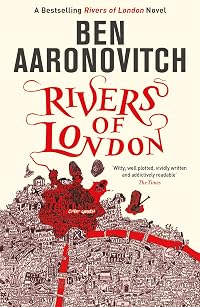
[b:Our Lady of Mysterious Ailments|57731125|Our Lady of Mysterious Ailments (Edinburgh Nights, #2)|T.L. Huchu|https://i.gr-assets.com/images/S/compressed.photo.goodreads.com/books/1639425795l/57731125._SY75_.jpg|90424532] is the second in the Edinburgh Nights series, which is set in a compelling future with magic after British society has mostly collapsed. As the author interview at the end mentions, the vibes are very similar to the [b:Rivers of London|9317452|Rivers of London (Rivers of London, #1)|Ben Aaronovitch|https://i.gr-assets.com/images/S/compressed.photo.goodreads.com/books/1401385034l/9317452._SY75_.jpg|13552476] series. Both series have a young black magician as the protagonist, shaking up Britain's traditional white show more magical establishment. In Edinburgh Nights, however, Ropa the protagonist is a broke teenage girl rather than a cop. I appreciated her anger at being offered an unpaid internship when she is the breadwinner of her family. The tension in the plot comes from her need to hustle for some cash, rather than from the magical shenanigans. Indeed, the plot wasn't as spooky this time around, although I enjoyed the ingenious way it incorporated the founding of the Royal Bank of Scotland. There are some fun details concerning magic and its history; I was particularly taken with the explanation for the Library of the Dead.
What delighted me most, though, was the adept use of the Edinburgh setting. I love how Huchu (who has lived here for 15 years) incorporates less than glamorous corners of the city. The magical archive in South Gyle industrial estate, Ropa's home in Hermiston, and the school by Tipperlin Road are all examples. The picturesque city centre also features, of course, in scenes at Dundas House and on Arthur's Seat. But there is a particular charm to finding yourself in a place you last visited to get a covid vaccination, or one you pass frequently on the way to a favourite library. This alternate Edinburgh is really fun to explore and Ropa is a great guide around it. The mysterious ailments of the title turned out to be the least interesting thing about the book, which overall I enjoyed a lot. There are hints of an overarching plot arc and I look forwarding to seeing where they go. show less
What delighted me most, though, was the adept use of the Edinburgh setting. I love how Huchu (who has lived here for 15 years) incorporates less than glamorous corners of the city. The magical archive in South Gyle industrial estate, Ropa's home in Hermiston, and the school by Tipperlin Road are all examples. The picturesque city centre also features, of course, in scenes at Dundas House and on Arthur's Seat. But there is a particular charm to finding yourself in a place you last visited to get a covid vaccination, or one you pass frequently on the way to a favourite library. This alternate Edinburgh is really fun to explore and Ropa is a great guide around it. The mysterious ailments of the title turned out to be the least interesting thing about the book, which overall I enjoyed a lot. There are hints of an overarching plot arc and I look forwarding to seeing where they go. show less
Compared to the first book, this installment goes much deeper into the underbelly of magic in Edinburgh. While I liked book one, this book had a much stronger plot pulling me through.
The world building is fantastic! Like seriously well laid out, to the point that I'm guessing the series bible is a full book on it's own. I love the scientific / mathematical methods they give to magic. The world alone is reason to read the series. It's a unique take on magic laced into the normal society, and based on the ending of this book I can only imagine we are diving deeper into the heart of just how intertwined everything really is.
While in the first book it didn't really seem like any of the cast grew as people, even though a life altering moment show more occurred, this book is the opposite. Many of the characters have growth arcs, and secrets that are coming to the surface.
We get to see more of the various economic differences between classes, and this time it ties more into the mystery which just doubles down on the world building. The author does a great job at solving this case but setting up the next book with plenty of problems.
You'll enjoy this series if you like heavy world building, and seeing the eyes of a city through the younger occupants. show less
The world building is fantastic! Like seriously well laid out, to the point that I'm guessing the series bible is a full book on it's own. I love the scientific / mathematical methods they give to magic. The world alone is reason to read the series. It's a unique take on magic laced into the normal society, and based on the ending of this book I can only imagine we are diving deeper into the heart of just how intertwined everything really is.
While in the first book it didn't really seem like any of the cast grew as people, even though a life altering moment show more occurred, this book is the opposite. Many of the characters have growth arcs, and secrets that are coming to the surface.
We get to see more of the various economic differences between classes, and this time it ties more into the mystery which just doubles down on the world building. The author does a great job at solving this case but setting up the next book with plenty of problems.
You'll enjoy this series if you like heavy world building, and seeing the eyes of a city through the younger occupants. show less
Oh, how I loved returning to this version of Edinburgh and to the snarky Ropa Moyo! Part Two of Edinburgh Nights is everything I hoped it to be. A fantastic and thrilling mystery steeped in magic and twisted politics. So much more is revealed about The Library of the Dead, as well as a bunch of other new places and people. But, once again, my favorite part is Ropa. What a character she is. I totally believe in her and also love her friends Priya and Jomo, her magical scarf Cruickshank and trusted vulpine friend, River. Her gran and sister Izwi are truly the heart of Ropa, and they play an important role in her journey as well. I don't think I'll ever tire of her! Can't wait for the next one.
Just as good as the first, I was hooked from the first chapter. I love this narrator. She really makes this story come to life. And what a story! Another dodgy commission, finally allowed in to the library. The threesome is up to more chaos as they support Ropa in all her bad decisions. I love the sass, the wit, and the shenanigans. I have to be honest and say, as we neared the end, I had absolutely no guesses and was just loving the story. I can't wait for the next one!
Members
- Recently Added By
Lists

2023 Hugo Awards -- Eligible Works -- Novels
70 works; 21 members

2023 Lodestar Award -- Eligible Works -- Young Adult Books (not a Hugo)
10 works; 6 members

Books Read in 2022
5,226 works; 115 members
Author Information

20+ Works 2,777 Members
Some Editions
Awards and Honors
Awards
Notable Lists
Series

Common Knowledge
- Canonical title
- Our Lady of Mysterious Ailments
- Original title
- Our Lady of Mysterious Ailments
- Original publication date
- 2022
- People/Characters
- Ropa Moyo; Priyanka Kapoor; Jomo Maige; Sir Ian Callendar
- Important places
- Edinburgh, Scotland, UK
- Dedication
- For Haggai Huchu
- First words
- So, I'm skint again.
- Last words
- (Click to show. Warning: May contain spoilers.)I'll leave all my troubles for autumn to sort out.
- Publisher's editor
- Pagan, Bella
Classifications
Statistics
- Members
- 473
- Popularity
- 64,474
- Reviews
- 18
- Rating
- (3.90)
- Languages
- English, German
- Media
- Paper, Audiobook, Ebook
- ISBNs
- 14
- ASINs
- 4