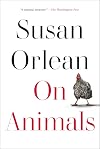
On Animals
by Susan Orlean
On This Page
Description
'How we interact with animals has preoccupied philosophers, poets, and naturalists for ages,' writes Susan Orlean. Since the age of six, when Orlean wrote and illustrated a book called Herbert the Near-Sighted Pigeon, she's been drawn to stories about how we live with animals, and how they abide by us. Now, in On Animals, she examines animal-human relationships through the compelling tales she has written over the course of her celebrated career. These stories consider a range of creatures, show more the household pets we dote on, the animals we raise to end up as meat on our plates, the creatures who could eat us for dinner, the various tamed and untamed animals we share our planet with who are central to human life. In her own backyard, Orlean discovers the delights of keeping chickens. In a different backyard, in New Jersey, she meets a woman who has twenty-three pet tigers--something none of her neighbors knew about until one of the tigers escapes. In Iceland, the world₂s most famous whale resists the efforts to set him free; in Morocco, the world's hardest-working donkeys find respite at a special clinic. We meet a show dog and a lost dog and a pigeon who knows exactly how to get home. show lessTags
Recommendations






Member Reviews
*I received an ARC in exchange for an honest review.*
Though I never met her, Susan Orlean and I are exact contemporaries, and co-alums of the University of Michigan, 1976. We are both animal lovers. I settled in to this with some enjoyable anticipation. It didn’t last long.
Within a few pages, I was cocking an eyebrow with puzzlement: as a student, she spends an unexpected windfall on an Irish setter puppy, while living in a rented college-town apartment, with crazy hours and unsympathetic landlords (yes, I remember it well…). A few pages and years later, when she moves to Manhattan with her now-elderly setter, she worries because the dog had “never lived in an apartment.” A new boyfriend impresses her by bringing a friend with show more a fully-grown lion to her apartment. She decides she’d like to have only animals with red hair. And then she falls in love with chickens based on a Martha Stewart television show – whose chickens were always a marketing tool, and who sighs that she’ll “never get another Egyptian Fayoumi again” after the hen froze to death. Orlean seems oblivious to any problem with any of this. Throughout most of these essays, reprinted largely from The New Yorker and Smithsonian magazines, there is an unsettling sense of someone for whom animals are interesting and appealing, and some of whom she comes to be fond of, but who are more accoutrements, charming rural accessories, or colorful topics for an essay than individual, thinking, feeling, “complete” beings in their own right. She is frequently glib, surprisingly callous. There is an otherwise lovely vignette about the role of oxen in the agriculture of Cuba over the decades of pre- and post-Soviet dominion, and the character of these highly-valued animals – but she can’t resist a flippant comment about an ox who broke into a feed bin and “died happy of incurable colic.” Colic is a dreadful, painful way for an animal to die. That ox did not "die happy."
Then there’s the fact-checking… or lack thereof. There were statements of fact or incident that were questionable at best; wrong or outdated at worst. She mentions buying hay for her chickens' nests; straw would be much more likely, preferred, and cheaper. Biff the show dog “beg[s] for chocolate”; I thought everyone knew chocolate is not a good treat for dogs, and the brand of dog food Biff shills for is lousy quality, mostly corn junk food. She blithely offers that knee-replacement surgery has boosted the market for riding mules because mules have a smoother gait and thus are easier on the knees; no substantiation is given, and most riders with replaced knees are fine in the saddle – it’s the mounting and dismounting that can be dicey. And perhaps this is old fake news, but she suggests there may be a connection between cellphone towers and disoriented homing pigeons – again, with no factual support, and which has been fairly well debunked buy Audubon Society researchers. And really, Susan, lions don’t sweat.
The best essays are the ones in which Orlean herself features the least. The strange and awful Tiger Lady saga (pre-Tiger King!) is a disturbing portrait of the wild-animal-as-pet trade and obsession. The piece on rabbit-keeping in the U.S. is a clear-eyed look at the ambivalence of rabbit fanciers who can’t decide if their charges are much-loved pets or meat stock. Taxidermists come across as a pleasantly loony, obsessed, creative and artistic bunch – but she completely avoids the figurative (and maybe even literal) elephant in the room about where the “trophies” they create come from, how, and at whose hands. However, the piece on the Lion Guy forcefully depicts the tragic state of lions in the modern world, and the unconscionable horrors of canned safari hunts.
The final section outlines a year or so in the life of Orlean’s hobby farm in the Hudson Valley: dogs, cats, poultry, and even a few cattle occupy her (though the cattle are actually a tax-avoidance project, as is a casual and joking reference to raising puppies for profit). Still, there is a weird lack of emotional connection to these, her very own personal menagerie. They take in a stray cat, and she seems to be mystified by why her resident cat hates the newcomer, whose sex she can’t even identify correctly. I will agree whole-heartedly with her assessment of the evils of ticks, though. I’d also like to know how Helen, the Rhode Island Red hen, is the lowest chicken in the pecking order on one page, becomes the top-ranking alpha hen a few pages later.
And then, the family ups sticks and move to Los Angeles for a job opportunity. The animals have to be handed off, arranged for, and away they go. They spend a few more summers in New York, but it turns out to be too much trouble, so they sell up what we’ve been told is a much-loved, long-dreamed-for place, and that’s that.
Animal lovers, if you are looking for dedication, loyalty, intimacy, and a recognition of animals as, in the inimitable words of Henry Beston, “finished and complete, gifted with extensions of the senses we have lost or never attained, living by voices we shall never hear. They are not brethren, they are not underlings; they are other nations, caught with ourselves in the net of life and time, fellow prisoners of the splendour and travail of the earth,” don’t look here. To be fair, she is never mawkish or sentimental, she does not anthropomorphize, and her approach seems to be one clinging to objectivity (with some factual issues), an eye for detail, and respect for the attitudes the human subjects may have toward their animal charges. But her own humanity has gaps, and she lacks “another and a wiser…concept of animals,” (Beston again) that respects them as they deserve. show less
Though I never met her, Susan Orlean and I are exact contemporaries, and co-alums of the University of Michigan, 1976. We are both animal lovers. I settled in to this with some enjoyable anticipation. It didn’t last long.
Within a few pages, I was cocking an eyebrow with puzzlement: as a student, she spends an unexpected windfall on an Irish setter puppy, while living in a rented college-town apartment, with crazy hours and unsympathetic landlords (yes, I remember it well…). A few pages and years later, when she moves to Manhattan with her now-elderly setter, she worries because the dog had “never lived in an apartment.” A new boyfriend impresses her by bringing a friend with show more a fully-grown lion to her apartment. She decides she’d like to have only animals with red hair. And then she falls in love with chickens based on a Martha Stewart television show – whose chickens were always a marketing tool, and who sighs that she’ll “never get another Egyptian Fayoumi again” after the hen froze to death. Orlean seems oblivious to any problem with any of this. Throughout most of these essays, reprinted largely from The New Yorker and Smithsonian magazines, there is an unsettling sense of someone for whom animals are interesting and appealing, and some of whom she comes to be fond of, but who are more accoutrements, charming rural accessories, or colorful topics for an essay than individual, thinking, feeling, “complete” beings in their own right. She is frequently glib, surprisingly callous. There is an otherwise lovely vignette about the role of oxen in the agriculture of Cuba over the decades of pre- and post-Soviet dominion, and the character of these highly-valued animals – but she can’t resist a flippant comment about an ox who broke into a feed bin and “died happy of incurable colic.” Colic is a dreadful, painful way for an animal to die. That ox did not "die happy."
Then there’s the fact-checking… or lack thereof. There were statements of fact or incident that were questionable at best; wrong or outdated at worst. She mentions buying hay for her chickens' nests; straw would be much more likely, preferred, and cheaper. Biff the show dog “beg[s] for chocolate”; I thought everyone knew chocolate is not a good treat for dogs, and the brand of dog food Biff shills for is lousy quality, mostly corn junk food. She blithely offers that knee-replacement surgery has boosted the market for riding mules because mules have a smoother gait and thus are easier on the knees; no substantiation is given, and most riders with replaced knees are fine in the saddle – it’s the mounting and dismounting that can be dicey. And perhaps this is old fake news, but she suggests there may be a connection between cellphone towers and disoriented homing pigeons – again, with no factual support, and which has been fairly well debunked buy Audubon Society researchers. And really, Susan, lions don’t sweat.
The best essays are the ones in which Orlean herself features the least. The strange and awful Tiger Lady saga (pre-Tiger King!) is a disturbing portrait of the wild-animal-as-pet trade and obsession. The piece on rabbit-keeping in the U.S. is a clear-eyed look at the ambivalence of rabbit fanciers who can’t decide if their charges are much-loved pets or meat stock. Taxidermists come across as a pleasantly loony, obsessed, creative and artistic bunch – but she completely avoids the figurative (and maybe even literal) elephant in the room about where the “trophies” they create come from, how, and at whose hands. However, the piece on the Lion Guy forcefully depicts the tragic state of lions in the modern world, and the unconscionable horrors of canned safari hunts.
The final section outlines a year or so in the life of Orlean’s hobby farm in the Hudson Valley: dogs, cats, poultry, and even a few cattle occupy her (though the cattle are actually a tax-avoidance project, as is a casual and joking reference to raising puppies for profit). Still, there is a weird lack of emotional connection to these, her very own personal menagerie. They take in a stray cat, and she seems to be mystified by why her resident cat hates the newcomer, whose sex she can’t even identify correctly. I will agree whole-heartedly with her assessment of the evils of ticks, though. I’d also like to know how Helen, the Rhode Island Red hen, is the lowest chicken in the pecking order on one page, becomes the top-ranking alpha hen a few pages later.
And then, the family ups sticks and move to Los Angeles for a job opportunity. The animals have to be handed off, arranged for, and away they go. They spend a few more summers in New York, but it turns out to be too much trouble, so they sell up what we’ve been told is a much-loved, long-dreamed-for place, and that’s that.
Animal lovers, if you are looking for dedication, loyalty, intimacy, and a recognition of animals as, in the inimitable words of Henry Beston, “finished and complete, gifted with extensions of the senses we have lost or never attained, living by voices we shall never hear. They are not brethren, they are not underlings; they are other nations, caught with ourselves in the net of life and time, fellow prisoners of the splendour and travail of the earth,” don’t look here. To be fair, she is never mawkish or sentimental, she does not anthropomorphize, and her approach seems to be one clinging to objectivity (with some factual issues), an eye for detail, and respect for the attitudes the human subjects may have toward their animal charges. But her own humanity has gaps, and she lacks “another and a wiser…concept of animals,” (Beston again) that respects them as they deserve. show less
" If therapists didn't charge you and were willing to chase sticks, they would be dogs. The kindly and receptive silences, the respect for secrets, the inexhaustible supply of attention-- these are a dog's and a therapist's finest qualities. Dogs, though, are more fun than therapists, more dear, and certainly more admiring." (page 220).
og
My dog, Sophie
Susan Orlean, author and staff writer at the New Yorker, refers to herself as animalish. I had never heard that term before. I am a dog person, and my neighbor is a cat person. I have another friend who adores parrots. But animalish means something more. For Orlean, animals are "her style" and have always played a central role in her life. In the mid-1990s, she moved with her family to a show more rural area in upstate New York, where she and her husband could have lots of animals.
Her book, On Animals, a collection of animal essays published in the New Yorker and the Smithsonian Magazine from 1995 -2011, reflects her passion. Orlean begins with the personal, her newfound fascination for chickens and includes many entertaining anecdotes of raising poultry on her farm. Next, she provides information on the history of chickens, including wry observations of the human chicken relationships amongst those who raise chickens as pets.
The subsequent 14 essays follow the same format: lively, finely tuned writing, humor, insight, history, and entre into worlds about which I previously knew little. Some of the essays are quirky yet endearing. I especially enjoyed the pieces on homing pigeons and Kevin Richardson, a lion whisperer in southern Africa. However, other articles were somewhat macabre: the essays on Taxidermy and the International Taxidermist's competition and a New Jersey woman who hoards tigers bordered on bizarre. Predictably, my favorite examined pet detectives who search for lost dogs and cats.
While I enjoyed the book, I was disturbed that none of the essays dealt with animal cruelty and abuse. Orleans mentions factory farming in passing and ignores the issue of animal testing. If being animalish means making animals central in our lives, then standing up against animal abuse must also be front and center. show less
og
My dog, Sophie
Susan Orlean, author and staff writer at the New Yorker, refers to herself as animalish. I had never heard that term before. I am a dog person, and my neighbor is a cat person. I have another friend who adores parrots. But animalish means something more. For Orlean, animals are "her style" and have always played a central role in her life. In the mid-1990s, she moved with her family to a show more rural area in upstate New York, where she and her husband could have lots of animals.
Her book, On Animals, a collection of animal essays published in the New Yorker and the Smithsonian Magazine from 1995 -2011, reflects her passion. Orlean begins with the personal, her newfound fascination for chickens and includes many entertaining anecdotes of raising poultry on her farm. Next, she provides information on the history of chickens, including wry observations of the human chicken relationships amongst those who raise chickens as pets.
The subsequent 14 essays follow the same format: lively, finely tuned writing, humor, insight, history, and entre into worlds about which I previously knew little. Some of the essays are quirky yet endearing. I especially enjoyed the pieces on homing pigeons and Kevin Richardson, a lion whisperer in southern Africa. However, other articles were somewhat macabre: the essays on Taxidermy and the International Taxidermist's competition and a New Jersey woman who hoards tigers bordered on bizarre. Predictably, my favorite examined pet detectives who search for lost dogs and cats.
While I enjoyed the book, I was disturbed that none of the essays dealt with animal cruelty and abuse. Orleans mentions factory farming in passing and ignores the issue of animal testing. If being animalish means making animals central in our lives, then standing up against animal abuse must also be front and center. show less
Such an appealing read from an author who describes herself as “animalish”, who thrives on “filling the needs of her animals every day for it felt elemental and essential”, enjoys “their colours, their fur, the sounds and smells of their presence” and persuades us that animals give a warm wonderful texture to our lives. Her quirky writing gives substance to the animals she writes of. The animals she writes of could fill a zoo: chickens, dogs, donkeys, mules, pandas, rabbits, rats, and tigers. She writes of the crisis in Africa caused by China buying millions of donkey hides to supply their folk medicine demands for ejaio. The donkey which serves as a beast of burden for poor Africans is being slaughtered at a pace which show more cannot be sustained for donkeys reproduce slowly. The author states “taxidermy is an unnatural resurrection for the sake of art” but I must disagree with her when she states “taxidermists love animals” for they could no more love animals than an embalmer loves dead people. If you’re an animal lover, you should like this book but if you’re not, don’t read it for you’ll neither comprehend or appreciate it. show less
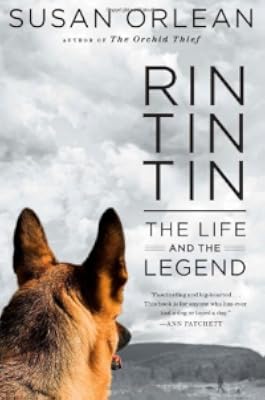
Susan Orlean loves animals, as you may have gathered if you are lucky enough to have read her book “Rin Tin Tin: The Life and the Legend.” The celebrated nonfiction author brings her passion for animals front and center in her latest book, “On Animals” (2021).
The book consists of previously published magazine articles, mostly from The New Yorker, where she is a regular contributor. Some of these go back as far as the 1990s. Some are very personal, as when she writes about the many animals on her family's small farm in rural New York. Others are more objective, as when she writes about a show dog named Biff. All are witty and fascinating.
She writes about a New Jersey woman with so many tigers she has lost count. When a loose show more tiger walks through a residential area and eventually has to be shot, she doesn't know if it was one of hers or not. Orlean says there may be seven times as many pet tigers in the United States as there are registered Irish setters.
Another essay discusses homing pigeons. Another is about the animals used in movies and television programs. (Even worms and insects that appear on film cannot be harmed in any way.) Separate articles deal with mules and donkeys. She writes about a highly infectious disease that threatens all rabbits, both wild and domestic. There's even a piece on taxidermy. Another is about a lion whisperer.
Orlean's prose draws the reader in quickly and leaves one both entertained and educated. You need not share her passion for animals to love her book. show less
The book consists of previously published magazine articles, mostly from The New Yorker, where she is a regular contributor. Some of these go back as far as the 1990s. Some are very personal, as when she writes about the many animals on her family's small farm in rural New York. Others are more objective, as when she writes about a show dog named Biff. All are witty and fascinating.
She writes about a New Jersey woman with so many tigers she has lost count. When a loose show more tiger walks through a residential area and eventually has to be shot, she doesn't know if it was one of hers or not. Orlean says there may be seven times as many pet tigers in the United States as there are registered Irish setters.
Another essay discusses homing pigeons. Another is about the animals used in movies and television programs. (Even worms and insects that appear on film cannot be harmed in any way.) Separate articles deal with mules and donkeys. She writes about a highly infectious disease that threatens all rabbits, both wild and domestic. There's even a piece on taxidermy. Another is about a lion whisperer.
Orlean's prose draws the reader in quickly and leaves one both entertained and educated. You need not share her passion for animals to love her book. show less
Animals are the best! So reading about animals is wonderful too and this book proves it. There are 15 stories about them first published in the New Yorker mag, Atlantic or Smithsonian mag. Stories are from soup to nuts about panda bears, chickens, dogs, an orca, donkeys, lions, tigers, rabbits, homing pigeons and more. There was lovely writing too to enjoy, very personal and light hearted creating a good break from the human condition!
"Humankind has ended up mediating almost every aspect of the natural world, muddling the notion of what being truly wild can really mean anymore."
"Every corny thing that's said about living with nature--being in harmony with the earth, feeling the cycle of the seasons--happens to be true."
These essays are bookmarked by the experience of buying her own farm and the animals she shared this time with. Her love of animals, her curiosity, her enthusiasm is readily apparent, it draws the reader into her various subjects. From racing pigeons, to pandas, mules, a show dog and his life and a missing dog. Never knew there were dog detectives, agencies. I found the chapter on lions both embracing and sad. I always disposed big game hunting, but show more after reading this I absolutely hate them. The chapter on donkeys in Morocco was so interesting her the donkeys are essential because in the Fez medina the streets are too narrow for other forms of transportation.
A well researched book, she actually visited these places, met with the people within. It is at times humorous, sometimes despairing but always informative and interesting.
ARC from Edelweiss show less
"Every corny thing that's said about living with nature--being in harmony with the earth, feeling the cycle of the seasons--happens to be true."
These essays are bookmarked by the experience of buying her own farm and the animals she shared this time with. Her love of animals, her curiosity, her enthusiasm is readily apparent, it draws the reader into her various subjects. From racing pigeons, to pandas, mules, a show dog and his life and a missing dog. Never knew there were dog detectives, agencies. I found the chapter on lions both embracing and sad. I always disposed big game hunting, but show more after reading this I absolutely hate them. The chapter on donkeys in Morocco was so interesting her the donkeys are essential because in the Fez medina the streets are too narrow for other forms of transportation.
A well researched book, she actually visited these places, met with the people within. It is at times humorous, sometimes despairing but always informative and interesting.
ARC from Edelweiss show less
2.75 stars. there are some great essays here about some surprising animals. she goes for some of the ones you'd expect like cats, dogs, tigers, lions, and orcas, and some that you don't expect like wild turkeys, oxen, ticks, and pigeons. they are largely informative, each with a story to bring you in and keep your attention. the entire book is bookended with essays that are more personal, and those are the ones that i particularly liked and preferred. i did find myself doing some research on some of the things she discussed in the middle of the book, because she didn't always give the endings to the stories she was using as a way in to discuss the specific animal the essay was about, and i wished she'd given the full story.
it's well show more written and engaging and it makes me curious to read her other stuff as this was my first of her books. show less
it's well show more written and engaging and it makes me curious to read her other stuff as this was my first of her books. show less
Members
- Recently Added By
Lists

Science: Zoology
107 works; 1 member
Author Information

30+ Works 12,106 Members
Susan Orlean is a staff writer for The New Yorker and has also written for Outside, Esquire, Rolling Stone, and Vogue. She graduated from the University of Michigan and worked as a reporter in Portland, Oregon, and Boston, Massachusetts. Orlean is the author of The Orchid Thief and Rin Tin Tin: The Life and Legend. She now lives in New York City show more and can be reached via the internet at www.susanorlean.com (Bowker Author Biography) show less
Awards and Honors
Awards
Common Knowledge
- Original publication date
- 2021-10-12
- Epigraph
- Animals first entered the imagination as messengers and promises.
--John Berger, Why Look at Animals? - Dedication
- For John and Austin,
and for Ivy and Buck and Leo and Cooper and Molly and
Duffy and Laura and Beauty and Helen and Tweed
and Mabel and Sparky and... - First words
- Even before the cats, before the dogs, before the chickens, before the turkeys, before the ducks and the guinea fowl and the betta fish and the Black Angus cattle, I was always a little animalish.
- Last words
- (Click to show. Warning: May contain spoilers.)As I made my way through the trees and across the fields and down to where the coop had been, I collected a few things that could remind me of the farm forever and perhaps betoken some place in my future that would feel the way it had: a piece of quartz, a pine cone, a knob of moss, and one perfect chicken feather.
- Original language
- English
Classifications
- Genres
- Science & Nature, General Nonfiction, Nonfiction, Biography & Memoir
- DDC/MDS
- 590 — Natural sciences & mathematics Animals Animals
- LCC
- QL85 .O75 .O5 — Science Zoology Zoology General
- BISAC
Statistics
- Members
- 481
- Popularity
- 63,135
- Reviews
- 23
- Rating
- (3.74)
- Languages
- English
- Media
- Paper, Audiobook, Ebook
- ISBNs
- 13
- ASINs
- 2