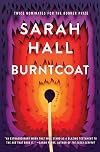
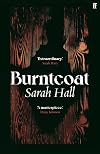
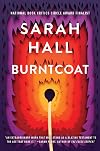
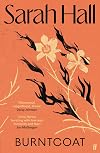
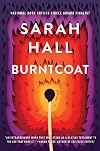
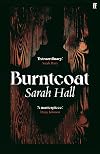
Burntcoat
by Sarah Hall
On This Page
Description
"In an unnamed British city, the virus is spreading, and like everyone else, the celebrated sculptor Edith Harkness retreats inside. She isolates herself in her immense studio, Burntcoat, with Halit, the lover she barely knows. As life outside changes irreparably, inside Burntcoat, Edith and Halit find themselves changed as well: by the histories and responsibilities each carries and bears, by the fears and dangers of the world outside, and by the progressions of their new relationship"--Tags
Recommendations











Member Reviews
Sarah Hall's writing always surprises and amazes me and Burntcoat is no exception. The title is the studio of a celebrated UK artist, Edith, who produces large wooden pieces using a Japanese technique that involves burning. There is a pandemic, not Covid-19 but an even more brutal virus that brings with it pain and distress. The novel is physically sensual and packed with detail. Edith is in lockdown with her new partner and she describes their adventurous love making intimately. When the virus hits, she describes this in detail too. Meanwhile, Edith looks back on her childhood with her mother, who had written novels and then lost some brain function. The two of them lived in an isolated cottage on the fells and Edith enjoyed a show more childhood where she was both free and caring. A complex novel; it has elements of joy as well as trauma. An excellent read. show less
‘’Those who tell stories survive.’’
‘’Is it possible to be saved, like Scheherazade seducing the enemy with tales? Do stories make sense in a disordered world?’’
A tragic change inflicts the most important person in your life, your mother. A worthless father withdraws from your life. And then, you become an artist. You need to experience and express, to support and confess. You need to understand in order to find yourself.
Burntcoat. As in ‘’burn your skin’’. Burn your prejudices. Cleanse yourself of the ills of the past. Start anew. For as long as Life allows you to exist.
‘’We could talk about most things. But there were native compartments full of history I couldn’t access, and in which I would never belong; show more you contained seas that shared no tides here.’’
A young man from Turkey, Halit. His name means ‘’eternal’’. They fall in love at first sight. Yes, it can happen. In an instant, like a heavy blow of the wind. Like an earthquake that makes you question your entire being. When two people come together against the world, there is always hope for the future. Even if it is only reserved for the ‘’happy few’’.
‘’I’m still a halfling on the moors, finding berries, cupping from the underground river, making things out of reeds and thorns. The world exists through recreation, how it is perceived. You were a tear in all that, a gift of sudden truth. Because of you I could say, with certainty, I believe in it, all.’’
The quiet and restless beauty of the moors cannot hide that Nature has become a lethal threat. Yet love prompts you forward. A modern plague has been born and the land is heading back to the Middle Ages. A deadly virus is destroying the world but your heart opens. Violence, madness. Human beings become monsters. The spirit and soul of a house become a cocoon that will protect two souls that have found each other amidst unthinkable chaos.
I cannot describe how deeply I connected with Edith and how piercingly I could understand the depth of her feelings. For her feelings are mine as well and I could ‘’hear’’ her soul as I can ‘’hear’’ mine. In a time when certain emotions are growing within me more and more, Edith’s voice became my voice.
*Necessary stop to rant: Those who complain about the supposedly ‘’strong’’ sex scenes? You must be nuns or ‘’strongly’’ repressed. Or simply ridiculous. Judging by the Goodreads mob that has been plaguing the reading community for a couple of years now, I’d go with the third option. So, please stop. You lower our IQ levels! *
As I was reaching the end, I started reading slower and slower. I didn’t want it to end. I didn’t want to face the resolution that was looming. Threateningly. When a novel manages to make my heart ache (literally, I felt excruciating pain), then that is all I need to know that I have found a new literary home.
For personal reasons - which may become obvious to you when you read Sarah Hall’s masterpiece and my poor attempt to review it - Burntcoat became my home. Edith mirrored my own choices, its darkness and hope and love spoke to the very depths of my soul. For me, it was so much more than a book. It was the mirror to a new path that is currently beckoning to me. It was the part of myself viewed in an autumn dream born during the summer that recently departed. A dream that has become a beautiful, albeit difficult, reality…
‘’I never brought you to the valley. Lying on the bed, when we walked together, I described it, the sheer granite slabs, the fast brackish water and luminous moors. You never took me home either. Between coordinates is where we existed. Perhaps that’s true for all relationships. In the end, we want versions we can’t have, rearrangements in time. We want someone wise or well scarred from the other side to say how it is, and what will happen, to be re-childed.’’
Many thanks to Faber and Faber Ltd and NetGalley for the ARC in exchange for an honest review.
My reviews can also be found on https://theopinionatedreaderblog.wordpress.com/ show less
‘’Is it possible to be saved, like Scheherazade seducing the enemy with tales? Do stories make sense in a disordered world?’’
A tragic change inflicts the most important person in your life, your mother. A worthless father withdraws from your life. And then, you become an artist. You need to experience and express, to support and confess. You need to understand in order to find yourself.
Burntcoat. As in ‘’burn your skin’’. Burn your prejudices. Cleanse yourself of the ills of the past. Start anew. For as long as Life allows you to exist.
‘’We could talk about most things. But there were native compartments full of history I couldn’t access, and in which I would never belong; show more you contained seas that shared no tides here.’’
A young man from Turkey, Halit. His name means ‘’eternal’’. They fall in love at first sight. Yes, it can happen. In an instant, like a heavy blow of the wind. Like an earthquake that makes you question your entire being. When two people come together against the world, there is always hope for the future. Even if it is only reserved for the ‘’happy few’’.
‘’I’m still a halfling on the moors, finding berries, cupping from the underground river, making things out of reeds and thorns. The world exists through recreation, how it is perceived. You were a tear in all that, a gift of sudden truth. Because of you I could say, with certainty, I believe in it, all.’’
The quiet and restless beauty of the moors cannot hide that Nature has become a lethal threat. Yet love prompts you forward. A modern plague has been born and the land is heading back to the Middle Ages. A deadly virus is destroying the world but your heart opens. Violence, madness. Human beings become monsters. The spirit and soul of a house become a cocoon that will protect two souls that have found each other amidst unthinkable chaos.
I cannot describe how deeply I connected with Edith and how piercingly I could understand the depth of her feelings. For her feelings are mine as well and I could ‘’hear’’ her soul as I can ‘’hear’’ mine. In a time when certain emotions are growing within me more and more, Edith’s voice became my voice.
*Necessary stop to rant: Those who complain about the supposedly ‘’strong’’ sex scenes? You must be nuns or ‘’strongly’’ repressed. Or simply ridiculous. Judging by the Goodreads mob that has been plaguing the reading community for a couple of years now, I’d go with the third option. So, please stop. You lower our IQ levels! *
As I was reaching the end, I started reading slower and slower. I didn’t want it to end. I didn’t want to face the resolution that was looming. Threateningly. When a novel manages to make my heart ache (literally, I felt excruciating pain), then that is all I need to know that I have found a new literary home.
For personal reasons - which may become obvious to you when you read Sarah Hall’s masterpiece and my poor attempt to review it - Burntcoat became my home. Edith mirrored my own choices, its darkness and hope and love spoke to the very depths of my soul. For me, it was so much more than a book. It was the mirror to a new path that is currently beckoning to me. It was the part of myself viewed in an autumn dream born during the summer that recently departed. A dream that has become a beautiful, albeit difficult, reality…
‘’I never brought you to the valley. Lying on the bed, when we walked together, I described it, the sheer granite slabs, the fast brackish water and luminous moors. You never took me home either. Between coordinates is where we existed. Perhaps that’s true for all relationships. In the end, we want versions we can’t have, rearrangements in time. We want someone wise or well scarred from the other side to say how it is, and what will happen, to be re-childed.’’
Many thanks to Faber and Faber Ltd and NetGalley for the ARC in exchange for an honest review.
My reviews can also be found on https://theopinionatedreaderblog.wordpress.com/ show less
When, in 2020, with the onset of Covid-19, the world started shutting down and whole populations were being shut inside, literature was – at least for some of us – a way of escaping the terrors of the present or, perhaps, trying to make sense of them. Gothic, horror and post-apocalyptic fiction seemed particularly adept at reflecting the all-pervasive end-of-times atmosphere.
Burntcoat by Sarah Hall is, however, one of the first novels – and, although admittedly a bold claim, possibly the first literary masterpiece – to be written during lockdown and to explicitly reference Covid-19. It is narrated by 59-year old Edith Harkness, a survivor, who surveys the life-changing pandemic with the benefit of intervening time.
The images show more Edith describes are familiar, even though the virus featured in the novel is actually much deadlier than the “novel coronavirus”, leading to one million deaths in the United Kingdom alone:
"The virus has shed its initial and older names. They were frightening, incorrect, discriminatory. Hanta. Nova. Now it is simply AG3. It is contained; an event in a previous era from which we continue to learn. Contingency planning. Social tracking. Herd control. The picture of the pathogen– orange and reticulated– has become as recognisable as the moon. Children sketch it in science lessons, the curious arms, proteins and spikes. The civic notices listing symptoms, and the slogans, look vintage ...
The images are so strong from that time. The nurse standing in the empty aisle, her back to us, hair dishevelled and her uniform crumpled, the weight of the shopping basket, though it is empty, pulling her body downwards. The Pope, kneeling in the rain in a deserted St Peter’s Square."
Edith is a visual artist. Her expertise lies in the creation of large-scale wooden sculptures, using a technique learnt in Japan. A major success in her 20s finances her acquisition of Burntcoat, a large riverside warehouse-like building at the outskirts of an unnamed British town. Burntcoat is at once her studio and her residence, a labour of love. On the announcement of lockdown, it is to Burntcoat that she retires, accompanied by restaurant-owner Halit, the new-found lover with whom she has just started a relationship.
Edith’s story, just like many of the present generations, will be marked by the pandemic. We meet her at the opening of the novel, putting the finishing touches on a commission meant to mark the victims of the pandemic, which prompts her recollections of that painful event. But Edith’s story is not just about the lockdown months, about the deaths and devastation. It is also about other aspects of her life – such as growing up with her mother, an author recovering from a severe stroke; the loss of her father, who abandoned the family when they most needed him; the growth of Edith’s artistic career. But, as one would expect, the novel keeps circling around those (literally and figuratively) feverish months.
At one point in the novel, Edith is discussing Naomi’s work with her agent Karolina. Critics have reassessed her mother’s writing, she tells us,
… the label of Gothic stripped off like cheap varnish. Karoline once said to me the term is used for women whose work the establishment enjoys but doesn’t respect. Men are the existentialists.
Leaving aside for the moment the problematic implication that the Gothic is cheap (alas, a centuries-old prejudice), this sounds much like an apology for Hall’s own novel. Indeed, although not primarily fascinated with “the ghostly, the ghastly and the supernatural”, to borrow Dale Townshend’s succinct definition of the Gothic, the novel does visit the tropes of the genre, exploiting them to great effect. The symptoms of the virus skirt body horror. The violence and breakdown of society echo post-apocalyptic fiction. Burntcoat itself might not be plagued by literal ghosts, but it is visited by illness and death and haunted by memories, a contemporary urban version of the possessed Gothic mansion. But Burntcoat is also, defiantly, a novel about life, love, and lust. Edith’s ground-breaking creations find a parallel in the (very explicit) sex scenes, which hungrily, almost desperately, challenge the impending siege of the virus.
Just like her narrator Edith, in Burntcoat Sarah Hall has given us a poetic tribute to the all those who have suffered losses during Covid. I perfectly understand that describing a work as a tribute is ambivalent praise. Because, admittedly, tributes tend to stick to safe ground, to seek a “common denominator” which will gain as wide approval as possible. Edith certainly doesn’t do so with her transgressive works. Similarly, Hall comes up with a work which might challenge some sensibilities, but which is also incredibly moving and ends, albeit without any sentimentality, on a note of cautious hope.
https://endsoftheword.blogspot.com/2021/08/burntcoat-by-sarah-hall.html show less
Burntcoat by Sarah Hall is, however, one of the first novels – and, although admittedly a bold claim, possibly the first literary masterpiece – to be written during lockdown and to explicitly reference Covid-19. It is narrated by 59-year old Edith Harkness, a survivor, who surveys the life-changing pandemic with the benefit of intervening time.
The images show more Edith describes are familiar, even though the virus featured in the novel is actually much deadlier than the “novel coronavirus”, leading to one million deaths in the United Kingdom alone:
"The virus has shed its initial and older names. They were frightening, incorrect, discriminatory. Hanta. Nova. Now it is simply AG3. It is contained; an event in a previous era from which we continue to learn. Contingency planning. Social tracking. Herd control. The picture of the pathogen– orange and reticulated– has become as recognisable as the moon. Children sketch it in science lessons, the curious arms, proteins and spikes. The civic notices listing symptoms, and the slogans, look vintage ...
The images are so strong from that time. The nurse standing in the empty aisle, her back to us, hair dishevelled and her uniform crumpled, the weight of the shopping basket, though it is empty, pulling her body downwards. The Pope, kneeling in the rain in a deserted St Peter’s Square."
Edith is a visual artist. Her expertise lies in the creation of large-scale wooden sculptures, using a technique learnt in Japan. A major success in her 20s finances her acquisition of Burntcoat, a large riverside warehouse-like building at the outskirts of an unnamed British town. Burntcoat is at once her studio and her residence, a labour of love. On the announcement of lockdown, it is to Burntcoat that she retires, accompanied by restaurant-owner Halit, the new-found lover with whom she has just started a relationship.
Edith’s story, just like many of the present generations, will be marked by the pandemic. We meet her at the opening of the novel, putting the finishing touches on a commission meant to mark the victims of the pandemic, which prompts her recollections of that painful event. But Edith’s story is not just about the lockdown months, about the deaths and devastation. It is also about other aspects of her life – such as growing up with her mother, an author recovering from a severe stroke; the loss of her father, who abandoned the family when they most needed him; the growth of Edith’s artistic career. But, as one would expect, the novel keeps circling around those (literally and figuratively) feverish months.
At one point in the novel, Edith is discussing Naomi’s work with her agent Karolina. Critics have reassessed her mother’s writing, she tells us,
… the label of Gothic stripped off like cheap varnish. Karoline once said to me the term is used for women whose work the establishment enjoys but doesn’t respect. Men are the existentialists.
Leaving aside for the moment the problematic implication that the Gothic is cheap (alas, a centuries-old prejudice), this sounds much like an apology for Hall’s own novel. Indeed, although not primarily fascinated with “the ghostly, the ghastly and the supernatural”, to borrow Dale Townshend’s succinct definition of the Gothic, the novel does visit the tropes of the genre, exploiting them to great effect. The symptoms of the virus skirt body horror. The violence and breakdown of society echo post-apocalyptic fiction. Burntcoat itself might not be plagued by literal ghosts, but it is visited by illness and death and haunted by memories, a contemporary urban version of the possessed Gothic mansion. But Burntcoat is also, defiantly, a novel about life, love, and lust. Edith’s ground-breaking creations find a parallel in the (very explicit) sex scenes, which hungrily, almost desperately, challenge the impending siege of the virus.
Just like her narrator Edith, in Burntcoat Sarah Hall has given us a poetic tribute to the all those who have suffered losses during Covid. I perfectly understand that describing a work as a tribute is ambivalent praise. Because, admittedly, tributes tend to stick to safe ground, to seek a “common denominator” which will gain as wide approval as possible. Edith certainly doesn’t do so with her transgressive works. Similarly, Hall comes up with a work which might challenge some sensibilities, but which is also incredibly moving and ends, albeit without any sentimentality, on a note of cautious hope.
https://endsoftheword.blogspot.com/2021/08/burntcoat-by-sarah-hall.html show less
When, in 2020, with the onset of Covid-19, the world started shutting down and whole populations were being shut inside, literature was – at least for some of us – a way of escaping the terrors of the present or, perhaps, trying to make sense of them. Gothic, horror and post-apocalyptic fiction seemed particularly adept at reflecting the all-pervasive end-of-times atmosphere.
Burntcoat by Sarah Hall is, however, one of the first novels – and, although admittedly a bold claim, possibly the first literary masterpiece – to be written during lockdown and to explicitly reference Covid-19. It is narrated by 59-year old Edith Harkness, a survivor, who surveys the life-changing pandemic with the benefit of intervening time.
The images show more Edith describes are familiar, even though the virus featured in the novel is actually much deadlier than the “novel coronavirus”, leading to one million deaths in the United Kingdom alone:
"The virus has shed its initial and older names. They were frightening, incorrect, discriminatory. Hanta. Nova. Now it is simply AG3. It is contained; an event in a previous era from which we continue to learn. Contingency planning. Social tracking. Herd control. The picture of the pathogen– orange and reticulated– has become as recognisable as the moon. Children sketch it in science lessons, the curious arms, proteins and spikes. The civic notices listing symptoms, and the slogans, look vintage ...
The images are so strong from that time. The nurse standing in the empty aisle, her back to us, hair dishevelled and her uniform crumpled, the weight of the shopping basket, though it is empty, pulling her body downwards. The Pope, kneeling in the rain in a deserted St Peter’s Square."
Edith is a visual artist. Her expertise lies in the creation of large-scale wooden sculptures, using a technique learnt in Japan. A major success in her 20s finances her acquisition of Burntcoat, a large riverside warehouse-like building at the outskirts of an unnamed British town. Burntcoat is at once her studio and her residence, a labour of love. On the announcement of lockdown, it is to Burntcoat that she retires, accompanied by restaurant-owner Halit, the new-found lover with whom she has just started a relationship.
Edith’s story, just like many of the present generations, will be marked by the pandemic. We meet her at the opening of the novel, putting the finishing touches on a commission meant to mark the victims of the pandemic, which prompts her recollections of that painful event. But Edith’s story is not just about the lockdown months, about the deaths and devastation. It is also about other aspects of her life – such as growing up with her mother, an author recovering from a severe stroke; the loss of her father, who abandoned the family when they most needed him; the growth of Edith’s artistic career. But, as one would expect, the novel keeps circling around those (literally and figuratively) feverish months.
At one point in the novel, Edith is discussing Naomi’s work with her agent Karolina. Critics have reassessed her mother’s writing, she tells us,
… the label of Gothic stripped off like cheap varnish. Karoline once said to me the term is used for women whose work the establishment enjoys but doesn’t respect. Men are the existentialists.
Leaving aside for the moment the problematic implication that the Gothic is cheap (alas, a centuries-old prejudice), this sounds much like an apology for Hall’s own novel. Indeed, although not primarily fascinated with “the ghostly, the ghastly and the supernatural”, to borrow Dale Townshend’s succinct definition of the Gothic, the novel does visit the tropes of the genre, exploiting them to great effect. The symptoms of the virus skirt body horror. The violence and breakdown of society echo post-apocalyptic fiction. Burntcoat itself might not be plagued by literal ghosts, but it is visited by illness and death and haunted by memories, a contemporary urban version of the possessed Gothic mansion. But Burntcoat is also, defiantly, a novel about life, love, and lust. Edith’s ground-breaking creations find a parallel in the (very explicit) sex scenes, which hungrily, almost desperately, challenge the impending siege of the virus.
Just like her narrator Edith, in Burntcoat Sarah Hall has given us a poetic tribute to the all those who have suffered losses during Covid. I perfectly understand that describing a work as a tribute is ambivalent praise. Because, admittedly, tributes tend to stick to safe ground, to seek a “common denominator” which will gain as wide approval as possible. Edith certainly doesn’t do so with her transgressive works. Similarly, Hall comes up with a work which might challenge some sensibilities, but which is also incredibly moving and ends, albeit without any sentimentality, on a note of cautious hope.
https://endsoftheword.blogspot.com/2021/08/burntcoat-by-sarah-hall.html show less
Burntcoat by Sarah Hall is, however, one of the first novels – and, although admittedly a bold claim, possibly the first literary masterpiece – to be written during lockdown and to explicitly reference Covid-19. It is narrated by 59-year old Edith Harkness, a survivor, who surveys the life-changing pandemic with the benefit of intervening time.
The images show more Edith describes are familiar, even though the virus featured in the novel is actually much deadlier than the “novel coronavirus”, leading to one million deaths in the United Kingdom alone:
"The virus has shed its initial and older names. They were frightening, incorrect, discriminatory. Hanta. Nova. Now it is simply AG3. It is contained; an event in a previous era from which we continue to learn. Contingency planning. Social tracking. Herd control. The picture of the pathogen– orange and reticulated– has become as recognisable as the moon. Children sketch it in science lessons, the curious arms, proteins and spikes. The civic notices listing symptoms, and the slogans, look vintage ...
The images are so strong from that time. The nurse standing in the empty aisle, her back to us, hair dishevelled and her uniform crumpled, the weight of the shopping basket, though it is empty, pulling her body downwards. The Pope, kneeling in the rain in a deserted St Peter’s Square."
Edith is a visual artist. Her expertise lies in the creation of large-scale wooden sculptures, using a technique learnt in Japan. A major success in her 20s finances her acquisition of Burntcoat, a large riverside warehouse-like building at the outskirts of an unnamed British town. Burntcoat is at once her studio and her residence, a labour of love. On the announcement of lockdown, it is to Burntcoat that she retires, accompanied by restaurant-owner Halit, the new-found lover with whom she has just started a relationship.
Edith’s story, just like many of the present generations, will be marked by the pandemic. We meet her at the opening of the novel, putting the finishing touches on a commission meant to mark the victims of the pandemic, which prompts her recollections of that painful event. But Edith’s story is not just about the lockdown months, about the deaths and devastation. It is also about other aspects of her life – such as growing up with her mother, an author recovering from a severe stroke; the loss of her father, who abandoned the family when they most needed him; the growth of Edith’s artistic career. But, as one would expect, the novel keeps circling around those (literally and figuratively) feverish months.
At one point in the novel, Edith is discussing Naomi’s work with her agent Karolina. Critics have reassessed her mother’s writing, she tells us,
… the label of Gothic stripped off like cheap varnish. Karoline once said to me the term is used for women whose work the establishment enjoys but doesn’t respect. Men are the existentialists.
Leaving aside for the moment the problematic implication that the Gothic is cheap (alas, a centuries-old prejudice), this sounds much like an apology for Hall’s own novel. Indeed, although not primarily fascinated with “the ghostly, the ghastly and the supernatural”, to borrow Dale Townshend’s succinct definition of the Gothic, the novel does visit the tropes of the genre, exploiting them to great effect. The symptoms of the virus skirt body horror. The violence and breakdown of society echo post-apocalyptic fiction. Burntcoat itself might not be plagued by literal ghosts, but it is visited by illness and death and haunted by memories, a contemporary urban version of the possessed Gothic mansion. But Burntcoat is also, defiantly, a novel about life, love, and lust. Edith’s ground-breaking creations find a parallel in the (very explicit) sex scenes, which hungrily, almost desperately, challenge the impending siege of the virus.
Just like her narrator Edith, in Burntcoat Sarah Hall has given us a poetic tribute to the all those who have suffered losses during Covid. I perfectly understand that describing a work as a tribute is ambivalent praise. Because, admittedly, tributes tend to stick to safe ground, to seek a “common denominator” which will gain as wide approval as possible. Edith certainly doesn’t do so with her transgressive works. Similarly, Hall comes up with a work which might challenge some sensibilities, but which is also incredibly moving and ends, albeit without any sentimentality, on a note of cautious hope.
https://endsoftheword.blogspot.com/2021/08/burntcoat-by-sarah-hall.html show less
The number of times I've finished several books I enjoyed just fine, thinking I'm doing well picking for myself, and then started a Sarah Hall book and realized anew, oh, this is writing.
Burntcoat is the story of Edith Harkness and her reconciliation with Death as she prepares for her end from the relapse of a frightful disease, part of a global pandemic. She reminisces about her life, most of her memories concentrate on her childhood with her mother and her last romance, her pandemic love affair with Halit, the owner of a nearby restaurant. She also spends some time on how her career flourished. She won a huge commission at the start of her career, one that was met with the same anger and awe as Maya Lin’s Vietnam Memorial.
She had an unusual childhood. Her mother had some brain damage from an aneurism and had to relearn the basic skills. Her father left and though he sued for custody when he lost, he did not try to show more stay in her life. Her mother was not demonstrative, but she came through with surprising strength, in particular when she confronted Edith’s early, bad boyfriend.
The book starts with the lockdown for this great pandemic. It is worse than COVID, much more deadly. It takes longer for them to find a vaccine and the world is disrupted even more with food shortages and violence. Edith and Halit both get it, which we know from the beginning as she has relapsed.
Burntcoat is beautifully written for the most part. Sarah Hall knows how to craft a sentence. It also is very graphic. I’ve read plenty of erotica and this is the first time I felt uncomfortable with it. It felt like Sarah Hall was trying to write about sex differently, but in her effort to avoid euphemism, it became so much about the mechanics and the fluids.
The greatest flaw, though, was in Hall’s choice to make the disease not be COVID. With COVID there were hate crimes and violence, so why the need to make a new, even worse pandemic? It felt like a cop-out, an abdication of her responsibility. I know she’s the writer. It’s her choice, but it was a bad choice. There were unforgivable choices made during COVID, we didn’t need to supersize the disease to get incompetent government, food shortages, and hate crimes.
So, I think this book is great writing skill wasted on cringe sex and a cop-out virus. Edith is interesting, I cared about her, but her mother Naomi was for me, the heart of the book.
I received an ARC of Burntcoat from the publisher through Shelf Awareness.
Burntcoat at Custom House Books | Harper Collins
Sarah Hall author site
https://tonstantweaderreviews.wordpress.com/2021/12/14/9780062657107/ show less
She had an unusual childhood. Her mother had some brain damage from an aneurism and had to relearn the basic skills. Her father left and though he sued for custody when he lost, he did not try to show more stay in her life. Her mother was not demonstrative, but she came through with surprising strength, in particular when she confronted Edith’s early, bad boyfriend.
The book starts with the lockdown for this great pandemic. It is worse than COVID, much more deadly. It takes longer for them to find a vaccine and the world is disrupted even more with food shortages and violence. Edith and Halit both get it, which we know from the beginning as she has relapsed.
Burntcoat is beautifully written for the most part. Sarah Hall knows how to craft a sentence. It also is very graphic. I’ve read plenty of erotica and this is the first time I felt uncomfortable with it. It felt like Sarah Hall was trying to write about sex differently, but in her effort to avoid euphemism, it became so much about the mechanics and the fluids.
The greatest flaw, though, was in Hall’s choice to make the disease not be COVID. With COVID there were hate crimes and violence, so why the need to make a new, even worse pandemic? It felt like a cop-out, an abdication of her responsibility. I know she’s the writer. It’s her choice, but it was a bad choice. There were unforgivable choices made during COVID, we didn’t need to supersize the disease to get incompetent government, food shortages, and hate crimes.
So, I think this book is great writing skill wasted on cringe sex and a cop-out virus. Edith is interesting, I cared about her, but her mother Naomi was for me, the heart of the book.
I received an ARC of Burntcoat from the publisher through Shelf Awareness.
Burntcoat at Custom House Books | Harper Collins
Sarah Hall author site
https://tonstantweaderreviews.wordpress.com/2021/12/14/9780062657107/ show less
This is a short, intense novel. Edith looks back on her life, including growing up with her mother, who nearly died when Edith was a child but recovered enough to keep her daughter with her after her husband leaves. Edith eventually built her own life as an artist.
Central to her story is a love affair with Halit, a man who has settled here after being forced into exile. But the lovers haven't been together long at the start of a pandemic, and a society hit by crisis, fear and food shortages, and xenophobia.
I think this novel will be one of the best books I read this year, but it isn't always easy reading, with very explicit descriptions of sex and illness. Edith is looking back several decades later, and Sarah Hall in this story show more imagines a situation in which things got much, much worse, though eventually there was some return to a new normal. This may be a book that people should read, if they want to, in a time and place when they are ready for it. show less
Central to her story is a love affair with Halit, a man who has settled here after being forced into exile. But the lovers haven't been together long at the start of a pandemic, and a society hit by crisis, fear and food shortages, and xenophobia.
I think this novel will be one of the best books I read this year, but it isn't always easy reading, with very explicit descriptions of sex and illness. Edith is looking back several decades later, and Sarah Hall in this story show more imagines a situation in which things got much, much worse, though eventually there was some return to a new normal. This may be a book that people should read, if they want to, in a time and place when they are ready for it. show less
Members
- Recently Added By
Published Reviews
ThingScore 100
[...] sparse, sumptuous, brilliant [...]
added by Nevov
Lists

Global Reads: Books Set in the United Kingdom and Ireland
109 works; 5 members

Maybe This Year? Books to Look Forward To
412 works; 9 members

Library ebooks and electronic audio books
52 works; 1 member

Books Read in 2022
5,168 works; 114 members

Books Read in 2021
5,361 works; 114 members

COVID in literature
96 works; 9 members

Dublin Literary Award 2023 Longlist
67 works; 5 members
Author Information

19+ Works 3,765 Members
Some Editions
Awards and Honors
Awards
Distinctions
The Guardian Book of the Day (2021-10-08)
Common Knowledge
- Canonical title
- Burntcoat
Classifications
Statistics
- Members
- 292
- Popularity
- 110,592
- Reviews
- 20
- Rating
- (3.72)
- Languages
- Dutch, English, French
- Media
- Paper, Audiobook, Ebook
- ISBNs
- 16
- ASINs
- 5