
On This Page
Description
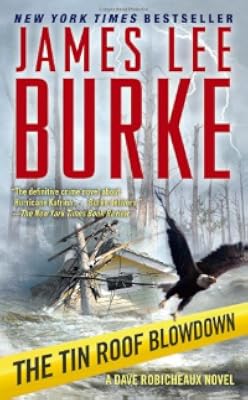
In the waning days of summer, 2005, a storm with greater impact than the bomb that struck Hiroshima peels the face off southern Louisiana. This is the gruesome reality Iberia Parish Sheriff's Detective Dave Robicheaux discovers as he is deployed to New Orleans. As James Lee Burke's new novel, The Tin Roof Blowdown, begins, Hurricane Katrina has left the commercial district and residential neighborhoods awash with looters and predators of every stripe. The power grid of the city has been show more destroyed, New Orleans reduced to the level of a medieval society. There is no law, no order, and no sanctuary for the infirm, the helpless, and the innocent. Bodies float in the streets and lie impaled on the branches of flooded trees. In the midst of an apocalyptical nightmare, Robicheaux must find two serial rapists, a morphine-addicted priest, and a vigilante who may be more dangerous than the criminals looting the city. In a singular style that defies genre, James Lee Burke has created a hauntingly bleak picture of life in New Orleans after Katrina. Filled with complex characters and depictions of people at both their best and worst, The Tin Roof Blowdown is not only an action-packed crime thriller, but a poignant story of courage and sacrifice that critics are already calling Burke's best work. show lessTags
Recommendations









Member Reviews
August, 2007:
This was a tough one to finish. It's Burke at his brutal best, but the story line didn't grab me, and the author was too much in evidence, although I'm fairly sure Burke knew he was doing that and just didn't care. It is only incidentally a novel--it's mainly about the destruction of Burke's beloved New Orleans, and not just by the forces of nature. I do wish he'd stop putting Robicheuax's loved ones in mortal peril over and over--that gets a bit old.
I was reading it at a difficult time, too, and I probably shouldn't have done that. If you like Burke, you'll have to read it. Otherwise, pass.
This was a tough one to finish. It's Burke at his brutal best, but the story line didn't grab me, and the author was too much in evidence, although I'm fairly sure Burke knew he was doing that and just didn't care. It is only incidentally a novel--it's mainly about the destruction of Burke's beloved New Orleans, and not just by the forces of nature. I do wish he'd stop putting Robicheuax's loved ones in mortal peril over and over--that gets a bit old.
I was reading it at a difficult time, too, and I probably shouldn't have done that. If you like Burke, you'll have to read it. Otherwise, pass.
Nobody but James Lee Burke could have made me feel sorry for a rapist, murderer, looter and all around bad guy. But he did and that is the talent of this writer.
To start at the beginning, Hurricane Katrina rampages through New Orleans with all the resultant devastation that we know so well. Some people rise to the occasion, such as Father Jude Leblanc who goes to a church in the poorest neighbourhood to help people, and some people use the occasion as an excuse to commit crimes, such as Bertrand Melancon who steals a boat and starts looting houses with his brother and friends. Then, as Melancon and his friends are leaving one house after finding a fortune hidden in its walls, his brother and one of his friends are shot. The friend is show more killed instantly but the brother lives albeit as a paraplegic. Bertrand takes his brother to the hospital stashing the loot along the way. Then his problems really start. The house he looted belongs to a crime boss named Sidney Kovick. It appears unlikely that Bertrand or his brother will live long enough to enjoy their ill-gotten gains.
Dave Robicheaux of the New Iberia Police Department ends up investigating the shooting because the NOPD needs all the help they can get and the New Iberia personnel are called into the city after Katrina hit. Since Kovick and his wife were out of the city during the storm they can't be the guilty party. Suspicion quickly comes to rest on a neighbour, Otis Baylor, who had his own reasons for hating the Melancons. Just as Dave is getting his teeth into the investigation the FBI takes over and Dave should be free to pursue other cases. However, the case keeps popping up and a very scuzzy guy named Ronald Bledsoe turns up in New Iberia. Dave believes he was hired by Kovick to retrieve the money and other items the looters took. Bledsoe also starts pestering Alafair, Dave's daughter. Getting Bledsoe becomes a very personal matter for Dave.
Burke can make you feel the humidity in the air and smell the decaying plant matter. He can also paint the sunset and give voice to a jazz band in the French Quarter. He obviously loves Louisiana but he knows the seamy underbelly of the state too. I was riveted to this book from start to finish. With each succeeding Dave Robicheaux mystery I feel I get to know this man a little bit better. But he is a complex guy and I'm sure I'll never learn everything. I'm willing to keep trying though. show less
To start at the beginning, Hurricane Katrina rampages through New Orleans with all the resultant devastation that we know so well. Some people rise to the occasion, such as Father Jude Leblanc who goes to a church in the poorest neighbourhood to help people, and some people use the occasion as an excuse to commit crimes, such as Bertrand Melancon who steals a boat and starts looting houses with his brother and friends. Then, as Melancon and his friends are leaving one house after finding a fortune hidden in its walls, his brother and one of his friends are shot. The friend is show more killed instantly but the brother lives albeit as a paraplegic. Bertrand takes his brother to the hospital stashing the loot along the way. Then his problems really start. The house he looted belongs to a crime boss named Sidney Kovick. It appears unlikely that Bertrand or his brother will live long enough to enjoy their ill-gotten gains.
Dave Robicheaux of the New Iberia Police Department ends up investigating the shooting because the NOPD needs all the help they can get and the New Iberia personnel are called into the city after Katrina hit. Since Kovick and his wife were out of the city during the storm they can't be the guilty party. Suspicion quickly comes to rest on a neighbour, Otis Baylor, who had his own reasons for hating the Melancons. Just as Dave is getting his teeth into the investigation the FBI takes over and Dave should be free to pursue other cases. However, the case keeps popping up and a very scuzzy guy named Ronald Bledsoe turns up in New Iberia. Dave believes he was hired by Kovick to retrieve the money and other items the looters took. Bledsoe also starts pestering Alafair, Dave's daughter. Getting Bledsoe becomes a very personal matter for Dave.
Burke can make you feel the humidity in the air and smell the decaying plant matter. He can also paint the sunset and give voice to a jazz band in the French Quarter. He obviously loves Louisiana but he knows the seamy underbelly of the state too. I was riveted to this book from start to finish. With each succeeding Dave Robicheaux mystery I feel I get to know this man a little bit better. But he is a complex guy and I'm sure I'll never learn everything. I'm willing to keep trying though. show less
Given that James Lee Burke has drawn the map of coastal Louisiana for so many readers, it’s no surprise that he would have to chronicle the changes wrought by the unnatural disaster that was Katrina. The surprise in reading this book for me wasn’t that he musters all of his descriptive power to describe the tragedy that befell New Orleans - I expected that, and he delivers - but that his story, so often a larger-than-life tapestry of history and human greed and Burke’s own electrically-charged poetry, is a network of interlocking accidents, small tragedies that bubble up from the muck left behind.
The knot at the center of it all is Bernand Melancon, a young man from the ninth ward, who makes two fatal mistakes: with his brother show more and a cohort he loots the Garden District home of a well-connected mobster, and he does it in a boat that he stole from a priest who is trying to rescue people trapped in an attic. For one misttinroof.jpgake, he may pay with his life; for the other - his soul. And his soul is not so atrophied that he doesn’t realize it. Slipping between first and third person, between reportage and the sort of mythic storytelling that is his metier, Burke proves what he has practiced all along. History is always present, all of our choices are moral ones, and all of us are capable of both great evil and of redemption. The ending is beautifully unfinished, ambiguous, and strangely full of hope, if not for the city that is not a place but a musical form, at least for one young man who “tried to become the person he might have been if he’d had a better shake.” show less
The knot at the center of it all is Bernand Melancon, a young man from the ninth ward, who makes two fatal mistakes: with his brother show more and a cohort he loots the Garden District home of a well-connected mobster, and he does it in a boat that he stole from a priest who is trying to rescue people trapped in an attic. For one misttinroof.jpgake, he may pay with his life; for the other - his soul. And his soul is not so atrophied that he doesn’t realize it. Slipping between first and third person, between reportage and the sort of mythic storytelling that is his metier, Burke proves what he has practiced all along. History is always present, all of our choices are moral ones, and all of us are capable of both great evil and of redemption. The ending is beautifully unfinished, ambiguous, and strangely full of hope, if not for the city that is not a place but a musical form, at least for one young man who “tried to become the person he might have been if he’d had a better shake.” show less
Sometimes fiction can make real what the news or government reports, no matter how immediate or thorough, cannot. In The Tin Roof Blowdown, the 16th novel in James Lee Burke’s Dave Robicheaux series, Burke describes the devastation and tragedy of Hurricane Katrina with a gut-wrenching emotional intensity that no amount of news footage could ever achieve.
While the hurricane rages and floodwaters rise, Robicheaux and his sidekick, Clete Purcell, track down the usual assortment of psychopathic deviants and lost souls, including several rapists, Mafioso hooligans, a junky priest, and mercenary black marketeers.
The details of the plot get a little shaggy, but as a historical record and ode to a New Orleans that is gone forever, this one show more deserves its fourth star.
Also posted on Rose City Reader. show less
While the hurricane rages and floodwaters rise, Robicheaux and his sidekick, Clete Purcell, track down the usual assortment of psychopathic deviants and lost souls, including several rapists, Mafioso hooligans, a junky priest, and mercenary black marketeers.
The details of the plot get a little shaggy, but as a historical record and ode to a New Orleans that is gone forever, this one show more deserves its fourth star.
Also posted on Rose City Reader. show less
A New Orleans or Louisiana writer with a contemporary character there would be amiss to ignore Hurricane Katrina - Burke embraces Katrina and the forgotten Rita that helped to scour away much of the land and people of the state. The crime Dave focuses on is born of the looting that broke out in the midst of the storm, but also leads to a series of rapes. Honestly, the crime and Dave's investigation in this one take a back seat to Burke's description of the storm and its aftermath - and the book is worth it just for that.
5 bones!!!!!
Highly Recommended!
5 bones!!!!!
Highly Recommended!
A powerful and angry book. This brings home the horror of Katrina and its human and environmental consequences to those who, like me, watched from a television in another country. Burke cleverly weaves this story with a compelling crime narrative, dealing with the mafia, drug-related crime, smuggling, psychopaths and the struggles individuals have to survive and find redemption in a fractured world. Burke leaves loose ends and questions, but mostly leaves us feeling shocked and shamed for the dreadful and avoidable fate suffered by so many in a natural disaster exacerbated by human inaction and partly redeemed by individuals doing they best they can...
What gripped me about this story was less the crime that made up the main plot and more the role the hurricanes Katrina and Rita and their consequences played in it. The effects of the storms on the native city of Dave Robicheaux and Clete Purcell were not separate from how they affected the characters. I wouldn't be at all surprised to learn that James Lee Burke had been to New Orleans right after Katrina or while it hit.
The entire book is filled with his grief over the losses endured by the city and its people. Details I'd never heard of -- like the flocks of birds flying in the sky as if they had nowhere to land -- made the destruction and loss all the more real. In the end, the book gave me a strong sense of how it might have felt show more to have been in New Orleans after the hurricanes. A unique novel. show less
The entire book is filled with his grief over the losses endured by the city and its people. Details I'd never heard of -- like the flocks of birds flying in the sky as if they had nowhere to land -- made the destruction and loss all the more real. In the end, the book gave me a strong sense of how it might have felt show more to have been in New Orleans after the hurricanes. A unique novel. show less
Members
- Recently Added By
Lists

The Guardian's 1000 Novels Everyone Must Read
1,005 works; 550 members

Best Crime Fiction
262 works; 39 members

Crime and Mysteries to Read
746 works; 31 members
Author Information

122+ Works 38,479 Members
James Lee Burke, winner of two Edgar awards, is the author of nineteen previous novels, many of them "New York Times" bestsellers, including "Cimmaron Rose", Cadillac Jukebox", & "Sunset Limited". He & his wife divide their time between Missoula, Montana, & New Iberia, Louisiana. (Publisher Provided)
Some Editions
Awards and Honors
Awards
Distinctions
Notable Lists
Series

Common Knowledge
- Canonical title
- The Tin Roof Blowdown
- Original title
- The Tin Roof Blowdown
- Original publication date
- 2007
- People/Characters
- Clete Purcel; Dave Robicheaux; Kathleen Blanco, Governor of Louisiana; Bertrand Melancon; Eddy Melancon; Helen Soileau (show all 8); Otis Baylor; Sidney Kovick
- Important places
- New Orleans, Louisiana, USA; New Iberia, Louisiana, USA
- Important events
- Hurricane Katrina (2005); Hurricane Rita (2005)
- Epigraph
- Proverbs 8:24-31
- Dedication
- For John and Kathy Clark
- First words
- My worst dreams have always contained images of brown water and fields of elephant grass and the downdraft of helicopter blades.
- Last words
- (Click to show. Warning: May contain spoilers.)But in a way he cannot understand, Bertrand knows that somehow all of them are safe now, including himself, inside a pewter vessel that is as big as the hand of God.
Classifications
Statistics
- Members
- 1,846
- Popularity
- 11,700
- Reviews
- 67
- Rating
- (4.01)
- Languages
- 9 — Danish, Dutch, English, French, German, Italian, Norwegian (Bokmål), Norwegian, Spanish
- Media
- Paper, Audiobook, Ebook
- ISBNs
- 53
- ASINs
- 19