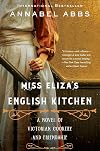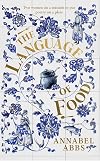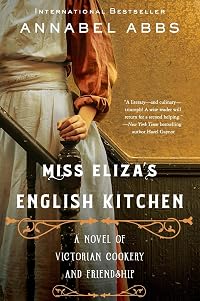
Miss Eliza's English Kitchen: A Novel of Victorian Cookery and Friendship
by Annabel Abbs
On This Page
Description
INTERNATIONAL BESTSELLERGood Housekeeping Book Club Pick * A Country Living Best Book of Fall * A Washington Post Best Feel-Good Book of the Year * One of the New York Times's Best Historical Fiction Novels of Fall
In a novel perfect for fans of Hazel Gaynor's A Memory of Violets and upstairs-downstairs stories, Annabel Abbs, the award-winning author of The Joyce Girl, returns with the brilliant real-life story of Eliza Acton and her assistant as they revolutionized British cooking and show more cookbooks around the world.
Before Mrs. Beeton and well before Julia Child, there was Eliza Acton, who changed the course of cookery writing forever.
England, 1835. London is awash with thrilling new ingredients, from rare spices to exotic fruits. But no one knows how to use them. When Eliza Acton is told by her publisher to write a cookery book instead of the poetry she loves, she refuses—until her bankrupt father is forced to flee the country. As a woman, Eliza has few options. Although she's never set foot in a kitchen, she begins collecting recipes and teaching herself to cook. Much to her surprise she discovers a talent – and a passion – for the culinary arts.
Eliza hires young, destitute Ann Kirby to assist her. As they cook together, Ann learns about poetry, love and ambition. The two develop a radical friendship, breaking the boundaries of class while creating new ways of writing recipes. But when Ann discovers a secret in Eliza's past, and finds a voice of her own, their friendship starts to fray.
Based on the true story of the first modern cookery writer, Miss Eliza's English Kitchen is a spellbinding novel about female friendship, the struggle for independence, and the transcendent pleasures and solace of food.
. show less
Tags
Recommendations











Member Reviews
Ma che peccato!
Un libro scritto benissimo, con un ottimo ritmo; una ammirevole scelta lessicale; un argomento a dir poco interessante come la scrittura femminile e femminista; gli aromi e i sapori descritti in modo che pare quasi di sentirli!
E tutto questo rovinato da un finale assurdo, frettoloso, e con alcune incongruenze psicologiche non da poco. Sarebbe stato meglio finire un capitolo prima, l'epilogo è una triste e non necessaria aggiunta.
Molte tematiche erano degne di approfondimento: l'autrice, ottima scrittrice, ha affrontato con dovizia l'argomento della scrittura femminile, che era all'epoca considerata poco rispettabile; ha affrontato in modo minore ma comunque presente il disonore della povertà e quello della maternità show more fuori dal matrimonio. Temi sfiorati ma con un commento implicito fin troppo chiaro. Quasi tutti i dettagli della vita privata di Eliza Acton sono inventati (a parte il suo stato civile). Anche Ann è un personaggio di fantasia.
Il rapporto tra le due donne è molto particolare, diciamo che tramite la comune passione della cucina riescono a curare le proprie ferite e a stabilire un'intesa che va oltre la classe sociale e che potrebbe sfociare in una bella amicizia.
Ma il finale rovina tutto, arriva improvviso, inatteso, tronca ogni possibile evoluzione e comunica tutto in poche righe. Rivelando una Ann adulta che non mi è piaciuta per niente.
Un peccato davvero: con queste premesse poteva essere un libro molto riuscito. Invece è solo un discreto testo. Anche se ben scritto. show less
Un libro scritto benissimo, con un ottimo ritmo; una ammirevole scelta lessicale; un argomento a dir poco interessante come la scrittura femminile e femminista; gli aromi e i sapori descritti in modo che pare quasi di sentirli!
E tutto questo rovinato da un finale assurdo, frettoloso, e con alcune incongruenze psicologiche non da poco. Sarebbe stato meglio finire un capitolo prima, l'epilogo è una triste e non necessaria aggiunta.
Molte tematiche erano degne di approfondimento: l'autrice, ottima scrittrice, ha affrontato con dovizia l'argomento della scrittura femminile, che era all'epoca considerata poco rispettabile; ha affrontato in modo minore ma comunque presente il disonore della povertà e quello della maternità show more fuori dal matrimonio. Temi sfiorati ma con un commento implicito fin troppo chiaro. Quasi tutti i dettagli della vita privata di Eliza Acton sono inventati (a parte il suo stato civile). Anche Ann è un personaggio di fantasia.
Il rapporto tra le due donne è molto particolare, diciamo che tramite la comune passione della cucina riescono a curare le proprie ferite e a stabilire un'intesa che va oltre la classe sociale e che potrebbe sfociare in una bella amicizia.
Ma il finale rovina tutto, arriva improvviso, inatteso, tronca ogni possibile evoluzione e comunica tutto in poche righe. Rivelando una Ann adulta che non mi è piaciuta per niente.
Un peccato davvero: con queste premesse poteva essere un libro molto riuscito. Invece è solo un discreto testo. Anche se ben scritto. show less
This book is a really well done portrait of Victorian women's lives. It focuses on Eliza Acton and her servant girl, Anne, who come from very different backgrounds and crises to meet in the kitchen. There were things that are a bit unbelievable in the way that real life can be unbelievable. There were many things about both Eliza and Anne that left me agitated in the reading -- their circumstances, their lack of power, their inability to understand each other in their different stations in life. The story unfolded in a perfectly paced and precise way, and the audiobook narrator did a wonderful job.
Advanced Listening Copy provided by Libro.fm
Advanced Listening Copy provided by Libro.fm
The Language of Food by Annabel Abbs was a sublime read containing tantalising descriptions of food, and life below stairs during 1800s England. The Language of Food tells the untold story of Eliza Acton, a poet at heart and author of Britain's first cookery book for domestic readers. Modern Cookery for Private Families was published in 1845 and author Annabel Abbs has given the reader a fictionalised account of Eliza Acton's life.
Told from two perspectives, that of Eliza and a housemaid by the name Ann Kirby, the reader is soon swept into a world where the kitchen is the centre of the household.
"And it seems to me that the kitchen, with its natural intimacy, is more conducive to friendship and love than any other room in the house. The show more steady indeterminate pattern of days spent there, the heady unforgettable smells, the warmth and succour of its confined space." Page 317
Female agency is a strong theme throughout the book, not surprising given the period and our two lead characters, but I celebrated the manner in which both characters seemed to follow their calling despite feelings of obligation and family responsibility laying elsewhere.
Eliza Acton was a poet in real life and the author has spared no effort in imagining the world of food, spices and cooking through the eyes of a poet and a woman who didn't even know how to boil an egg when she first ventured into a kitchen.
The writing is deliciously suggestive but also funny on occasion, as in this observation from Ann Kirby early on in the novel:
"Mrs Thorpe has a bosom so ample you could trot a mouse on it." Page 43
Modern Cookery for Private Families was the first cookery book to provide a detailed list of ingredients, precise quantities and cooking times for each recipe in a format we still follow today. Mrs Beeton's Book of Household Management was published in 1861 well after Eliza Acton's and it is now known that Mrs Beeton plagiarised hundreds of Acton's recipes for the collection. Not only that, but Mrs Beeton stole recipes from other cookery books as well, and knowing that now, I wish she wasn't held in such high esteem. A pox on her book!
The Language of Food by Annabel Abbs is definitely a book to savour, but be prepared to salivate as you visualise and imagine the dishes being tested, prepared and devoured. Abbs provides phrases to roll around your tongue and plenty of description so you can immerse yourself in the sensual writing and imagine yourself in the character's shoes. I particularly related to Ann Kirby, and enjoyed this section describing the first three days of her employment by Miss Eliza Acton:
"For three days, Miss Eliza gives me instructions and I follow them to the letter. I scrape the sugar from its loaf, scrub the vegetables of mud and insects, scour the sink with sand and spread the tea leaves for drying. I fetch water, and firewood, and fish from the market. I slice and sift and grate and pluck. I stoke and sweep and black the range. I wash and dry and polish. And when I get a second to myself, I eat. I eat pie crusts burnt to a crisp and fit only for the pig. I drink cream that has curdled and is intended for the cat. I steal spoonfuls of over-salted sauces so that my tongue withers in my mouth. I eat the leftovers and lick the cooking spoons and even wipe my tongue around the batter basin. I cannot help myself for my insides are gnawed half to death from years of hunger and I've never seen so much food." Pages 83-84
I always know I'm reading a great book when I want to recommend it to friends before I've even finished it and that was certainly the case here. The Language of Food by Annabel Abbs is an absorbing historical fiction novel for those who love the poetry of food, the magic of a kitchen and anything to do with cooking, baking, chopping, saucing, stirring or tasting food. Highly recommended!
* Copy courtesy of Simon & Schuster * show less
Told from two perspectives, that of Eliza and a housemaid by the name Ann Kirby, the reader is soon swept into a world where the kitchen is the centre of the household.
"And it seems to me that the kitchen, with its natural intimacy, is more conducive to friendship and love than any other room in the house. The show more steady indeterminate pattern of days spent there, the heady unforgettable smells, the warmth and succour of its confined space." Page 317
Female agency is a strong theme throughout the book, not surprising given the period and our two lead characters, but I celebrated the manner in which both characters seemed to follow their calling despite feelings of obligation and family responsibility laying elsewhere.
Eliza Acton was a poet in real life and the author has spared no effort in imagining the world of food, spices and cooking through the eyes of a poet and a woman who didn't even know how to boil an egg when she first ventured into a kitchen.
The writing is deliciously suggestive but also funny on occasion, as in this observation from Ann Kirby early on in the novel:
"Mrs Thorpe has a bosom so ample you could trot a mouse on it." Page 43
Modern Cookery for Private Families was the first cookery book to provide a detailed list of ingredients, precise quantities and cooking times for each recipe in a format we still follow today. Mrs Beeton's Book of Household Management was published in 1861 well after Eliza Acton's and it is now known that Mrs Beeton plagiarised hundreds of Acton's recipes for the collection. Not only that, but Mrs Beeton stole recipes from other cookery books as well, and knowing that now, I wish she wasn't held in such high esteem. A pox on her book!
The Language of Food by Annabel Abbs is definitely a book to savour, but be prepared to salivate as you visualise and imagine the dishes being tested, prepared and devoured. Abbs provides phrases to roll around your tongue and plenty of description so you can immerse yourself in the sensual writing and imagine yourself in the character's shoes. I particularly related to Ann Kirby, and enjoyed this section describing the first three days of her employment by Miss Eliza Acton:
"For three days, Miss Eliza gives me instructions and I follow them to the letter. I scrape the sugar from its loaf, scrub the vegetables of mud and insects, scour the sink with sand and spread the tea leaves for drying. I fetch water, and firewood, and fish from the market. I slice and sift and grate and pluck. I stoke and sweep and black the range. I wash and dry and polish. And when I get a second to myself, I eat. I eat pie crusts burnt to a crisp and fit only for the pig. I drink cream that has curdled and is intended for the cat. I steal spoonfuls of over-salted sauces so that my tongue withers in my mouth. I eat the leftovers and lick the cooking spoons and even wipe my tongue around the batter basin. I cannot help myself for my insides are gnawed half to death from years of hunger and I've never seen so much food." Pages 83-84
I always know I'm reading a great book when I want to recommend it to friends before I've even finished it and that was certainly the case here. The Language of Food by Annabel Abbs is an absorbing historical fiction novel for those who love the poetry of food, the magic of a kitchen and anything to do with cooking, baking, chopping, saucing, stirring or tasting food. Highly recommended!
* Copy courtesy of Simon & Schuster * show less
'A recipe can be as beautiful as a poem' and indeed Annabel Abbs' writing and her portrayal of two strong women in The Language of Food is as beautiful as anything I've ever read.
I feel like I should have heard of Eliza Acton but for me her contribution to cookery writing was lost in the mists of time…until now. I'm so pleased to have read this book and to have been able to find out more about this remarkable woman, who was ahead of her time.
Eliza was a published poet with a second collection already prepared when she was told by a prospective publisher that what they really needed from her was a cookery book. She was no cook and a woman of her status would not expect to spend any time in the kitchen, but she rose to the challenge show more with the help of a young maid by the name of Ann Kirby. There is so much that is wonderful about this book and one of the things that stood out was the unexpected friendship and companionship that builds between the two women. There is a perfect blend of fact and fiction (not much was known about Ann) and whilst Eliza is based on many known facts, Annabel Abbs has weaved her narrative around them without compromising on good storytelling.
The book that Eliza eventually wrote was trailblazing and I loved every word that described the food and the way it was prepared and cooked (maybe with the exception of the eel!). There is such delight in the characters' accomplishments and although I found myself wishing for scratch and sniff pages, Abbs does a tremendous job at illustrating the feelings, sounds and smells of the kitchen through her written words.
This is not just a story of cookery writing though, but also one of the constraints placed on women in the 19th century, and the contrast between the poor and those who had a higher place in society. In alternating chapters from each woman's point of view we are able to see each battle with their own place and status. I think The Language of Food is an outstanding book, staying faithful to the truth whilst giving the reader a truly absorbing read. It is beautiful inside and out and will be one of my favourite reads of the year. show less
I feel like I should have heard of Eliza Acton but for me her contribution to cookery writing was lost in the mists of time…until now. I'm so pleased to have read this book and to have been able to find out more about this remarkable woman, who was ahead of her time.
Eliza was a published poet with a second collection already prepared when she was told by a prospective publisher that what they really needed from her was a cookery book. She was no cook and a woman of her status would not expect to spend any time in the kitchen, but she rose to the challenge show more with the help of a young maid by the name of Ann Kirby. There is so much that is wonderful about this book and one of the things that stood out was the unexpected friendship and companionship that builds between the two women. There is a perfect blend of fact and fiction (not much was known about Ann) and whilst Eliza is based on many known facts, Annabel Abbs has weaved her narrative around them without compromising on good storytelling.
The book that Eliza eventually wrote was trailblazing and I loved every word that described the food and the way it was prepared and cooked (maybe with the exception of the eel!). There is such delight in the characters' accomplishments and although I found myself wishing for scratch and sniff pages, Abbs does a tremendous job at illustrating the feelings, sounds and smells of the kitchen through her written words.
This is not just a story of cookery writing though, but also one of the constraints placed on women in the 19th century, and the contrast between the poor and those who had a higher place in society. In alternating chapters from each woman's point of view we are able to see each battle with their own place and status. I think The Language of Food is an outstanding book, staying faithful to the truth whilst giving the reader a truly absorbing read. It is beautiful inside and out and will be one of my favourite reads of the year. show less
Reading this was as satisfying as watching a good cooking show because it had me imagining the flavor of all the delicious sounding food it described. Also, the historical characters Eliza Acton, author of the first modern English cookery book (cookbook to us in the US), and her assistant Ann Kirby were fascinating to read about. Their story explored the friendship between two women from very different backgrounds working together with a common goal.
This was the kind of historical fiction that immerses you in the period it portrays and leaves you with an appreciation for the historical figures whose influence is still felt in the world of today. It ended with sample recipes and an afterward with notes about the setting and events along show more with several short biographies of the supporting characters.
. Disclosure: I received a copy to review from Goodreads Giveaways. show less
This was the kind of historical fiction that immerses you in the period it portrays and leaves you with an appreciation for the historical figures whose influence is still felt in the world of today. It ended with sample recipes and an afterward with notes about the setting and events along show more with several short biographies of the supporting characters.
. Disclosure: I received a copy to review from Goodreads Giveaways. show less
Inspired by the little that is known of the life of poet, and pioneering cookery writer, Eliza Acton, and her assistant, Ann Kirby, The Language of Food (also published under the title Miss Eliza’s English Kitchen) is the third novel from British author, Annabel Abbs.
“But you cannot cook, Eliza. You have never cooked. Besides, ladies do not cook.”
The rejection of Eliza Acton’s second book of poetry by a publisher who suggests she writes a gothic romance or recipe book instead, coincides with her father’s abrupt bankruptcy, leaving she and her mother to take charge of a boardinghouse for wealthy visitors to Tunbridge Wells in order to support themselves. Despite rarely ever having even set foot in a kitchen, and her mother’s show more objections, Eliza volunteers to take on the role of cook, reasoning it’s an opportunity to save money, and accept the publisher’s commission to write a recipe book.
The sole carer for her mentally ill mother and one legged, alcoholic father, seventeen year old Ann Kirby is both apprehensive and excited when the local Vicar Mr Thorpe arranges a position for her as underhousemaid for Eliza at the boardinghouse. Unused to service, Ann has no idea what to expect but she soon proves herself invaluable to Eliza as she proves to have an instinct for flavours, and they work to develop the cookbook together.
“Why should the culinary arts not include poetry? Why should a recipe book not be a thing of beauty?”
Told through the alternating perspectives of the two women, The Language of Food draws on fact and imagination as Eliza and Ann develop what will eventually be “the greatest British cookbook of all time”, published in 1845 as ‘Modern Cookery, in All Its Branches: Reduced to a System of Easy Practice, for the Use of Private Families’. It’s also a story of female friendship and fortitude, as the women, despite their different stations in life, work side by side, and a story of creativity and cooking as Eliza and Ann combine their talents for poetry and instinct for flavours.
While Abbs incorporates as much accurate information as available about Eliza in The Language of Food, Ann is almost an entirely a fictional construct. I liked Eliza as a somewhat unconventional woman for her time, and it’s pleasing she and her contribution to modern cookery have being remembered and honoured here. Ann is young and naive, and her backstory makes her a very sympathetic character. Abb’s portrayal of the partnership they develop in the kitchen is warming, though their situation precludes a truly equal relationship. I found it interesting that Abbs explained the omission of Ann as a coauthor of the book as a decision made by Ann, and have to wonder if there was any truth to that.
The bulk of the story takes place over a year so, though in reality it took Eliza and Ann ten years, from 1835 to 1845. to write their cookbook. Abbs touches on the social history of the era including the tremendous inequality between social classes, the status of women across the social spectrum, and the treatment of the mentally ill.
“I must coax the flavors from my ingredients, as a poet coaxes mood and meaning from his words. And then there is the writing itself. Like a poem, a recipe should be clear and precise and ordered. Nothing stray.”
Eliza is credited as the pioneer of modern cookery books because she was the first to list ingredients separately from the methodology, and to provide precise quantities of ingredients. She could also be said to have pioneered the genre of ‘food writing’, by combining instruction with description. Foodies should enjoy Eliza’s poetic depictions of scents and tastes, though the fare of the 1800’s, which relied heavily on game and foraged foods, may sound quite unusual. A handful of Eliza’s ‘reciepts’ are printed after the Notes section at the end of the book.
The Language of Food is an engaging historical novel, and I appreciated learning about the beginnings of the modern recipe book. show less
“But you cannot cook, Eliza. You have never cooked. Besides, ladies do not cook.”
The rejection of Eliza Acton’s second book of poetry by a publisher who suggests she writes a gothic romance or recipe book instead, coincides with her father’s abrupt bankruptcy, leaving she and her mother to take charge of a boardinghouse for wealthy visitors to Tunbridge Wells in order to support themselves. Despite rarely ever having even set foot in a kitchen, and her mother’s show more objections, Eliza volunteers to take on the role of cook, reasoning it’s an opportunity to save money, and accept the publisher’s commission to write a recipe book.
The sole carer for her mentally ill mother and one legged, alcoholic father, seventeen year old Ann Kirby is both apprehensive and excited when the local Vicar Mr Thorpe arranges a position for her as underhousemaid for Eliza at the boardinghouse. Unused to service, Ann has no idea what to expect but she soon proves herself invaluable to Eliza as she proves to have an instinct for flavours, and they work to develop the cookbook together.
“Why should the culinary arts not include poetry? Why should a recipe book not be a thing of beauty?”
Told through the alternating perspectives of the two women, The Language of Food draws on fact and imagination as Eliza and Ann develop what will eventually be “the greatest British cookbook of all time”, published in 1845 as ‘Modern Cookery, in All Its Branches: Reduced to a System of Easy Practice, for the Use of Private Families’. It’s also a story of female friendship and fortitude, as the women, despite their different stations in life, work side by side, and a story of creativity and cooking as Eliza and Ann combine their talents for poetry and instinct for flavours.
While Abbs incorporates as much accurate information as available about Eliza in The Language of Food, Ann is almost an entirely a fictional construct. I liked Eliza as a somewhat unconventional woman for her time, and it’s pleasing she and her contribution to modern cookery have being remembered and honoured here. Ann is young and naive, and her backstory makes her a very sympathetic character. Abb’s portrayal of the partnership they develop in the kitchen is warming, though their situation precludes a truly equal relationship. I found it interesting that Abbs explained the omission of Ann as a coauthor of the book as a decision made by Ann, and have to wonder if there was any truth to that.
The bulk of the story takes place over a year so, though in reality it took Eliza and Ann ten years, from 1835 to 1845. to write their cookbook. Abbs touches on the social history of the era including the tremendous inequality between social classes, the status of women across the social spectrum, and the treatment of the mentally ill.
“I must coax the flavors from my ingredients, as a poet coaxes mood and meaning from his words. And then there is the writing itself. Like a poem, a recipe should be clear and precise and ordered. Nothing stray.”
Eliza is credited as the pioneer of modern cookery books because she was the first to list ingredients separately from the methodology, and to provide precise quantities of ingredients. She could also be said to have pioneered the genre of ‘food writing’, by combining instruction with description. Foodies should enjoy Eliza’s poetic depictions of scents and tastes, though the fare of the 1800’s, which relied heavily on game and foraged foods, may sound quite unusual. A handful of Eliza’s ‘reciepts’ are printed after the Notes section at the end of the book.
The Language of Food is an engaging historical novel, and I appreciated learning about the beginnings of the modern recipe book. show less
This novel is based on a true story of a poet and a first cookery writer, Eliza Acton. She rediscovers cooking after a publisher suggests Eliza to write a cookbook instead of poetry. She starts collecting recipes, experimenting them and writing observations. Together with her assistant, Ann, they carefully try different recipes and make adjustments for the dish to be unique and delicious.
There is much more in this book besides love for cooking. This is a story of friendship between a lady and her servant. Told in alternating perspectives between Eliza and Ann, the reader experiences struggles and challenges of two women from different social classes in the Victorian era.
The writing is wonderful, the main characters are lovable, the show more plot is fascinating and the story is beautifully told. I truly enjoyed this book. show less
There is much more in this book besides love for cooking. This is a story of friendship between a lady and her servant. Told in alternating perspectives between Eliza and Ann, the reader experiences struggles and challenges of two women from different social classes in the Victorian era.
The writing is wonderful, the main characters are lovable, the show more plot is fascinating and the story is beautifully told. I truly enjoyed this book. show less
Members
- Recently Added By
Lists

A Smorgasbord of Culinary Fiction
221 works; 94 members
Author Information

8+ Works 770 Members
Awards and Honors
Distinctions
Common Knowledge
- Original title
- Miss Eliza's English Kitchen: A Novel of Victorian Cookery and Friendship
- Alternate titles
- The Language of Food
- Original publication date
- 2021
- People/Characters
- Eliza Acton; Ann Kirby
- Important places
- Tonbridge, Kent, England, UK; London, England
- Dedication
- To my daughter, Bryony, fellow writer and kitchen companion
Classifications
Statistics
- Members
- 316
- Popularity
- 100,921
- Reviews
- 20
- Rating
- (3.87)
- Languages
- 9 — Czech, English, French, German, Hungarian, Italian, Norwegian, Portuguese, Spanish
- Media
- Paper, Audiobook, Ebook
- ISBNs
- 27
- ASINs
- 7