On This Page
Description
Grimpow finds a stone on a dead knight and begins a quest that will change his life forever.Tags
Recommendations







Member Reviews
ORIGINALLY POSTED AT Fantasy Literature.
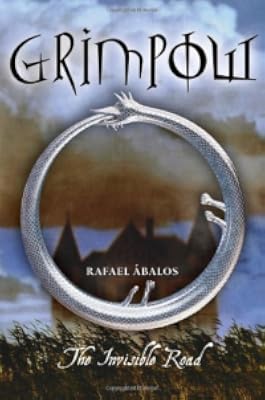
Grimpow: The Invisible Road was written for young adults by Spanish lawyer Rafael Abalos and translated to English after its success in Europe. The story is a medieval mystery/historical fantasy set in early 14th century Europe.
Grimpow is an illiterate orphan who stumbles upon the dead body of one of the last of the Knights Templar who was on a quest to secure the philosopher's stone from the grasp of King Philip IV and Pope Clement V. The king and pope, in order to get control of the stone and its promise of wealth and wisdom, had accused the Knights of heresy and were in the process of eliminating them. On the dead knight, Grimpow finds a letter, a seal, and a magical stone which gives him the show more ability to understand written languages and the desire to find wisdom. He takes up the search for wisdom while trying to keep the stone out of the hands of King Philip's inquisitor.
The book's pace is slow at first, while Grimpow spends a lot of time in an abbey reading forbidden scientific manuscripts and questioning the monks. There's a lot of reading and talking going on, and not much action. I got the impression that Abalos was using this as "teaching time" and we get a few mini-lectures on history, astronomy, mythology, geometry, mathematics, architecture, the arts, alchemy, and the nature of God and wisdom. There's a lot of name-dropping going on here, too: Aristotle, Socrates, Pythagoras, Ptolemy, Plato, etc.
Things pick up when Grimpow, who has become very wise by this time, decides it's time to leave to search for wisdom. So he becomes the squire of an Italian knight who, though Grimpow doesn't know it yet, has some connections with the Templars and the sages who discovered the stone centuries before. Eventually they join up with a beautiful woman who is also involved in the search for wisdom. The three of them work together to solve a series of clues and riddles during their search.
Overall, the writing is very good (no worries about the translation), except that the dialogue is often stilted and formal ("There is a fire in the village of Cornhill. And I think the wind is dragging the screams of battle and laments of death. Let's go and see what's happening."), there are a few tired similes ("Durlib knew that hostile snow-covered region like the back of his hand."), and we are often told the motivation behind speeches or questions: someone is pretending, joking, flattering, feigning confusion, or expressing anger. Also, there was little description of what the main characters looked like, and the beautiful lady, who was instrumental in solving clues, had the personality of a pancake.
I thought some of the characters had unrealistic reactions after learning that Grimpow was carrying the famed philosopher's stone. I mean, if I met a kid with the philosopher's stone, I'd at least say "can I see it?" but Grimpow's allies didn't. But what bugged me most were the huge logical leaps in puzzle and riddle solving. Grimpow and the pretty pancake lady came up with these outrageous solutions to riddles that turned out to be correct. I can't give examples, or that will ruin the story, but let me just say that the riddle solutions are so far-fetched that it's no use to try to figure them out for yourself.
But, I remind myself that this story was written for middle school kids, and I'm thirty something. This is a well-told and well-written story with an interesting historical background and likable characters, and the stuff I rolled my eyes at might be fun and exciting for a youngster.
One caution for Christian parents: This story deals with the corruption of the Catholic church in the middle ages, and this is done mostly accurately (except, of course for the fantasy elements such as the philosopher's stone). However, at the end of the novel, it is suggested that humans reach the pinnacle of wisdom when we become equal to God. Parents who consider this heresy will want to discuss that with their kids.
I listened to Grimpow on audio. The reader does a good job, except that one character sounds like a mobster and another has an inexplicable German accent. But, if you can suppress your giggles, the audio version works well for this story.
Read this review in context at Fantasy Literature . show less
Grimpow: The Invisible Road was written for young adults by Spanish lawyer Rafael Abalos and translated to English after its success in Europe. The story is a medieval mystery/historical fantasy set in early 14th century Europe.
Grimpow is an illiterate orphan who stumbles upon the dead body of one of the last of the Knights Templar who was on a quest to secure the philosopher's stone from the grasp of King Philip IV and Pope Clement V. The king and pope, in order to get control of the stone and its promise of wealth and wisdom, had accused the Knights of heresy and were in the process of eliminating them. On the dead knight, Grimpow finds a letter, a seal, and a magical stone which gives him the show more ability to understand written languages and the desire to find wisdom. He takes up the search for wisdom while trying to keep the stone out of the hands of King Philip's inquisitor.
The book's pace is slow at first, while Grimpow spends a lot of time in an abbey reading forbidden scientific manuscripts and questioning the monks. There's a lot of reading and talking going on, and not much action. I got the impression that Abalos was using this as "teaching time" and we get a few mini-lectures on history, astronomy, mythology, geometry, mathematics, architecture, the arts, alchemy, and the nature of God and wisdom. There's a lot of name-dropping going on here, too: Aristotle, Socrates, Pythagoras, Ptolemy, Plato, etc.
Things pick up when Grimpow, who has become very wise by this time, decides it's time to leave to search for wisdom. So he becomes the squire of an Italian knight who, though Grimpow doesn't know it yet, has some connections with the Templars and the sages who discovered the stone centuries before. Eventually they join up with a beautiful woman who is also involved in the search for wisdom. The three of them work together to solve a series of clues and riddles during their search.
Overall, the writing is very good (no worries about the translation), except that the dialogue is often stilted and formal ("There is a fire in the village of Cornhill. And I think the wind is dragging the screams of battle and laments of death. Let's go and see what's happening."), there are a few tired similes ("Durlib knew that hostile snow-covered region like the back of his hand."), and we are often told the motivation behind speeches or questions: someone is pretending, joking, flattering, feigning confusion, or expressing anger. Also, there was little description of what the main characters looked like, and the beautiful lady, who was instrumental in solving clues, had the personality of a pancake.
I thought some of the characters had unrealistic reactions after learning that Grimpow was carrying the famed philosopher's stone. I mean, if I met a kid with the philosopher's stone, I'd at least say "can I see it?" but Grimpow's allies didn't. But what bugged me most were the huge logical leaps in puzzle and riddle solving. Grimpow and the pretty pancake lady came up with these outrageous solutions to riddles that turned out to be correct. I can't give examples, or that will ruin the story, but let me just say that the riddle solutions are so far-fetched that it's no use to try to figure them out for yourself.
But, I remind myself that this story was written for middle school kids, and I'm thirty something. This is a well-told and well-written story with an interesting historical background and likable characters, and the stuff I rolled my eyes at might be fun and exciting for a youngster.
One caution for Christian parents: This story deals with the corruption of the Catholic church in the middle ages, and this is done mostly accurately (except, of course for the fantasy elements such as the philosopher's stone). However, at the end of the novel, it is suggested that humans reach the pinnacle of wisdom when we become equal to God. Parents who consider this heresy will want to discuss that with their kids.
I listened to Grimpow on audio. The reader does a good job, except that one character sounds like a mobster and another has an inexplicable German accent. But, if you can suppress your giggles, the audio version works well for this story.
Read this review in context at Fantasy Literature . show less
I've left Grimpow and his companion-in-peril, Lianelle, locked inside a legendary secret chamber inside a Templar's fortress. This chamber is functioning as an hour glass, with a small trickle of sand entering in from an adjacent chamber not only marking the time that Grimpow and Lianelle have to solve the next riddle, but also marking the time until they are engulfed in sand and suffocate should they not succeed.
I've torn myself away from such life altering adventure in order to convey a freshness of excitement for this tale that is being told.
I've experienced Templar-ish intrigue in various movies, but this is the first I've experienced in a novel and I am enjoying myself immensely. There is so much legend and history and mystery show more pouring out between the pages. Not to mention gallantry, purity and devotion among various characters that take part in the events that unfold. I would say it is a genuine literary if idealistic quest to find a secret "treasure."
At the beginning of the tale we meet Grimpow and his companion-in-crime Durlib as they encounter a dead man in the forest where they make their home. On the man's body they discover jewel encrusted daggers, silver, a gold seal, an encrypted note, and what turns out to be the most important artifact of all, a small talisman-like stone which Durlib commits to Grimpow's possession, speaking truthfully that it is "tied to his destiny."
As Grimpow discovers almost immediately upon possessing the stone there is a wealth of knowledge available to its owner. As with the Ring in Tolkien's tale, I immediately assume there will be a corruption of the soul that follows the one who possesses the object. I won't let on to the result of that puzzle, mainly because I haven't finished the tale myself.
I suppose I should mention that this is a YA book, although the inclusion of such detailed threads of history and legend which wind themselves around and around the plot quite assuredly add a loop which even the most anti-YA-reading adult could latch on to. I feel like the only moments which shine YA are those when the author will sum up previous portions of the tale as the adventure moves on in order to make sure the reader is following along and not confused and lost.
(please forgive any misspelling of names of characters above – I am actually listening to this book on cd and I can only transcribe the peculiar names as I hear them!) show less
I've torn myself away from such life altering adventure in order to convey a freshness of excitement for this tale that is being told.
I've experienced Templar-ish intrigue in various movies, but this is the first I've experienced in a novel and I am enjoying myself immensely. There is so much legend and history and mystery show more pouring out between the pages. Not to mention gallantry, purity and devotion among various characters that take part in the events that unfold. I would say it is a genuine literary if idealistic quest to find a secret "treasure."
At the beginning of the tale we meet Grimpow and his companion-in-crime Durlib as they encounter a dead man in the forest where they make their home. On the man's body they discover jewel encrusted daggers, silver, a gold seal, an encrypted note, and what turns out to be the most important artifact of all, a small talisman-like stone which Durlib commits to Grimpow's possession, speaking truthfully that it is "tied to his destiny."
As Grimpow discovers almost immediately upon possessing the stone there is a wealth of knowledge available to its owner. As with the Ring in Tolkien's tale, I immediately assume there will be a corruption of the soul that follows the one who possesses the object. I won't let on to the result of that puzzle, mainly because I haven't finished the tale myself.
I suppose I should mention that this is a YA book, although the inclusion of such detailed threads of history and legend which wind themselves around and around the plot quite assuredly add a loop which even the most anti-YA-reading adult could latch on to. I feel like the only moments which shine YA are those when the author will sum up previous portions of the tale as the adventure moves on in order to make sure the reader is following along and not confused and lost.
(please forgive any misspelling of names of characters above – I am actually listening to this book on cd and I can only transcribe the peculiar names as I hear them!) show less
This book is split into three parts and the first part is almost painfully difficult to get through. It picks up after awhile, but never reaches its full potential. I loved the inclusion of the Templar knights and all those legends, but I could never get fully into the book due to the writing style. As this book was originally published in Spanish, I feel that the English version is severely handicapped by a second-rate translator.
Reviewed by Natalie Tsang for TeensReadToo.com
Rafael Ábalos' GRIMPOW: THE INVISIBLE ROAD starts out with the discovery of a dead body on a cold winter's day. In other words, it's a sure sign of a dangerous and exciting story, and the novel does not disappoint.
The body turns out to be a nobleman with a saddlebag full of coins, jeweled daggers, and a letter with a strange wax seal of a snake swallowing its own tail. Grimpow, a young thief, finds a stone clenched in the man's hand. He soon realizes that the stone is magical and bestows on him strange powers, such as the ability to read in all languages and to see visions. The first thing he reads is the cryptic message of the letter. As a rule of thumb, an extraordinary object is always show more sought after by the worse sort of people. It soon becomes apparent that others are searching for the stone and the letter. With the help of new and old friends, Grimpow not only has to avoid capture but also unravel its secrets.
Set in the early fourteenth century, this novel is a blend of fantasy and history. I really liked that Rafael Ábalos actually took the time to describe what things looked like at the time and to explain some medieval beliefs and superstitions. The book never feels rushed, and its slower pace also makes it easier to keep track of the characters who move in and out of Grimpow's quest. However, there is little chance that the readers will get bored.
Fans of THE DA VINCI CODE and medieval lore will love this book. It contains, but is not limited to, the Knights Templar, jousts, battles, cryptograms, alchemy, and secret societies. There are several illustrations in the book. While it may be hard to put the book down, it is fun to stop reading and try to figure out the riddles by yourself or even with a few friends.
While a little gory, GRIMPOW: THE INVISIBLE ROAD is a fun and thrilling read. And may even inspire an interest in history! show less
Rafael Ábalos' GRIMPOW: THE INVISIBLE ROAD starts out with the discovery of a dead body on a cold winter's day. In other words, it's a sure sign of a dangerous and exciting story, and the novel does not disappoint.
The body turns out to be a nobleman with a saddlebag full of coins, jeweled daggers, and a letter with a strange wax seal of a snake swallowing its own tail. Grimpow, a young thief, finds a stone clenched in the man's hand. He soon realizes that the stone is magical and bestows on him strange powers, such as the ability to read in all languages and to see visions. The first thing he reads is the cryptic message of the letter. As a rule of thumb, an extraordinary object is always show more sought after by the worse sort of people. It soon becomes apparent that others are searching for the stone and the letter. With the help of new and old friends, Grimpow not only has to avoid capture but also unravel its secrets.
Set in the early fourteenth century, this novel is a blend of fantasy and history. I really liked that Rafael Ábalos actually took the time to describe what things looked like at the time and to explain some medieval beliefs and superstitions. The book never feels rushed, and its slower pace also makes it easier to keep track of the characters who move in and out of Grimpow's quest. However, there is little chance that the readers will get bored.
Fans of THE DA VINCI CODE and medieval lore will love this book. It contains, but is not limited to, the Knights Templar, jousts, battles, cryptograms, alchemy, and secret societies. There are several illustrations in the book. While it may be hard to put the book down, it is fun to stop reading and try to figure out the riddles by yourself or even with a few friends.
While a little gory, GRIMPOW: THE INVISIBLE ROAD is a fun and thrilling read. And may even inspire an interest in history! show less
This book wasn't exactly what I expected it to be going in. I had thought that it would be a high fantasy novel when in reality it was historical fantasy, set in France in the (I believe) 1200's. That being said, it had a similar atmosphere to your stereotypical high fantasy setting, what with knights and castles and whatnot, so I suppose this difference in genre didn't significantly affect the story as a whole. The general idea was pretty interesting, but it didn't hold my attention as well as I would have thought, and I'm not exactly sure why. It involves fantasy elements and riddles that the main characters have to solve, and usually I'm all over stories that involve solving riddles and puzzles, but for some reason, there were a lot show more of times when I had to reread pages because I found that I had zoned out and stopped paying attention to what I was reading. Part of the problem may have been that we got very little description of the characters, so they all kind of blurred together, and I was never even completely sure how old our main protagonist, Grimpow, was. A lot of the characters generally seemed too nice to Grimpow, also. For example, he becomes a squire to a knight, but the knight is very kind to him and treats him like an equal from the get-go, which felt strange. Later, you find out he's not quite who he seems, which explains it a little better, but then you find out he's not who he said he was (again), which made me question his kindness some more. The characters also didn't really have distinctive personalities, for the most part. This story could have been epic, but in the end it just seemed to be going through the motions and didn't really have a lot of excitement and emotion in it to keep my attention. show less
I really liked the second half of this book. The first half was a bit tough to get trough. The book is so cleverly written, with beautiful descriptions and a very own style of the writer, that I would definitely recommend this story to anyone who likes a story about knights, quests and the middle ages.
The translation was flat, the characters one-dimensional, and the storyline was never fully developed. Didn't like it, wouldn't recommend it. I don't understand the appeal, since none of the truly interesting elements (alchemy, Templars, battle, romance, coming-of-age, etc.) are fleshed out. An unfortunately dreary read.
Members
- Recently Added By
Lists

1001 Children's Books You Must Read Before You Grow Up
774 works; 101 members
Author Information

9 Works 520 Members
Some Editions
Awards and Honors
Series

Common Knowledge
- Canonical title*
- Grimpow, het geheim der wijzen
- Original title
- Grimpow, el camino invisible
- Original publication date
- 2005
- People/Characters
- Grimpow
- Important places*
- Andalusië, Spanje
- Dedication*
- Voor Constantino Bértolo,
zonder twijfel - First words*
- Door de mist kon hij niet verder kijken dan zijn eigen voetstappen op de dikke sneeuwlaag die de bergen bedekte.
- Quotations*
- Wij leven in een verbijsterende wereld.
Wij willen zin geven aan alles wat wij om ons heen zien en vragen ons af:
wat is de aard van het universum?
Wat is onze plaats erin en vanwaar komt het, vanwaar komen wij?
<... (show all)br>Stephen W. Hawking, Het heelal - Last words*
- (Click to show. Warning: May contain spoilers.)Naar een kasteel tussen de sterren.....
- Original language
- Spanish
*Some information comes from Common Knowledge in other languages. Click "Edit" for more information.
Classifications
Statistics
- Members
- 376
- Popularity
- 83,402
- Reviews
- 10
- Rating
- (3.38)
- Languages
- 11 — Dutch, English, French, German, Greek, Hungarian, Italian, Lithuanian, Polish, Portuguese (Portugal), Spanish
- Media
- Paper, Audiobook
- ISBNs
- 33
- ASINs
- 2