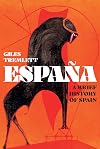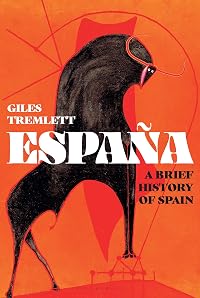
España: A Brief History of Spain
by Giles Tremlett
On This Page
Description
Bestselling author Giles Tremlett traverses the rich and varied history of Spain, from prehistoric times to today, in a brief, accessible primer for visitors, curious listeners and hispanophiles. Spain's position on Europe's south-western corner has exposed it to cultural, political and actual winds blowing from all quadrants. Africa lies a mere nine miles to the south. The Mediterranean connects it to the civilizational currents of Phoenicians, Romans, Carthaginians, and Byzantines as well show more as the Arabic lands of the near east. Hordes from the Russian steppes were amongst the first to arrive. They would be followed by Visigoths, Arabs, Napoleonic armies and many more invaders and immigrants. Circular winds and currents linked it to the American continent, allowing Spain to conquer and colonize much of it. As a result, Spain has developed a sort of hybrid vigour. Whenever it has tried to deny this inevitable heterogeneity, it has required superhuman effort to fashion a 'pure' national identity-which has proved impossible to maintain. In España, Giles Tremlett argues that, in fact, that lack of a homogenous identity is Spain's defining trait. show lessTags
Recommendations

























Member Reviews
A wide-ranging exploration of the history of what we deem Spain today.
The author does well at highlighting the fragmentation and federalization of what we call Spain. "Spain" as a coherent entity does not really exist; what we deem "Spain" is really Castile, Catalán, the Basque country, and similar such federal regions.
The author generally focuses on Spain after Ferdinand and Isabella; there is a discussion of prehistoric Spain, the Carthaginian, Roman, and Visigothic periods, the Muslim invasion and the Reconquista, but these periods are discussed quickly and without the depth the rest of the work provides. The author seems more at home with Spain in the days of the Renaissance, early modern, and modern periods: the Habsburg dynasty, show more the development and exploitation of the empire, and the ruinous wars and unequal distribution of the wealth gained from empire. He then describes the days of the Bourbons, the Napoleonic interruption, and the tension between various Carlist and republican factions throughout the 19th and early 20th centuries. Much is made of the period before Franco, the Spanish Civil War, and the period of Franco. The author also goes into detail regarding Spain's return to Europe and its values in the days since Franco, and of the current challenges facing the country.
Since most European history works speak of Spain quickly in the 16th and 17th centuries and then perhaps a little about the 1930s, and that's about it, this is a helpful work to come to a better understanding of why Spain is what it is and how and to what end it leveraged its influence in Central and South America, Asia, and many other parts of the world. A useful resource, even if it could have provided a bit more thorough explanation of the days before 1492.
**--galley received as part of early review program show less
The author does well at highlighting the fragmentation and federalization of what we call Spain. "Spain" as a coherent entity does not really exist; what we deem "Spain" is really Castile, Catalán, the Basque country, and similar such federal regions.
The author generally focuses on Spain after Ferdinand and Isabella; there is a discussion of prehistoric Spain, the Carthaginian, Roman, and Visigothic periods, the Muslim invasion and the Reconquista, but these periods are discussed quickly and without the depth the rest of the work provides. The author seems more at home with Spain in the days of the Renaissance, early modern, and modern periods: the Habsburg dynasty, show more the development and exploitation of the empire, and the ruinous wars and unequal distribution of the wealth gained from empire. He then describes the days of the Bourbons, the Napoleonic interruption, and the tension between various Carlist and republican factions throughout the 19th and early 20th centuries. Much is made of the period before Franco, the Spanish Civil War, and the period of Franco. The author also goes into detail regarding Spain's return to Europe and its values in the days since Franco, and of the current challenges facing the country.
Since most European history works speak of Spain quickly in the 16th and 17th centuries and then perhaps a little about the 1930s, and that's about it, this is a helpful work to come to a better understanding of why Spain is what it is and how and to what end it leveraged its influence in Central and South America, Asia, and many other parts of the world. A useful resource, even if it could have provided a bit more thorough explanation of the days before 1492.
**--galley received as part of early review program show less
Excerpt from longer article:
Timely Take-aways for Life-Long Learning: History of Place
Whether exploring the history of remote mountain regions or telling the story of a city through its people, these new works of nonfiction explore how five places around the world evolved over time.
…
España : A Brief History of Spain
Giles Tremlett, Sept 2022, Bloomsbury Publishing, an imprint of Macmillan
Themes: History, Europe, Western
From prehistoric times to today, readers explore the geographic, cultural, and political history of Spain along with its relationship with people and lands nearby. Stunning photographs and illustrations bring the place and international history to life.
Take-aways: Educators will find the book’s approach useful as show more they think about interesting ways to present international history. show less
Timely Take-aways for Life-Long Learning: History of Place
Whether exploring the history of remote mountain regions or telling the story of a city through its people, these new works of nonfiction explore how five places around the world evolved over time.
…
España : A Brief History of Spain
Giles Tremlett, Sept 2022, Bloomsbury Publishing, an imprint of Macmillan
Themes: History, Europe, Western
From prehistoric times to today, readers explore the geographic, cultural, and political history of Spain along with its relationship with people and lands nearby. Stunning photographs and illustrations bring the place and international history to life.
Take-aways: Educators will find the book’s approach useful as show more they think about interesting ways to present international history. show less
Giles Tremlett (historian) traverses the varied history of Spain from prehistoric times to today 2022, in a very brief an accesible way. Spain´s cahotic history.
Feb 2, 2025Spanish
Ratings
Members
- Recently Added By
Lists

Library Non-Fiction
164 works; 1 member
Author Information

9 Works 1,529 Members
Common Knowledge
- Original publication date
- 2022
- Dedication
- To two fellow new Spaniards,
Lucas and Samuel Tremlett,
and two old teachers,
Peter Carter and Oliver Ramsbotham. - First words
- (Introduction) We could choose any moment just before a football match featuring Spain's national team but let us start with the 2010 World Cup final at the Soccer City stadium in Johannesburg, South Africa.
(Chapter 1) The wife-killer and child-murderer known to the Romans as Hercules purged his considerable sins with twelve, famously harsh tasks. - Last words
- (Click to show. Warning: May contain spoilers.)For anyone seeking a new point of unity, or even a viable national narrative, it is a good place to start.
Classifications
Statistics
- Members
- 85
- Popularity
- 375,749
- Reviews
- 3
- Rating
- (4.05)
- Languages
- English, Portuguese, Spanish
- Media
- Paper, Audiobook, Ebook
- ISBNs
- 9
- ASINs
- 3