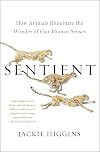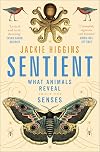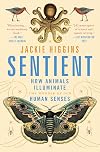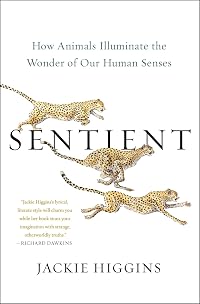
Sentient: How Animals Illuminate the Wonder of Our Human Senses
by Jackie Higgins
On This Page
Description
Perfect for fans of The Soul of an Octopus and The Genius of Birds, this "masterpiece of science and nature writing" (The Washington Post) explores how we process the world around us through the lens of the incredible sensory capabilities of thirteen animals, revealing that we are not limited to merely five senses.There is a scientific revolution stirring in the field of human perception. Research has shown that the extraordinary sensory powers of our animal friends can help us better show more understand the same powers that lie dormant within us.
From the harlequin mantis shrimp with its ability to see a vast range of colors, to the bloodhound and its hundreds of millions of scent receptors; from the orb-weaving spider whose eyes recognize not only space but time, to the cheetah whose ears are responsible for its perfect agility, these astonishing animals hold the key to better understanding how we make sense of the world around us.
"An appealingly written, enlightening, and sometimes eerie journey into the extraordinary possibilities for the human senses" (Kirkus Reviews, starred), Sentient will change the way you look at humanity. show less
Tags
Recommendations

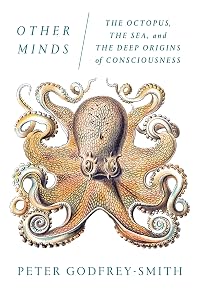
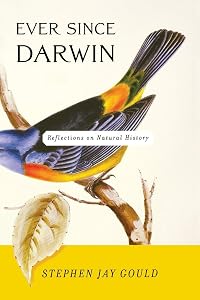
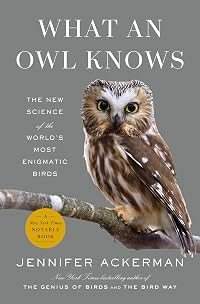
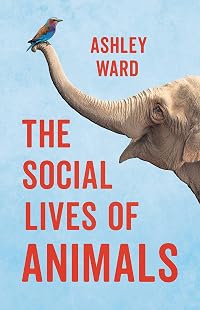







Member Reviews
“Sentient” here refers to our ability to sense the world around us—but by “our” I mean the entire animal kingdom. And as for the idea that we use just five senses to do that (sight, hearing, smell, taste and touch), well that’s an idea which has been out of date for a very long time now. There are at least a couple of dozen senses, and probably more.
So we have the mantis shrimp, which looks a lot like a small lobster and has an incredible twelve types of cone cell in its retinas for seeing colours, compared to our three. There’s the spookfish of the deep ocean, the only species in five hundred million years of vertebrate history to have an extra pair of eyes which form an image using, not lenses, but curved mirrors show more (and which possibly makes them reflecting telescopes, I’m still not sure). Then there’s a mole with a nose which looks like a tiny hand but acts as an extra eye, seeing underground. The Goliath catfish tastes the world with its whole body, nose to tail. Trained avalanche dogs can smell skiers buried under twenty-four feet of snow. And so on (if I told you all the rest, this review would be as long as the book itself).
But Sentient isn’t only about going “wow” at their extraordinary abilities; its point is very much about better appreciating our own too, our more familiar human senses. For example, the human eye can register a single photon of light—even a physicist would struggle to convey just how tiny that is; a photon is one of the fundamental quantum particles of the universe. That’s astounding, I had no idea. In an utterly silent room, like Beranek’s Box constructed in a lab at Harvard, the human ear can hear its owner’s nervous system functioning. If our ears were just a smidgeon more sensitive than that we’d be hearing (and being distracted by) the very atoms of the air around us vibrating. Our hearing, in other words, is as acute as it could be without becoming a liability. Like dolphins and bats, we too have echolocation, we locate silent and immobile objects from the sounds they reflect—even their shapes and compositions. A very limited echolocating ability it’s true, but we do have it and some biologists suspect we unconsciously use it all the time. And even that’s not the half of it…
To sum up the theme of this wonderful book: the animal kingdom is endlessly astonishing—and as fully paid-up members ourselves, so are we. show less
So we have the mantis shrimp, which looks a lot like a small lobster and has an incredible twelve types of cone cell in its retinas for seeing colours, compared to our three. There’s the spookfish of the deep ocean, the only species in five hundred million years of vertebrate history to have an extra pair of eyes which form an image using, not lenses, but curved mirrors show more (and which possibly makes them reflecting telescopes, I’m still not sure). Then there’s a mole with a nose which looks like a tiny hand but acts as an extra eye, seeing underground. The Goliath catfish tastes the world with its whole body, nose to tail. Trained avalanche dogs can smell skiers buried under twenty-four feet of snow. And so on (if I told you all the rest, this review would be as long as the book itself).
But Sentient isn’t only about going “wow” at their extraordinary abilities; its point is very much about better appreciating our own too, our more familiar human senses. For example, the human eye can register a single photon of light—even a physicist would struggle to convey just how tiny that is; a photon is one of the fundamental quantum particles of the universe. That’s astounding, I had no idea. In an utterly silent room, like Beranek’s Box constructed in a lab at Harvard, the human ear can hear its owner’s nervous system functioning. If our ears were just a smidgeon more sensitive than that we’d be hearing (and being distracted by) the very atoms of the air around us vibrating. Our hearing, in other words, is as acute as it could be without becoming a liability. Like dolphins and bats, we too have echolocation, we locate silent and immobile objects from the sounds they reflect—even their shapes and compositions. A very limited echolocating ability it’s true, but we do have it and some biologists suspect we unconsciously use it all the time. And even that’s not the half of it…
To sum up the theme of this wonderful book: the animal kingdom is endlessly astonishing—and as fully paid-up members ourselves, so are we. show less
In this book, Higgins sets out to offer us new ways of looking at our senses by exploring other animals who have this sense in a more pronounced form.
The book explores twelve senses (although Higgins notes that many scientists believe we have upwards of thirty senses): color, dark vision, hearing, touch, pleasure/pain, taste, smell, desire, balance, time, direction, and body. Each of these senses are paired with an animal companion—bat, cheetah, octopus, to name a few.
Higgins' approach to the subject ends up broaching the topic of neuroscience. One interesting things she calls out about this field is that, contrary to common belief, certain areas of the brain are less tied to specific senses, and more about a certain kind of show more perspective. For example, people can use their sense of touch to "see" things, even if they are blind, and this sense of touch utilizes the "vision" parts of the brain.
I'm curious about the ways in which the author chose which case studies to include and which to exclude. Maybe we'll get another book someday that speaks about another dozen senses? I certainly hope so!
This book inspires a sense of wonder at what it is to be human. Our perception is less limited by our sensory capacity (which is seemingly limitless), and more by our attention, and the way in which we fall into habits around the limited ways in which we normally employ our senses.
If there is any critique that I would offer, it would be that I wish the author had gone further into the fields of philosophy and somatics to help make sense of everything she's compiled here. I'm currently reading "The Master and His Emissary," and "The Matter With Things" (both by Iain McGilchrist), which hopefully will address some of these areas (although I am a little wary of their emphasis on neuroscience). show less
The book explores twelve senses (although Higgins notes that many scientists believe we have upwards of thirty senses): color, dark vision, hearing, touch, pleasure/pain, taste, smell, desire, balance, time, direction, and body. Each of these senses are paired with an animal companion—bat, cheetah, octopus, to name a few.
Higgins' approach to the subject ends up broaching the topic of neuroscience. One interesting things she calls out about this field is that, contrary to common belief, certain areas of the brain are less tied to specific senses, and more about a certain kind of show more perspective. For example, people can use their sense of touch to "see" things, even if they are blind, and this sense of touch utilizes the "vision" parts of the brain.
I'm curious about the ways in which the author chose which case studies to include and which to exclude. Maybe we'll get another book someday that speaks about another dozen senses? I certainly hope so!
This book inspires a sense of wonder at what it is to be human. Our perception is less limited by our sensory capacity (which is seemingly limitless), and more by our attention, and the way in which we fall into habits around the limited ways in which we normally employ our senses.
If there is any critique that I would offer, it would be that I wish the author had gone further into the fields of philosophy and somatics to help make sense of everything she's compiled here. I'm currently reading "The Master and His Emissary," and "The Matter With Things" (both by Iain McGilchrist), which hopefully will address some of these areas (although I am a little wary of their emphasis on neuroscience). show less
There is no exact definition of SENSE and there are more senses than the original Aristotelian five, which everyone knows. Each section of this book treats one of these additional senses, with the animal, bird, or fish who exhibit a prodigious sense, that we humans probably lack--direction, except maybe only some people possess this sense--or are so obvious that we haven't paid attention to them, such as body or balance sense, among others. The author describes each, and how each creature exhibits them. There is some kind of neurological explanation for each. The author gives current research into each and how each was discovered in humans. The last section deals with possible further discoveries taken from the animal world and how they show more may improve our life. A fascinating discussion for the educated layperson. show less
Tells how animals are used to understand and learn about our senses. This is about more than our five senses of touch, hearing, sight, taste, and smell. Tells about our senses of pain and pleasure, balance, time, direction, desire, and body. It also tells about our deep, dark vision as well as our sense of color.
I found this interesting although, at times, it was a bit over my head when it got too scientific. I was fascinated by vampire bats and their sense of pleasure and how they show it. I found the jaguar and his sense of balance so interesting as Ms. Higgins talks about the head not moving as the jaguar runs and how quickly he can stop or change direction. The octopus, especially Inky, was extremely fascinating as he escaped from show more his aquarium in New Zealand and made it to the ocean.
This is worth reading. How scientists use animals to better understand our senses and how we use them. show less
I found this interesting although, at times, it was a bit over my head when it got too scientific. I was fascinated by vampire bats and their sense of pleasure and how they show it. I found the jaguar and his sense of balance so interesting as Ms. Higgins talks about the head not moving as the jaguar runs and how quickly he can stop or change direction. The octopus, especially Inky, was extremely fascinating as he escaped from show more his aquarium in New Zealand and made it to the ocean.
This is worth reading. How scientists use animals to better understand our senses and how we use them. show less
this didn't hold my interest as much as it should have. the case studies made me perk up but the rest of it (which was most of it), while interesting, was hard for me to focus on and i kept finding myself drifting away from the narration. i probably listened to most of this two or three times; sometimes that helped but often it was hard for me to pay attention. so maybe it was me but this is a subject i am really interested in; maybe it was just that an immense world did similar work better (and i read it first).
Always instructive to think about the limits of human ability to sense the world, and to imagine what the extraordinary sensory abilities of other species are like
Excerpted from a longer article:
Animal-Human Relationships
From turtles and koalas to animal babies, explore several new books that examine the lives of animals and their relationships with humans around the world.
...
Sentient: How Animals Illuminate the Wonder of Our Human Senses
Jackie Higgins, 2022, Atria Books, an imprint of Simon & Schuster
Themes: Nature, Animals
Told through the sensory capabilities of thirteen animals, readers learn about human perception and celebrate the connections among creatures of the world.
Take-aways: Teach senses within the context of human and animal characteristics.
...
Whether helping educators keep up-to-date in their subject-areas, promoting student reading in the content-areas, or simply encouraging show more nonfiction leisure reading, teacher librarians need to be aware of the best new titles across the curriculum and how to activate life-long learning. - Annette Lamb show less
Animal-Human Relationships
From turtles and koalas to animal babies, explore several new books that examine the lives of animals and their relationships with humans around the world.
...
Sentient: How Animals Illuminate the Wonder of Our Human Senses
Jackie Higgins, 2022, Atria Books, an imprint of Simon & Schuster
Themes: Nature, Animals
Told through the sensory capabilities of thirteen animals, readers learn about human perception and celebrate the connections among creatures of the world.
Take-aways: Teach senses within the context of human and animal characteristics.
...
Whether helping educators keep up-to-date in their subject-areas, promoting student reading in the content-areas, or simply encouraging show more nonfiction leisure reading, teacher librarians need to be aware of the best new titles across the curriculum and how to activate life-long learning. - Annette Lamb show less
Members
- Recently Added By
Lists

Books Read in 2022
5,166 works; 112 members

2025 Reading List
51 works; 2 members
Author Information

8 Works 366 Members
Awards and Honors
Common Knowledge
- Original publication date
- 2021
Classifications
Statistics
- Members
- 180
- Popularity
- 181,794
- Reviews
- 8
- Rating
- (3.97)
- Languages
- Chinese, English
- Media
- Paper, Audiobook, Ebook
- ISBNs
- 13
- ASINs
- 5