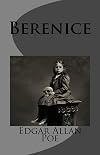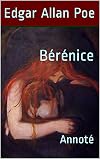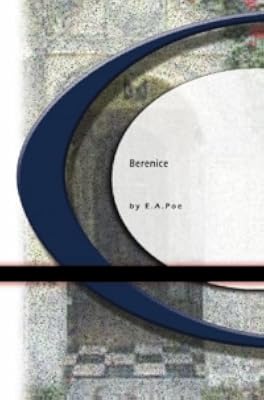
Berenice [short story]
by Edgar Allan Poe
On This Page
Description
"Berenice" is a short story by Edgar Allan Poe, centered on obsession and horror. The story follows Egaeus, a man tormented by obsessive thoughts, and his cousin Berenice, who suffers from a mysterious illness. The narrative unfolds around Egaeus' morbid fixation on Berenice's teeth, culminating in a macabre and disturbing outcome that reveals the depth of his obsession.Tags
Recommendations



















Member Reviews
Since there are a few dozen reviews already posted here, in the spirit of freshness I will compare Poe’s tale with a few other tales, each of these other tales picking up on a Berenice theme.
OBSESSION
In The Gaze by Jean Richepin, the narrator peers through the window of a cell at a madman, arms spread, head uplifted, transfixed by a point on a wall near the ceiling. The doctor-alienist relates to the narrator how this inmate is obsessed with the gaze of eyes from an artist’s portrait. “For there was something in that gaze, believe me, that could trouble not only the already-enfeebled brain of a man afflicted with general paralysis, but even a sound and solid mind.” Indeed, as it turns out, the doctor-alienist is, in his own way, show more obsessed with the eyes of the portrait. Obsession in this tale is clear-cut and unambiguous, the level-headed narrator encountering two different men obsessed by painterly eyes.
TEETH
Toward the end of At the Death-Bed by Guy de Maupassant, a tale told by an old man reflecting back on an experience he has years ago when he and a friend sat in a room next to the chamber where lay the corpse of German pessimistic philosopher Arthur Schopenhauer. The old man relates how they both heard a sound and saw something white pass across the death bed and disappear under an armchair. Terrified, they moved to the chamber with the bed. We read, “Meanwhile my friend, who had taken the other candle, bent down. Then he touched my arm without a word. I followed his gaze and there, on the ground, under the armchair next to the bed, all white on the dark carpet, open as if ready to bite – Schopenhauer’s false teeth.” And the next sentence provides the explanation: “The rot setting in had loosened his jaws, and they has sprung from his mouth.” A horrifying experience for the old man, to be sure. But as powerful as his experience was, it had a completely rational explanation.
SPLIT IDENTITY
The Double Soul by Jean Richepin is a straightforward tale about a sixteen year-old boy who witnesses his father’s death, a witnessing that causes him, psychologically, to live as two separate persons alternately. A doctor-alienist observing the young man in his sanitarium notes, “Undoubtedly, the duplication of personality manifested itself regularly, at two-year intervals: when the two years of one personality came to an end, the other was ready to come into play; between the two of them, one curious phenomenon was indispensable, a kind of mental trigger by which the first self-yielded its place to the second.” Richepin’s tale is fascinating but the fascination emerges from a telling where the disclosing of psychological facts is direct and unmistakable.
Let’s now move to Poe’s tale, which is, in many respects, at the opposite end of the aesthetic spectrum from all three of the above. Rather than a straight-forward story told by a level-headed narrator, Poe’s tale-teller conveys how he has been sickly and morose and mentally unbalanced since childhood, which, of course, alerts us to question his reliability. And to add to the eeriness and the Gothic, the tale is told in the gloomy, gray book-lined chamber of the family mansion where the narrator was born and where his mother died. There is something suffocating and ghastly and unreal permeating the atmosphere. We read, “The realities of the world affected me as visions, and as visions only, while the wild ideas of the land of dreams became, in turn, - not the material of my every-day existence but in very deed that existence utterly and solely in itself.” In other words, for the narrator, his dream-world is his concrete reality.
Dark and creepy is ratcheted up several notches as the narrator goes on to sketch how he and his cousin Berenice grew up together – he himself cloistered indoors in ill-health, Berenice rambling outdoors in energetic radiant health. Radiant health, that is, until Berenice is stricken by a debilitating illness the narrator describes as a kind of extreme epilepsy. Meanwhile, the narrator's own disease grows, a sickness and intensity of nerves he terms monomania, where he obsesses on objects or words for hours, for days and sometimes even weeks. We read how his obsession affects his perception of his cousin: “True to its own character, my disorder reveled in the less important but more startling changes wrought in the physical frame of Berenice – in the singular and most appalling distortions of her personal identity.”
How does the narrator distort Berenice’s personal identity? Dark and creepy is ratcheted up yet again as the narrator further mixes his obsession with dream-visions of Bernice. We read, “The eyes were lifeless, and lusterless, and seemingly pupil-less, and I shrank involuntarily from their glassy stare to the contemplation of the thin and shrunken lips. They parted; and in a smile of peculiar meaning, the teeth of the changed Berenice disclosed themselves slowly to my view.” Ah, to have your lover’s teeth take on a life of their own in your obsessive, monomaniacal, twisted, morbid mind!
I wouldn’t want to continue with quotes or relaying the details of Poe’s tale so as to possibly spoil the ending for readers. It is enough to point out that Poe didn’t stop here. There is ample evidence at the end of the tale that the narrator suffers from another disorder so extreme even he cannot face it squarely – that disorder being split identity or what in medical parlance is known as dissociative identity disorder (previously known as multiple personality disorder).
Is it any wonder at the time of the tale’s publication in 1835 Poe’s critics and readers said the author went too far, that this Gothic tale was so ghastly and gruesome as to offend good taste? And I didn’t even touch on the possibility of Berenice being buried alive! Nearly two hundred years later this tale of horror can still raise the hairs on the back of a reader’s neck.
*The quotes from the two Jean Richepin stories are from Crazy Corner translated by Brian Stableford and published by Black Coat Press. The quotes from Guy de Maupassant’s tale come from French Decadent Tales, translated by Stephen Romer and published by Oxford University Press. show less
Since there are a few dozen reviews already posted here, in the spirit of freshness I will compare Poe’s tale with a few other tales, each of these other tales picking up on a ‘Berenice’ theme.
Obsession
In ‘The Gaze’ by Jean Richepin, the narrator peers through the window of a cell at a madman, arms spread, head uplifted, transfixed by a point on a wall near the ceiling. The doctor-alienist relates to the narrator how this inmate is obsessed with the gaze of eyes from an artist’s portrait. “For there was something in that gaze, believe me, that could trouble not only the already-enfeebled brain of a man afflicted with general paralysis, but even a sound and solid mind.” Indeed, as it turns out, the doctor-alienist is, in show more his own way, obsessed with the eyes of the portrait. Obsession in this tale is clear-cut and unambiguous, the level-headed narrator encountering two different men obsessed by painterly eyes.
Teeth
Toward the end of ‘At the Death-Bed’ by Guy de Maupassant, a tale told by an old man reflecting back on an experience he has years ago when he and a friend sat in a room next to the chamber where lay the corpse of German pessimistic philosopher, Arthur Schopenhauer. The old man relates how they both heard a sound and saw something white pass across the death bed and disappear under an armchair. Terrified, they moved to death chamber. We read, “Meanwhile my friend, who had taken the other candle, bent down. Then he touched my arm without a word. I followed his gaze and there, on the ground, under the armchair next to the bed, all white on the dark carpet, open as if ready to bite – Schopenhauer’s false teeth.” And the next sentence provides the explanation: “The rot setting in had loosened his jaws, and they has sprung from his mouth.” A horrifying experience for the old man, to be sure. But as powerful as his experience was, it had a completely rational explanation.
Split Identity
‘The Double Soul’ by Jean Richepin is a straightforward tale about a sixteen year-old boy who witnesses his father’s death, a witnessing that causes him, psychologically, to live as two separate persons alternately. A doctor-alienist observing the young man in his sanitarium notes, “Undoubtedly, the duplication of personality manifested itself regularly, at two-year intervals: when the two years of one personality came to an end, the other was ready to come into play; between the two of them, one curious phenomenon was indispensable, a kind of mental trigger by which the first self-yielded its place to the second.” Richepin’s tale is fascinating but the fascination emerges from a telling where the disclosing of psychological facts is direct and unmistakable.
Let’s now move to Poe’s tale, which is, in many respects, at the opposite end of the aesthetic spectrum from all three of the above tales. Rather than a straight-forward story told by a level-headed narrator, Poe’s tale-teller conveys how he has been sickly and morose and mentally unbalanced since childhood, which, of course, alerts us to question his reliability. And to add to the eeriness and the Gothic, the tale is told in the gloomy, gray book-lined chamber of the family mansion where the narrator was born and where his mother died. There is something suffocating and ghastly and unreal permeating the atmosphere. We read, “The realities of the world affected me as visions, and as visions only, while the wild ideas of the land of dreams became, in turn, -- not the material of my every-day existence but in very deed that existence utterly and solely in itself.” In other words, for the narrator, his dream-world is his concrete reality.
Dark and creepy is ratcheted up several notches as the narrator goes on to sketch how he and his cousin Berenice grew up together – he cloistered indoors in ill-health, Berenice rambling outdoors in energetic radiant health. Radiant health, that is, until Berenice is stricken by a debilitating illness the narrator describes as a kind of extreme epilepsy. Meanwhile, the narrator's own disease grows, a sickness and intensity of nerves he terms monomania, where he obsesses on objects or words, for hours, for days and sometimes even weeks. We read how his sickness of obsession affects his perception of his cousin: “True to its own character, my disorder reveled in the less important but more startling changes wrought in the physical frame of Berenice – in the singular and most appalling distortions of her personal identity.”
How does the narrator distort Berenice’s personal identity? Dark and creepy is ratcheted up yet again as the narrator further mixes his obsession with dream-visions of Bernice. We read, “The eyes were lifeless, and lusterless, and seemingly pupil-less, and I shrank involuntarily from their glassy stare to the contemplation of the thin and shrunken lips. They parted; and in a smile of peculiar meaning, the teeth of the changed Berenice disclosed themselves slowly to my view.” Ah, to have your lover’s teeth take on a life of their own in your obsessive, monomaniacal, twisted, morbid mind!
I wouldn’t want to continue with quotes or relaying the details of Poe’s tale so as to possibly spoil the ending for readers. It is enough to point out that Poe didn’t stop here. There is ample evidence at the end of the tale that the narrator suffers from another disorder so extreme even he cannot face it squarely – that disorder being split identity or what in medical parlance is known as dissociative identity disorder (and previously known as multiple personality disorder).
Is it any wonder at the time of the tale’s publication in 1835 Poe’s critics and readers said the author went too far, that this Gothic tale was so ghastly and gruesome as to offend good taste? And I didn’t even touch on the possibility of Berenice being buried alive! Nearly 200 years later this tale of horror can still raise the hairs on the back of a reader’s neck.
*The quotes from the two Jean Richepin stories are from “Crazy Corner” translated by Brian Stableford and published by Black Coat Press. The quotes from Guy de Maupassant’s tale come from ‘French Decadent Tales', translated by Stephen Romer and published by Oxford University Press. show less
Obsession
In ‘The Gaze’ by Jean Richepin, the narrator peers through the window of a cell at a madman, arms spread, head uplifted, transfixed by a point on a wall near the ceiling. The doctor-alienist relates to the narrator how this inmate is obsessed with the gaze of eyes from an artist’s portrait. “For there was something in that gaze, believe me, that could trouble not only the already-enfeebled brain of a man afflicted with general paralysis, but even a sound and solid mind.” Indeed, as it turns out, the doctor-alienist is, in show more his own way, obsessed with the eyes of the portrait. Obsession in this tale is clear-cut and unambiguous, the level-headed narrator encountering two different men obsessed by painterly eyes.
Teeth
Toward the end of ‘At the Death-Bed’ by Guy de Maupassant, a tale told by an old man reflecting back on an experience he has years ago when he and a friend sat in a room next to the chamber where lay the corpse of German pessimistic philosopher, Arthur Schopenhauer. The old man relates how they both heard a sound and saw something white pass across the death bed and disappear under an armchair. Terrified, they moved to death chamber. We read, “Meanwhile my friend, who had taken the other candle, bent down. Then he touched my arm without a word. I followed his gaze and there, on the ground, under the armchair next to the bed, all white on the dark carpet, open as if ready to bite – Schopenhauer’s false teeth.” And the next sentence provides the explanation: “The rot setting in had loosened his jaws, and they has sprung from his mouth.” A horrifying experience for the old man, to be sure. But as powerful as his experience was, it had a completely rational explanation.
Split Identity
‘The Double Soul’ by Jean Richepin is a straightforward tale about a sixteen year-old boy who witnesses his father’s death, a witnessing that causes him, psychologically, to live as two separate persons alternately. A doctor-alienist observing the young man in his sanitarium notes, “Undoubtedly, the duplication of personality manifested itself regularly, at two-year intervals: when the two years of one personality came to an end, the other was ready to come into play; between the two of them, one curious phenomenon was indispensable, a kind of mental trigger by which the first self-yielded its place to the second.” Richepin’s tale is fascinating but the fascination emerges from a telling where the disclosing of psychological facts is direct and unmistakable.
Let’s now move to Poe’s tale, which is, in many respects, at the opposite end of the aesthetic spectrum from all three of the above tales. Rather than a straight-forward story told by a level-headed narrator, Poe’s tale-teller conveys how he has been sickly and morose and mentally unbalanced since childhood, which, of course, alerts us to question his reliability. And to add to the eeriness and the Gothic, the tale is told in the gloomy, gray book-lined chamber of the family mansion where the narrator was born and where his mother died. There is something suffocating and ghastly and unreal permeating the atmosphere. We read, “The realities of the world affected me as visions, and as visions only, while the wild ideas of the land of dreams became, in turn, -- not the material of my every-day existence but in very deed that existence utterly and solely in itself.” In other words, for the narrator, his dream-world is his concrete reality.
Dark and creepy is ratcheted up several notches as the narrator goes on to sketch how he and his cousin Berenice grew up together – he cloistered indoors in ill-health, Berenice rambling outdoors in energetic radiant health. Radiant health, that is, until Berenice is stricken by a debilitating illness the narrator describes as a kind of extreme epilepsy. Meanwhile, the narrator's own disease grows, a sickness and intensity of nerves he terms monomania, where he obsesses on objects or words, for hours, for days and sometimes even weeks. We read how his sickness of obsession affects his perception of his cousin: “True to its own character, my disorder reveled in the less important but more startling changes wrought in the physical frame of Berenice – in the singular and most appalling distortions of her personal identity.”
How does the narrator distort Berenice’s personal identity? Dark and creepy is ratcheted up yet again as the narrator further mixes his obsession with dream-visions of Bernice. We read, “The eyes were lifeless, and lusterless, and seemingly pupil-less, and I shrank involuntarily from their glassy stare to the contemplation of the thin and shrunken lips. They parted; and in a smile of peculiar meaning, the teeth of the changed Berenice disclosed themselves slowly to my view.” Ah, to have your lover’s teeth take on a life of their own in your obsessive, monomaniacal, twisted, morbid mind!
I wouldn’t want to continue with quotes or relaying the details of Poe’s tale so as to possibly spoil the ending for readers. It is enough to point out that Poe didn’t stop here. There is ample evidence at the end of the tale that the narrator suffers from another disorder so extreme even he cannot face it squarely – that disorder being split identity or what in medical parlance is known as dissociative identity disorder (and previously known as multiple personality disorder).
Is it any wonder at the time of the tale’s publication in 1835 Poe’s critics and readers said the author went too far, that this Gothic tale was so ghastly and gruesome as to offend good taste? And I didn’t even touch on the possibility of Berenice being buried alive! Nearly 200 years later this tale of horror can still raise the hairs on the back of a reader’s neck.
*The quotes from the two Jean Richepin stories are from “Crazy Corner” translated by Brian Stableford and published by Black Coat Press. The quotes from Guy de Maupassant’s tale come from ‘French Decadent Tales', translated by Stephen Romer and published by Oxford University Press. show less
I have read this over 5 years ago, and I never forgot it because it terrified me to read the last page. When he opens that box, MY OH MY! Alright, no spoilers, but this was one sick psychotic short story that made me think maybe Poe is a serial killer. It also made 'The Raven' seem ordinary next to this one.
This should be a Halloween read :)
This should be a Halloween read :)
At first read, there seems to be nothing special here, but when you dive deeper into the text, it slowly starts to share its secrets with you.
... Not Poe's best, in my opinion. Only recommended for those who want to read all of Poe's work, otherwise this story doesn't stand well on its own, unless you have a thing for teeth.
I've read nearly all of Poe at some point or another, but I didn't have a memory of reading this one before.
For such a short piece, I felt like it took a while to draw me in. However, it certainly ends with some drama... ("Pow, right in the kisser...?")
Here we have a young couple - the young man: dark, brooding, and perhaps unhealthily obsessive... the young woman: lovely, without fault, yet languishing of illness.
Of course, tragedy will strike - and horrors beyond tragedy.
Just coincidentally, I read this the same day I went to see the Poe exhibit at the Grolier Club:
For such a short piece, I felt like it took a while to draw me in. However, it certainly ends with some drama... ("Pow, right in the kisser...?")
Here we have a young couple - the young man: dark, brooding, and perhaps unhealthily obsessive... the young woman: lovely, without fault, yet languishing of illness.
Of course, tragedy will strike - and horrors beyond tragedy.
Just coincidentally, I read this the same day I went to see the Poe exhibit at the Grolier Club:
O final é assustador. https://www.planocritico.com/category/literatura/
Members
- Recently Added By
Lists

Favourite Short Stories
153 works; 9 members

Best Vampire & Werewolf Fiction
221 works; 146 members
Author Information

3,818+ Works 107,774 Members
Edgar Allan Poe was born in Boston, Massachusetts on January 19, 1809. In 1827, he enlisted in the United States Army and his first collection of poems, Tamerlane and Other Poems, was published. In 1835, he became the editor of the Southern Literary Messenger. Over the next ten years, Poe would edit a number of literary journals including the show more Burton's Gentleman's Magazine and Graham's Magazine in Philadelphia and the Broadway Journal in New York City. It was during these years that he established himself as a poet, a short story writer, and an editor. His works include The Fall of the House of Usher, The Tell-Tale Heart, The Murders in the Rue Morgue, The Mystery of Marie Roget, A Descent into the Maelstrom, The Masque of the Red Death, and The Raven. He struggle with depression and alcoholism his entire life and died on October 7, 1849 at the age of 40. (Bowker Author Biography) show less
Some Editions
Work Relationships
Is contained in
Cuentos completos de Edgar Allan Poe. . Edicion comentada (Spanish Edition) by Edgar Allan Poe (indirect)
Edgar Allan Poe: Collected Stories and Poems (Collector's Library Editions) by Edgar Allan Poe (indirect)
The Complete Tales of Mystery and Imagination; The Narrative of Arthur Gordon Pym; The Raven and Other Poems by Edgar Allan Poe (indirect)
The Works of Edgar Allen Poe in One Volume: Poems, Tales, Essays, Criticisms with New Notes by Edgar Allan Poe
Great Short Stories of Detection, Mystery and Horror, First Series & Second Series by Dorothy L. Sayers (indirect)
The annotated tales of Edgar Allan Poe edited with an introduction, notes, and a bibliography by Edgar Allan Poe
Has the adaptation
Common Knowledge
- Canonical title
- Berenice [short story]
- Original title
- Berenice: A Tale
- Original publication date
- 1835-03
- People/Characters
- Egæus; Berenice
- Epigraph
- Dicebant mihi sodales si sepulchrum amicae visitarem curas meas aliquantulum fore levatas.
Ebn Zaiat - First words
- Misery is manifold.
- Last words
- (Click to show. Warning: May contain spoilers.)But I could not force it open: and in my tremor it slipped from my hands, and fell heavily; and burst into pieces; and from it, with a rattling sound, there rolled out some instruments of dental surgery, intermingled with thirty-two small, white and ivory-looking substances that were scattered to and fro about the floor.
- Original language
- English
- Disambiguation notice*
- This is a short story. Do NOT combine with any collections.
*Some information comes from Common Knowledge in other languages. Click "Edit" for more information.
Classifications
Statistics
- Members
- 111
- Popularity
- 293,481
- Reviews
- 8
- Rating
- (3.54)
- Languages
- 5 — English, German, Italian, Portuguese, Spanish
- Media
- Paper, Audiobook, Ebook
- ISBNs
- 21
- ASINs
- 9