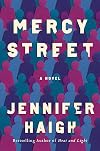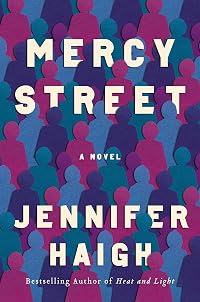
Mercy Street
by Jennifer Haigh
On This Page
Description
NATIONAL BESTSELLER "Ms. Haigh is an expertly nuanced storyteller long overdue for major attention. Her work is gripping, real, and totally immersive, akin to that of writers as different as Richard Price, Richard Ford, and Richard Russo."--Janet Maslin, New York Times The highly praised, "extraordinary" (New York Times Book Review) novel about the disparate lives that intersect at a women's clinic in Boston, by New York Times bestselling author Jennifer Haigh For almost a decade, Claudia show more has counseled patients at Mercy Street, a clinic in the heart of the city. The work is consuming, the unending dramas of women in crisis. For its patients, Mercy Street offers more than health care; for many, it is a second chance. But outside the clinic, the reality is different. Anonymous threats are frequent. A small, determined group of anti-abortion demonstrators appears each morning at its door. As the protests intensify, fear creeps into Claudia's days, a humming anxiety she manages with frequent visits to Timmy, an affable pot dealer in the midst of his own existential crisis. At Timmy's, she encounters a random assortment of customers, including Anthony, a lost soul who spends most of his life online, chatting with the mysterious Excelsior11--the screenname of Victor Prine, an anti-abortion crusader who has set his sights on Mercy Street and is ready to risk it all for his beliefs. Mercy Street is a novel for right now, a story of the polarized American present. Jennifer Haigh, "an expert natural storyteller with a keen sense of her characters' humanity" (New York Times), has written a groundbreaking novel, a fearless examination of one of the most divisive issues of our time. show lessTags
Recommendations






















Member Reviews
Highly recommended: Suspenseful, read-aloud writing, incredible characterizations, and as prescient as possible given its theme of a woman who works as a counselor in an abortion clinic. As Ron Charles wrote in the Washington Post, "[b:Mercy Street|58006995|Mercy Street|Jennifer Haigh|https://i.gr-assets.com/images/S/compressed.photo.goodreads.com/books/1626718788l/58006995._SY75_.jpg|90897808] carefully sketches out the geography of poverty, that invisible realm that lies just beyond the horizon of middle-class life. Without condescension or sentimentality, [a:Jennifer Haigh|41209|Jennifer Haigh|https://images.gr-assets.com/authors/1623875593p2/41209.jpg] describes people who aspire to live in a double-wide trailer, who must decide show more between paying the water bill and the cable bill, who feel the humiliation of using food stamps. Indeed, that life was Claudia’s adolescence, a background that makes her particularly attuned to the logic of the clinic’s poorer clients."
He goes on "Claudia’s mother, who had no particular interest in parenting, took in foster kids expressly to get extra cash from the state. Haigh never pushes on this theme, but she doesn’t need to: It’s clear that Claudia’s early exposure to the multitude of children unwanted by anyone and carelessly warehoused by the government has made her determined to present women with real reproductive choices."
The descriptions of snowy NE weather and roads, and conversations among the wildly varied cast of characters were on the mark, as, I imagine, were the strange mental meanderings of the gun freak haunting the Internet. Reminded me a bit of [b:The Beans of Egypt, Maine|263862|The Beans of Egypt, Maine|Carolyn Chute|https://i.gr-assets.com/images/S/compressed.photo.goodreads.com/books/1389141854l/263862._SY75_.jpg|464869] Fine work. show less
He goes on "Claudia’s mother, who had no particular interest in parenting, took in foster kids expressly to get extra cash from the state. Haigh never pushes on this theme, but she doesn’t need to: It’s clear that Claudia’s early exposure to the multitude of children unwanted by anyone and carelessly warehoused by the government has made her determined to present women with real reproductive choices."
The descriptions of snowy NE weather and roads, and conversations among the wildly varied cast of characters were on the mark, as, I imagine, were the strange mental meanderings of the gun freak haunting the Internet. Reminded me a bit of [b:The Beans of Egypt, Maine|263862|The Beans of Egypt, Maine|Carolyn Chute|https://i.gr-assets.com/images/S/compressed.photo.goodreads.com/books/1389141854l/263862._SY75_.jpg|464869] Fine work. show less
In the winter of 2015, Boston was hit with "monstah northeastah" after monster northeaster: a series of weekly blizzards that dumped so much snow there was no place to put it all. This weather, and the siege mentality it produced, is the setting for Mercy Street, a story with several characters whose lives glance off each other's in various ways.
*Spoilers*
Claudia Birch is a social worker at the Mercy Street women's health clinic; she answers the help line and counsels abortion patients. She had a difficult childhood in rural Maine, about which she said little to her husband Phil and his family (the marriage didn't last, but their friendship did). Claudia has trouble sleeping and visits Timmy, her weed dealer, for help with show more insomnia.
Timmy Flynn has an ex and a fourteen-year-old son in Florida; he worries that if/when weed becomes legal, he'll be out of a job, and thinks about getting out of the drug business and opening a laundromat - but first, he'll need more cash than he has, so he decides to sell the car he's been restoring.
Anthony ("Winky") knew the Flynns growing up, but his life was knocked off course by an accident when he was working on the Big Dig. He receives disability payments and spends his time attending the Catholic church, St. Dymphna's, and taking photos of the patients outside Mercy Street for his "second best friend" online, Victor.
Victor is a former trucker, prepper, white supremacist, obsessed with "white females'" lack of dedication to fulfilling their purpose of having babies. He runs a website that includes a "Hall of Shame," of women outside abortion clinics all over the country. After Anthony takes a photo of Claudia, Victor becomes obsessed with her, and drives to Massachusetts to see her in person, but crashes in the snow before reaching Boston.
Claudia avoids whatever confrontation Victor would have caused, but realizes that after having sex with Timmy one time, she is pregnant; though she miscarried (and was relieved) when she was married, she decides to keep this pregnancy.
Quotes
Everyone says that kids are adaptable. If that's true, it's because they have no choice. (Claudia, 51)
He was like water spilled everywhere. He no longer had a container for his life. (Timmy, 67)
Phil's family was half the reason she'd married him, and yet she'd come to resent their generosity and concern and relentless advice, which she badly needed but couldn't bear to receive. She had misrepresented herself to them and they had believed her, which made them seem stupid. The Claudia they loved was a fiction, the person she pretended to be. (96)
It was as though he'd missed the bus that was supposed to take him to the rest of his life.
The rest of his life was a country he had yet to visit. Nothing, nothing had turned out as planned. (Anthony/Winky, 110)
Preventing her abortion was all [the protesters] cared about. The bleak struggle of her life - the stark daily realities that made motherhood impossible - didn't trouble them at all. (Claudia, 130)
You couldn't see it clearly unless you knew what it used to be. (Victor, 143)
There was nowhere left to put the snow....Life had ground to a halt and would stay ground. Until further notice, everything was suspended: deliveries, trash pickup, mail service, bus service. Animation, judgment, disbelief. (217)
If you happen to be a woman, all problems are female problems.
Failure to perform scheduled maintenance may void the warranty. (285)
There is a fine line between concern and intrusiveness. (327) show less
*Spoilers*
Claudia Birch is a social worker at the Mercy Street women's health clinic; she answers the help line and counsels abortion patients. She had a difficult childhood in rural Maine, about which she said little to her husband Phil and his family (the marriage didn't last, but their friendship did). Claudia has trouble sleeping and visits Timmy, her weed dealer, for help with show more insomnia.
Timmy Flynn has an ex and a fourteen-year-old son in Florida; he worries that if/when weed becomes legal, he'll be out of a job, and thinks about getting out of the drug business and opening a laundromat - but first, he'll need more cash than he has, so he decides to sell the car he's been restoring.
Anthony ("Winky") knew the Flynns growing up, but his life was knocked off course by an accident when he was working on the Big Dig. He receives disability payments and spends his time attending the Catholic church, St. Dymphna's, and taking photos of the patients outside Mercy Street for his "second best friend" online, Victor.
Victor is a former trucker, prepper, white supremacist, obsessed with "white females'" lack of dedication to fulfilling their purpose of having babies. He runs a website that includes a "Hall of Shame," of women outside abortion clinics all over the country. After Anthony takes a photo of Claudia, Victor becomes obsessed with her, and drives to Massachusetts to see her in person, but crashes in the snow before reaching Boston.
Claudia avoids whatever confrontation Victor would have caused, but realizes that after having sex with Timmy one time, she is pregnant; though she miscarried (and was relieved) when she was married, she decides to keep this pregnancy.
Quotes
Everyone says that kids are adaptable. If that's true, it's because they have no choice. (Claudia, 51)
He was like water spilled everywhere. He no longer had a container for his life. (Timmy, 67)
Phil's family was half the reason she'd married him, and yet she'd come to resent their generosity and concern and relentless advice, which she badly needed but couldn't bear to receive. She had misrepresented herself to them and they had believed her, which made them seem stupid. The Claudia they loved was a fiction, the person she pretended to be. (96)
It was as though he'd missed the bus that was supposed to take him to the rest of his life.
The rest of his life was a country he had yet to visit. Nothing, nothing had turned out as planned. (Anthony/Winky, 110)
Preventing her abortion was all [the protesters] cared about. The bleak struggle of her life - the stark daily realities that made motherhood impossible - didn't trouble them at all. (Claudia, 130)
You couldn't see it clearly unless you knew what it used to be. (Victor, 143)
There was nowhere left to put the snow....Life had ground to a halt and would stay ground. Until further notice, everything was suspended: deliveries, trash pickup, mail service, bus service. Animation, judgment, disbelief. (217)
If you happen to be a woman, all problems are female problems.
Failure to perform scheduled maintenance may void the warranty. (285)
There is a fine line between concern and intrusiveness. (327) show less
This book is about Claudia, who has run the clinic on Mercy Street for years, during the winter Boston was hit by snowstorm after snowstorm. She's never been afraid and sometimes argues with the protestors who stake out the entrance and yell at the women attempting to access the clinic's many services. She has a weed dealer named Timmy she visits now and again. Timmy fell into the job a long time ago and now that his son is a teenager, he's thinking that it's past time for him to start a legitimate business and make a life where his son could come and live with him. Anthony also visits Timmy. He hasn't been the same since a workplace accident put him on disability, but the weed helps with the vertigo and the headaches. Anthony found a show more place to belong in his local church and a priest has him running an anti-abortion website for him. He has a friend he only knows by his internet name, and who has asked him to take pictures of women entering the clinic on Mercy Street for him.
Haigh does a great job with the structure of taking unconnected characters and gradually showing how they relate to one another and putting those characters on a collision course. And while the novel centers on a women's clinic and the people it serves, this isn't a book that exists to drive home a political point. The characters are all so believable and human, from the drug dealer to the guy with very unfortunate views about women. I've read a few of Haigh's novels now and I've enjoyed the thoughtful way she approaches polarizing subject matter in every one. show less
Haigh does a great job with the structure of taking unconnected characters and gradually showing how they relate to one another and putting those characters on a collision course. And while the novel centers on a women's clinic and the people it serves, this isn't a book that exists to drive home a political point. The characters are all so believable and human, from the drug dealer to the guy with very unfortunate views about women. I've read a few of Haigh's novels now and I've enjoyed the thoughtful way she approaches polarizing subject matter in every one. show less
This book just so flat out blew me away that I'm at a loss for words. MERCY STREET, Jennifer Haigh's latest, is a bullseye look at the way America is today, with all its nastiness, pettiness, division, hate, small mindedness hypocrisy and more. In it, Haigh once again takes aim at one of her favorite targets, the Church, specifically its antiabortion stance. But she also tackles white male supremacy, online porn, far right talk radio, gun nuts, survivalists, our health care system mess and the eternal plight of the marginalized poor and ignorant. Yeah, really. It's all in there, just like a giant jar of Prego. And it all converges on a Boston health center for women, which too many see only as "an abortion clinic." The central character show more is Claudia Birch, a divorced, forty-plus worker at the Mercy Street clinic, who grew up as "trailer trash" in rural Maine, but escaped to college and a somewhat better, if lonely, life. On a daily basis, she fights her way to work through crowds of obnoxious pro-life protesters. One of these is Anthony, a traumatic brain injury victim on disability who lives in his mother's basement and attends daily mass with an odd assortment of old people faithful. As a cradle Catholic, I found myself chortling and even guffawing in the initial Anthony chapter with its descriptions of Catholic rituals, education and brainwashing. And it takes place at the (fictional) parish of St Dymphna, patron saint of mental illness. Claudia doesn't know Anthony but they both know Timmy Flynn, the friendly local pot dealer, another important player here, with an angry ex-wife and teenage son down in Florida. And finally there is Victor Prine, Vietnam vet and retired long haul trucker, deeply influenced by years of white supremacy talk radio, and now waging a one-man antiabortion crusade, planting handmade signs across the country. (And, incidentally, he is from the former coaltown of Bakerton, Haigh's setting for her best-selling trilogy.) These four fascinating characters' lives all begin to merge in a riveting narrative that kept me turning pages deep into the wee hours, finally culminating in a conclusion that took me totally by surprise - but I liked it.
Well, I guess I found words after all. And in case you haven't guessed, I loved this book. It gets my very highest recommendation.
- Tim Bazzett, author of the memoir, BOOKLOVER show less
Well, I guess I found words after all. And in case you haven't guessed, I loved this book. It gets my very highest recommendation.
- Tim Bazzett, author of the memoir, BOOKLOVER show less
In Jennifer Haigh’s novel, Heat and Light, we got a great portrait of the question of fracking as seen by multiple characters with different perspectives. She now takes on the question of abortion in a wintry Boston where the snow and the desperation keep accumulating. The main character Claudia is an intake counselor who provides the sympathy and information needed to women and girls during desperate times. She and her clients have to pass through a crowd of anti-abortion protesters, one of whom is sending pictures to an online white supremacist who creates a wall of shame website. Claudia is a great portrait of a knowledgeable dedicated counselor who grew up in a trailer with a mother who took on foster children for an income. show more She’s divorced and interacts with two men, one for convenient sex, the other for weed. interestingly the three other main characters are men: one is Timothy who sells weed, and another Anthony, who was injured in a construction site accident and seeks the consolation of community that he finds in a dwindling Catholic Parish. Lastly we have Victor Prime, who after serving in Vietnam and after being jailed for domestic abuse, fears that the white race is losing its power, its majority. The answer is to prevent white women from having abortions.
The writing is wonderful and provides a picture of poverty that’s important to see.
Richard Russo “the book is wonderfully entertaining, boasting a large, varied cast of vividly drawn characters whose company readers will find deeply rewarding, in no small part because lurking in their shadows is the devastatingly wry humor of their creator”
Highly recommend this and will look to continue to explore her works.
Lines:
Drug addiction and alcoholism, depression and anxiety, accidental pregnancy and sexually transmitted disease. These conditions are believed to share a common etiology, the failure of virtue. Whatever their diagnosis, all Wellways patients have this in common: their troubles are seen to be, in part or in full, their own goddamn fault.
The name-calling was more disturbing. Not so much the word itself as the way he said it: triumphantly, as though winning an argument. For a certain type of man, cunt was a concealed weapon—discreet, portable, always at the ready.
Tara’s life was a burning building with a fire on each floor. Which fire did you put out first?
The food stamps were blue or purple, to make absolutely certain no one would ever mistake them for actual money. It was important to make them look like what they were: government handouts for poor people. They were designed for maximum embarrassment.
The world was full of discarded people, sickly old ones and damaged young ones, and she was a paid caretaker. It said something about the world that this was the worst-paying job around.
Claudia excelled at this type of dating. Like a city gardener who grows tiny tomatoes in clay pots, she had realistic expectations. There was a natural limit on how big such plants could grow.
He wore no coat, just the standard Boston street uniform: nylon track pants, wool watch cap, a short-sleeved T-shirt over a long-sleeved one.
The owner was a throwback in every way: his hair slick with Brylcreem, the novelty bowling shirts he wore to hide his high belly, which began at the sternum.
wedlock rhymed with headlock,
“It’s the snow,” said Claudia. “Storm babies. It accounts for half the population of New England.”
Back then Phil had a full beard and a nimbus of curly hair—packing material, she thought, to protect his outsized brain. Now he had life insurance and acid reflux and a spreading bald spot, yarmulke-sized, on top of his head.
Married life was like walking around in shoes that almost fit. She wore them every day for two years, and still they gave her blisters. Like most shoes designed for women, they were not foot-shaped.
St. Dymphna was the patroness of incest survivors, children raped by fathers. Her subspecialties were neurological disorders, depression, and anxiety. The modern saint was expected to multitask.
In the sad B movie that was life in Grantham, actors were recast periodically, replaced with younger models, but the script itself never changed. It was that kind of town.
The paternal resemblance existed for one reason only: to prove that the female was not a whore.
The kitchen clock had a jerky second hand, like an old man with a tremor. show less
The writing is wonderful and provides a picture of poverty that’s important to see.
Richard Russo “the book is wonderfully entertaining, boasting a large, varied cast of vividly drawn characters whose company readers will find deeply rewarding, in no small part because lurking in their shadows is the devastatingly wry humor of their creator”
Highly recommend this and will look to continue to explore her works.
Lines:
Drug addiction and alcoholism, depression and anxiety, accidental pregnancy and sexually transmitted disease. These conditions are believed to share a common etiology, the failure of virtue. Whatever their diagnosis, all Wellways patients have this in common: their troubles are seen to be, in part or in full, their own goddamn fault.
The name-calling was more disturbing. Not so much the word itself as the way he said it: triumphantly, as though winning an argument. For a certain type of man, cunt was a concealed weapon—discreet, portable, always at the ready.
Tara’s life was a burning building with a fire on each floor. Which fire did you put out first?
The food stamps were blue or purple, to make absolutely certain no one would ever mistake them for actual money. It was important to make them look like what they were: government handouts for poor people. They were designed for maximum embarrassment.
The world was full of discarded people, sickly old ones and damaged young ones, and she was a paid caretaker. It said something about the world that this was the worst-paying job around.
Claudia excelled at this type of dating. Like a city gardener who grows tiny tomatoes in clay pots, she had realistic expectations. There was a natural limit on how big such plants could grow.
He wore no coat, just the standard Boston street uniform: nylon track pants, wool watch cap, a short-sleeved T-shirt over a long-sleeved one.
The owner was a throwback in every way: his hair slick with Brylcreem, the novelty bowling shirts he wore to hide his high belly, which began at the sternum.
wedlock rhymed with headlock,
“It’s the snow,” said Claudia. “Storm babies. It accounts for half the population of New England.”
Back then Phil had a full beard and a nimbus of curly hair—packing material, she thought, to protect his outsized brain. Now he had life insurance and acid reflux and a spreading bald spot, yarmulke-sized, on top of his head.
Married life was like walking around in shoes that almost fit. She wore them every day for two years, and still they gave her blisters. Like most shoes designed for women, they were not foot-shaped.
St. Dymphna was the patroness of incest survivors, children raped by fathers. Her subspecialties were neurological disorders, depression, and anxiety. The modern saint was expected to multitask.
In the sad B movie that was life in Grantham, actors were recast periodically, replaced with younger models, but the script itself never changed. It was that kind of town.
The paternal resemblance existed for one reason only: to prove that the female was not a whore.
The kitchen clock had a jerky second hand, like an old man with a tremor. show less
Jennifer Haigh has once again proven her talent as a gifted writer in this timely, aptly-named novel set in Boston during a very harsh winter. The characters include Claudia, working as a counselor in a women's healthcare clinic in Boston; Anthony, living on disability in his mother's basement due to a traumatic brain injury; Timmy, a local drug dealer; and Victor, a far-right Vietnam veteran obsessed with white supremacy and the self-imposed need to stop abortions at any cost. The protestors who meet daily outside the clinic are seemingly unaware that the clinic provides health care for women that goes beyond termination of pregnancies. These self-righteous people feel entitled to confront women with scripture and hate. There is show more apparently no need for them to recognize or understand the factors that lead women to the difficult decision of abortion. Where are these people when unwanted children are born?
Haigh does a deep dive into all the factors that lead to a currently deeply-divided country. She explores the issues around abortion, gun control, racism, the Catholic church's unremitting stance on abortion, children in foster care, and the angry people living on the fringes of society. These seemingly-unrelated characters are all meant to meet with an unexpected, perhaps hopeful, ending.
I applaud Jennifer Haigh for another noteworthy book. One of her previous novels, Faith, is also thought-provoking. She is definitely an author to follow. show less
Haigh does a deep dive into all the factors that lead to a currently deeply-divided country. She explores the issues around abortion, gun control, racism, the Catholic church's unremitting stance on abortion, children in foster care, and the angry people living on the fringes of society. These seemingly-unrelated characters are all meant to meet with an unexpected, perhaps hopeful, ending.
I applaud Jennifer Haigh for another noteworthy book. One of her previous novels, Faith, is also thought-provoking. She is definitely an author to follow. show less
OK, wow. Mercy Street is Jennifer Haigh’s best book yet, and that’s saying a lot. Just finished listening to this on audio. Narrated perfectly by Stacey Glembosky, who doesn’t overdo the accents for the characters in Boston, Maine, and Midwest. You might think a book set in and around a women's health clinic that provides abortions would be grim and message-y but the author has fully developed, believable characters with close and distant connections to the Mercy Street clinic and makes the motivations of even the whacko extremists on the anti-abortionist side understandable.
Members
- Recently Added By
Lists

Books published and read in 2022
82 works; 5 members

Books Read in 2022
5,226 works; 115 members

Feminism
167 works; 4 members
Author Information

19+ Works 5,252 Members
Jennifer Haigh was born in Barnesboro, Pennsylvania. She attended Dickinson College in Carlisle, Pennsylvania and earned a Master of Fine Arts degree from the Iowa Writers' Workshop in 2002. Her novel, Mrs. Kimble, won the PEN/Hemingway Award for outstanding debut fiction in 2003. Her other works include Baker Towers, which won the 2006 PEN/L. L. show more Winship Award for outstanding book by a New England author, The Condition, and Faith. (Bowker Author Biography) show less
Awards and Honors
Distinctions
Common Knowledge
- Canonical title
- Mercy Street
- Original publication date
- 2022
- People/Characters
- Claudia Birch; Tim "Timmy" Flynn; Anthony "Winky" Blanchard; Victor Prine aka Excelsior11
- Important places
- Boston, Massachusetts
- Epigraph
- I'm walking up and down Beacon Hill
searching for a street sign—
namely MERCY STREET.
Not there.
I try the Back Bay.
Not there.
Not there.
—ANNE SEXTON - Dedication
- For the one in four
- First words
- It's hard to know, ever, where a story begins. We touch down in a world fully inhabited by others, a drama already in progress. By the time we make our entrance—incontinent and screaming, like dirty bombs detonating—the c... (show all)limax is a distant memory. Our arrival is not the beginning; it is a consequence.
- Quotations
- In ten months of dating they had discovered no common interests beyond sex and dinner, a common condition among couples who'd met online.
On the front porch, Timmy—she didn't know his last name—was smoking a cigarette, a big beefy guy with pale blue eyes and the terminally startled look of a person with blond eyebrows.
The bed was unmade, the floor littered with dirty clothes, like the lair of some furtive, hibernating male creature.
Wedlock. The word sounded ominous, punitive, faintly medieval.
In Miami the sirens were screaming. Timmy was selling drugs while watching a TV show about drug crime. He was aware of the absurdity of this.
Marcel's entire biography would fit on a Bazooka comic, a scrap of paper so small you could swallow it whole.
Nicotine-stained teeth, the color of buckwheat honey, gave him a rakish air.
He counted off tens and twenties, grubby pothead money from the roll in his pocket, bulging there like a giant hard-on.
Stone, he was expansive, professorial—the kind of pothead who lives to explain the world to other potheads.
The truth was inescapable: when weed was legalized, Timmy would become a displaced worker, like his dad when Raytheon closed the plant in Northboro. The legal weed business would be run by lawyers and bankers, the same douche... (show all)bags who ran everything else in the world.
Timmy didn't understand golf but found it soothing: the rolling green lawns, the announcers speaking in hushed voices as though a baby were sleeping.
But Timmy, disconcertingly, had no memory of saying such a thing to Winky. He wondered, not for the first time, if he was smoking too much weed.
He'd been told he had a problem with authority. He didn't like hearing it, which proved it was entirely true.
Never in a million years would he qualify for such a loan—a fact he understood on a cellular level, which was why the thought hadn't occurred to him and never would. His own calculus was simpler: To open a Laundromat, he ne... (show all)eded a pile of money. To make a pile of money, he had to sell a pile of weed.
IT WAS HARD TO BELIEVE THEY'D EVER BEEN MARRIED. Claudia's recollections of that time were blurred photocopies, memories of memories of memories.
She hadn't disliked it, exactly. Married life was like walking around in sho... (show all)es that almost fit. She wore them every day for two years, and still they gave her blisters. Like most shoes designed for women, they were not foot-shaped.
The saints were prayed to for specific purposes: seasonable weather, relief of headaches, the protection of firefighters. Each saint was in charge of his own department, like middle management in a corporation.
Hind-sight was always twenty-twenty, which was the only thing anybody ever said about it.
At morning Mass he studied the old people, the embers of his Church, and pondered its disintegration. The Church was like an old car driven past its limit, to the stage where everything broke down at once: brakes, transmissio... (show all)n, the decrepit engine running hot. The Church was basically flying to pieces.
A little-known fact was he'd like to have a family. Not his own kids, necessarily: he wouldn't mind taking over ones that some other guy had started. In a way, he'd prefer it. For some guys it was all ego, passing along their... (show all) genes and whatnot. Anthony figured his genes were something the world could go on without.
Lately he got the sense that his mother thought he was gay, an impression he didn't bother to correct because the truth was even less flattering.
He was given a PET scan and a CAT scan but curiously, no dog scan.
Days got longer, shorter, longer. Warmer, colder, warmer. In this way, years passed.
THEY HAD KNOWN EACH OTHER FOR SIX MONTHS, IN THE PECULIAR way strangers know each other online: screen name, alleged age and gender and whatever else the other chose to reveal or embellish or outright fabricate about himself.
To Anthony, who had never impregnated anyone and had little hope of doing so, abortion was a distant, abstract problem—a thing you were supposed to care about, like the national debt.
IT ALL CAME DOWN TO NUMBERS.
This was the organizing principle of democracy, a truth baked into the system: The majority owned the minority. In a well-functioning democracy, the minority was the majority's bitch.
Junie had a son his own age, a shy, undersized kid who stuttered when nervous, a choke chain of consonants jammed in his mouth.
Victor chose his words carefully. Luther Cross was a talker. Telling him anything was like writing it in the sky.
Women who refused to be women were no better—they were far worse—than men who refused to be men.
If breasts were a consumer product, the manufacturer would be forced to issue a recall.
The old man jammed an index finger into one ear and twiddled violently, as though he had an itch in his brain.
"There is no more Stuart. Stuart is gonzo," she said. Whether he'd stopped calling, or she had simply stopped answering, wasn't clear and didn't matter. It was another argument in favor of the e-boyfriend—the most persuasiv... (show all)e one, really. There was no need, ever, for a nasty breakup. There was simply nothing to break.
If you happen to be a female, all problems were female problems.
Failure to perform scheduled maintenance may void the warranty.
Thinking about that now, decades later, made him sad, how a kid could learn, without ever being told, that some things could never be.
At such moments he felt unfairly punished, by the someone or something that had decided, long ago, that every ordinary human pleasure was off-limits to him.
HE WAS AT THE STAGE OF LIFE WHEN A MAN LOOKED BACKWARD. There was so much life behind him and—no point in denying it—so little ahead.
LIFE HAPPENS IN INCREMENTS. EARLY HUMANS UNDERSTOOD this, and so they invented time, a way of parsing the eternal.
HOSPITAL DAYS WERE LIKE PRISON DAYS, LONG AND EMPTY. Victor ate and shat and ate again, like a factory-farmed chicken. Mealtimes were the only events worth noting, the highlight of his day.
IN PREGNANCY SHE WAS ALWAYS TIRED. MAKING A PERSON, IT turned out, was exhausting work. - Last words
- (Click to show. Warning: May contain spoilers.)Soon, soon, she would give birth to her mother. In the dream she had found this ridiculous, but also correct and delightful.
It was the best possible thing.
Classifications
Statistics
- Members
- 355
- Popularity
- 89,217
- Reviews
- 19
- Rating
- (3.78)
- Languages
- English, French
- Media
- Paper, Audiobook, Ebook
- ISBNs
- 12
- ASINs
- 3