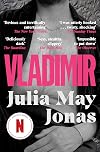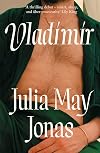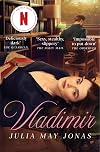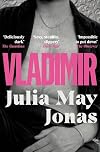
Vladimir
by Julia May Jonas
On This Page
Description
"When I was a child, I loved old men, and I could tell that they also loved me." And so we meet our deliciously incisive narrator: a popular English professor whose husband, a charismatic husband at the same small liberal arts college is under investigation for his inappropriate relationships with his former students. The couple have long had a mutual understanding when it comes to their extra-marital pursuits, but with these new allegations, life has become far less comfortable for them show more both. And when our narrator becomes increasingly infatuated with Vladimir, a celebrated, married young novelist who's just arrived on campus, their tinder box world comes dangerously close to exploding. With her bold, edgy, and uncommonly assured literary debut, Julia May Jonas takes us into charged territory, where the strictures of morality (so sensible, so sober!) bump up against the impulses of the human heart (so mercurial, so vain!) Propulsive, darkly funny, and surreptitiously moving, Vladimir maps the personal and political minefield of our current moment, exposing the messy contradictions of power and desire. show lessTags
Recommendations







Member Reviews
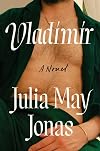
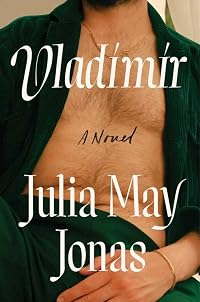
Provincial as it may be, I can't look at a the sexually charged cover of a novel called Vladimir without thinking of Nabokov, and the book's opening passages on the attraction between young women and older men do little to correct the association. Like several of the other Vladimir's best works, Julia May Jonas' novel unfolds in the leafy cloisters of a nameless liberal arts college, this one in upstate New York. The female narrator's tranquil academic middle age has been punctured by twin disruptions: the public revelation of her husband's numerous affairs with students, and the arrival of a lauded younger author named Vladimir and his family. Moving seamlessly from the protagonist’s literary work to her fantasies to her reflections show more on changing campus politics to her unsettled family life Jonas explores the effect of a lifetime of insecurities, fears, and regrets on a woman whose world is becoming unmoored and unrecognizable. Small events and defeats slowly build to a crescendo when she decides to take matters into her own hands in dramatic fashion as it all falls apart.
The writing is measured yet passionate, the voice believably intelligent and literary without feeling edited. I found myself transported by the occasional passages describing natural beauty, which never felt purple, and charmed by asides about the proper ratio for a martini or the importance of including olives in pasta sauce. As a novel squarely concerned with the female experience and perspective, inner monologues were fascinating (and frankly disturbing) and I discovered I had much more patience than expected for political topics which only occasionally strayed from a delicate balancing act between platitude and Twitter thread. Though they sometimes stuck out from the flow of the story, they were mostly well-stitched and consistently interesting. I was a bit less sold on the novel’s ending, but it was bold and unexpected, and I have no idea how else the story’s threads could tie together more satisfactorily. Perhaps it’s an admission of my own ignorance of the genre, but the parallel I saw most directly was to Rachel Cusk’s novel Second Place, another story of a middle-aged woman in a complicated relationship with her daughter, her husband, and a brilliant artist. I enjoyed Vladimir quite a bit more, especially the perception and agency of the Jonas’ narrator. In both books, the protagonist is buffeted by forces and personalities beyond their control, but Vladimir’s is well aware of her own predicament and foibles and makes no decisions or mistakes which feel beyond the pale of the character’s behavior. I look forward to more novels from Julia May Jonas, and I’m excited to seek out her other work. show less
The writing is measured yet passionate, the voice believably intelligent and literary without feeling edited. I found myself transported by the occasional passages describing natural beauty, which never felt purple, and charmed by asides about the proper ratio for a martini or the importance of including olives in pasta sauce. As a novel squarely concerned with the female experience and perspective, inner monologues were fascinating (and frankly disturbing) and I discovered I had much more patience than expected for political topics which only occasionally strayed from a delicate balancing act between platitude and Twitter thread. Though they sometimes stuck out from the flow of the story, they were mostly well-stitched and consistently interesting. I was a bit less sold on the novel’s ending, but it was bold and unexpected, and I have no idea how else the story’s threads could tie together more satisfactorily. Perhaps it’s an admission of my own ignorance of the genre, but the parallel I saw most directly was to Rachel Cusk’s novel Second Place, another story of a middle-aged woman in a complicated relationship with her daughter, her husband, and a brilliant artist. I enjoyed Vladimir quite a bit more, especially the perception and agency of the Jonas’ narrator. In both books, the protagonist is buffeted by forces and personalities beyond their control, but Vladimir’s is well aware of her own predicament and foibles and makes no decisions or mistakes which feel beyond the pale of the character’s behavior. I look forward to more novels from Julia May Jonas, and I’m excited to seek out her other work. show less
The beginning of this contemporary novel nearly lost me; I thought I was reading some variation of Fifty Shades of Awful, and I nearly set the book aside. But I did not, and I am glad. While the novel did center around sexual desire, it was far more about appetites of many varieties that are expected in a man -- sexual, professional recognition, food, drink -- and how they appear villainous when they are assigned to a female character. This villain, though -- the unnamed 50-something English professor at a small upstate New York liberal arts college who narrates the story -- turns out to be not so much of a villain at all, but an insecure woman concerned with her aging body. To me, it seemed a bit of twist on Nabokov's Lolita, including show more the name of the object of the narrator's desire, Vladimir Vladinsky, the hot, younger new English professor in the department currently chaired by the narrator's husband, who is about to be me-tooed out of his job. show less
A bewildering beginning - who, really, is the protagonist; does she know what her husband is doing; does she care? The relationship of two late-middle-aged professors at a small college is revealed bit by bit. Initially, the protagonist appears logical and clear-eyed - a strong woman who knows who she is, what she wants, what she is willing to accept & how she acts in reaction to society's mores. Now & then is a glimmer of some imperfection in her portrayal. The husband's actions are routinely recognized as aberrant; no uncertainty there. And then, an opportunity materializes for the protagonist to reconsider how she has thought of herself as old (she's not; she's 59), as cynical & no longer able to have ecstatic feelings, and as show more someone who seemingly can willfully step out of the mode of believing herself to be fixed & no longer changeable.
Throughout the book I felt increasing fears for her, so strongly that I felt fearful myself. The book is very well-done - excellent writing, intricate plot & unusual but believable characters. show less
Throughout the book I felt increasing fears for her, so strongly that I felt fearful myself. The book is very well-done - excellent writing, intricate plot & unusual but believable characters. show less
The unnamed 58-year-old narrator and her husband John have been teaching in the English department of a small college for years. From the start, they have found a relaxed way in their relationship, not asking too many questions, but being good partners and caring for their daughter. Now, however, a group of former students accuses John of having abused his power to lure them into affairs. At the same time, a new couple shows up at the college, Vladimir and his wife, both charismatic writers who both fascinate equally. The narrator immediately falls for Vladimir, even more after having read his novel, a feeling she hasn’t known for years and all this in the most complicated situation of her marriage.
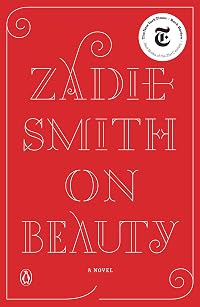
Admittedly, I was first drawn to the show more book because of the cover that was used for another novel I read last year and liked a lot. It would have been a pity to overlook Julia May Jonas’ debut “Vladimir” which brilliantly captures the emotional rollercoaster of a woman who – despite her professional success and being highly esteemed – finds herself in exceptional circumstances and has to reassess her life.
Jonas’ novel really captures the zeitgeist of campus life and the big questions of where men and women actually stand – professionally as well as in their relationship. Even though the narrator has an equal job to her husband, she, after decades of teaching, is still only considered “his wife” and not an independent academic. That she, too, is highly affected in her profession by the allegations against her husband is simply a shame, but I fear that this is just how it would be in real life.
They had an agreement on how their relationship should look like, but now, she has to ask herself is this wasn’t one-sided. She actually had taken the classic role of wife and mother, caring much more for their daughter while he was pursuing his affairs. They had an intellectual bond which was stronger than the bodily but this raises questions in her now. Especially when she becomes aware of what creative potential her longing for Vladimir trigger in her.
A novel which provides a lot of food for thought, especially in the middle section when the narrator is confronted with professional consequences due to her husband’s misbehaviour. The author excellently captures the narrator’s oscillating thoughts and emotions making the novel a great read I’d strongly recommend. show less
Admittedly, I was first drawn to the show more book because of the cover that was used for another novel I read last year and liked a lot. It would have been a pity to overlook Julia May Jonas’ debut “Vladimir” which brilliantly captures the emotional rollercoaster of a woman who – despite her professional success and being highly esteemed – finds herself in exceptional circumstances and has to reassess her life.
Jonas’ novel really captures the zeitgeist of campus life and the big questions of where men and women actually stand – professionally as well as in their relationship. Even though the narrator has an equal job to her husband, she, after decades of teaching, is still only considered “his wife” and not an independent academic. That she, too, is highly affected in her profession by the allegations against her husband is simply a shame, but I fear that this is just how it would be in real life.
They had an agreement on how their relationship should look like, but now, she has to ask herself is this wasn’t one-sided. She actually had taken the classic role of wife and mother, caring much more for their daughter while he was pursuing his affairs. They had an intellectual bond which was stronger than the bodily but this raises questions in her now. Especially when she becomes aware of what creative potential her longing for Vladimir trigger in her.
A novel which provides a lot of food for thought, especially in the middle section when the narrator is confronted with professional consequences due to her husband’s misbehaviour. The author excellently captures the narrator’s oscillating thoughts and emotions making the novel a great read I’d strongly recommend. show less
A middle-aged English professor's life is upended when her husband, chair of the department, is caught up in a #MeToo scandal. While his behavior wasn't illegal, it was opportunistic and predatory and as he waits for a hearing to find out his future, his wife, who had previously been seen as a popular and as a feminist role model, is being regarded as complicit, especially as she has not spoken out against him. And her husband is feeling hostile and hard done by, leaving her lonely and unmoored. Which is when Vladimir enters the picture, new assistant professor and author of a well-regarded novel. Friendly and eager to please, he is exactly the right man to develop a crush on, an easy distraction from unpleasant reality.
For the first show more two-thirds of this novel, I was sure that the author was engaging in a clever bit of bait and switch. It's a thoughtful and very well-written look at academia, at aging, at a woman having to reassess her ideas about herself, and at a marriage that was not designed to withstand pressure. I enjoyed this part of the book immensely, and was laughing to myself about how an essentially quiet book about a middle-aged woman was marketed with that cover and a misleading title when the novel exploded into an entirely different kind of thing and became anything but quiet and thoughtful. It was definitely a book that surprised me. show less
For the first show more two-thirds of this novel, I was sure that the author was engaging in a clever bit of bait and switch. It's a thoughtful and very well-written look at academia, at aging, at a woman having to reassess her ideas about herself, and at a marriage that was not designed to withstand pressure. I enjoyed this part of the book immensely, and was laughing to myself about how an essentially quiet book about a middle-aged woman was marketed with that cover and a misleading title when the novel exploded into an entirely different kind of thing and became anything but quiet and thoughtful. It was definitely a book that surprised me. show less
The story has been told a thousand times, but Jonas shares new perspectives on accusations of sexual harassment. Nothing is black and white in this novel, and the reader is constantly challenged to rethink assumptions. The protagonist is richly drawn, sarcastic, vulnerable, confident, lost. An impressive piece.
I was very much sucked into the first half of this novel about an older writer/academic who develops a crush on a good-looking younger writer/associate professor at the same time her own carefully ordered life and marriage is imploding. I didn't particularly care for the unnamed main character (or her husband or her love interest), but I empathized with her. The book kind of lost me at its climatic turn (no spoilers), and I wasn't sure what it became after that. The ending felt a bit too neat, wrapping everything up and putting a bow on it. The writing was quite good, though, very absorbing, especially since most of it was internal reflection rather than action, and from the point of view of an older woman, which we readers don't show more usually get. show less
Members
- Recently Added By
Lists

Books Set in New York State
65 works; 11 members

Dark Academia Novels
59 works; 11 members

Books Read in 2023
5,638 works; 147 members

Writers as Characters in Fiction
120 works; 19 members

Anticipated 2022 & Early 2023 Releases
209 works; 4 members

Books Read in 2022
5,226 works; 115 members

Fiction Published in 2022
21 works; 1 member

Reading Group 2023
5 works; 1 member
Author Information
1 Work 772 Members
Awards and Honors
Distinctions
The Guardian Book of the Day (2022-05-23)
Notable Lists
Common Knowledge
- Canonical title
- Vladimir
- Original publication date
- 2022-02-01
- People/Characters
- Sidney; John; Vladimir Vladinski; Cynthia
- Epigraph
- I ask this one thing:
Let me go mad in my own way.
-SOPHOCLES, ELEKTRA - Dedication
- For Adam
- First words
- When I was a child, I loved old men, and I could tell that they also loved me.
- Last words
- (Click to show. Warning: May contain spoilers.)Oh, shame.
- Blurbers
- Shriver, Lionel; Semple, Maria; King, Lily
Classifications
Statistics
- Members
- 772
- Popularity
- 36,285
- Reviews
- 40
- Rating
- (3.57)
- Languages
- 6 — Danish, Dutch, English, German, Portuguese, Turkish
- Media
- Paper, Audiobook, Ebook
- ISBNs
- 20
- ASINs
- 5