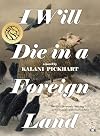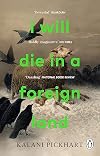
I Will Die in a Foreign Land
by Kalani Pickhart
On This Page
Description
In 1913, a Russian ballet incited a riot in Paris at the new Théâtre de Champs-Elysées. A century later, in November 2013, thousands of Ukrainian citizens gathered at Independence Square in Kyiv to protest then-President Yanukovych's failure to sign a referendum with the European Union, opting instead to forge a closer alliance with President Vladimir Putin and Russia. The peaceful protests turned violent when military police shot live ammunition into the crowd, killing over a hundred show more civilians.I Will Die in a Foreign Land follows four individuals over the course of a volatile Ukrainian winter, as their lives are forever changed by the Euromaidan protests. Katya is an Ukrainian-American doctor stationed at a makeshift medical clinic in St. Michael's Monastery; Misha is an engineer originally from Pripyat, who has lived in Kyiv since his wife's death; Slava is a fiery young activist whose past hardships steel her determination in the face of persecution; and Aleksandr Ivanovich, a former KGB agent, who climbs atop a burned-out police bus at Independence Square and plays the piano.While unfolding an especially moving story of quiet beauty and love in a time of terror, I Will Die in a Foreign Land is an ambitious, intimate, and haunting portrait of human perseverance and empathy. show lessTags
Recommendations








































Member Reviews
At its core, this is a portrait of “the” Ukraine. Many Europeans and Americans add the article, as if Ukraine were not a real country, but just a “borderland” between legitimate countries with dubious claims to its land and resources. If not for its four main characters, this novel would read like a documentary about a troubled region. Because of its strategic location, Ukraine is a perennial political pawn with a tumultuous history. The stories Pickhart tells, however, add personal elements to this history emphasizing Ukraine as a real homeland for many people. To them their independence and culture are worth defending, even as Russia today is treatening yet another offensive against them.
With her characters, Pickhart evokes show more key elements in the Ukrainian personality. These are determined, empathic and honest people with a history and cultural heritage worth remembering. Americans saw these traits on clear display with the moving Congressional testimony of Lt Col Alexander Vindman regarding the infamous Trump phone call to the Ukrainian president demanding a bogus investigation into his political opponent.
The novel is set in Kyiv during the 2013-14 uprising following President Yanukovych’s decision not to join the EU, instead opting for closer ties to Putin’s Russia. He elected to quell the riots with police, resulting in the deaths of more than 100 protesters. Four memorable characters protesting in the Euromaidan come together at a makeshift hospital set up in St. Michael’s Monastery adjacent to Independence Square. Two women, Katya and Slava, are struggling to overcome recent traumas, while two men, Alexander and Misha, are working through old issues. Katya is a Ukrainian-American doctor fleeing a troubled marriage and memories of her young son’s death. As a child, Slava was sold to sex traffickers by her mother and is now a social radical committed to the independence movement. She is struggling with the recent disappearance of her doomed female journalist partner. Alexander, who was severely wounded while playing piano in the Maidan, is haunted by guilt from his past as a Russian KGB agent during the Czechoslovakian revolution. Pickhart tells his story though a series of cassette tapes addressed to his missing daughter and discovered in his belongings. Misha is an engineer whose background includes Chernobyl. His beloved wife has died from radiation sickness and his mother is one of the babushkas, women who elect to return to their homes in the exclusion zone despite warnings about its danger.
Pickhart’s aim seems to be to give this dark novel a picaresque feel without losing site of her central aim of telling the story of Ukraine using relevant personal stories. This is challenging because each story is complex and connecting them, especially their outcomes, risks seeming contrived. Moreover, the novel’s structure is equally complex because Pickhart parses the stories non-chronologically in bits and pieces using multiple points of view. Including news clippings and a complete list of those who died when a commercial airliner was shot down by a Russian missile seems gratuitous. Likewise, the recurring chorus of traditional Ukrainian storytellers known as Kobzari seems to add unnecessary confusion to what is already quite a complex narrative. Despite these shortcomings, this is an engaging novel with much to say about Ukraine. show less
With her characters, Pickhart evokes show more key elements in the Ukrainian personality. These are determined, empathic and honest people with a history and cultural heritage worth remembering. Americans saw these traits on clear display with the moving Congressional testimony of Lt Col Alexander Vindman regarding the infamous Trump phone call to the Ukrainian president demanding a bogus investigation into his political opponent.
The novel is set in Kyiv during the 2013-14 uprising following President Yanukovych’s decision not to join the EU, instead opting for closer ties to Putin’s Russia. He elected to quell the riots with police, resulting in the deaths of more than 100 protesters. Four memorable characters protesting in the Euromaidan come together at a makeshift hospital set up in St. Michael’s Monastery adjacent to Independence Square. Two women, Katya and Slava, are struggling to overcome recent traumas, while two men, Alexander and Misha, are working through old issues. Katya is a Ukrainian-American doctor fleeing a troubled marriage and memories of her young son’s death. As a child, Slava was sold to sex traffickers by her mother and is now a social radical committed to the independence movement. She is struggling with the recent disappearance of her doomed female journalist partner. Alexander, who was severely wounded while playing piano in the Maidan, is haunted by guilt from his past as a Russian KGB agent during the Czechoslovakian revolution. Pickhart tells his story though a series of cassette tapes addressed to his missing daughter and discovered in his belongings. Misha is an engineer whose background includes Chernobyl. His beloved wife has died from radiation sickness and his mother is one of the babushkas, women who elect to return to their homes in the exclusion zone despite warnings about its danger.
Pickhart’s aim seems to be to give this dark novel a picaresque feel without losing site of her central aim of telling the story of Ukraine using relevant personal stories. This is challenging because each story is complex and connecting them, especially their outcomes, risks seeming contrived. Moreover, the novel’s structure is equally complex because Pickhart parses the stories non-chronologically in bits and pieces using multiple points of view. Including news clippings and a complete list of those who died when a commercial airliner was shot down by a Russian missile seems gratuitous. Likewise, the recurring chorus of traditional Ukrainian storytellers known as Kobzari seems to add unnecessary confusion to what is already quite a complex narrative. Despite these shortcomings, this is an engaging novel with much to say about Ukraine. show less
This is an engaging and involving book, set in Ukraine during the 2013-2014 period following protests at Euromaidan, Kyiv after the then President refused to sign an association agreement with the European Union. It presents as something of a scrapbook. The author follows four lives - that of Katya, an American doctor of Ukrainian heritage; Aleksandr, a musician haunted by his KGB past; Misha, whose wife dies of radiation poisoning after Chernobyl; and tough Slava, whose mother sold her into sex-slavery. As the layers of their lives unfold, we realise how connected they are in this time of brutality. Actual newspaper accounts, Ukrainian folksongs are dropped into the non-linear narrative, from which Ukraine and its troubled history show more emerges as the main protagonist. Pickhart has taken an immense subject. She's humanised it, emphasised its tragedy in a sweeping story which will remain with me as the war in Ukraine continues to dominate our headlines. show less
What to say about this unique historical fiction of Ukraine in the 2013-14 timeframe? It was certainly written by a creative passionate lover of the Ukrainian people. I think it must resonate greatly with Ukrainian people who know and love their country. For me, who has only basic knowledge of Ukraine and it's history, it was not an easy book to read. It seemed disjointed and took much perseverance to finish. The characters were interesting, but it took me over half the book before I related to them as it skips around so much that I would loose track of people and have to try to remember who they were and what the relationships were. This period seems like a microcosm of what began in February 2022. Should Putin have read this book show more maybe he would have understood that these people are passionate and willing to die for their country and will not be conquered easily if at all. With any luck this ignorance and his egotism, nepotism, and tyranny will destroy him and those who follow him without thinking or reasoning before he obliterates as much of Ukraine as possible. This book certainly contributes to the world's resolve to resist and defend Ukraine's sovereignty by helping us understand the people. show less
"Kalani Pickhart's timely debut novel, I Will Die In a Foreign Land, is about the 2014 Ukrainian revolution which provided a pretense for Russia to annex Crimea. The story follows the experiences of several characters whose lives intersect as the country's political situation deteriorates. There's a Ukrainian-American doctor, an old KGB spy, a former mine worker, and others, and these episodes are interspersed with folk songs, news reports and historical notes. The effect—kaleidoscopic but never confusing—provides an intimate sense of a country convulsing, mourning, and somehow surviving."
Pickhart brings home the struggle and devastation of the Ukrainian people over decades, focusing on the Euromaidan protests that mobilized thousands to fight against war and oppression. It was a bit difficult to follow at times, trying to keep names and times straight, but I understood enough to have my heart break for the people of Ukraine.
Katya - born in the Ukraine but raised in U.S. goes to Ukraine to help victims of the demonstrations and to avoid her no longer loved husband after the death of their son; Misha, an engineer in the mines who has lived in Kyiv since his wife Vera died of cancer from radioactivity; Slava, young activist, lesbian and lover of journalist Dascha; Alexander Ivanovich, former KGB, who joins the protests where he plays the piano. Their lies and lives intersect.
Timely given the current situation in Ukraine, which the author makes clear isn’t a new war.
Members
- Recently Added By
Lists

A Ukraine Reading List
121 works; 90 members
Author Information
2 Works 164 Members
Awards and Honors
Awards
Distinctions
Common Knowledge
- Important places
- Kyiv, Ukraine; Odesa, Ukraine; Pripyat, Ukraine; Prague, Czech Republic
- Important events
- Euromaidan demonstrations
- Epigraph
- I know that far away
By strangers in a foreign land
I will be laid away;
This little pinch of native oil
Will on my grave be placed -
- Taras Shevhenko
You have navigated with raging soul
Fra from the paternal home,
Passing beyond the sea's double rocks.
And now you inhabit a foreign land.
- Medea - Dedication
- For Bethany
- First words
- Where does it begin? Ah, ah. Depends on who you ask.
- Last words
- (Click to show. Warning: May contain spoilers.)Light, like foam.
Classifications
Statistics
- Members
- 162
- Popularity
- 199,988
- Reviews
- 8
- Rating
- (3.98)
- Languages
- English
- Media
- Paper, Audiobook, Ebook
- ISBNs
- 10
- ASINs
- 2