On This Page
Description
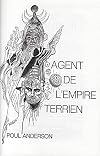
Now that Dominic Flandry is of an age more suited to deciding the fate of empires from behind the throne, others must take up the challenge of courting danger on strange planets filled with still stranger creatures. So begins the career of Diana and her faithful Tigery companion.Tags
Recommendations
















Member Reviews
A fairly short novel about tigeries, God, winsome waifs, crocodile/centaurs, xenophobic lizardmen and interstellar intrigues. Targovi, a tigery intelligence officer, has a bad feeling about Olaf Magnusson - a war hero turned barbarian at the gate of the Terran empire. With his young, beautiful female companion and her religious researcher Wodenite friend, they go in search of evidence that could change the course of human history.
This story is readable, but it is not really Flandry in the sense of having Dominic Flandry as the hero. Flandry appears in a few scenes, is captured by the villain and sits out the rest of the book until he is rescued at the end ad promises rewards to the real heroes. The focus of the book is Flandry's daughter Diana, daughter of Flandry and a now-dead Amerind named Maria Crowfeather. Since her mother's death, Diana has grown up largely on her own on the world Imhotep, where the Tigeries and Seafolk of Starkad were resettled after Dominic discovered the approaching destruction of their world (in Ensign Flandry). Diana is clearly intended as a female equivalent of Kipling's Kim, very streetwise. She takes up with Azor, a dragonlike show more Wodenite (a race which appeared in the earlier Polesotechnic League period) , a priest seeing evidence of ancient beings who may once have dominated the galaxy (and, he believes, have known more of Jesus (or strictly the Logos) as a universal savior). They travel with a Tigery, Targovi, son of Dragoika who was Flandry's ally in Ensign (Targovis himself is a low-level Impeial Intelligence agent, though outwardly a tramp spacemerchant). Just as their adventure begins, there is a sharp turn in the plot -- the charismatic Imperial Navy hero Admiral Sir Olaf Magnuson revolts against the cruel emperor Gerhart (a sort of Domitian to Emperor Hans, the Vespasian-like ruler Dominic had helped install) . The revolt leaves the three travelers stranded on Daedalus, a planet where one large island has been settled by the Zacharies, a family of genetically designed superior humans. One of the Zacharies, Kukulkan, sets himself agreeably to trying to seduce Diana (a virgin but not naive). In another sharp plot twist (Spoiler warning), Targovi finds that the Zacharies and Olaf are in a plot with the Merseians. He manages to break into their (improbably) lightly guarded base, kill the one(!) guard on their master computer, download the complete files of the computer (despite having no password and only minimal knowledge of the Merseian language) and escape with the files, and the guard's head, to join Diana and Azor; the three manage to capture the (again, improbably lightly guarded) Merseian spaceship, escape back to Imhotep and reveal Olaf's treachery, which his own forces, with minor exceptions, believe, and promptly kill him. Meanwhile Dominic had suspected Olaf's treachery, but had been arrested without a fight during a parley with Olaf himself, so as noted he effectively sits out the story. The carefully inbred Zachary colony is split up, so presumably its people will no longer cherish their dreams of ruling the inferior humans as Merseian viceroys. show less
If you are a serious fan of the Flandry series, then read this book. Otherwise, don't bother.
Dominic Flandry has only a minor part in this story, most of the focus being on his daughter, but in fact, not much really happens in this book.
Dominic Flandry has only a minor part in this story, most of the focus being on his daughter, but in fact, not much really happens in this book.
Ratings
Members
- Recently Added By
Author Information

693+ Works 53,538 Members
Poul Anderson, November 25, 1926 - July 31, 2001 Poul Anderson was born on November 25, 1926 in Bristol, Pennsylvania to parents Anton and Astrid. After his father's death, Poul's mother took them first to Denmark and then to Maryland and Minnesota. He earned his degree in Physics from the University of Minnesota, but chose instead to write show more stories for science fiction magazines, such as "Astounding." Anderson is considered a "hard science fiction" writer, meaning that his books have a basis in scientific fact. To attain this high level of scientific realism, Anderson spent many hours researching his topics with scientists and professors. He liked to write about individual liberty and free will, which was a well known theme in many of his books. He also liked to incorporate his love of Norse mythology into his stories, sometimes causing his modern day characters to find themselves in fantastical worlds, such as in "Three Hearts and Three Lions," published in 1961. Anderson has written over a hundred books, his last novel, "Genesis" won the John W. Campbell Award, one of the three major science fiction awards. He is a former president of the Science Fiction and Fantasy Writers of America and won three Nebula awards and nine Hugo Awards. In 1997, Anderson was named a Grandmaster by the Science Fiction and Fantasy Writers of America and was also inducted into the Science Fiction Fantasy Hall of Fame. Poul Anderson died on July 31, 2001 at the age of 74. (Bowker Author Biography) show less
Some Editions
Series


Work Relationships
Is contained in
Common Knowledge
- Original publication date
- 1985
- Dedication
- To James P. Baen
Classifications
Statistics
- Members
- 366
- Popularity
- 86,087
- Reviews
- 3
- Rating
- (3.13)
- Languages
- English, German, Italian
- Media
- Paper, Ebook
- ISBNs
- 4
- ASINs
- 4