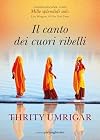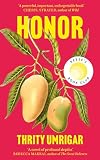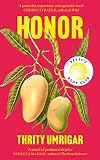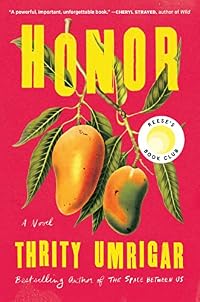
Honor
by Thrity Umrigar
On This Page
Description
THE JANUARY 2022 REESE'S BOOK CLUB PICK“In the way A Thousand Splendid Suns told of Afghanistan’s women, Thrity Umrigar tells a story of India with the intimacy of one who knows the many facets of a land both modern and ancient, awash in contradictions.” —Lisa Wingate, #1 New York Times bestselling author of Before We Were Yours
In this riveting and immersive novel, bestselling author Thrity Umrigar tells the story of two couples and the sometimes dangerous and heartbreaking show more challenges of love across a cultural divide.
Indian American journalist Smita has returned to India to cover a story, but reluctantly: long ago she and her family left the country with no intention of ever coming back. As she follows the case of Meena—a Hindu woman attacked by members of her own village and her own family for marrying a Muslim man—Smita comes face to face with a society where tradition carries more weight than one’s own heart, and a story that threatens to unearth the painful secrets of Smita’s own past. While Meena’s fate hangs in the balance, Smita tries in every way she can to right the scales. She also finds herself increasingly drawn to Mohan, an Indian man she meets while on assignment. But the dual love stories of Honor are as different as the cultures of Meena and Smita themselves: Smita realizes she has the freedom to enter into a casual affair, knowing she can decide later how much it means to her.
In this tender and evocative novel about love, hope, familial devotion, betrayal, and sacrifice, Thrity Umrigar shows us two courageous women trying to navigate how to be true to their homelands and themselves at the same time.
. show less
Tags
Recommendations



































Member Reviews
Indian-American journalist Smita Agarwal cuts a rare vacation short when her white journalist friend Shannon calls her to Mumbai - a city Smita swore she'd never return to again. Smita thinks Shannon needs her to help recuperate in the hospital, but Shannon actually wants Smita to go to a small village and cover the story she'd been working on: the story of Meena, a Hindu woman who married a Muslim man. Meena's two older brothers set her husband on fire and killed him, and nearly killed her as well. Anjali, a lawyer, took Meena's case against her brothers pro bono, and the verdict is coming down any day now. Smita travels with Shannon's friend Mohan, an Indian man, to Meena's village, despite the painful memories the journey revives for show more her.
Quotes
"Being uncomfortable is good, beta. It's in discomfort that growth happens." (Papa, 41)
Nobody was the villain in his or her own life story. (51)
"You don't love something because you're blind to its faults, right? You love it despite its flaws." (Mohan, 61)
Because traditions are like eggs - once you break one, it is impossible to put it back inside its shell. (Meena, 117)
"These men will never give up until they destroy us. Their traditions mean more to them than their humanity." (Radha to Meena, 129)
As children, we were taught to be afraid of tigers and lions. Nobody taught us what I know today - the most dangerous animal in this world is a man with wounded pride. (Meena, 131)
But in that one minute, my whole life changed. His words cut open a belief I had held my whole life, but when I looked inside, there was nothing there. (Meena, 164)
Because a woman can live in one of two houses - fear or love. It is impossible to live in both at the same time. (Meena, 189)
"What cannot be cured must be endured." (Papa, 204)
"All the important things in life are supposed to scare you." (Mohan, 289) show less
Quotes
"Being uncomfortable is good, beta. It's in discomfort that growth happens." (Papa, 41)
Nobody was the villain in his or her own life story. (51)
"You don't love something because you're blind to its faults, right? You love it despite its flaws." (Mohan, 61)
Because traditions are like eggs - once you break one, it is impossible to put it back inside its shell. (Meena, 117)
"These men will never give up until they destroy us. Their traditions mean more to them than their humanity." (Radha to Meena, 129)
As children, we were taught to be afraid of tigers and lions. Nobody taught us what I know today - the most dangerous animal in this world is a man with wounded pride. (Meena, 131)
But in that one minute, my whole life changed. His words cut open a belief I had held my whole life, but when I looked inside, there was nothing there. (Meena, 164)
Because a woman can live in one of two houses - fear or love. It is impossible to live in both at the same time. (Meena, 189)
"What cannot be cured must be endured." (Papa, 204)
"All the important things in life are supposed to scare you." (Mohan, 289) show less
TW/CW: Murder, torture, misogyny, sex, racism
RATING: 4/5
REVIEW: Honor is the story of Smita, an Indian-American journalist who has come to India to report on the court case of a young Hindu woman whose marriage to a Muslim man led to his death and her disfigurement.
This is a truly heartbreaking story. The writing is beautiful, and I found myself flipping through the pages quickly, wanting desperately to find out what happens next. I really liked the way the author made sure that the reader knew that things like this didn’t happen just in India – for instance, how she connected what happened to Meena to the murder of black people in America. Because this story is unfortunately not one that is tied to one nation only but which is a show more black spot on the entire human race.
This is an emotional book, but it is also a beautiful one. I didn’t want to put it down and while parts of it broke my heart, it also was very hopeful. I highly recommend this book! show less
RATING: 4/5
REVIEW: Honor is the story of Smita, an Indian-American journalist who has come to India to report on the court case of a young Hindu woman whose marriage to a Muslim man led to his death and her disfigurement.
This is a truly heartbreaking story. The writing is beautiful, and I found myself flipping through the pages quickly, wanting desperately to find out what happens next. I really liked the way the author made sure that the reader knew that things like this didn’t happen just in India – for instance, how she connected what happened to Meena to the murder of black people in America. Because this story is unfortunately not one that is tied to one nation only but which is a show more black spot on the entire human race.
This is an emotional book, but it is also a beautiful one. I didn’t want to put it down and while parts of it broke my heart, it also was very hopeful. I highly recommend this book! show less
My thanks to Edelweiss and the publisher for my e-ARC.
Smita, a foreign correspondent, is back in Mumbai, her homeland. She didn't plan it. In fact, she avoided India. Due to an incident, a devastating betrayal, she, along with her parents and older brother, Rohit, had been exiled when she was fourteen. America was their new home. They were determined to forget their old life and forge ahead.
But, plans go awry. Shannon, her good friend, desperately needed her help. And, since Smita happened to be so close -- vacationing in the Maldives...
Shannon had been in the midst of writing a series of articles which, due to a bad fall, she will be unable to finish. That's where Smita comes in. She is needed to cover the upcoming verdict. The show more articles are about an honor killing. Meena, a Hindu woman is taking her two brothers to court for setting her on fire and killing her Muslim husband. Vithalgaon, the village where she and her family was from, was stuck in a time warp. Ruled with an iron fist by a megalomaniac, Rupal Bhosle.
Smita, is, understandably, reluctant and resentful. She was led to believe that Shannon needed help recuperating from the complicated operation on her broken hip. That would be easy compared to travelling to Birwad, an archaic, conservative, orthodox all-Muslim village to speak to a pariah, a woman socially ostracized not only by those of her own religion, but also by those of her progressive late husband's.
In spite of her earlier apprehensions, Smita feels gratified that she met Meena. At the same time, she feels embarrassed and ashamed. Her exile experience, although difficult, was NOTHING like Meena's. She and her family could escape. After this assignment, she can leave. Meena doesn't have that luxury. Meena doesn't have ANY luxury. Yet, she feels thankful for small pleasures. Smita's concerns and first-world problems now seem frivolous relative to the trauma Meena is facing. But, still, unlike Shannon, she feels an emotional and cultural connection. She is confident that her write-ups will be affecting and poignant human-interest pieces.
The story is divided into "Books," each focusing on a primary character. Each book is further divided into short chapters which made it easy to read. I enjoyed the descriptive language, fleshed out characters, and lively dialogue. I was transported. Although I could relate to what Smita experienced, I could not relate to her. I did not like her...at first. She came off as snappish, snarky, and snobbish...at first. But, her past made her what she was. And Meena made her into what she became.
Like Smita, I was born in India and emigrated to America at a very young age. Unlike Smita, my family and I were not compelled to leave. Also, unlike Smita, I did not make a concerted effort to avoid my homeland. Granted, India has many traditions, social norms, and attitudes which I categorically disagree with.
I LOVED this book! It was an emotional read. Hardly surprising because it depicts a tough subject. Still, it's a story that needs to be told. Honor killings have become a prevalent global issue. The end, although bittersweet, was satisfying in its realism. show less
Smita, a foreign correspondent, is back in Mumbai, her homeland. She didn't plan it. In fact, she avoided India. Due to an incident, a devastating betrayal, she, along with her parents and older brother, Rohit, had been exiled when she was fourteen. America was their new home. They were determined to forget their old life and forge ahead.
But, plans go awry. Shannon, her good friend, desperately needed her help. And, since Smita happened to be so close -- vacationing in the Maldives...
Shannon had been in the midst of writing a series of articles which, due to a bad fall, she will be unable to finish. That's where Smita comes in. She is needed to cover the upcoming verdict. The show more articles are about an honor killing. Meena, a Hindu woman is taking her two brothers to court for setting her on fire and killing her Muslim husband. Vithalgaon, the village where she and her family was from, was stuck in a time warp. Ruled with an iron fist by a megalomaniac, Rupal Bhosle.
Smita, is, understandably, reluctant and resentful. She was led to believe that Shannon needed help recuperating from the complicated operation on her broken hip. That would be easy compared to travelling to Birwad, an archaic, conservative, orthodox all-Muslim village to speak to a pariah, a woman socially ostracized not only by those of her own religion, but also by those of her progressive late husband's.
In spite of her earlier apprehensions, Smita feels gratified that she met Meena. At the same time, she feels embarrassed and ashamed. Her exile experience, although difficult, was NOTHING like Meena's. She and her family could escape. After this assignment, she can leave. Meena doesn't have that luxury. Meena doesn't have ANY luxury. Yet, she feels thankful for small pleasures. Smita's concerns and first-world problems now seem frivolous relative to the trauma Meena is facing. But, still, unlike Shannon, she feels an emotional and cultural connection. She is confident that her write-ups will be affecting and poignant human-interest pieces.
The story is divided into "Books," each focusing on a primary character. Each book is further divided into short chapters which made it easy to read. I enjoyed the descriptive language, fleshed out characters, and lively dialogue. I was transported. Although I could relate to what Smita experienced, I could not relate to her. I did not like her...at first. She came off as snappish, snarky, and snobbish...at first. But, her past made her what she was. And Meena made her into what she became.
Like Smita, I was born in India and emigrated to America at a very young age. Unlike Smita, my family and I were not compelled to leave. Also, unlike Smita, I did not make a concerted effort to avoid my homeland. Granted, India has many traditions, social norms, and attitudes which I categorically disagree with.
I LOVED this book! It was an emotional read. Hardly surprising because it depicts a tough subject. Still, it's a story that needs to be told. Honor killings have become a prevalent global issue. The end, although bittersweet, was satisfying in its realism. show less
Largely deserving all its accolades, Honor is a deeply moving work. Umrigar, a journalist and novelist, is clearly invested in exposing violence in India, much of it aimed at women, committed in the name of religion and tradition. Some aspects feel personal, as confirmed by an essay on her website. Despite this, I couldn’t give the book four stars, and here’s why:
The story begins with Shannon, a white American journalist recovering from a major surgery. Smita, a colleague and friend, cuts her vacation short to be by Shannon’s side. Indian-born Smita feels manipulated into finishing a story for Shannon, since she had vowed never to return to India. The relationships feel murky, especially with Nandini, who is Shannon’s show more translator, and Mohan, a male friend of some means. Ultimately, Shannon and Nandini feel unnecessary to the plot.
The second part shifts to Meena, a Hindu woman who in defiance of her community falls in love with and marries a Muslim man. The response from her family and village is horrific. As Smita takes over Shannon's story, she is tasked with interviewing Meena. Mohan, not a journalist, but simply a friend of Shannon’s, ends up as Smita’s translator and guide. Umrigar’s writing is at its best when telling Meena’s story—it’s poetic, poignant, and tender. However, Smita’s character, filled with dithering and logistical concerns, feels tedious, though when revealed her own backstory is revealed.
The third part intensifies, focusing on Meena’s harrowing ordeal, a section filled with distressing but crucial scenes. After a shocking climax to her story, Umrigar unfortunately, shifts to the romance between Smita and Mohan. I found this shift jarring. For me it took away Honor’s emotional gravity. The shift from Meena’s tragic narrative to a will-they-won’t-they romance undermined the emotional depth of Meena’s journey. Upon reading Umrigar’s essay, "Reclaiming Honor", I learned her intent was to contrast Meena’s choosing love regardless of the cost and Smita’s difficulty entertaining love even though doing so would be of no consequence to someone of her class/religion/status. All I can say is that the transition left me so frustrated I wanted to throw the book across the room.
In contrast, the book also features a deeper, more conflicted love story, i.e. the one between Smita and India. Her complex feelings for the country of her birth more befits the novel, and I appreciated the depiction of what had happened in Smita’s childhood to produce such complicated emotions in her.
So for me, ultimately this was a worthwhile read, and an important work, but I do give it less than a book of this caliber should merit. 3.75 stars show less
The story begins with Shannon, a white American journalist recovering from a major surgery. Smita, a colleague and friend, cuts her vacation short to be by Shannon’s side. Indian-born Smita feels manipulated into finishing a story for Shannon, since she had vowed never to return to India. The relationships feel murky, especially with Nandini, who is Shannon’s show more translator, and Mohan, a male friend of some means. Ultimately, Shannon and Nandini feel unnecessary to the plot.
The second part shifts to Meena, a Hindu woman who in defiance of her community falls in love with and marries a Muslim man. The response from her family and village is horrific. As Smita takes over Shannon's story, she is tasked with interviewing Meena. Mohan, not a journalist, but simply a friend of Shannon’s, ends up as Smita’s translator and guide. Umrigar’s writing is at its best when telling Meena’s story—it’s poetic, poignant, and tender. However, Smita’s character, filled with dithering and logistical concerns, feels tedious, though when revealed her own backstory is revealed.
The third part intensifies, focusing on Meena’s harrowing ordeal, a section filled with distressing but crucial scenes. After a shocking climax to her story, Umrigar unfortunately, shifts to the romance between Smita and Mohan. I found this shift jarring. For me it took away Honor’s emotional gravity. The shift from Meena’s tragic narrative to a will-they-won’t-they romance undermined the emotional depth of Meena’s journey. Upon reading Umrigar’s essay, "Reclaiming Honor", I learned her intent was to contrast Meena’s choosing love regardless of the cost and Smita’s difficulty entertaining love even though doing so would be of no consequence to someone of her class/religion/status. All I can say is that the transition left me so frustrated I wanted to throw the book across the room.
In contrast, the book also features a deeper, more conflicted love story, i.e. the one between Smita and India. Her complex feelings for the country of her birth more befits the novel, and I appreciated the depiction of what had happened in Smita’s childhood to produce such complicated emotions in her.
So for me, ultimately this was a worthwhile read, and an important work, but I do give it less than a book of this caliber should merit. 3.75 stars show less
This is the second novel by Thrity Umrigar I've read—the other was The Story Hour—and it's left me eager to track down more of her work ASAP. In both books, Unrigar's central characters wrestle with the world around them and with their own assumptions and come to life with a depth that makes them fascinating.
Honor weaves together the stories of two women: Smita, born in India, but raised in the U.S., a peripatetic reporter willing to travel anywhere *except* India and Meena, a young Hindu woman who was happily married to a Muslim man until her brothers murdered him and attempted to murder her as well. Both women's stories combine devastating loss, isolation, and a fierce courage. Smita has more control over her circumstances than show more Meena does and has created for herself a stripped down life with few social ties. Meena's isolation has been enforced by others for years: first by her brothers and a village leader who objected her employment in a garment factory, then by those in her husband's home village, who blame her for his murder.
Honor includes two love stories: Meena's, which led her to take the enormous risk of an interfaith marriage, and Smita's which challenges the life she's carefully constructed for herself. In general, I'm a curmudgeon where romance is concerned, but the romance (if one can call it that in Honor) here is central to the women's identities and the plot.
Hindu-Muslim tensions in India predate the country's birth in its present form and regularly surface, as any quick search of news reporting will confirm. Religious violence has played a substantial role at significant moments in India's history, just as it has in the history of far too many nations. These tensions are more obvious in rural areas, but also impact India's major cities at times. In writing Honor, Umrigar has offered us a stark depiction of one slice of our current world that gives us a lens for viewing life in many parts of the globe, including the U.S.
Read this book for its depiction of religious tensions in India, for its relevance to other regions, and—most of all—for the story at its heart, full of both conflict and jope.
I received a free electronic review copy of this title from the publisher via NetGalley; the opinions are my own. show less
Honor weaves together the stories of two women: Smita, born in India, but raised in the U.S., a peripatetic reporter willing to travel anywhere *except* India and Meena, a young Hindu woman who was happily married to a Muslim man until her brothers murdered him and attempted to murder her as well. Both women's stories combine devastating loss, isolation, and a fierce courage. Smita has more control over her circumstances than show more Meena does and has created for herself a stripped down life with few social ties. Meena's isolation has been enforced by others for years: first by her brothers and a village leader who objected her employment in a garment factory, then by those in her husband's home village, who blame her for his murder.
Honor includes two love stories: Meena's, which led her to take the enormous risk of an interfaith marriage, and Smita's which challenges the life she's carefully constructed for herself. In general, I'm a curmudgeon where romance is concerned, but the romance (if one can call it that in Honor) here is central to the women's identities and the plot.
Hindu-Muslim tensions in India predate the country's birth in its present form and regularly surface, as any quick search of news reporting will confirm. Religious violence has played a substantial role at significant moments in India's history, just as it has in the history of far too many nations. These tensions are more obvious in rural areas, but also impact India's major cities at times. In writing Honor, Umrigar has offered us a stark depiction of one slice of our current world that gives us a lens for viewing life in many parts of the globe, including the U.S.
Read this book for its depiction of religious tensions in India, for its relevance to other regions, and—most of all—for the story at its heart, full of both conflict and jope.
I received a free electronic review copy of this title from the publisher via NetGalley; the opinions are my own. show less
I was really drawn to the clash of cultures as Smita returns to the place where she was born while now being deeply shaped by American culture. That tension added so much depth to the story and to Smita’s perspective as she navigates both familiarity and distance. The novel is heartbreaking and jolting, especially in the way it exposes injustices that still exist in society today. It’s an uncomfortable but powerful read that stays with you and forces you to reflect long after the final page.
This is a difficult read on the horrendous topic of domestic violence and religious extremism in both rural and urban India. Circumstances bring journalist Smita, an Indian-American, back to Mumbai to report on the murder of Abdul, a Muslim husband, by his Hindu brothers-in-law, which also resulted in their sister Meena being set afire. Meena, who with her sister had taken a factory job against the wishes of her brothers, tells her painful story in the weak hope that it will bring vindication for and attention to their trial on murder charges. The hatred between Muslims and Hindus is also told in Smita's back story, revealed in a surprising unwinding. There's also a slow-burning romance that provides relief from the darkness. The novel show more is a well-written and heartbreaking acknowledgement that extreme gender bias requires intervention by better government and by recognition that the subjugation of women is criminal activity that creates poverty and maintains repression. show less
Members
- Recently Added By
Lists

Books Read in 2022
5,164 works; 113 members

2022 GoodReads Choice Fiction Awards
20 works; 1 member

Fiction: Asia
85 works; 2 members

Reese Witherspoon Book Club
100 works; 3 members

Top Five Books of 2024
795 works; 264 members

Reese's Book Club
122 works; 2 members
Author Information

17+ Works 6,742 Members
Thrity Umrigar is an Indian-American writer, who was born in Mumbai. She received her Bachelors of Science from Bombay University. She immigrated to the United States when she was 21.She then went on to earn her M.A. From Ohio State and her Phd from Kent State University. She is a journalist and the author of the novels Bombay Time, The Space show more Between Us and The Weight of Heaven. She has written for the Washington Post, Cleveland Plain Dealer, among other newspapers, and regularly writes for The Boston Globe 's book pages. She is currently assistant professor of English at Case Western Reserve University where she teaches creative writing and literature. She was a winner of the Nieman Fellowship to Harvard University. She has a Ph.D. in English and lives in Cleveland, Ohio. Her title Space Between Us made The New York Times Best Seller List for 2011. (Bowker Author Biography) show less
Awards and Honors
Awards
Notable Lists
Common Knowledge
- Canonical title
- Honor
- Original title
- Honor
- People/Characters
- Smita Agarwal
- Epigraph
- What we don't say
we carry in our suitcases, coat pockets, our nostrils.
- "Town Watches Them Take Alfonso," Ilya Kaminsky
This place could be beautiful,
right? You could make this place beautiful.
- "Good Bones," Maggie Smith - Dedication
- For Feroza Freeland,
whose light brightens our path - Blurbers
- Wingate, Lisa; Makkai, Rebecca; Strayed, Cheryl; Shultz, Connie
Classifications
Statistics
- Members
- 621
- Popularity
- 46,680
- Reviews
- 38
- Rating
- (4.15)
- Languages
- 5 — English, French, Italian, Portuguese (Portugal), Spanish
- Media
- Paper, Audiobook, Ebook
- ISBNs
- 20
- ASINs
- 9