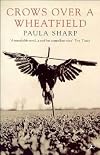
Crows Over A Wheatfield
by Paula Sharp
On This Page
Description
This is the story of Melanie Ratleer, a judge who is approaching the peak of her career with the anguished awareness that she has long since abandoned herself to the comforting impersonality of her work. Paula Sharp is the author of The Woman Who Was Not All There and The Imposter.Tags
Recommendations

































Member Reviews
This novel started out really strong with me. The storytelling is really excellent. Plenty of background and some minutia, but it was never boring. The alternating timelines are told in big enough chunks to get caught up in. I really hate when authors pull us back and forth too quickly. Sharp doesn’t do that and neither does she demonize Matt’s mental illness. Not just that, but he isn’t only the mentally ill brother, he’s Matt, with other characteristics, interests, foibles and talents. She also writes well and has a nice turn of phrase - “The nightcrawlers clung to the earth without claws, battling our grips with nothing but the muscles of their fear.” p 127
Given the novel’s jacket copy and the events of the first show more section, it isn’t a surprise where things go. Mildred has to run and hide in the face of an unjust custody agreement and it was that whole process that I couldn’t take in. First it was too laden with detail. The judge, the lawyers, the law itself - all of it corrupt and biased against women. I know it is important to show how unjust it was and how much better (for the most part) it is now, but boy did it do my head in. The unfairness and the helplessness was so acute. After a while I just skipped to the next section that took up the action some 15 years after Mildred flees.
Once that was past me, I got caught up again. Melanie is the central character, but we don’t get to know her very well. Instead we get to know the situation she finds herself in and how conflicted she is about the law and how it deals with women, custody, divorce and children’s safety. Which is to say, in this book, it was biased all to the men in the cases no matter what they’d done to their kids or wives. Bruises, broken bones, terror, threats; none of it seemed to count no matter how “hard” the evidence. In some ways, things haven’t changed; women still have to show overwhelming proof they’ve been abused. Their word isn’t enough. It is when a man shows up to a police station saying he was mugged or his car was stolen. Oh sure, they believe him right away, but if a woman says a man did something foul to her she’s automatically suspected of lying.
It’s infuriating and so ingrained in our culture that I don’t know how to overcome it. That said, I enjoyed the book for the most part and thought it ended well albeit a little strangely. I would have liked Melanie’s distaste for her profession to come across a little stronger than it did. Because of that her decision to leave it instead of trying to change things for the better felt wrong. I did like that the women took action themselves though, Melanie and Mildred, and they didn’t have to be rescued by the good guys in the story. show less
Given the novel’s jacket copy and the events of the first show more section, it isn’t a surprise where things go. Mildred has to run and hide in the face of an unjust custody agreement and it was that whole process that I couldn’t take in. First it was too laden with detail. The judge, the lawyers, the law itself - all of it corrupt and biased against women. I know it is important to show how unjust it was and how much better (for the most part) it is now, but boy did it do my head in. The unfairness and the helplessness was so acute. After a while I just skipped to the next section that took up the action some 15 years after Mildred flees.
Once that was past me, I got caught up again. Melanie is the central character, but we don’t get to know her very well. Instead we get to know the situation she finds herself in and how conflicted she is about the law and how it deals with women, custody, divorce and children’s safety. Which is to say, in this book, it was biased all to the men in the cases no matter what they’d done to their kids or wives. Bruises, broken bones, terror, threats; none of it seemed to count no matter how “hard” the evidence. In some ways, things haven’t changed; women still have to show overwhelming proof they’ve been abused. Their word isn’t enough. It is when a man shows up to a police station saying he was mugged or his car was stolen. Oh sure, they believe him right away, but if a woman says a man did something foul to her she’s automatically suspected of lying.
It’s infuriating and so ingrained in our culture that I don’t know how to overcome it. That said, I enjoyed the book for the most part and thought it ended well albeit a little strangely. I would have liked Melanie’s distaste for her profession to come across a little stronger than it did. Because of that her decision to leave it instead of trying to change things for the better felt wrong. I did like that the women took action themselves though, Melanie and Mildred, and they didn’t have to be rescued by the good guys in the story. show less
Picture a small town where barely anything of interest disrupts the landscape; no mountains, no oceans, no canyons, nor rivers. Nothing as far as the eye can see except farmland and fields. This is Wisconsin and Crows Over a Wheatfield is the thirty-year story of Melanie Klonecki, first growing up in such a small town, then becoming a judge in New York City and trying to escape memories of an abusive but brilliant criminal defense lawyer of a father (a "diabolical Atticus" as one of his colleagues described him). Told in four parts (Crows Over a Wheatfield, Muskellunge, Custody, & Mirror Universe) we begin Melanie's recollection in the year 1957 when she was seven years old. Her 41 year old father has just remarried someone 17 years his show more junior. Ottilie comes to the family with a seven year old child of her own, Matthew. These outsiders are not immune to the abuse handed out by Joel Ratleer either. His abuses come in many forms: subtle as in not being allowed to go to church or forcing Matthew to call his mother Ottilie, and violent in the form of severe beatings without provocation or warning. And yet, curiously, Melanie's recollection of this abuse is fuzzy. She uses such phrases as, "must have bullied", "no longer recall", and "barely evoke any memory". It's as if she cannot face her terrible childhood with any clarity and as a result it clouds her entire adult life. When faced with another abusive situation Melanie is forced to "wake up" and take action. This time, as an adult, she is able to make choices. Her career as a judge hangs in the balance as she considers how far one would go to protect the ones they love. show less
This novel encompasses thirty years in the life of Melanie Ratleer, the daughter of a famous criminal attorney, who was also capable of violent acts against his family. Melanie and her half-brother, Matthew, were terrorized by this man throughout their childhood. Matthew became psychotic and addicted to drugs while Melanie went on to law school and became a federal judge appointee.
As the story evolves, Melanie and Matthew become involved in a movement enabling women and children to escape abusive relationships when the legal system won't protect them. Legal ethics are frequently discussed in this novel, leaving the reader with many thought-provoking questions about justice and its administration.
There are many characters and sub-plots show more in this long book. Overall, I found the all-too-real issues disturbing and absorbing. show less
As the story evolves, Melanie and Matthew become involved in a movement enabling women and children to escape abusive relationships when the legal system won't protect them. Legal ethics are frequently discussed in this novel, leaving the reader with many thought-provoking questions about justice and its administration.
There are many characters and sub-plots show more in this long book. Overall, I found the all-too-real issues disturbing and absorbing. show less
This is a great story of survival. So many of the characters are fighting for their survival; be it from domestic violence, mental illness or personal demons. The characters come to life off the pages, some to love, some to hate, it is a great mix of both. I did think the story to be a bit wordy at times, it seemed some of the narrative could have been cut out without hurting the story. This would be a very interesting title for a book club as there are many topics to discuss.
This is the story of Judge Melanie Ratleer, who is the daughter of an abusive criminal defense lawyer, and her friend Mildred Steck. Because of her own experience, Mildred decides to start an underground railroad designed to protect mothers and their children from domestic violence when the court system has failed to do so.
Ratings
Members
- Recently Added By
Lists

Books Read in 2018
4,360 works; 110 members
Author Information
8+ Works 307 Members
Awards and Honors
Notable Lists
Common Knowledge
- Original publication date
- 1996
- Epigraph
- Much Madness is divivest Sense- To a discerning Eye
-Emily Dickinsin
Or is injustice, once suffered, a mirror universe, with laws of logic and principles of reason the opposaite of civilization's? -E.L. Doctor... (show all)ow, Ragtime
We are fighting the devil and the devil is the law -Mildred Steck - Dedication
- This book is for Lauren Austin and Diane Lopez, and, once again, for you, E Sharp
- First words
- A few months after my mother died, my father brought Ottilie home for the first time.
- Last words
- (Click to show. Warning: May contain spoilers.)The fire multiplied through the wheat, covering everthing, as the heartland's oceans once must have.
- Blurbers
- Berg, Elizabeth
Classifications
Statistics
- Members
- 125
- Popularity
- 260,073
- Reviews
- 5
- Rating
- (3.83)
- Languages
- English
- Media
- Paper
- ISBNs
- 4