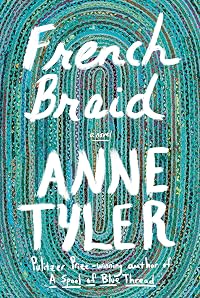
French Braid
by Anne Tyler
On This Page
Description
"The Garretts take their first and last family vacation in the summer of 1959. They hardly ever venture beyond Baltimore, but in some ways they have never been farther apart. Mercy has trouble resisting the siren call of her aspirations to be a painter, which means less time keeping house for her husband Robin. Their teenage daughters, steady Alice and boy-crazy Lily, could not have less in common. Their youngest, David, is already intent on escaping his family's orbit, for reasons none of show more them understands. Yet as these lives advance across decades, the Garretts' influence on one another ripples unmistakably through each generation, much like French-braided hair keeps its waves even after it is undone. Full of heartbreak and hilarity, French Braid is classic Anne Tyler: a stirring, uncannily insightful novel of tremendous warmth and humor that illuminates the kindnesses and cruelties of our daily lives, the impossibility of breaking free from those who love us, and how close--yet how unknowable--every family is to itself"-- show lessTags
Recommendations

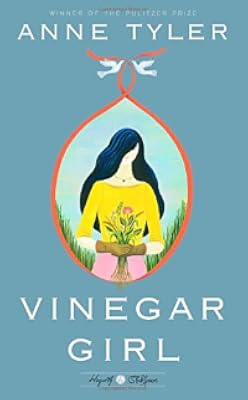
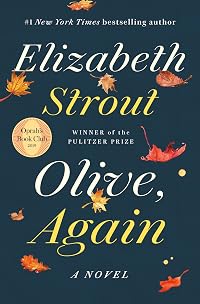
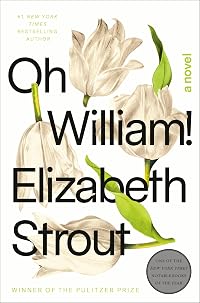
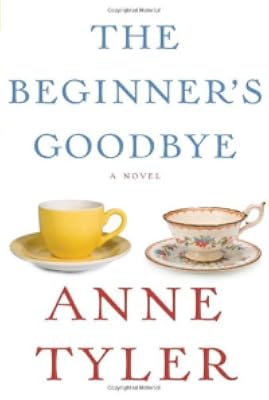

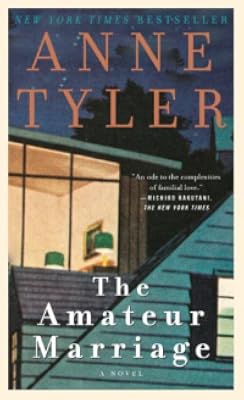
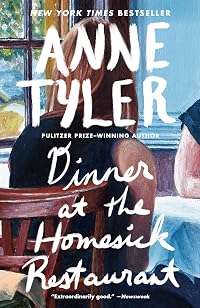






Member Recommendations

Member Reviews
The Garrett clan, or at least the three generations of them presented here, are not necessarily harmonious or even affectionate. But their lives are interwoven in such a way that they share connections even without sharing intimacy. Repeated gestures, hair colouring, a certain thorniness. And so a family saga about the Garretts might not follow the pattern of a narrative arc, crescendoing at what, from the outside, would be seen as the important bits. It might just be some vignettes, memories, or events that are loosely bound together, braided, if you will. And that suits Anne Tyler’s writing style nicely.
There are some fine observations of individuals and of families here. But there isn’t substantial drama. Some things happen show more offstage. And sometimes it takes a bit of thinking to realize how the protagonist of one section of the whole connects to the others. Which is to say that we don’t, as readers, get too close to any of these characters. And that too might be a very deliberate choice on Tyler’s part, since, she is suggesting, we don’t get that close to our own family members either.
In any case, the writing is always comforting and there is just enough challenge to make it interesting.
Very lightly recommended. show less
There are some fine observations of individuals and of families here. But there isn’t substantial drama. Some things happen show more offstage. And sometimes it takes a bit of thinking to realize how the protagonist of one section of the whole connects to the others. Which is to say that we don’t, as readers, get too close to any of these characters. And that too might be a very deliberate choice on Tyler’s part, since, she is suggesting, we don’t get that close to our own family members either.
In any case, the writing is always comforting and there is just enough challenge to make it interesting.
Very lightly recommended. show less
This really is just perfect and rightly or wrongly Anne Tyler is my window on American families and I take her observations as gospel. At first I did get confused about the different children and their parents, particularly all the Robins. This settled down and I was completely immersed in Mercy and Robin's story and their sort-of break-up. As you would expect it is superbly observed and has fun parts and sadness. She makes this seem so effortless but has clearly worked hard to achieve this. The characters are all individual and clear. The stories everyday and yet unique. A fabulous read.
This is the first Tyler book that really resonated for me. I think it’s 100% because I read her other book before I had lived enough life. She captures the quiet nuances of marriage and the the fraught relationships between children and their parents with such a gentle hand. I couldn’t appreciate that before. If contemplative books bore you, skip this one. Truly nothing happens and there’s no big reveal, but the quiet moments of connection make it worthwhile. I’m still thinking about the ways we all see the same situation differently and the misunderstanding or resentments that can grow from that.
After opening and abandoning several books, I settled into French Braid by Anne Tyler for my next December TBR shelf read. It was just what I needed: an ordinary family and yet magnificently messed up. It was cozy and calming and comic and interesting and surprising all at once.
We are formed–or deformed– by our families. The Garrett family is no different. They are such a fractured family that in the opening scene, a woman isn’t sure if a man she sees is her cousin. It had been years since they had last seen each other at their grandfather’s funeral. Serena’s boyfriend has a close family, but she realizes that hers “never seemed to take” when they did gather at weddings or funerals.
Then, Tyler takes us back to 1959 and the show more one and only Garrett family vacation to a cabin at lake, introducing us to parents Robin and Mercy and their three children, teenagers Alice and Lily, and the youngest, David. It isn’t really a family vacation, the kind where everyone enjoys time together. Lily finds a boy and disappears all day. David is afraid of the water and feels judged by his father. Mercy paints, unconcerned that Lily is hanging with an older boy. Robin is unconcerned by Lily’s broken heart. And we understand the basic disconnection of these people.
These people never talk about their problems with each other. They just drift apart into their own lives. When Mercy moves out, little by little, into an art studio apartment, her separation from her husband is never recognized. Her own children don’t even think of it as a separation.
Tyler’s understated style is not for everyone. There are no horrendous events or compulsive story arcs. Just life, like yours and mine, and a shared recognition. And perhaps, some healing knowing all families leave their indelible marks. show less
We are formed–or deformed– by our families. The Garrett family is no different. They are such a fractured family that in the opening scene, a woman isn’t sure if a man she sees is her cousin. It had been years since they had last seen each other at their grandfather’s funeral. Serena’s boyfriend has a close family, but she realizes that hers “never seemed to take” when they did gather at weddings or funerals.
Then, Tyler takes us back to 1959 and the show more one and only Garrett family vacation to a cabin at lake, introducing us to parents Robin and Mercy and their three children, teenagers Alice and Lily, and the youngest, David. It isn’t really a family vacation, the kind where everyone enjoys time together. Lily finds a boy and disappears all day. David is afraid of the water and feels judged by his father. Mercy paints, unconcerned that Lily is hanging with an older boy. Robin is unconcerned by Lily’s broken heart. And we understand the basic disconnection of these people.
These people never talk about their problems with each other. They just drift apart into their own lives. When Mercy moves out, little by little, into an art studio apartment, her separation from her husband is never recognized. Her own children don’t even think of it as a separation.
Tyler’s understated style is not for everyone. There are no horrendous events or compulsive story arcs. Just life, like yours and mine, and a shared recognition. And perhaps, some healing knowing all families leave their indelible marks. show less
The French Braid
Reading another Anne Tyler novel is like beginning another season of PBS's All Creatures Great and Small, (which happened last night) . It's a welcoming acknowledgment that you're settling into something touching, knowing and insightful. This novel, like so many of hers, takes place in Baltimore and centers around a single family. Really most of Tyler's writing can be summed up with this passage:
"Oh, a French braid,” Greta said. “That’s it. And then when she undid them, her hair would still be in ripples, little leftover squiggles, for hours and hours afterward.” “Yes…” “Well,” David said, “that’s how families work, too. You think you’re free of them, but you’re never really free; the ripples show more are crimped in forever.”
The Garrett family, Robin and Mercy, have three children and live comfortable lives in Baltimore. Tyler provides glimpses of the various stages, sometimes jumping years ahead. At a train station two cousins run into each other, a family trip to Deep Creek, a child's unexpected pregnancy, a grandmother and granddaughter trip to NYC. Sometimes I wish there were more to learn about these people, but Tyler selects the vignettes that perfectly helps the reader see the strands of a family, both flawed and memorable. Her writing is straightforward and peppered with wonderful observations. What can I say; it always a pleasure to return to her world.
Lines:
“Oh, I know how uppity you Baltimoreans are,” James said. “I know how you guys sort people out by what high school they attended. And then marry someone from your high school in the end.”
Alice often liked to imagine that a book was being written about her life. A narrator with an authoritative male voice was describing her every act.
Because if you’re going to do someone a favor, her father used to tell her, you might as well do it graciously.
She knew her family made fun of him. Or found him amusing, at least. She knew he came across as stuffy and too earnest, prone to telling the entire plots of movies and to making a low, place-holding humming noise any time he paused to search for words; and he was going to have one of those tacked-on-looking bellies if he didn’t cut back on those biscuits.
“I just want to warn you,” she’d said, “that the quality you marry a person for will end up being what you hate them for, most often.”
Oh, the lengths this family would go to so as not to spoil the picture of how things were supposed to be!
So maybe parenthood was meant to be educational, Robin thought—a lesson for the parents on totally other styles of being.
She figured that when she turned thirteen, she’d campaign for a whole row of piercings running up the outer rim of each ear. Then she’d fit a tiny hoop into each and every one, so that the edges of her ears would resemble the spine of a spiral notebook.
It was decided that Benny would sleep in Nicholas’s old room, which still had glow-in-the-dark constellations plastered to the ceiling, and Nicholas in Emily’s room.
“So, this is how it works,” she said. “This is what families do for each other—hide a few uncomfortable truths, allow a few self-deceptions. Little kindnesses.”
He could still catch a trace of Benny’s little-boy scent, salty but sweet, like clean sweat. show less
Reading another Anne Tyler novel is like beginning another season of PBS's All Creatures Great and Small, (which happened last night) . It's a welcoming acknowledgment that you're settling into something touching, knowing and insightful. This novel, like so many of hers, takes place in Baltimore and centers around a single family. Really most of Tyler's writing can be summed up with this passage:
"Oh, a French braid,” Greta said. “That’s it. And then when she undid them, her hair would still be in ripples, little leftover squiggles, for hours and hours afterward.” “Yes…” “Well,” David said, “that’s how families work, too. You think you’re free of them, but you’re never really free; the ripples show more are crimped in forever.”
The Garrett family, Robin and Mercy, have three children and live comfortable lives in Baltimore. Tyler provides glimpses of the various stages, sometimes jumping years ahead. At a train station two cousins run into each other, a family trip to Deep Creek, a child's unexpected pregnancy, a grandmother and granddaughter trip to NYC. Sometimes I wish there were more to learn about these people, but Tyler selects the vignettes that perfectly helps the reader see the strands of a family, both flawed and memorable. Her writing is straightforward and peppered with wonderful observations. What can I say; it always a pleasure to return to her world.
Lines:
“Oh, I know how uppity you Baltimoreans are,” James said. “I know how you guys sort people out by what high school they attended. And then marry someone from your high school in the end.”
Alice often liked to imagine that a book was being written about her life. A narrator with an authoritative male voice was describing her every act.
Because if you’re going to do someone a favor, her father used to tell her, you might as well do it graciously.
She knew her family made fun of him. Or found him amusing, at least. She knew he came across as stuffy and too earnest, prone to telling the entire plots of movies and to making a low, place-holding humming noise any time he paused to search for words; and he was going to have one of those tacked-on-looking bellies if he didn’t cut back on those biscuits.
“I just want to warn you,” she’d said, “that the quality you marry a person for will end up being what you hate them for, most often.”
Oh, the lengths this family would go to so as not to spoil the picture of how things were supposed to be!
So maybe parenthood was meant to be educational, Robin thought—a lesson for the parents on totally other styles of being.
She figured that when she turned thirteen, she’d campaign for a whole row of piercings running up the outer rim of each ear. Then she’d fit a tiny hoop into each and every one, so that the edges of her ears would resemble the spine of a spiral notebook.
It was decided that Benny would sleep in Nicholas’s old room, which still had glow-in-the-dark constellations plastered to the ceiling, and Nicholas in Emily’s room.
“So, this is how it works,” she said. “This is what families do for each other—hide a few uncomfortable truths, allow a few self-deceptions. Little kindnesses.”
He could still catch a trace of Benny’s little-boy scent, salty but sweet, like clean sweat. show less
This is so distinctly and entirely a novel by Anne Tyler that the addition of the author's name to the cover is superfluous. Set in Baltimore, this is the story of an ordinary family over decades, told through what are almost interconnected stories. Each chapter is beautifully written and holds such empathy for each character, even as they fail to see the needs of the family members around them or simply long to be somewhere else. From a week-long summer vacation near a lake to a family reunion at an Easter dinner to an anniversary party, this is the kind of quiet novel that Tyler is deservedly known for and was a pleasure to read. I have the habit of forgetting about how much I love her writing for long stretches and then I pick up show more another one of her novels and I remember what a great and under-celebrated novelist she is. show less
French Braid by Anne Tyler is a very highly recommended portrait of a family. No one authentically portrays families in their frailties and strengths like Tyler. This exceptional novel provides uncomfortable truths, allows a few self-deceptions, little kindnesses, and little cruelties while depicting a Baltimore family.
French Braid follows the Garrett family over the course of sixty years. In the opening set in 2010, Serena and her boyfriend are in a Philadelphia train station when Serena thinks a man in the crowd is her cousin Nicholas. She hasn't seen him for years and can't really identify him. Her boyfriend thinks that there is some hidden secret about the distance between her extended family members. After this opening scene, the show more novel drops back in time to provide a portrait of the family over several decades.
In 1959, Robin and Mercy Garrett and their three children, oldest daughter Alice, her younger sister fifteen-year-old Lucy, and seven-year-old David, take their first and last family vacation. It becomes obvious why they have never taken a vacation. Robin is uncomfortable without a routine and worries about costs. Mercy simply wants to wander off alone and paint. Alice is the dependable one. Lucy is absent running around with an older boy she met. And quiet David is content playing with his plastic GIs he calls veterinarians. This vacation captures the essence of the family that will be confirmed over the years.
The narrative then unfolds over the years through the perspective of individual family members, capturing their lives and the distance between them. David remains distanced from his family, only occasionally joining family events, which are few and far between. This is where Tyler's unsurpassed skill and artistry is shown in her ability to create and develop realistic, sympathetic characters. The portrayal of each character is insightful as specific details are revealed and clarified over the years.
Tyler has been one of my favorite writers for years and French Braid perfectly showcases why. The quality of her writing is always perfect, finely crafted and exemplary. She always depicts her characters, who are average people, with such sympathy, warmth, insight and clarity. There is kindness as well as cruelty in their intermingled lives. Nothing huge or shocking happens in the plot, but much as in most ordinary people, there are small incidents and events that can add up. Characters do make some major choices, but it is presented as an event, not a crisis, and it is telling how the characters react to these crucial choices. Everyone should read this novel. French Braid is one of the best novels of the year.
The title comes from a discussion between David and his wife where he explains that families are like French braids. When you undo them, the hair is still in ripples, little leftover squiggles, for hours and hours afterward. David said, “that’s how families work, too. You think you’re free of them, but you’re never really free; the ripples are crimped in forever.”
Disclosure: My review copy was courtesy of the publisher/author via Edelweiss.
http://www.shetreadssoftly.com/2022/03/french-braid.html
https://www.goodreads.com/review/show/4601968471 show less
French Braid follows the Garrett family over the course of sixty years. In the opening set in 2010, Serena and her boyfriend are in a Philadelphia train station when Serena thinks a man in the crowd is her cousin Nicholas. She hasn't seen him for years and can't really identify him. Her boyfriend thinks that there is some hidden secret about the distance between her extended family members. After this opening scene, the show more novel drops back in time to provide a portrait of the family over several decades.
In 1959, Robin and Mercy Garrett and their three children, oldest daughter Alice, her younger sister fifteen-year-old Lucy, and seven-year-old David, take their first and last family vacation. It becomes obvious why they have never taken a vacation. Robin is uncomfortable without a routine and worries about costs. Mercy simply wants to wander off alone and paint. Alice is the dependable one. Lucy is absent running around with an older boy she met. And quiet David is content playing with his plastic GIs he calls veterinarians. This vacation captures the essence of the family that will be confirmed over the years.
The narrative then unfolds over the years through the perspective of individual family members, capturing their lives and the distance between them. David remains distanced from his family, only occasionally joining family events, which are few and far between. This is where Tyler's unsurpassed skill and artistry is shown in her ability to create and develop realistic, sympathetic characters. The portrayal of each character is insightful as specific details are revealed and clarified over the years.
Tyler has been one of my favorite writers for years and French Braid perfectly showcases why. The quality of her writing is always perfect, finely crafted and exemplary. She always depicts her characters, who are average people, with such sympathy, warmth, insight and clarity. There is kindness as well as cruelty in their intermingled lives. Nothing huge or shocking happens in the plot, but much as in most ordinary people, there are small incidents and events that can add up. Characters do make some major choices, but it is presented as an event, not a crisis, and it is telling how the characters react to these crucial choices. Everyone should read this novel. French Braid is one of the best novels of the year.
The title comes from a discussion between David and his wife where he explains that families are like French braids. When you undo them, the hair is still in ripples, little leftover squiggles, for hours and hours afterward. David said, “that’s how families work, too. You think you’re free of them, but you’re never really free; the ripples are crimped in forever.”
Disclosure: My review copy was courtesy of the publisher/author via Edelweiss.
http://www.shetreadssoftly.com/2022/03/french-braid.html
https://www.goodreads.com/review/show/4601968471 show less
Members
- Recently Added By
Published Reviews
ThingScore 88
The insular Baltimore family, the quirky occupations, the special foods — they all move across these pages as predictably as the phases of the moon. There are times when such familiarity might feel tiresome. But we’re not in one of those times. Indeed, given today’s slate of horror and chaos, the rich melody of “French Braid” offers the comfort of a beloved hymn. It doesn’t even show more matter if you believe in the sanctity of family life; the sound alone brings solace. show less
added by aprille
But “French Braid” is the opposite of reassuring. The novel is imbued with an old-school feminism of a kind currently unfashionable. It looks squarely at the consequences of stifled female ambition — to the woman herself, and to those in her orbit. For all its charm, “French Braid” is a quietly subversive novel, tackling fundamental assumptions about womanhood, motherhood and female show more aging. show less
added by aprille
"Oh, the lengths this family would go to so as not to spoil the picture of how things were supposed to be!" Tyler writes. It is lines like that one — seemingly tossed off by the omniscient narrator, a great skill of Tyler's — that bring heft to this largely plotless book. "French Braid" is filled with piercing observation.
added by aprille
Lists

Recommend the 20 best books you've read in the last five years
2,168 works; 606 members

Books published and read in 2022
82 works; 5 members

Books Read in 2022
5,168 works; 114 members

Books Read in 2023
5,547 works; 145 members

Library "dead tree" current reads, past loans/reads and TBR
25 works; 1 member

Maybe This Year? Books to Look Forward To
412 works; 9 members

Books Read in 2021
5,361 works; 114 members
Author Information

64+ Works 56,092 Members
Anne Tyler was born in Minneapolis, Minnesota on October 25, 1941. She graduated from Duke University at the age of 19 and completed graduate work in Russian studies at Columbia University. Before becoming a full-time author, she worked as a librarian and bibliographer. Her first novel, If Morning Ever Comes, was published in 1964. Her other works show more include Saint Maybe, Back When We Were Grownups, Digging to America, Noah's Compass, The Beginner's Goodbye, A Spool of Blue Thread, and Vinegar Girl. She has won several awards including the PEN Faulkner Award in 1983 for Dinner at the Homesick Restaurant, the 1985 National Book Critics Circle Award for The Accidental Tourist, and the 1988 Pulitzer Prize for Breathing Lessons. The Accidental Tourist was adapted into a 1988 movie starring William Hurt and Geena Davis. In 2018 her title, Clock Dance, made the bestsellers list. (Bowker Author Biography) Anne Tyler was born in Minneapolis, Minnesota, and grew up in Raleigh, North Carolina. "Back When We Were Grownups" is her 15th novel; her 11th, "Breathing Lessons", won the Pulitzer Prize in 1988. She is a member of the American Academy of Arts & Letters. She lives in Baltimore, Maryland. (Publisher Provided) show less
Awards and Honors
Awards
Distinctions
Notable Lists
Series
Belongs to Publisher Series
Otavan kirjasto (298)
A tot vent (772)
Common Knowledge
- Canonical title
- French Braid
- Original title
- French braid
- Original publication date
- 2022
- People/Characters
- Robin Garrett; Mercy Garrett; Alice Garrett Lainey; Lily Garrett Drew; David Garrett; Greta Thornton Garrett (show all 17); Emily Thornton; Morris Drew; Kevin Lainey; Robby (the Boy | the Boy); Robby (the Girl | the Girl); Eddie Lainey; Kendall “Candle” Lainey; Serena Drew Hayes; Claude Evers; Nicholas Garrett; Benny Garrett
- Important places
- Baltimore, Maryland, USA
- First words
- This happened back in 2010, when the Philadelphia train station still had the kind of information board that clickity-clacked as the various gate assignments rolled up.
- Quotations
- “Sometimes people live first one life and then another life,” her grandmother said. “First a family life and then later a whole other kind of life. That’s what I’m doing.”
“Oh, a French braid, Greta said.
“That’s it. And then when she undid them, her hair would still be in ripples, little leftover squiggles, for hours and hours afterward.”
“Yes . . . “
“Well, David said,â... (show all)€�that’s how families work, too. You think you’re free of them, but you’re never really free; the ripples are crimped in forever.” - Last words
- (Click to show. Warning: May contain spoilers.)He shook his head and smiled, and he put the mask in the box and went back to Greta.
- Blurbers
- Bloom, Amy
- Original language*
- englanti
*Some information comes from Common Knowledge in other languages. Click "Edit" for more information.
Classifications
Statistics
- Members
- 1,215
- Popularity
- 20,376
- Reviews
- 75
- Rating
- (3.77)
- Languages
- 7 — Catalan, Dutch, English, Finnish, German, Italian, Spanish
- Media
- Paper, Audiobook, Ebook
- ISBNs
- 28
- ASINs
- 8