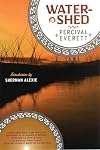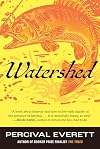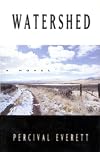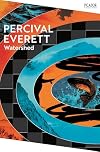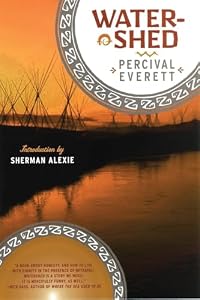
Watershed
by Percival Everett
On This Page
Description
"On a windswept landscape somewhere north of Denver, Robert Hawkes, a feisty and dangerously curious hydrologist, finds himself enmeshed in a fight over Native American treaty rights. What begins for Robert as a peaceful fishing interlude ends in murder and the disclosure of government secrets. Everett mines history for this one, focusing on the relationships between Native American activist and Black Panther groups who bonded over their shared enemies in the 1960s civil rights movement." show more -page [4] of cover show lessTags
Recommendations










Member Reviews
Robert Hawks is a hydrologist with “a pathological disposition to know what was going on in all matters, at all times” that leads him into a complex mystery involving water tribal water rights, two dead FBI agents, and radical Indians somewhere near Denver.
He distrusts most law enforcement because of the typical negative encounters that many black young men experience. He’s stoical. “I didn’t believe in god, I didn’t believe in race, and I especially didn’t believe in America.” He has on/off relationship with a clingy, unstable woman named Karen, mirroring his dynamic with white people in general.
Robert’s racial identity and complicated relationship with the broader America moves him closer to the tribe in their quest show more for justice. show less
He distrusts most law enforcement because of the typical negative encounters that many black young men experience. He’s stoical. “I didn’t believe in god, I didn’t believe in race, and I especially didn’t believe in America.” He has on/off relationship with a clingy, unstable woman named Karen, mirroring his dynamic with white people in general.
Robert’s racial identity and complicated relationship with the broader America moves him closer to the tribe in their quest show more for justice. show less
"You can't murder Indians," Dicky said.
"What?"
"Murder is a legal concept. You can kill an Indian, but you can't murder one. You've got to have a law against it before it's murder."
Robert Hawks is a hydrologist, taking a little time off to spend at his cabin north of Denver, Colorado, to fish and also to get away from a relationship he'd like to end but can't manage to do so. It's in an out-of-the-way location near an Indian reservation and one cold evening he gives a ride to a small Native American woman, an act that will involve him in a conflict generations old.
With Watershed, Percival Everett gives a masterclass on how to write a novel, from the carefully crafted plot and the slow revelation of the protagonist's personality and show more past, to the perfectly crafted sentences. Watershed opens with a bang; Hawks sits in a small cold church on the reservation, across from an FBI agent who is tied to a chair. Around him sit several other armed men while outside the church, a large number of law enforcement have gathered near the bodies of three other men.
From there, the story moves to how Hawks reached this point, from his past as the son and grandson of doctors active in the Civil Rights movement, to his life in Denver, involved with the wrong woman, to how he is gradually drawn into a conflict between members of an Indian tribe and the FBI. There's a lot going on in 200 pages, but it never feels hurried or anything less than deliberate. show less
"What?"
"Murder is a legal concept. You can kill an Indian, but you can't murder one. You've got to have a law against it before it's murder."
Robert Hawks is a hydrologist, taking a little time off to spend at his cabin north of Denver, Colorado, to fish and also to get away from a relationship he'd like to end but can't manage to do so. It's in an out-of-the-way location near an Indian reservation and one cold evening he gives a ride to a small Native American woman, an act that will involve him in a conflict generations old.
With Watershed, Percival Everett gives a masterclass on how to write a novel, from the carefully crafted plot and the slow revelation of the protagonist's personality and show more past, to the perfectly crafted sentences. Watershed opens with a bang; Hawks sits in a small cold church on the reservation, across from an FBI agent who is tied to a chair. Around him sit several other armed men while outside the church, a large number of law enforcement have gathered near the bodies of three other men.
From there, the story moves to how Hawks reached this point, from his past as the son and grandson of doctors active in the Civil Rights movement, to his life in Denver, involved with the wrong woman, to how he is gradually drawn into a conflict between members of an Indian tribe and the FBI. There's a lot going on in 200 pages, but it never feels hurried or anything less than deliberate. show less
This is my third Everett and maybe my last because, again, I think a lot of what he was doing went right over my head. Most of the text is straightforward narrative; one part reminiscence and one part real-time happenings. Interspersed with these are bits lifted from a hydrology report (I assume this is what our leading man was working on) and material from the Bureau of Indian Affairs. The latter I assume is real. It’s cruel, racist and cringe-worthy enough to be so. Sometimes the parallels between these pieces and the story are well-drawn, but not always and sometimes I skimmed or outright skipped them (well, the hydrology report anyway).
As usual, Everett uses his story to comment and reflect upon race relations. This time in show more addition to black/African Americans we have Indians/native Americans. The lead character is Robert Hawks, a hydrologist on sabbatical who gets pulled into drama involving the local Indian reservation and the FBI. The opening scene is actually the culmination of events he relates in the rest of the book.
There’s a lot to absorb here. Foremost is how Europeans treated the people they found living here. At best like children, at worst like inhuman beasts in need of eradication. On page 87 there is a section outlining how the white man could “help” the Indians - “Education is to be the medium through which the rising generations of Indians are to be brought into the fraternal and harmonious relationship with their fellow citizens, and with them enjoy the sweets of refined homes, the delight of social intercourse, the emoluments of commerce and trade, the advantages of travel, together with the pleasures that come from literature, science, and philosophy, and the solace and stimulus afforded by a true religion.”
So shameful that over and over again, Europeans couldn’t see that the Indians already had all that. But if it isn’t Western it’s crap and had to go. No compromise. No understanding. No leeway. Sigh.
Religion comes up in context of Robert’s life and relationship to his family. A black atheist seems so much the outsider and he plays it that way. Robert’s father and grandfather married religious women, but advocated atheism in their lives and thus created a familial rift. Robert revels in his non-belief and it contrasts greatly with the Indian’s religion. They cling to theirs to differentiate their culture, to hang on to the shreds of an old way of life, and as a mark of rebellion. Black folks however have adopted Christianity wholeheartedly. Hawks thinks they should ditch it as a way to rebell.
A lot of that comes up in the memories Hawks has of his father and grandfather. It seems like telling about them was a way to distance himself from the mess his life has become. His horrible handling of his toxic girlfriend, the lies he tells to the FBI and his suspicions about the murdered agents. It’s as if he’s setting up another identity for himself; one where he sticks to his guns and doesn’t automatically fall into line with authority.
Considering the enfeebled build-up, I shouldn’t have been surprised at the passivity of the ending. The underlying crime itself, the one against the tribe and the reservation, was evil and horrifying to contemplate that things like that aren’t far from the truth. Hawks fires his shot, sends the true story out into the world and we’re left to imagine its reverberations and actions. show less
As usual, Everett uses his story to comment and reflect upon race relations. This time in show more addition to black/African Americans we have Indians/native Americans. The lead character is Robert Hawks, a hydrologist on sabbatical who gets pulled into drama involving the local Indian reservation and the FBI. The opening scene is actually the culmination of events he relates in the rest of the book.
There’s a lot to absorb here. Foremost is how Europeans treated the people they found living here. At best like children, at worst like inhuman beasts in need of eradication. On page 87 there is a section outlining how the white man could “help” the Indians - “Education is to be the medium through which the rising generations of Indians are to be brought into the fraternal and harmonious relationship with their fellow citizens, and with them enjoy the sweets of refined homes, the delight of social intercourse, the emoluments of commerce and trade, the advantages of travel, together with the pleasures that come from literature, science, and philosophy, and the solace and stimulus afforded by a true religion.”
So shameful that over and over again, Europeans couldn’t see that the Indians already had all that. But if it isn’t Western it’s crap and had to go. No compromise. No understanding. No leeway. Sigh.
Religion comes up in context of Robert’s life and relationship to his family. A black atheist seems so much the outsider and he plays it that way. Robert’s father and grandfather married religious women, but advocated atheism in their lives and thus created a familial rift. Robert revels in his non-belief and it contrasts greatly with the Indian’s religion. They cling to theirs to differentiate their culture, to hang on to the shreds of an old way of life, and as a mark of rebellion. Black folks however have adopted Christianity wholeheartedly. Hawks thinks they should ditch it as a way to rebell.
A lot of that comes up in the memories Hawks has of his father and grandfather. It seems like telling about them was a way to distance himself from the mess his life has become. His horrible handling of his toxic girlfriend, the lies he tells to the FBI and his suspicions about the murdered agents. It’s as if he’s setting up another identity for himself; one where he sticks to his guns and doesn’t automatically fall into line with authority.
Considering the enfeebled build-up, I shouldn’t have been surprised at the passivity of the ending. The underlying crime itself, the one against the tribe and the reservation, was evil and horrifying to contemplate that things like that aren’t far from the truth. Hawks fires his shot, sends the true story out into the world and we’re left to imagine its reverberations and actions. show less
This is a strong book. It's heartbreaking to read the excerpts of real laws regarding Native Americans that are peppered throughout, and they greatly enhance the story and take this book to a deeper level than standard fiction. The protagonist's mistrust of white people is valid and Percival Everett does a great job making him come to life on these pages.
This was a confusing novel for me. I was trying to picture why Robert Hawkes, a black hydrologist working not too far from Denver, was getting involved with native American Indians on a reservation called Plata. I also wondered why he never could leave his totally kooky girlfriend Karen who came from an equally nuts family. Then there was the story of his own unstable family in which his parents were divorced, and he had been handed back and forth between the two different sides of his family. Add to this mixture, inserts (really!) of geographic and hydrologic features of land as well as descriptions of brains and treaties between the Indians and the white man. This, in a nutshell is this story.
It sounds grotesque, but I found it show more fascinating to learn why Robert Hawkes found such an interest in a tiny woman named Louise who fixed his truck and hitched a ride with him. If you like an intriguing story in which you have to figure out what is going on, you'll like this novel a lot. I did. I found the ending very satisfying as well (although we never get to the real tippy end).
This is the second novel I've read by Percival Everett. Both were very thought-provoking so I'm surely up for reading more of this excellent novelist's works in the future. show less
It sounds grotesque, but I found it show more fascinating to learn why Robert Hawkes found such an interest in a tiny woman named Louise who fixed his truck and hitched a ride with him. If you like an intriguing story in which you have to figure out what is going on, you'll like this novel a lot. I did. I found the ending very satisfying as well (although we never get to the real tippy end).
This is the second novel I've read by Percival Everett. Both were very thought-provoking so I'm surely up for reading more of this excellent novelist's works in the future. show less
The title refers to the Plata Mountain watershed.
It is such a layered story, like a thick meaty lasagna. You have the main character who is a hydrologist, his whole back story and family history, his 'girlfriend's' story and history, Native American treaty rights, the FBI, the Black Panther Party, and anthrax! At times, I think there were too many layers. It's a good read, but I didn't find that all of the story threads came to a final resting place that I had hoped they would.
I did really enjoy reading all of the excerpts from the treaties between the U.S. government and the Indian nations that are sprinkled throughout the book. The historical context, and the exploitation of the Native tribes, add a real gravitas to the fictional show more story woven around them. show less
It is such a layered story, like a thick meaty lasagna. You have the main character who is a hydrologist, his whole back story and family history, his 'girlfriend's' story and history, Native American treaty rights, the FBI, the Black Panther Party, and anthrax! At times, I think there were too many layers. It's a good read, but I didn't find that all of the story threads came to a final resting place that I had hoped they would.
I did really enjoy reading all of the excerpts from the treaties between the U.S. government and the Indian nations that are sprinkled throughout the book. The historical context, and the exploitation of the Native tribes, add a real gravitas to the fictional show more story woven around them. show less
In which a hydrologist nosing around the rez begins to follow the trail of some dirty doings involving the tribe's water rights. This is a competently-written book by a very imaginative man who should be doing a lot better work than semi-mysteries which serve mostly as a vehicle for him to explicate his understanding of today's west.
Members
- Recently Added By
Lists

Books Read in 2017
4,249 works; 130 members

Books With Water Words in the Title
186 works; 12 members
Author Information

45+ Works 12,825 Members
Percival Everett is a professor of English at the University of Southern California.
Common Knowledge
- Original publication date
- 1996
- People/Characters
- Robert Hawkes; Clara; Louise Yellow Calf; Karen
- Dedication
- For Chessie,
As always, with love - Quotations
- Our way tells that when the river dies, so will
our people.
In seventh grade, I was asked by a science teacher, a Mr. Yount, who looked very much like his name, to tell the class what I thought venereal disease was. I said, “I believe it is a shaft infection.” - Blurbers
- Madison Smartt Bell; Rick Bass
Classifications
Statistics
- Members
- 135
- Popularity
- 240,972
- Reviews
- 7
- Rating
- (3.69)
- Languages
- English
- Media
- Paper
- ISBNs
- 6
- UPCs
- 1