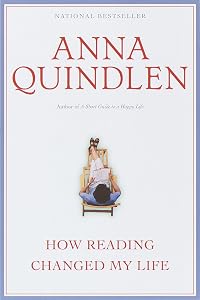
How Reading Changed My Life
by Anna Quindlen
On This Page
Description
THE LIBRARY OF CONTEMPORARY THOUGHT is a groundbreaking series where America's finest writers and most brilliant minds tackle today's most provocative, fascinating, and relevant issues. Striking and daring, creative and important, these original voices on matters political, social, economic, and cultural, will enlighten, comfort, entertain, enrage, and ignite healthy debate across the country.From the Trade Paperback edition.
.
Tags
Recommendations


Member Reviews
If I wrote this book it would be titled How Books Made My Life. For I do not remember a time when I was not surrounded by books, visiting the library and reading books. Anna Quindlen, in a sense, lived a life made as well as "changed" by books. She shares the impact of books on her dreams and beliefs in delightful narrative vignettes of her experiences reading books. I remember from my reading as a young boy feeling the same excitement she describes (p 21) becoming friends with strangers. Crusoe and Friday. Pip and Estella, Jack Hawkins, Alice, and Jane Eyre. These and other literary characters remain friends to this day and to them I have added Daisy and Gatsby. Ishmael and Ahab. Marcel and Robert Saint-Loup, Achilles and Odysseus. show more There are also tragic characters whose experiences have enriched my life; they include Jude and Tess, Oedipus and Antigone, Anna Karenina and Emma Bovary, and others. The list also includes searchers like Binx Bolling and Harry Haller. Many of these characters have become friends and their adventures have become part of my reading life. In addition to her soothing prose Anna Quindlen adds a few "arbitrary and capricious" suggestions for her fellow readers. These are also worth the price of the book. show less
An eloquent account by a favorite writer about the impact that books and reading have had on her life. It's a pleasure (but not a surprise) to find in Quindlen a kindred spirit in this area; I have occasionally throughout life been given the hairy eyeball for my literary compulsions.Quindlen echoes my own convictions about the value of a reading life, and this slim volume would be a good place to steer somebody who is taking flak for being a bookworm. I don't think it will convert the unwashed, but it will provide support and ammunition for the rest of us. The book concludes with an assortment of quirky and creative suggested reading lists ("10 Books That Will Help a Teenager Feel More Human").
A pleasant hour or so of reading about reading. Likely would have been more enjoyable/I would have given it a slightly higher rating if I had read it when it came out (1998), as some of the things she's considering and discussing come off as patently absurd twenty-seven years later. Not because there was anything wrong with her thinking at the time; she just, like all of us, did not have a crystal ball and didn't anticipate things like ereaders, so some of this quite short book is simply utterly irrelevant now (except as a snapshot of how a reader and writer was thinking about some associated topics at the time).
For a such a slim volume, this book left me with many, many thoughts. I think it would make an excellent book club read because the issues it raises are many and conversations could go on for hours. TL;DR version: it's good and worth the read.
My personal feelings about this book jumped around like a yo-yo: at the beginning I was saying to myself "she's describing my childhood!" and in the next breath I was saying "Oh stop making sweeping generalisations about things you don't know!" and then back again to "yes, that's precisely the point!".
This slim volume consists of 70 pages of Quindlen's musings concerning reading and the importance of it to her life thus far (and so many of us).
She makes some generalisations about gender that I show more didn't agree with (why women read what they read vs. why men read what they read). My feelings (and I recognise they are just my own) are that she's trying to give meaning to something that doesn't need to have it. Knowing what MT gets out of reading Bosch and what I get out of reading Kate Daniels isn't going to give any great insights into my marriage. The important insight is that we share an enjoyment of reading.
Quindlen also touches upon the great upheaval concerning The Canon and the collective wig-out pretentious idiots around the world are having at the inclusion of female and culturally diverse authors. I found this part pretty amusing, because both camps are right and wrong but ultimately doing exactly what they should to move things forward. Do women and culturally diverse authors need to be part of The Canon? Yes. Are there people who want titles accepted as part of The Canon not for merit but because they are diverse, or financially successful? Yes. But this acrimonious tug-of-war is exactly what literature ultimately needs because the titles that survive the brouhaha are the ones that will actually deserve to be called great works of literature, regardless of color or gender. So while I think the fight is ultimately silly, I think it's ultimately vital too.
I was also amused by her attempt to argue the merits of reading for pleasure and entertainment; I agree with her - I wholeheartedly do, but her attempt to relate to everyman fails spectacularly. She uses her own guilty pleasure read as an example, to say that it's ok to read 'low brow' books. Her guilty pleasure? The Forsyte Saga by John Galsworthy, who by-the-by, won the Nobel Prize for literature in 1932. Now, if I was someone who suffered self-consciousness about what others thought of my reading choices, I don't think her Nobel prize winning guilty pleasure is going to make me feel vindicated or proud about my love for Deborah Harkness.
What I do think she nailed perfectly is the subjective mire of book banning and the importance of educational reading lists that focus more on instilling a love of literature and less on Important Books that contain Important Thoughts. She deftly handles the digital vs. print debate (spoiler: both will win) and she definitely, perfectly, describes the sheer joy of reading: for knowledge, for entertainment, for understanding, and for the places it can take you without ever leaving your chair. A worthy and thoughtful read. show less
My personal feelings about this book jumped around like a yo-yo: at the beginning I was saying to myself "she's describing my childhood!" and in the next breath I was saying "Oh stop making sweeping generalisations about things you don't know!" and then back again to "yes, that's precisely the point!".
This slim volume consists of 70 pages of Quindlen's musings concerning reading and the importance of it to her life thus far (and so many of us).
She makes some generalisations about gender that I show more didn't agree with (why women read what they read vs. why men read what they read). My feelings (and I recognise they are just my own) are that she's trying to give meaning to something that doesn't need to have it. Knowing what MT gets out of reading Bosch and what I get out of reading Kate Daniels isn't going to give any great insights into my marriage. The important insight is that we share an enjoyment of reading.
Quindlen also touches upon the great upheaval concerning The Canon and the collective wig-out pretentious idiots around the world are having at the inclusion of female and culturally diverse authors. I found this part pretty amusing, because both camps are right and wrong but ultimately doing exactly what they should to move things forward. Do women and culturally diverse authors need to be part of The Canon? Yes. Are there people who want titles accepted as part of The Canon not for merit but because they are diverse, or financially successful? Yes. But this acrimonious tug-of-war is exactly what literature ultimately needs because the titles that survive the brouhaha are the ones that will actually deserve to be called great works of literature, regardless of color or gender. So while I think the fight is ultimately silly, I think it's ultimately vital too.
I was also amused by her attempt to argue the merits of reading for pleasure and entertainment; I agree with her - I wholeheartedly do, but her attempt to relate to everyman fails spectacularly. She uses her own guilty pleasure read as an example, to say that it's ok to read 'low brow' books. Her guilty pleasure? The Forsyte Saga by John Galsworthy, who by-the-by, won the Nobel Prize for literature in 1932. Now, if I was someone who suffered self-consciousness about what others thought of my reading choices, I don't think her Nobel prize winning guilty pleasure is going to make me feel vindicated or proud about my love for Deborah Harkness.
What I do think she nailed perfectly is the subjective mire of book banning and the importance of educational reading lists that focus more on instilling a love of literature and less on Important Books that contain Important Thoughts. She deftly handles the digital vs. print debate (spoiler: both will win) and she definitely, perfectly, describes the sheer joy of reading: for knowledge, for entertainment, for understanding, and for the places it can take you without ever leaving your chair. A worthy and thoughtful read. show less
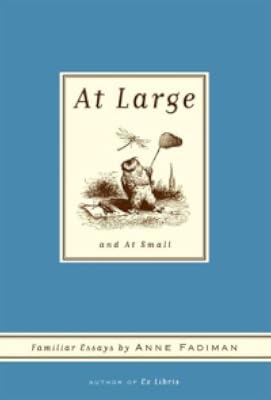
When I picked this book up, I wasn't quite sure what to expect. Was it going to be a serious discourse on certain key books, like Francis Spufford's The Child that Books Built? Perhaps a few bookish essays in the vein of Anne Fadiman's Ex Libris, or a sentimental autobiography about hardship and bookish redemption? Actually, it is none of those things.
Instead, what Quindlen offers us is an extended essay on books and reading, split into sections and garnished with bookish quotes from the likes of Thoreau and Whitman. In delicious prose that exudes enthusiasm, Quindlen meanders skilfully across a range of topics including the feeling of a being a book-lover in the midst of others who just don't 'get it', book snobbishness, academic show more elitism, book clubs, libraries, how men and women read differently, banned books and coming-of-age reading. Perhaps the most telling part is that on the future of the book and the rise of modern technology. This book was published in 1998, and Quindlen seems to find the idea of e-readers and online reading a bit of a curiosity, comparing it to the old fantasy films in which we were all eating capsule meals by the year 2000. I guess it just goes to show how quickly technology is leaping forward these days!
Though the final result bears little resemblance to what I'd expected from the rather self-centred title, this was even better than I'd hoped - a marvellous, well-reasoned look at the world of books, with enough of an 'every woman' feel to the anecdotes and examples to make it more inclusive and therefore more enjoyable to read. There is also a section at the back of the book with 'top ten' reading lists like '10 Books That Will Help a Teenager Feel More Human' and '10 Mystery Novels I'd Most Like to Find in a Summer Rental', which is a nice touch and added a few more titles to my wishlist... Highly recommended! show less
Instead, what Quindlen offers us is an extended essay on books and reading, split into sections and garnished with bookish quotes from the likes of Thoreau and Whitman. In delicious prose that exudes enthusiasm, Quindlen meanders skilfully across a range of topics including the feeling of a being a book-lover in the midst of others who just don't 'get it', book snobbishness, academic show more elitism, book clubs, libraries, how men and women read differently, banned books and coming-of-age reading. Perhaps the most telling part is that on the future of the book and the rise of modern technology. This book was published in 1998, and Quindlen seems to find the idea of e-readers and online reading a bit of a curiosity, comparing it to the old fantasy films in which we were all eating capsule meals by the year 2000. I guess it just goes to show how quickly technology is leaping forward these days!
Though the final result bears little resemblance to what I'd expected from the rather self-centred title, this was even better than I'd hoped - a marvellous, well-reasoned look at the world of books, with enough of an 'every woman' feel to the anecdotes and examples to make it more inclusive and therefore more enjoyable to read. There is also a section at the back of the book with 'top ten' reading lists like '10 Books That Will Help a Teenager Feel More Human' and '10 Mystery Novels I'd Most Like to Find in a Summer Rental', which is a nice touch and added a few more titles to my wishlist... Highly recommended! show less
I suppose it's fitting that my 100th book of the year is a book that features short essays ruminating on reading. Anna Quindlen is the author of One True Thing and other fiction. In How Reading Changed My Life she talks about reading as a child, how central it was to her, and how much of a book lover she is. Book lover to book lover, it's a wonderful homey feeling to read and feel like she "gets" me. She touches on the way our culture tends to look askance at readers (put down your "stupid book" and come play!), and also divide itself into the highbrow critics and "lowbrow" reading while the book lovers stand somewhere in the middle in their own special subculture.
Before sending this to an interested fellow bookcrosser, I flipped through the pages as a way of saying goodbye. I ended up reading the whole book again! Initially, this book was required reading for a college seminar course about "how we read." It was the best course of my life for many reasons, but this book was one of probably 20 books I was reading in a 3-month period. So I'm sure I got more out of it this second time.
It's wonderful! Inspiring! Quindlen is an outstanding writer who makes any topic enjoyable to read about. In this book, she discusses the politics of books, the stupidity of labeling some books "low-brow" as if they're not worthy of reading, and makes a good case for the value of such books. This book is about how show more reading (especially lowbrow books) can inspire students to become writers and how reading can, as the title states, change your life! Any reader will relate to the truthful musings of this established writer and you will have a deeper appreciation for your books and yourself as a reader after reading this. :) show less
It's wonderful! Inspiring! Quindlen is an outstanding writer who makes any topic enjoyable to read about. In this book, she discusses the politics of books, the stupidity of labeling some books "low-brow" as if they're not worthy of reading, and makes a good case for the value of such books. This book is about how show more reading (especially lowbrow books) can inspire students to become writers and how reading can, as the title states, change your life! Any reader will relate to the truthful musings of this established writer and you will have a deeper appreciation for your books and yourself as a reader after reading this. :) show less
Members
- Recently Added By
Lists

Books about Books
149 works; 23 members
Author Information

39+ Works 24,143 Members
Author Anna Quindlen was born in Philadelphia on July 8, 1953. She graduated from Barnard in 1974 and serves on their Board of Trustees. Quindlen worked as a reporter for the New York Post and the New York Times and wrote columns for the Times. She won the 1992 Pulitzer Prize for Commentary before devoting herself to writing fiction. She has show more written both adult fiction (including Object Lessons, Black and Blue and One True Thing, which was made into a motion picture starring Meryl Streep) and children's fiction (Happily Ever After and The Tree That Came to Stay). Her title Alternate Side made the bestseller list in 2018. Currently, she is a columnist at Newsweek. Her title Lots of Candles, Plenty of Cake made The New York Times Best Seller list for 2012. (Bowker Author Biography) show less
Series
Belongs to Publisher Series
Work Relationships
Is contained in
Common Knowledge
- Original title
- How Reading Changed My Life
- Original publication date
- 1998
- Original language
- English
Classifications
- Genres
- Nonfiction, Literature Studies and Criticism, Biography & Memoir
- DDC/MDS
- 813.54 — Literature & rhetoric American literature in English American fiction in English 1900-1999 1945-1999
- LCC
- PS3567 .U336 .Z468 — Language and Literature American literature American literature Individual authors 1961-
- BISAC
Statistics
- Members
- 1,037
- Popularity
- 24,991
- Reviews
- 29
- Rating
- (3.81)
- Languages
- English
- Media
- Paper, Ebook
- ISBNs
- 5
- ASINs
- 4