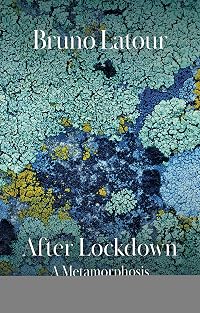
After Lockdown: A Metamorphosis
by Bruno Latour
On This Page
Description
After the harrowing experience of the pandemic and lockdown, both states and individuals have been searching for ways to exit the crisis, many hoping to return as soon as possible to 'the world as it was before the pandemic'. But there is another way to learn the lessons of this ordeal: as inhabitants of the earth, we may not be able to exit lockdown so easily after all, since the global health crisis is embedded in another larger and more serious crisis - that brought about by the New show more Climate Regime. Learning to live in lockdown might be an opportunity to be seized: a dress-rehearsal for the climate mutation, an opportunity to understand at last where we - inhabitants of the earth - live, what kind of place 'earth' is and how we will be able to orient ourselves and exist in this world in the years to come. We might finally be able to explore the land in which we live, together with all other living beings, begin to understand the true nature of the climate mutation we are living through and discover what kind of freedom is possible - a freedom differently situated and differently understood. In this sequel to his bestselling book Down to Earth, Bruno Latour provides a compass for this necessary re-orientation of our lives, outlining the metaphysics of confinement and deconfinement with which we will all be obliged to come to terms by the strange times in which we are living. show lessTags
Recommendations




















Members
- Recently Added By
Lists

Science: Health & Medical
100 works; 1 member
Author Information

112+ Works 4,947 Members
Bruno LaTour was born in the French province of Burgundy, where his family has been making wine for many generations. He was educated in Dijon, where he studied philosophy and Biblical exegesis. He then went to Africa, to complete his military service, working for a French organization similar to the American Peace Corps. While in Africa he became show more interested in the social sciences, particularly anthropology. LaTour believes that through his interests in philosophy, theology, and anthropology, he is actually pursuing a single goal, to understand the different ways that truth is built. Throughout the 1980s and 1990s, LaTour has written about the philosophy and sociology of science in an original, insightful, and sometimes quirky way. Works that have been translated to English include The Pasteurization of France; Laboratory Life; Science in Action: How to Follow Scientists and Engineers through Society; We Have Never Been Modern; and Aramis, or the Love of Technology. LaTour is a professor at the Center for the Sociology of Innovation, a division of the Ecole Nationale Superieure des Mines, in Paris. (Bowker Author Biography) show less
Classifications
- Genres
- Science & Nature, Nonfiction, Sociology, Philosophy, Politics and Government
- DDC/MDS
- 304.2 — Society, government, & culture Social sciences, sociology & anthropology Factors affecting social behavior Human ecology
- LCC
- GF41 .L3813 — Geography, Anthropology and Recreation Human ecology. Anthropogeography Human ecology. Anthropogeography
- BISAC
Statistics
- Members
- 39
- Popularity
- 716,570
- Languages
- English
- Media
- Paper, Ebook
- ISBNs
- 3
- ASINs
- 1