On This Page
Description
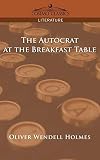
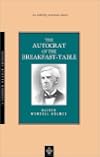
Originally published in The Atlantic Monthly in the mid-nineteenth century, these philosophical essays were written by one of America's most celebrated thinkers. Poet and essayist Oliver Wendell Holmes drew upon his youthful experiences at a Boston boarding house to add color and humor to his reflections. As the autocrat, or ruler, of the communal table, Holmes converses with his fellow boarders, including the Landlady, the Professor, the Divinity Student, and the Schoolmistress.A vivid show more record of the era when Boston was the hub of America's intellectual and cultural scene, this book also offer show lessTags
Recommendations


























Member Reviews
Oliver Wendell Holmes' The Autocrat of the Breakfast-Table was first published serially in The Atlantic Monthly in 1857, and in book form a year later. It is less a novel than a collection of short, idiosyncratic musings disguised as breakfast-table discussions (lectures might be a more accurate description) between the eponymous autocrat and his (semi-captive) audience - the other boarders at his lodging-house in Boston.
Since there's not really much plot to discuss, I thought I'd pick out a few portions of the book that either struck me as interesting or made me laugh. Holmes' wit remains sharp, but I suspect some references and allusions have been lost, dulled by the changes a century and a half have wrought in the American psyche. show more Nonetheless, there is much to enjoy in this little book.
The autocrat dislikes puns and wordplay (except, of course, when he wants to employ such tactics himself). "A pun," he writes, "does not commonly justify a blow in return. But if a blow were to be given for such cause, and death ensued, the jury would be judges both of the facts and of the pun, and might, if the latter were of an aggravated character, return a verdict of justifiable homicide."
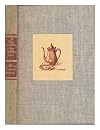
Holmes develops the concept of a "literary tea-pot," sort of a reading intern:
"Society is a strong solution of books. It draws the virtue out of what is best worth reading, as hot water draws the strength of tea-leaves. If I were a prince, I would hire or buy a private literary tea-pot, in which I would steep all the leaves of new books that promised well. ... You understand me; I would have a person whose sole business should be to read day and night, and talk to me whenever I wanted him to. I know the man I would have: a quick-witted, out-spoken, incisive fellow; knows history, or at any rate has a shelf full of books about it, which he can use handily, and the same of all useful arts and sciences; knows all the common plots of plays and novels, and the stock company of characters that are continually coming in on new costume; can give you a criticism of an octavo in an epithet and a wink, and you can depend on it; cares for nobody except for the virtue there is in what he says; delights in taking off big wigs and professional gowns, and in the disembalming and unbandaging of all literary mummies. ... In short, he is one of those men that know everything except how to make a living."
The musings seldom tend toward natural history, but Holmes' disquisition on elm trees in the tenth chapter is one of the sections I like most of all. It helped, perhaps, that I read this section just a few hours after discovering a survivor elm on Mount Auburn Street in Cambridge - a tree that possibly (if only barely) might have been a young sapling when Holmes himself walked those very streets.
Likewise, the essays only rarely refer to actual contemporary events, but Holmes does take to task those engaged in the wholesale rearrangement of Boston's cemeteries for the sake of symmetry: "... the upright stones have been shuffled about like chessman, and nothing short of the Day of Judgment will tell whose dust lies beneath any of those records, meant by affection to mark one small spot as sacred to some cherished memory. Shame! shame! shame! - that is all I can say. ... epitaphs were never famous for truth, but the old reproach of "Here lies" never had such a wholesale illustration as in these outraged burial-places, where the stone does lie above and the bones do not lie beneath."
An example of nineteenth century literary Boston brahminism at its finest, Holmes' jottings have retained most of their punch; Autocrat can still amuse, provoke, and chide its reader today, just as it did 150 years ago.
http://philobiblos.blogspot.com/2007/06/book-review-autocrat-of-breakfast-table.... show less
Since there's not really much plot to discuss, I thought I'd pick out a few portions of the book that either struck me as interesting or made me laugh. Holmes' wit remains sharp, but I suspect some references and allusions have been lost, dulled by the changes a century and a half have wrought in the American psyche. show more Nonetheless, there is much to enjoy in this little book.
The autocrat dislikes puns and wordplay (except, of course, when he wants to employ such tactics himself). "A pun," he writes, "does not commonly justify a blow in return. But if a blow were to be given for such cause, and death ensued, the jury would be judges both of the facts and of the pun, and might, if the latter were of an aggravated character, return a verdict of justifiable homicide."
Holmes develops the concept of a "literary tea-pot," sort of a reading intern:
"Society is a strong solution of books. It draws the virtue out of what is best worth reading, as hot water draws the strength of tea-leaves. If I were a prince, I would hire or buy a private literary tea-pot, in which I would steep all the leaves of new books that promised well. ... You understand me; I would have a person whose sole business should be to read day and night, and talk to me whenever I wanted him to. I know the man I would have: a quick-witted, out-spoken, incisive fellow; knows history, or at any rate has a shelf full of books about it, which he can use handily, and the same of all useful arts and sciences; knows all the common plots of plays and novels, and the stock company of characters that are continually coming in on new costume; can give you a criticism of an octavo in an epithet and a wink, and you can depend on it; cares for nobody except for the virtue there is in what he says; delights in taking off big wigs and professional gowns, and in the disembalming and unbandaging of all literary mummies. ... In short, he is one of those men that know everything except how to make a living."
The musings seldom tend toward natural history, but Holmes' disquisition on elm trees in the tenth chapter is one of the sections I like most of all. It helped, perhaps, that I read this section just a few hours after discovering a survivor elm on Mount Auburn Street in Cambridge - a tree that possibly (if only barely) might have been a young sapling when Holmes himself walked those very streets.
Likewise, the essays only rarely refer to actual contemporary events, but Holmes does take to task those engaged in the wholesale rearrangement of Boston's cemeteries for the sake of symmetry: "... the upright stones have been shuffled about like chessman, and nothing short of the Day of Judgment will tell whose dust lies beneath any of those records, meant by affection to mark one small spot as sacred to some cherished memory. Shame! shame! shame! - that is all I can say. ... epitaphs were never famous for truth, but the old reproach of "Here lies" never had such a wholesale illustration as in these outraged burial-places, where the stone does lie above and the bones do not lie beneath."
An example of nineteenth century literary Boston brahminism at its finest, Holmes' jottings have retained most of their punch; Autocrat can still amuse, provoke, and chide its reader today, just as it did 150 years ago.
http://philobiblos.blogspot.com/2007/06/book-review-autocrat-of-breakfast-table.... show less
This little book took me some time to read. At first, I thought I might write down some of the quotes from it, but soon I realised that each page had a memorable quote and I decided to leave the possibility that I will remember this book should any of the various quotes be needed again in the future. I daresay at this I shall fail but if I put it to memory that there are many important quotes in this work, I may well recover some of its hidden gems. I found Oliver Wendell Holmes to read like that other three-named American, Ralph Waldo Emerson, although less of a "Churchman", rather than a divinity address he had a divinity student at the boarding house table. This book was originally written as a series of articles for The Atlantic show more Monthly first written in 1857 with the first serial of this book appearing in its first edition. The work lends itself to being read in a stop-start fashion, as if it were meant to be serialised, and there is so much packed into so few sentences that it takes some time to absorb the sheer depth of wit, meaning, humour, learnedness, and intellect on display. The interspersed poetry had me wonder at times why poetry is so "on the nose" these days (Random House does not accept manuscripts of poetry, and recently, a quote on the movie The Big Short: "The truth is like poetry. And everyone fucking hates poetry"). I think we miss something as a result. But not so in Holmes' time. Nevertheless, this took a long time to digest, even though it is not a difficult read. show less
In a year's worth of columns for the nascent Atlantic Monthly, an orator holds forth on shoes, ships, and sealing wax over a series of boarding-house breakfasts. His audience, among the clatter of silverware and tea cups, is alternately impressed and skeptical at his assertions.
I was enormously disappointed in this book. If the narrator is indeed an autocrat, I'm all for revolution and bringing up the guillotine. Turgid and leaden in its delivery, not particularly funny, nor particularly wise. In short, the autocrat is a windy bore. Not recommended.
I recently completed reading 107 daily installments of this classic work on DailyLit. This book lends itself well to this format as it is a series of essays and often less essay than snippets, vignettes, and quotes as if collected in a commonplace book. Oliver Wendell Holmes waxes on poetry, manners, philosophy, aging and the art of conversation often with a touch of humor and satire. It was a fun way to read a Yankee classic.
Favorite Passages:
Favorite Passages:
When I feel inclined to read poetry I take down my Dictionary. The poetry of words is quite as beautiful as that of sentences. The author may arrange the gems effectively, but their shape and luster have been given by the attrition of ages. Bring me the finest simile from the whole range ofshow more
imaginative writing, and I will show you a single word which conveys a more profound, a more accurate, and a more eloquent analogy.
Why, the truths a man carries about with him are his tools; and do you think a carpenter is bound to use the same plane but once to smooth a knotty board with, or to hang up his hammer after it has driven its first nail? I shall never repeat a conversation, but an idea often. I shall use the same types when I like, but not commonly the same stereotypes. A thought is often original, though you have uttered it a hundred times. It has come to you over a new route, by a new and express train of associations.
You know, that, if you had a bent tube, one arm of which was of the size of a pipe-stem, and the other big enough to hold the ocean, water would stand at the same height in one as in the other. Controversy equalizes fools and wise men in the same way,--AND THE FOOLS KNOW IT.
show less
Many people can ride on horseback who find it hard to get on and to get off without assistance. One has to dismount from an idea, and get into the saddle again, at every parenthesis.
I really wanted to enjoy this and be very impressed by it. No less than Mark Twain said in A Biography: The Personal and Literary Life of Samuel Langhorne Clemens: "I told him you & I used the Autocrat as a courting book & marked it all through ..."
However, I found much of tedious and really had to push myself through it. I think I can partly blame this one the publisher. The numerous footnotes and parenthetic passages could be made readable with a better layout: more whitespace and larger font. Perhaps I will try again some day. Many of the allusions, foreign phrases, and references are so dated that I often interrupted my reading to Google for more info. Such explanations could be part of an annotated text.
Still, much (20%?) sparkles show more here. Only one poem does for me, and I already knew of that: "The Deacon’s Masterpiece or, the Wonderful "One-hoss Shay": A Logical Story"
Here are some quotes that sparkled to me. I copied the text out of the Gutenberg version, although I believe the text the same:
"There is no elasticity in a mathematical fact; if you bring up against it, it never yields a hair's breadth; everything must go to pieces that comes in collision with it."
"...the brain often runs away with the heart's best blood, which gives the world a few pages of wisdom or sentiment or poetry, instead of making one other heart happy..."
Interesting the classist issues arising back them, then 1% I suppose:
"We are forming an aristocracy, as you may observe, in this country,—not a gratiâ-Dei, nor a juredivino one,—but a de-facto upper stratum of being, which floats over the turbid waves of common life like the iridescent film you may have seen spreading over the water about our wharves,—very splendid, though its origin may have been tar, tallow, train-oil, or other such unctuous commodities. I say, then, we are forming an aristocracy; and, transitory as its individual life often is, it maintains itself tolerably, as a whole. Of course, money is its corner-stone. But now observe this. Money kept for two or three generations transforms a race,—I don’t mean merely in manners and hereditary culture, but in blood and bone. Money buys air and sunshine, in which children grow up more kindly, of course, than in close, back streets; it buys country-places to give them happy and healthy summers, good nursing, good doctoring, and the best cuts of beef and mutton." show less
However, I found much of tedious and really had to push myself through it. I think I can partly blame this one the publisher. The numerous footnotes and parenthetic passages could be made readable with a better layout: more whitespace and larger font. Perhaps I will try again some day. Many of the allusions, foreign phrases, and references are so dated that I often interrupted my reading to Google for more info. Such explanations could be part of an annotated text.
Still, much (20%?) sparkles show more here. Only one poem does for me, and I already knew of that: "The Deacon’s Masterpiece or, the Wonderful "One-hoss Shay": A Logical Story"
Here are some quotes that sparkled to me. I copied the text out of the Gutenberg version, although I believe the text the same:
"There is no elasticity in a mathematical fact; if you bring up against it, it never yields a hair's breadth; everything must go to pieces that comes in collision with it."
"...the brain often runs away with the heart's best blood, which gives the world a few pages of wisdom or sentiment or poetry, instead of making one other heart happy..."
Interesting the classist issues arising back them, then 1% I suppose:
"We are forming an aristocracy, as you may observe, in this country,—not a gratiâ-Dei, nor a juredivino one,—but a de-facto upper stratum of being, which floats over the turbid waves of common life like the iridescent film you may have seen spreading over the water about our wharves,—very splendid, though its origin may have been tar, tallow, train-oil, or other such unctuous commodities. I say, then, we are forming an aristocracy; and, transitory as its individual life often is, it maintains itself tolerably, as a whole. Of course, money is its corner-stone. But now observe this. Money kept for two or three generations transforms a race,—I don’t mean merely in manners and hereditary culture, but in blood and bone. Money buys air and sunshine, in which children grow up more kindly, of course, than in close, back streets; it buys country-places to give them happy and healthy summers, good nursing, good doctoring, and the best cuts of beef and mutton." show less
165. The Autocrat of the Breakfast Table, by Oliver Wendell Holmes (read 5 Dec 1944) I began reading this on Dec 2, 1944. On Dec. 3 I said: "Read most of the day in Autocrat. At first I was terribly bored but now I am getting used to it." On Dec 5 I said; "Finished Autocrat today. A good ending, a few good poems, and about 300 pages of bore. O well, it is "literature".
Members
- Recently Added By
Lists

Trinity College Booklist (1951): Class Ten, English Literature
358 works; 5 members

Publisher's Weekly Bestsellers Prior to 1895 in Chronological Order
95 works; 6 members

Book Titles Mentioned In Newberry Medal And Honor Books
884 works; 3 members
Author Information

110+ Works 2,002 Members
Some Editions
Series

Belongs to Publisher Series
Work Relationships
Is contained in
The Autocrat of the Breakfast Table and the Professor at The Breakfast Table by Oliver Wendell Holmes
The Breakfast-Table Series: The Autocrat Of The Breakfast-Table, The Professor At The Breakfast- Table; The Poet At The Breakfast-Table by Oliver Wendell Holmes (indirect)
THE AUTOCRAT OF THE BREAKFAST-TABLE [with] THE POET OF THE BREAKFAST-TABLE [with] THE PROFESSOR AT THE BREAKFAST-TABLE [with] OVER THE TEACUPS. by Oliver Wendell Holmes (indirect)
Works, 10 volumes, complete in this Author's edition, with Latest Addtions and Illustrative Notes.: The Complete Poetical Works, 4 vols., The Poet at the Breakfast Table, 2 vols., The Autocrat of the Breakfast Table, 2 vols, The Professor at the Breakfast Table, 2 vols. by Oliver Wendell Holmes (indirect)
Common Knowledge
- Original publication date
- 1858
- Epigraph
- Every man his own Boswell.
- First words
- I was just going to say, when I was interrupted, that one of the many ways of classifying minds is under the heads of arithmetical and algebraical intellects.
- Last words
- (Click to show. Warning: May contain spoilers.)I hope you all love me none the less for anything I have told you. Farewell!
Classifications
Statistics
- Members
- 876
- Popularity
- 30,791
- Reviews
- 11
- Rating
- (3.32)
- Languages
- English
- Media
- Paper, Audiobook, Ebook
- ISBNs
- 55
- UPCs
- 1
- ASINs
- 104