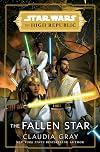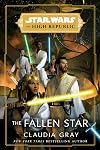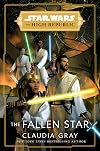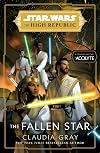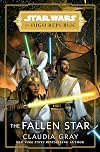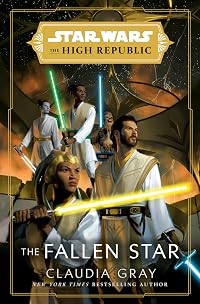
Star Wars: The High Republic: The Fallen Star
by Claudia Gray
Star Wars: Canon - chronological order (230 BBY, High Republic Era), Star Wars: The High Republic (Phase I: Light of the Jedi — Adult, Phase I, wave 3), Star Wars Universe
On This Page
Description
NEW YORK TIMES BESTSELLER • In this gripping sequel to Star Wars: The Rising Storm, the light of the Jedi faces its darkest hour.Time and again, the vicious raiders known as the Nihil have sought to bring the golden age of the High Republic to a fiery end. Time and again, the High Republic has emerged battered and weary but victorious thanks to its Jedi protectors—and there is no monument to their cause grander than the Starlight Beacon.
Hanging like a jewel in the Outer Rim, the Beacon show more embodies the High Republic at the apex of its aspirations: a hub of culture and knowledge, a bright torch against the darkness of the unknown, and an extended hand of welcome to the farthest reaches of the galaxy. As survivors and refugees flee the Nihil’s attacks, the Beacon and its crew stand ready to shelter and heal.
The grateful Knights and Padawans of the Jedi Order stationed there finally have a chance to recover—from the pain of their injuries and the grief of their losses. But the storm they thought had passed still rages; they are simply caught in its eye. Marchion Ro, the true mastermind of the Nihil, is preparing his most daring attack yet—one designed to snuff out the light of the Jedi. show less
Tags
Recommendations





Member Reviews
A longer time ago in a galaxy far, far away....
The closing chapter to the main High Republic novel series, THE FALLEN STAR, is intense. Told from multiple interconnecting viewpoints, which I think is something Claudia Gray excels at (her LOST STARS and BLOODLINE Star Wars novels are other excellent examples of this), we see the culmination of Marchion Ro's plan to bring the Jedi down and show that the Nihil are the ultimate force in the Outer Rim. No one is safe in this plan, so I hope no one has grown too attached to certain characters, as not everyone makes it out of this book alive. A remarkably solid ending to the first wave of stories, there are also plenty of questions still in place for the next wave of books coming later in the show more year. This is definitely a necessary read if you're a fan of the High Republic series. show less
The closing chapter to the main High Republic novel series, THE FALLEN STAR, is intense. Told from multiple interconnecting viewpoints, which I think is something Claudia Gray excels at (her LOST STARS and BLOODLINE Star Wars novels are other excellent examples of this), we see the culmination of Marchion Ro's plan to bring the Jedi down and show that the Nihil are the ultimate force in the Outer Rim. No one is safe in this plan, so I hope no one has grown too attached to certain characters, as not everyone makes it out of this book alive. A remarkably solid ending to the first wave of stories, there are also plenty of questions still in place for the next wave of books coming later in the show more year. This is definitely a necessary read if you're a fan of the High Republic series. show less
Claudia Gray’s Star Wars: The High Republic: The Fallen Star picks up after the events of The Rising Storm, with the Republic dusting itself off following the Nihil attack on the Republic Fair. The scattered Nihil launch a series of coordinated strikes, which the Jedi and Republic forces believe to be the last gasps of a dying organization, but Marchion Ro, the Eye of the Nihil, has greater plans for their future. His plans involve bringing Starlight Beacon down, using Nihil infiltrators and some type of creature that can feed on the Force and leave Jedi as husks. Unable to draw upon the Force, the Jedi cannot respond quickly or even trust their own decisions, transforming Starlight from a place of sanctuary into a haunted house. Gray show more perfectly sets up this haunted house tone, crafting a sense of dread that pervades the novel and makes this the darkest High Republic novel yet. Her conclusion recalls the aftermath of other real-world tragedies, as she writes, “Sorrows could bind people even more closely together. The natural bloodlust for revenge that would follow: That could be shaped, tamped, turned into common purpose. That would be Chancellor Soh’s task in the days to come” (pg. 331). Finally, despite the darkness, Gray ends on a hopeful note: “The firmament of the night sky shone no less brightly when one small star went dark. Another nebula would be born, glowing with its own new light” (pg. 332). A great third novel in the High Republic that opens up many possibilities for where the series might go next. show less
The third novel in The High Republic series sees the Nihil, a band of pirates lead by the opportunistic Marchion Ro, carry out their boldest attack yet to destabilize the Republic and injure the Jedi Order. Starlight Beacon, a space station built in the galaxy's Outer Rim as a symbol the Republic's culture and unity, is bombed by saboteurs who leave few options for escape and rescue. The station splits in half, and the better part of the novel involves the actions of the Jedi and others aboard the lower half (including the saboteurs and Nihil prisoners who were on board) to save themselves and others before it crashes on the planet below. To make matters worse, Ro has placed creatures known as the Nameless aboard the space station who show more have the power to dampen the connections the Jedi have with the force, effectively making them fight blind.
The novel reads like a disaster movie, like The Poseidon Adventure or maybe even Apollo 13, as the protagonists work to find solutions to cascading failures. I feel like I'm getting a better sense of the main characters than I have before, although there are several new characters introduced who make the proceedings confusing. Claudia Gray has the advantage of having the backstory established for her, but I also feel she's the most engaging writer among the three books. My two favorite characters, Jedi padawans Bell Zettifar and Burryaga Agaburry, get to team up in this book, and assuming the unclear fate of one of these characters is cleared up, I hope they get to be partners again in future novels.
This novel ends the trilogy on kind of a down note, with the biggest victory being that the people of the Republic come together to aid in the rescue and are unified by the disaster. But it's still a major defeat for the Republic and the Jedi. I haven't been able to figure out if the story is supposed to continue or how it fits in The High Republic extended universe which includes middle grade and early reader novels as well as comics (including one that has the story of what happens on the upper half of Starlight Beacon). Not sure I have the time or interest in reading them all to see if I'm missing any of the story but I will look for additional novels in the adult line if and when they're published. show less
The novel reads like a disaster movie, like The Poseidon Adventure or maybe even Apollo 13, as the protagonists work to find solutions to cascading failures. I feel like I'm getting a better sense of the main characters than I have before, although there are several new characters introduced who make the proceedings confusing. Claudia Gray has the advantage of having the backstory established for her, but I also feel she's the most engaging writer among the three books. My two favorite characters, Jedi padawans Bell Zettifar and Burryaga Agaburry, get to team up in this book, and assuming the unclear fate of one of these characters is cleared up, I hope they get to be partners again in future novels.
This novel ends the trilogy on kind of a down note, with the biggest victory being that the people of the Republic come together to aid in the rescue and are unified by the disaster. But it's still a major defeat for the Republic and the Jedi. I haven't been able to figure out if the story is supposed to continue or how it fits in The High Republic extended universe which includes middle grade and early reader novels as well as comics (including one that has the story of what happens on the upper half of Starlight Beacon). Not sure I have the time or interest in reading them all to see if I'm missing any of the story but I will look for additional novels in the adult line if and when they're published. show less
I was hoping that third time’s a charm, and I had high hopes because I have liked Claudia Gray’s previous Star Wars novels, but “The Fallen Star”, the third novel in the High Republic series, didn’t wow me. It had a few moments, but the book was as mediocre as the last two.
The plot of “The Fallen Star” is, basically, “The Poseidon Adventure” in space. For those out there who aren’t familiar with the reference (and, having been a high school teacher for a brief time, I am sadly cognizant of how woefully unaware children are of any pop cultural reference that is more than five years old), “The Poseidon Adventure” was a 1972 film about a cruise liner that is flipped over by a giant tidal wave. The survivors must show more figure out a way to reach safety in a boat that is upside down and sinking fast. It was a great movie. (Not to be mistaken for the 2006 remake “Poseidon” starring Kurt Russell, which sucked.)
A disaster movie in the Star Wars universe sounds like a win, and, to be fair, Gray does a great job with the disaster parts of the novel. In this novel, Nihil saboteurs have infiltrated the Starlight Beacon, the giant space station that is both an intergalactic life buoy and a symbol of the Republic, and have set off a bomb which destroys the station’s power source that controls its stability in space and the opening of dock bay doors. The thousands of inhabitants trapped on the station are now floating in space on a dead space station, running out of air and rations, unable to leave, and the station is gradually falling out of orbit on a collision course with the nearest planet.
For a good chunk of the middle part of the book, Gray had me hooked. This was exciting stuff.
What I didn’t think was great was the same problem I have had with the last two books: too many characters, very few stand-out well-developed characters, and a villain that is yawn-inducingly boring. Marchion Ro is no Darth Vader. He’s not even Kylo Ren. At best, he’s a Snoke wanna-be, and that’s pretty dumb.
Also, Gray throws in an added threat: a mysterious presence on board the Starlight Beacon that has the ability to drain the Force. It literally sucks the life out of any Jedi in its path and turns them into mere husks that fall into piles of ash. (Thanos?)
It sounds cool, except one thing: we never find out what the hell it is! Gray ends the book with this part unexplained! I’m assuming that it leads into the next book, but come on!
I’m not asking for much, people. I’m just looking for a few cool characters that I can latch onto. I don’t want 37 characters that I know or care nothing about. And give us a villain worthy of being in the Star Wars pantheon of villains. Vader. Jabba. Palpatine. Thrawn. Maul. The Yuuzhan Vong. Darth Caedus. Giancarlo Esposito.
Marchion Ro? Seriously? Captain Jack Sparrow, minus the humor, and always wearing a gas mask? It’s embarrassing, really. show less
The plot of “The Fallen Star” is, basically, “The Poseidon Adventure” in space. For those out there who aren’t familiar with the reference (and, having been a high school teacher for a brief time, I am sadly cognizant of how woefully unaware children are of any pop cultural reference that is more than five years old), “The Poseidon Adventure” was a 1972 film about a cruise liner that is flipped over by a giant tidal wave. The survivors must show more figure out a way to reach safety in a boat that is upside down and sinking fast. It was a great movie. (Not to be mistaken for the 2006 remake “Poseidon” starring Kurt Russell, which sucked.)
A disaster movie in the Star Wars universe sounds like a win, and, to be fair, Gray does a great job with the disaster parts of the novel. In this novel, Nihil saboteurs have infiltrated the Starlight Beacon, the giant space station that is both an intergalactic life buoy and a symbol of the Republic, and have set off a bomb which destroys the station’s power source that controls its stability in space and the opening of dock bay doors. The thousands of inhabitants trapped on the station are now floating in space on a dead space station, running out of air and rations, unable to leave, and the station is gradually falling out of orbit on a collision course with the nearest planet.
For a good chunk of the middle part of the book, Gray had me hooked. This was exciting stuff.
What I didn’t think was great was the same problem I have had with the last two books: too many characters, very few stand-out well-developed characters, and a villain that is yawn-inducingly boring. Marchion Ro is no Darth Vader. He’s not even Kylo Ren. At best, he’s a Snoke wanna-be, and that’s pretty dumb.
Also, Gray throws in an added threat: a mysterious presence on board the Starlight Beacon that has the ability to drain the Force. It literally sucks the life out of any Jedi in its path and turns them into mere husks that fall into piles of ash. (Thanos?)
It sounds cool, except one thing: we never find out what the hell it is! Gray ends the book with this part unexplained! I’m assuming that it leads into the next book, but come on!
I’m not asking for much, people. I’m just looking for a few cool characters that I can latch onto. I don’t want 37 characters that I know or care nothing about. And give us a villain worthy of being in the Star Wars pantheon of villains. Vader. Jabba. Palpatine. Thrawn. Maul. The Yuuzhan Vong. Darth Caedus. Giancarlo Esposito.
Marchion Ro? Seriously? Captain Jack Sparrow, minus the humor, and always wearing a gas mask? It’s embarrassing, really. show less
4.25★
"To acknowledge the darkness is to know the darkness. To know the darkness is to begin to control it."
I described Light of the Jedi as the synesthesia scene in Ratatouille, where ingredients fit together so perfectly they make you melt into a puddle. In that same line, The Fallen Star was like watching Revenge of the Sith: the trainwreck is obvious and the tragedy inevitable but you can't tore your eyes away and it makes your brain turn to mush. I loved it.
I'm a fan of sad narratives, of seeing the heroes beaten down. I think it makes it sweeter when they rise back up. Sometimes, you just have to consume catastrophies and messy things that don't work out at all. And all three main High Republic books did this masterfully, milking show more the dread and despair of a few hours into hundreds of pages.
It wasn't perfect, tho. I believe the book could've vastly benefited of more pages, of being able to give characters (and the reader) the opportunity to process some events. I love the rush and the sense of running out of time, but some major plot points were barely felt because a page later there was another one crumbling down on you.
But mostly, I was keenly aware that I had no idea what was going on on the other half of the story. I didn't want to read the comics, still don't know if I will, and some mentions or brief explanations to what was going on wouldn't be spoilery at all and should be standard. I don't want to begin consuming it all simply out of spite.
Even if the story doesn't have much chance to explore all the characters, they're the highlight for me and I love all of them. Contrary to the popular demand, I was craving the entire time for more Bell and Burryaga chapters; and although the next phase is giving us a prequel, I await anxiously to find out what's in the future for our surviving cast and how the Nihil will go on foward.
PS: I actually couldn't pick, so here's a SECOND quote:
"This is what hope is. It isn't pretending that nothing will go wrong if only we try hard enough. It's looking squarely at all the obstacles in the way—knowing the limits of our own power, and the possibility of failure—and moving ahead anyway." show less
"To acknowledge the darkness is to know the darkness. To know the darkness is to begin to control it."
I described Light of the Jedi as the synesthesia scene in Ratatouille, where ingredients fit together so perfectly they make you melt into a puddle. In that same line, The Fallen Star was like watching Revenge of the Sith: the trainwreck is obvious and the tragedy inevitable but you can't tore your eyes away and it makes your brain turn to mush. I loved it.
I'm a fan of sad narratives, of seeing the heroes beaten down. I think it makes it sweeter when they rise back up. Sometimes, you just have to consume catastrophies and messy things that don't work out at all. And all three main High Republic books did this masterfully, milking show more the dread and despair of a few hours into hundreds of pages.
It wasn't perfect, tho. I believe the book could've vastly benefited of more pages, of being able to give characters (and the reader) the opportunity to process some events. I love the rush and the sense of running out of time, but some major plot points were barely felt because a page later there was another one crumbling down on you.
But mostly, I was keenly aware that I had no idea what was going on on the other half of the story. I didn't want to read the comics, still don't know if I will, and some mentions or brief explanations to what was going on wouldn't be spoilery at all and should be standard. I don't want to begin consuming it all simply out of spite.
Even if the story doesn't have much chance to explore all the characters, they're the highlight for me and I love all of them. Contrary to the popular demand, I was craving the entire time for more Bell and Burryaga chapters; and although the next phase is giving us a prequel, I await anxiously to find out what's in the future for our surviving cast and how the Nihil will go on foward.
PS: I actually couldn't pick, so here's a SECOND quote:
"This is what hope is. It isn't pretending that nothing will go wrong if only we try hard enough. It's looking squarely at all the obstacles in the way—knowing the limits of our own power, and the possibility of failure—and moving ahead anyway." show less
The hollowness of "The High Republic" campaign is on full display here, as the third flagship novel just repeats the same basic narrative of its predecessors (basically a Star Wars "Airport" story where a huge cast of characters confront a major disaster in the making) and repeats even the same character arcs that we saw in t, so I am not sure when this series' wheels will turn, or even if they ever will turn. Sadly, this is probably the better written flagship novel, with Gray fleshing out some of the more interesting non-Jedi characters, but even that cannot paper over the feeling the architects of this story are just recycling their ideas.
I thought this book was pretty good. I liked seeing how the different Jedi tried to fix the problem in their own way. And I also like how the bad guys won. 8/10 - March 23, 2024
Members
- Recently Added By
Lists

Books Read in 2023
5,547 works; 145 members

Star Wars Canon Reading List
204 works; 1 member

Kindle Books - To Read
63 works; 1 member
Author Information

56+ Works 20,002 Members
Claudia Gray is the pseudonym of Amy Vincent. She is the author of the Evernight series, Spellcaster series, Firebird series, and several books in the Star Wars series. (Bowker Author Biography)
Awards and Honors
Awards
Notable Lists
Series


Common Knowledge
- Canonical title
- Star Wars: The High Republic: The Fallen Star
- Original publication date
- 2022-01-04
- People/Characters
- Stellan Gios; Elzar Mann; Marchion Ro; Bell Zettifar; Nib Assek; Burryaga Agaburry (show all 23); Indeera Stokes; Orla Jareni; Geode; Affie Hollow; Leox Gyasi; Chancey Yarrow; Nan; Regald Coll; Werrera; Leyel; Cale; Ghirra Starros; Thaya Ferr; Koley Linn; Pikka Adren; Joss Adren; JJ-5145
- Important places
- Starlight Beacon
Classifications
Statistics
- Members
- 410
- Popularity
- 75,701
- Reviews
- 9
- Rating
- (3.91)
- Languages
- English, French, Italian
- Media
- Paper, Audiobook, Ebook
- ISBNs
- 17
- ASINs
- 6