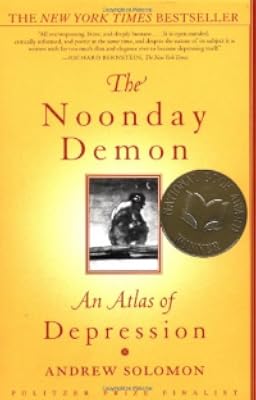
The Noonday Demon: An Atlas of Depression
by Andrew Solomon
On This Page
Description
The Noonday Demon is Andrew Solomon's National Book Award-winning, bestselling, and transformative masterpiece on depression—"the book for a generation, elegantly written, meticulously researched, empathetic, and enlightening" (Time)—now with a major new chapter covering recently introduced and novel treatments, suicide and anti-depressants, pregnancy and depression, and much more.The Noonday Demon examines depression in personal, cultural, and scientific terms. Drawing on his own show more struggles with the illness and interviews with fellow sufferers, doctors and scientists, policy makers and politicians, drug designers, and philosophers, Andrew Solomon reveals the subtle complexities and sheer agony of the disease as well as the reasons for hope. He confronts the challenge of defining the illness and describes the vast range of available medications and treatments, and the impact the malady has on various demographic populations—around the world and throughout history. He also explores the thorny patch of moral and ethical questions posed by biological explanations for mental illness. With uncommon humanity, candor, wit and erudition, award-winning author Solomon takes readers on a journey of incomparable range and resonance into the most pervasive of family secrets. His contribution to our understanding not only of mental illness but also of the human condition is truly stunning. show less
Tags
Recommendations
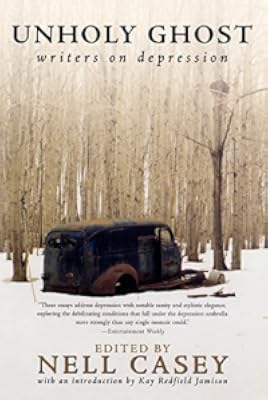
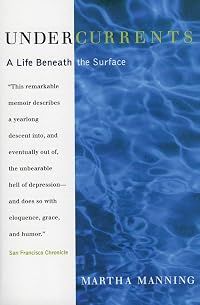
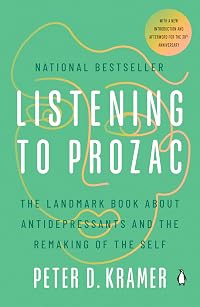
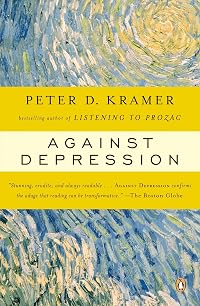









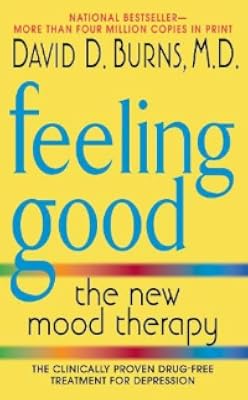


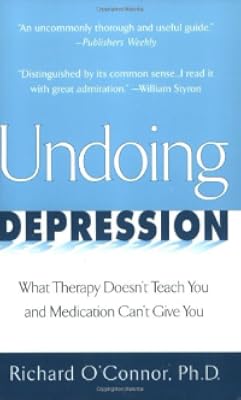



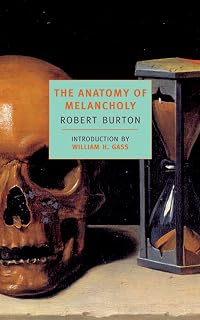
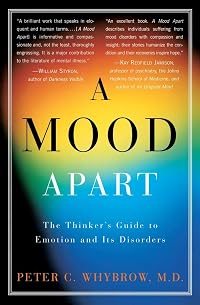





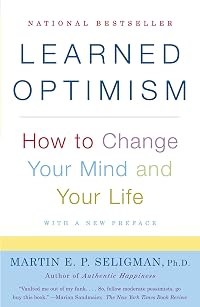



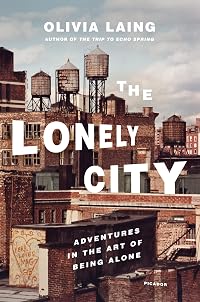
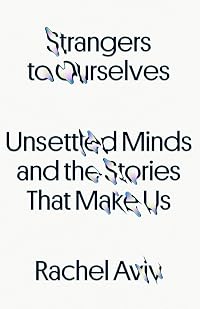


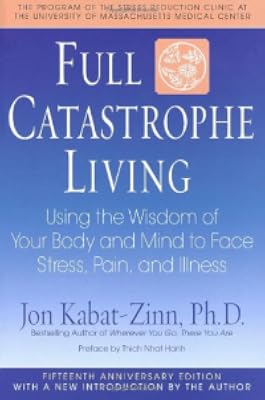


Member Recommendations

Member Reviews
Noonday Demon is Andrew Solomon's amazing memoir / history of depression - it's a must-read for anyone who wants to delve deeply into the causes and effects of depression. Solomon begins with his own journey through several severe depressive episodes. For a broader personal understanding of depression, he intermittently includes stories of "depressives" that he's interviewed. In his research for this book, Solomon explored many standard therapies for depression (i.e. medicine, psychotherapy, cognitive behavioral therapy, electroconvulsive therapy, etc.); but he also explored some very atypical therapies such as an African ritual in which he lay naked and covered in goat blood while people danced around him with a dead chicken. (He show more actually found it very cathartic.)
He followed his personal journey with epidemiology, biological causes, and historical development of depression.
I found this book fascinating. Solomon did a great job of inserting little vignettes of his own story or stories of people he interviewed into his more intellectual portions of the book, so that the material never became dry despite its length. Solomon came up with so many interesting points that I was always interested in what he would say next. His own story was touching. His facts seemed very well-researched. In short, it was simply an amazing book.
This is only a portion of my review to see the full one: http://hibernatorslibrary.blogspot.com/2015/11/the-noonday-demon-by-andrew-solom... show less
He followed his personal journey with epidemiology, biological causes, and historical development of depression.
I found this book fascinating. Solomon did a great job of inserting little vignettes of his own story or stories of people he interviewed into his more intellectual portions of the book, so that the material never became dry despite its length. Solomon came up with so many interesting points that I was always interested in what he would say next. His own story was touching. His facts seemed very well-researched. In short, it was simply an amazing book.
This is only a portion of my review to see the full one: http://hibernatorslibrary.blogspot.com/2015/11/the-noonday-demon-by-andrew-solom... show less
For some reason, I find myself drawn to books about depression. This must be the fourth or fifth nonfiction book on depression I’ve read in the last few years, and I think it’s probably the best. The chapters vary widely in style and I found some to be more interesting than others. The early chapter on Solomon’s own struggle with major depression was interesting and well-written, though I’ve noticed that narratives of a writer’s own depression can sometimes get lost in the weeds. In telling his own story, Solomon mostly keeps things moving briskly along, with thoughtful reflections on the nature of depression spread throughout. My favorite chapters were on the history of depression and it’s biology. The amount of research show more Solomon must of done to cover thousands of years of literary history is really impressive. We follow as depression turns from a disequilibrium of humors, to a possession, to a kind of fashionable sensitivity, and then to a disease. It’s strangely comforting to think how people have been struggle with depression for all of recorded history, and through the chapter on biology we learn that to be human is perhaps to be depressed. show less
Why are so many books about depression written by people like this? They always seem to have someone to help them, someone to put an arm around them and comfort them, someone to talk to about what’s happening to them, someone to listen—and wouldn’t last five minutes living the sort of life most of its sufferers are forced to. “My father”, “my family”, “my circle of friends”; “my literary agent”, “my publisher”, “a journalist / director / professor I know”; “my analyst”, “my therapist”, “my psychopharmacologist”… Most depressed people have none of these, and none of the money this author clearly has either (“my psychopharmacologist”???).
True, The Noonday Demon is comprehensive, show more thoughtful, some of the writing wonderful—and there were one or two memorable details: depression among the Inuit inhabitants of Greenland for instance (where an incredible 80% of the adult population suffers from it). The chapter about the history of the condition was interesting too: the ancient Greeks had a surprisingly modern and sympathetic view of depression (particularly their doctors, most notably Hippocrates) and it was the Christian worldview—converting an illness into a sin—which saddled it with the stigma it’s been stuck with ever since.
Overall, though, I learned precious little in return for slogging my way through 512 pages. Above all, it just made me bloody angry. During one of the author’s own depressive episodes for example: “Some dear friends, recently married, moved into my house and stayed with me for two months, getting me through the difficult parts of the days, talking through my anxieties and fears, telling me stories, seeing to it that I was eating, mitigating the loneliness…my brother flew in from California…my father snapped to attention…” This guy is living on another planet. show less
True, The Noonday Demon is comprehensive, show more thoughtful, some of the writing wonderful—and there were one or two memorable details: depression among the Inuit inhabitants of Greenland for instance (where an incredible 80% of the adult population suffers from it). The chapter about the history of the condition was interesting too: the ancient Greeks had a surprisingly modern and sympathetic view of depression (particularly their doctors, most notably Hippocrates) and it was the Christian worldview—converting an illness into a sin—which saddled it with the stigma it’s been stuck with ever since.
Overall, though, I learned precious little in return for slogging my way through 512 pages. Above all, it just made me bloody angry. During one of the author’s own depressive episodes for example: “Some dear friends, recently married, moved into my house and stayed with me for two months, getting me through the difficult parts of the days, talking through my anxieties and fears, telling me stories, seeing to it that I was eating, mitigating the loneliness…my brother flew in from California…my father snapped to attention…” This guy is living on another planet. show less
"I lost a great innocence when I understood that I and my mind were not going to be on good terms for the rest of my life."
It is going to be dashed difficult to separate the experience of reading this book from the experience of living with depression, just as it was impossible for the author to separate writing about it from living with it.
The great innocence lost that is referred to in the first quotation taken from the book is the sense of being able to rely on your own mind, at least, even when you feel like you can't rely on anything or anyone else. And finding that this mind has a mind of its own and can work against you instead of for you is probably the bitterest disappointment and letdown that I don't wish on anyone.
Therefore, show more I'd like to argue that the most authoritative voices on depression are those of sufferers themselves. Andrew Solomon tackles the subject from a variety of perspectives, ranging from the deeply and painfully personal to the medical and societal, all told with grace and depth.
We are introduced to the many ugly faces of depression, and more importantly, the many voices of depressed people, because each case is different from the rest, and in each case a different combination of factors has conspired to bring about the unwanted result, politics/policy and poverty amongst those Solomon explores.
"Sometimes I wish I could see my brain. I’d like to know what marks have been carved in it. I imagine it grey, damp, elaborate. I think of it sitting in my head, and sometimes I feel as if there’s me, who is living life, and this strange thing stuck in my head that sometimes works and sometimes doesn’t. It’s very odd. This is me. This is my brain. This is the pain that lives in my brain. Look here and you can see where the pain scratched this thing, what places are knotty and lumped up, which places are glowing."
Among other new and fascinating things, this book introduces one of the most captivating theories for the cause of depression: the explanation of depression as a relic of evolution. It all serves to show admirably that this condition is valid and should be as visible as physical ailments, because the forces at work behind it are very real and cause almost unimaginable suffering to an unimaginably high number of people.
However, not all is bleak, because, as any good Wikipedia article will tell you, depression is highly treatable, and experience with it will teach you how to live with it. Nobody is happy all the time, not even those who, fortunately for them, don’t add depression to their list of medical problems. On the converse, however, nobody can be sad all the time either. There’s much comfort in the thought that feeling bad all the time is just physiologically unsustainable. The rain and the sun, you know, and all that rot. But, once again, Solomon makes a good point in explaining it:
"The opposite of depression is not happiness but vitality, and my life, as I write this, is vital, even when sad."
Vitality in the face of being unable to get out of bed yet again. Just because life is low doesn't mean it stops. Depression is here to stay. So what? Like moving in with a new flatmate, your best bet is to get to know them. And now they have an entire atlas written about them.
Highly recommended for depressed people, those who think they might be, as well as their family and friends. show less
It is going to be dashed difficult to separate the experience of reading this book from the experience of living with depression, just as it was impossible for the author to separate writing about it from living with it.
The great innocence lost that is referred to in the first quotation taken from the book is the sense of being able to rely on your own mind, at least, even when you feel like you can't rely on anything or anyone else. And finding that this mind has a mind of its own and can work against you instead of for you is probably the bitterest disappointment and letdown that I don't wish on anyone.
Therefore, show more I'd like to argue that the most authoritative voices on depression are those of sufferers themselves. Andrew Solomon tackles the subject from a variety of perspectives, ranging from the deeply and painfully personal to the medical and societal, all told with grace and depth.
We are introduced to the many ugly faces of depression, and more importantly, the many voices of depressed people, because each case is different from the rest, and in each case a different combination of factors has conspired to bring about the unwanted result, politics/policy and poverty amongst those Solomon explores.
"Sometimes I wish I could see my brain. I’d like to know what marks have been carved in it. I imagine it grey, damp, elaborate. I think of it sitting in my head, and sometimes I feel as if there’s me, who is living life, and this strange thing stuck in my head that sometimes works and sometimes doesn’t. It’s very odd. This is me. This is my brain. This is the pain that lives in my brain. Look here and you can see where the pain scratched this thing, what places are knotty and lumped up, which places are glowing."
Among other new and fascinating things, this book introduces one of the most captivating theories for the cause of depression: the explanation of depression as a relic of evolution. It all serves to show admirably that this condition is valid and should be as visible as physical ailments, because the forces at work behind it are very real and cause almost unimaginable suffering to an unimaginably high number of people.
However, not all is bleak, because, as any good Wikipedia article will tell you, depression is highly treatable, and experience with it will teach you how to live with it. Nobody is happy all the time, not even those who, fortunately for them, don’t add depression to their list of medical problems. On the converse, however, nobody can be sad all the time either. There’s much comfort in the thought that feeling bad all the time is just physiologically unsustainable. The rain and the sun, you know, and all that rot. But, once again, Solomon makes a good point in explaining it:
"The opposite of depression is not happiness but vitality, and my life, as I write this, is vital, even when sad."
Vitality in the face of being unable to get out of bed yet again. Just because life is low doesn't mean it stops. Depression is here to stay. So what? Like moving in with a new flatmate, your best bet is to get to know them. And now they have an entire atlas written about them.
Highly recommended for depressed people, those who think they might be, as well as their family and friends. show less
Very interesting blend of psychology, pharmacology, history, social commentary, along with some very colorful descriptions of his personal experience with Depression. The style and tone of this book was much like his more recent book, "Far from the Tree". I enjoyed them both equally. The only reason that I didn't give Noonday Demon 5 stars was that, at time, it was a bit repetitive and overly verbose. Also, in spots, it was a bit self-indulgent. However, a very valuable reading experience.
A very comprehensive look at many facets of depression. At times too long winded -- and I could have lived without much of the contents of the history, poverty and evolution chapters -- but always thought-provoking.
Perhaps the best single volume overview of this topic ever written. It seems to try to hit everything: history, medications, treatments, sociological effects, the relationship between suicidality and depression (not as exact as I thought) and very briefly the future of treatment. The bibilography alone runs to over thirty pages.
The only complaint I can level at this work is that is seems the author couldn't figure out to what extent he was writing a biography, to what extent a polemic and to what extent a textbook, though that last may not be the proper term. He seems to be trying to give himself "street cred" in this area, if that makes sense. As in, yes I come from a privelged background and am a writer for many popular and show more prestigious...but I'm as bad off as some poor slob who's spent half his life shuffling between state hospitals and community treatment. Not necessary, and slightly distracting from the overall superb work done.
Oh, and the author's photo is disturbing. He looks like Lon Chaney with a bad tan. show less
The only complaint I can level at this work is that is seems the author couldn't figure out to what extent he was writing a biography, to what extent a polemic and to what extent a textbook, though that last may not be the proper term. He seems to be trying to give himself "street cred" in this area, if that makes sense. As in, yes I come from a privelged background and am a writer for many popular and show more prestigious...but I'm as bad off as some poor slob who's spent half his life shuffling between state hospitals and community treatment. Not necessary, and slightly distracting from the overall superb work done.
Oh, and the author's photo is disturbing. He looks like Lon Chaney with a bad tan. show less
Members
- Recently Added By
Published Reviews
ThingScore 75
''The Noonday Demon'' is a considerable accomplishment. It is likely to provoke discussion and controversy, and its generous assortment of voices, from the pathological to the philosophical, makes for rich, variegated reading. Solomon leaves us with the enigmatic statement that ''depression seems to be a peculiar assortment of conditions for which there are no evident boundaries'' -- exactly show more like life. show less
added by melmore
Depression is a country that the undepressed can't enter, but Solomon, who has travelled there and knows it well, bends all his energy and talent as a writer to sending us snapshots from this terrifying land (mood, he writes, 'is a frontier like deep ocean or deep space'). The result is scary but far from dispiriting; at times, Solomon's voice, calling to us from beyond the frontier, achieves show more a lonely rapture. show less
added by melmore
A reader’s guide to depression, hopelessly bleak yet heartbreakingly real.
added by melmore
Lists

The Guardian's 100 best books of the 21st century
100 works; 21 members

Top Five Books of 2014
1,064 works; 398 members

Psicología - Clásicos
165 works; 2 members

Books Read in 2015
3,299 works; 126 members

Simon & Schuster
136 works; 4 members
Author Information

31+ Works 5,172 Members
Andrew Solomon was born in New York City on October 30, 1963. He received a Bachelor of Arts degree in English from Yale University and a Master's degree in English at Jesus College, Cambridge. He has written for numerous publications including The New York Times and The New Yorker. He has written several non-fiction books including The Irony show more Tower, Far from the Tree: Parents, Children, and the Search for Identity, and The Noonday Demon: An Atlas of Depression, which won the 2001 National Book Award. He also wrote the novel A Stone Boat. He is a lecturer in psychiatry at Cornell University and special advisor on LGBT affairs to the Yale School of Medicine's Department of Psychiatry. (Bowker Author Biography) show less
Some Editions
Awards and Honors
Awards
Distinctions
Notable Lists
Common Knowledge
- Canonical title*
- Demonen van de middag
- Original title
- The noonday demon. an atlas of depression
- Alternate titles*
- Demonen van de middag : een persoonlijke geschiedenis van depressie
- Original publication date
- 2001 (Engels) (Engels); 2002 (Nederlands) (Nederlands)
- Epigraph
- Everything passes away—suffering, pain, blood, hunger, pestilence. The sword will pass away too, but the stars will still remain when the shadows of our presence and our deeds have vanished from the earth. There is no man w... (show all)ho does not know that. Why, then, will we not turn our eyes toward the stars? Why?
—Mikhael Bulgakov, The White Guard - Dedication
- For my father,
who gave me life not once, but twice - First words
- Depression is the flaw in love.
- Quotations
- "I will not have to seek far if I decide to kill myself, because in my mind and my heart I am more ready for this than for the unplanned daily tribulations that mark off the mornings and afternoons."
"Depressives have seen the world too clearly, have lost the selective advantage of blindness." - Last words
- (Click to show. Warning: May contain spoilers.)Is that not a rare joy?
- Blurbers
- White, Edmund; Sebald, W. G.; Styron, William; Bloom, Harold; Erdrich, Louise; McMurtry, Larry (show all 12); Wolf, Naomi; Gopnik, Adam; Jamison, Kay Redfield; Manning, Martha; Goleman, Daniel; Watson, James
- Original language*
- Engels
*Some information comes from Common Knowledge in other languages. Click "Edit" for more information.
Classifications
- Genres
- General Nonfiction, Nonfiction, Biography & Memoir, Science & Nature
- DDC/MDS
- 616.85270092 — Applied science & technology Medicine & health Diseases, Allergies, Skin Conditions Nervous Disorders: Autism, Anorexia, OCD Miscellaneous Neuroses Depression
- LCC
- RC537 .S598 — Medicine Internal medicine Internal medicine Neurosciences. Biological psychiatry. Neuropsychiatry Psychiatry Psychopathology Neuroses
- BISAC
Statistics
- Members
- 2,868
- Popularity
- 6,318
- Reviews
- 41
- Rating
- (4.08)
- Languages
- 12 — Chinese, Danish, Dutch, English, Finnish, French, German, Italian, Norwegian (Bokmål), Spanish, Swedish, Portuguese (Portugal)
- Media
- Paper, Audiobook, Ebook
- ISBNs
- 47
- ASINs
- 20