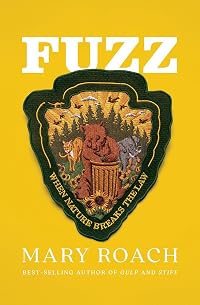
Fuzz: When Nature Breaks the Law
by Mary Roach
On This Page
Description
One of Bookpage's Most Anticipated Nonfiction Books of 2021 Join "America's funniest science writer" (Peter Carlson, Washington Post), Mary Roach, on an irresistible investigation into the unpredictable world where wildlife and humans meet. What's to be done about a jaywalking moose? A bear caught breaking and entering? A murderous tree? Three hundred years ago, animals that broke the law would be assigned legal representation and put on trial. These days, as New York Times best-selling show more author Mary Roach discovers, the answers are best found not in jurisprudence but in science: the curious science of human-wildlife conflict, a discipline at the crossroads of human behavior and wildlife biology. Roach tags along with animal-attack forensics investigators, human-elephant conflict specialists, bear managers, and "danger tree" faller blasters. Intrepid as ever, she travels from leopard-terrorized hamlets in the Indian Himalaya to St. Peter's Square in the early hours before the pope arrives for Easter Mass, when vandal gulls swoop in to destroy the elaborate floral display. She taste-tests rat bait, learns how to install a vulture effigy, and gets mugged by a macaque. Combining little-known forensic science and conservation genetics with a motley cast of laser scarecrows, langur impersonators, and trespassing squirrels, Roach reveals as much about humanity as about nature's lawbreakers. When it comes to "problem" wildlife, she finds, humans are more often the problem--and the solution. Fascinating, witty, and humane, Fuzz offers hope for compassionate coexistence in our ever-expanding human habitat. show lessTags
Recommendations



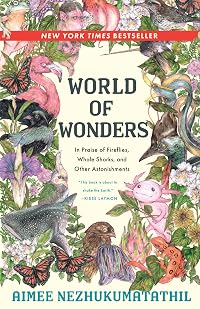
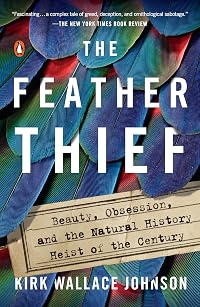
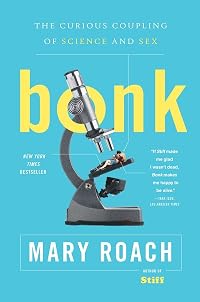
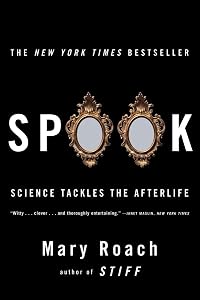

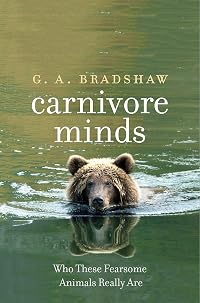
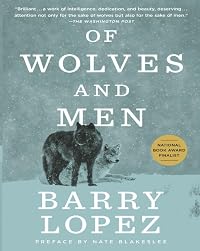

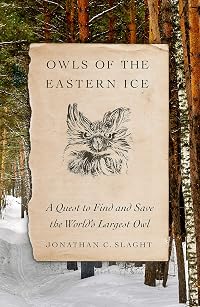
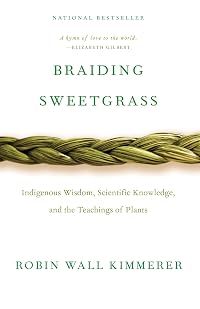





Member Recommendations

by anonymous user
Member Reviews
I got this book from my local library as a recommendation "in the style of" one of my favorites, Bill Bryson. Unfortunately Bryson's chief subjects - travel, the English language, and cultural history - are more in line with my own interests than Mary Roach's scientific subjects. I chose this book assuming it would be full of strange, off-the-wall encounters with animals, Cocaine Bear-style. What I got was just as violent but far more troubling. I know much more now about the "humane" killing or culling of animals than I ever wanted to. It was interesting, and even informative, but ultimately, it became a bit depressing. I probably wouldn't rush to read another of Roach's books, but I might recommend her to someone who's more into science.
I had not read Mary Roach in a few years, so I was delighted that her new book dealt with nature colliding with humanity. A subject that fascinates and horrifies me. There is her usual humor here but she mostly takes an informative dive into many areas, where animals and even trees, cross deadly paths with people. She covers bears, mountain lions, deer, elephants, albatross, macaques and mice. She also offers some solutions, for a better co-existence with this wildlife. A good, solid read and Roach does a fine job narrating the audiobook.
Most of what you expect to get from a Mary Roach book is here: a curious person investigating areas they don't know much about, conversations with experts in areas it perhaps had not previously occurred to you there would be experts in, and lots of engaging/funny anecdotes you will want to repeat to those around you.
That said, a lot of what humans do in the name of animal control is just depressing, and some of that wore on me after a while. Also, this felt less structured than Stiff: The Curious Lives of Human Cadavers, still my favorite book of hers that I've read, and I sometimes wondered where we were going and why.
That said, a lot of what humans do in the name of animal control is just depressing, and some of that wore on me after a while. Also, this felt less structured than Stiff: The Curious Lives of Human Cadavers, still my favorite book of hers that I've read, and I sometimes wondered where we were going and why.
Mary Roach investigates human-animal interactions of all kinds, from bears breaking into houses in Aspen, Colorado to Macaques stealing food in Delhi to gulls destroying the Pope’s flowers to the attempted eradication of invasive species in New Zealand.
It’s been awhile since I’ve read a Mary Roach book. Her writing is just as funny as ever, and her footnotes just as long. I love the way she leaves no question unanswered, even if it’s completely irrelevant to what she was just investigating. She’s a much more human-focused writer than many authors who write about animals, so she brought a bit of a new perspective, but also might leave a little to be desired for readers who are really into animals. I enjoyed how she pushes back show more against the usual western ideas that we should control all of nature (for example, many people believe that farmers should keep birds away from their plants because the birds will eat all of the crops, but investigations have shown that birds eat so many insects and rodents that they actually save more crops than they eat). I would say it’s a quick enjoyable read (boy does she know how to lead from one chapter to another) but not groundbreaking. show less
It’s been awhile since I’ve read a Mary Roach book. Her writing is just as funny as ever, and her footnotes just as long. I love the way she leaves no question unanswered, even if it’s completely irrelevant to what she was just investigating. She’s a much more human-focused writer than many authors who write about animals, so she brought a bit of a new perspective, but also might leave a little to be desired for readers who are really into animals. I enjoyed how she pushes back show more against the usual western ideas that we should control all of nature (for example, many people believe that farmers should keep birds away from their plants because the birds will eat all of the crops, but investigations have shown that birds eat so many insects and rodents that they actually save more crops than they eat). I would say it’s a quick enjoyable read (boy does she know how to lead from one chapter to another) but not groundbreaking. show less
I really enjoy Mary Roach's work -- not so much because of her humor, although there were definitely some funny moments in this book, but because of her ability to explain big scientific problems and current work in a way that I find easy to understand.
This is kind of a tough book, in the sense that it is about the deaths of animals, often on a horrifically large scale, which I find distressing. What I appreciated about it is that it is equally a book about trying to find alternatives to the deaths of animals, and particularly a book that illustrates the utter futility of trying to exterminate "pests", as it has been proven ineffective over and over again. I love the way Roach brings history into the narrative, and the way she links it show more to current science and concerns. I was really excited about the portion of the book on New Zealand, as I have often wondered if there was a better solution to the mass poisoning of forests that they practice in order to try and preserve their native species.
Fascinating.
Advanced Readers's Copy provided by Edelweiss. show less
This is kind of a tough book, in the sense that it is about the deaths of animals, often on a horrifically large scale, which I find distressing. What I appreciated about it is that it is equally a book about trying to find alternatives to the deaths of animals, and particularly a book that illustrates the utter futility of trying to exterminate "pests", as it has been proven ineffective over and over again. I love the way Roach brings history into the narrative, and the way she links it show more to current science and concerns. I was really excited about the portion of the book on New Zealand, as I have often wondered if there was a better solution to the mass poisoning of forests that they practice in order to try and preserve their native species.
Fascinating.
Advanced Readers's Copy provided by Edelweiss. show less
This is my third Mary Roach book. I don’t think there is a dud in the stable. She writes like the journalist she is but in a completely entertaining way. Her style is funny and very conversational. As a reader you get the feeling early on that you somehow know her. And don’t let her levity fool you. She’s among the best science writers out there. This book filled my head with all kinds of useless yet fun information about how humans get along with (or don’t) animals of all kinds. Maybe the most disgusting story Roach told was of her friend who picked up a discarded water bottle from the floor of her truck after a particularly dehydrating run. After noticing an unusual taste, the friend realized there was a decomposing mouse in show more what was left of the water. A call to an on-demand nurse told her she probably didn’t have to worry about disease (she didn’t swallow), but she might need a shrink. That story was one Roach told to illustrate how small an opening a mouse can get through. A mere listing of the dimensions of the opening isn’t good enough for Mary Roach. No, she has to come up with the grossest story she can dig up to make her point. That’s what makes her so good. I actually enjoyed “Stiff” more than this book, but I recommend “Fuzz” to anyone who wonders about how we’ve managed to live with these creatures for so long. show less
The subtitle here is more gimmicky than accurate. Obviously it's not about nature "breaking the law," because that's an inherently ridiculous concept. What it is about is the ways in which humans and animals (or, sometimes, plants) come into conflict with each other, and the ways in which humans respond to those conflicts.
My initial impression of this one is that, while it was readable and interesting enough, certainly, it wasn't nearly as entertaining as many of Mary Roach's earlier books. After a while, I realized that at least part of the problem was that even someone who once made reading about corpses an oddly enjoyable experience, couldn't (and, let's face it, probably shouldn't) do the same for stories about people getting mauled show more by bears or children being killed by leopards. After the first few chapters, though, she turns to some slightly less somber topics -- monkeys stealing things, seagulls vandalizing the Pope's flowers, weird tactics for scaring birds -- and things get rather more fun, especially Roach's trademark weird, hilarious footnotes. Well, mostly it gets more fun, anyway. The chapter about research into humane forms of pest control, perhaps ironically, is quite distressing.
Rating: I wavered just a little on this, but even when she's writing about things that are genuinely disturbing (as opposed to just kind of gross), Mary Roach is always worth reading. show less
My initial impression of this one is that, while it was readable and interesting enough, certainly, it wasn't nearly as entertaining as many of Mary Roach's earlier books. After a while, I realized that at least part of the problem was that even someone who once made reading about corpses an oddly enjoyable experience, couldn't (and, let's face it, probably shouldn't) do the same for stories about people getting mauled show more by bears or children being killed by leopards. After the first few chapters, though, she turns to some slightly less somber topics -- monkeys stealing things, seagulls vandalizing the Pope's flowers, weird tactics for scaring birds -- and things get rather more fun, especially Roach's trademark weird, hilarious footnotes. Well, mostly it gets more fun, anyway. The chapter about research into humane forms of pest control, perhaps ironically, is quite distressing.
Rating: I wavered just a little on this, but even when she's writing about things that are genuinely disturbing (as opposed to just kind of gross), Mary Roach is always worth reading. show less
Members
- Recently Added By
Lists

Top Five Books of 2022
736 works; 272 members

Looking Forward to 2021
14 works; 2 members

Books Read in 2022
5,218 works; 112 members

Youth: Zoology
128 works; 1 member

Books Read in 2023
5,617 works; 145 members

Club Read's Recommended Nonfiction Written by Women
618 works; 30 members

Favorite Animal Non-Fiction
293 works; 144 members
Author Information

24+ Works 33,637 Members
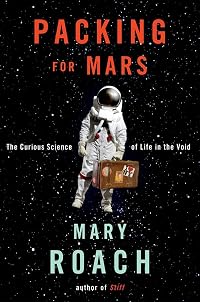
Mary Roach was born and raised in Etna, New Hampshire. She has a BA degree in psychology from Wesleyan University. She spent a few years as a free-lance copy editor before she landed a job at the San Francisco Zoological Society turning out press releases. She then moved on to write humor pieces for such periodicals as The New York Times Magazine, show more The San Francisco Chronicle and Sports Illustrated. Her article "How to Win at Germ Warfare" was a National Magazine Award Finalist, in 1995. In 1996, her article on earthquake-proof bamboo houses took the Engineering Journalism Award. She published several books such as Stiff: The Curious Lives of Human Cadavers (2003) and Packing for Mars (2010). Mary's title Grunt: The Curious Science of Humans at War, made the New York Times Bestseller list in 2016. (Bowker Author Biography) show less
Some Editions
Awards and Honors
Awards
Distinctions
Common Knowledge
- Canonical title
- Fuzz: When Nature Breaks the Law
- Alternate titles
- Animal, Vegetable, Criminal
- Original publication date
- 2021-09-14
- People/Characters
- Lindy Chamberlain
- Important places
- Aspen, Colorado, USA
- Important events
- Emu War
- Dedication
- For Gus, Bean, and Winnie. To the farthest star.
- First words
- On June 26, 1659, a representative from five towns in a province of northern Italy initiated legal proceedings against caterpillars. (introduction)
For most of the past century, your odds of being killed by a cougar were about the same as your odds of being killed by a filing cabinet. (chapter 1) - Quotations
- Whatever you do in this life, stay away from an inebriated bull elephant in musth.
- Last words
- (Click to show. Warning: May contain spoilers.)I'd nod hello, and we'd go about our days.
- Publisher's editor
- Byrne, Janet
- Blurbers
- Larson, Erik; Ronson, Jon; Pandell, Lexi; Black, Emily Rapp
- Original language
- English US
- Canonical DDC/MDS
- 591.5
Classifications
Statistics
- Members
- 1,813
- Popularity
- 12,029
- Reviews
- 87
- Rating
- (3.82)
- Languages
- English, Finnish, Spanish
- Media
- Paper, Audiobook, Ebook
- ISBNs
- 14
- ASINs
- 5