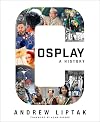
Cosplay: A History: The Builders, Fans, and Makers Who Bring Your Favorite Stories to Life
by Andrew Liptak 
On This Page
Description
This look at the colorful and complex history of cosplay and fandom fashion examines the relationship between franchises and the cosplayers they inspire and the technology that helps bring the details of costumes to life.Tags
Recommendations





Member Reviews
A very Star Wars-focused history of cosplay, padded somewhat by potted histories of related phenomena, including historical reenactments. Very much about franchise toleration and less about fair use, though also clearly written from a place of love. (There is discussion of the Lucasfilm litigation against the creator of the original Stormtrooper helmet; Lucasfilm won in the US—on trademark grounds—and lost in the UK—on copyright.) Significant quote from an insider: “We’re not interested in shutting anyone down unless we see someone trying to turn a real profit. When someone sells stormtrooper armor for under a grand, we know that no one’s making any money in that transaction. But as soon as you’re selling twenty or thirty show more suits a year for more than that, that’s when we want to come in and stop them.” Lucasfilm’s compromises were to “allow” a lot of cosplay, but prohibit appearances with politicians or “in places like strip clubs or bars,” while relying on cosplayers to help promote the franchise/take credit for things like visits to sick kids. Likewise, members of the main Star Wars cosplay organization could “make and sell their own merchandise like patches and coins internally, but not to the general public or for a profit.”
Other brief notes: Cosplay is another kind of performance, copying to achieve something new. Bjo Trimble shows up as an early technological innovator. I liked learning that, with the arrival of Blu-Ray, people identified parts of the original Boba Fett suit, including a dental expander and a Casio calculator pad. I also learned of the “cosplay music video,” a new-to-me cousin of the vid, described variously as “a trailer of sorts for the season’s cosplay and convention scene” and as reenacting or creating scenes but “stopping short of a proper fan film, which would have a longer story and plot. These instead act as more of a character study.”
The discussion of licensed versus unlicensed costume/parts makers is interesting though clearly muted; licensing means negotiations and slow going, as well as fitting into a niche so that you don’t compete with the mass market Halloween costumes. On the other hand, buying from a small business is risky, not just because of scammers but also because builders get overwhelmed by trying to turn a hobby into a business. There’s also a concept of unfair copying of work by cosplayer insiders—“recasting”—which insiders consider different from copying costumes from franchises themselves because it skips a bunch of hard work. And former cosplayers now can professionalize, not just among cosplayers but also by taking the skills they learned to make costumes, special effects and props on different pro productions. There, they may find frustration since cosplayers often have longer timelines and less interest in creating something that is imperfect but durable, cleanable, and adjustable enough to survive a shoot. show less
Other brief notes: Cosplay is another kind of performance, copying to achieve something new. Bjo Trimble shows up as an early technological innovator. I liked learning that, with the arrival of Blu-Ray, people identified parts of the original Boba Fett suit, including a dental expander and a Casio calculator pad. I also learned of the “cosplay music video,” a new-to-me cousin of the vid, described variously as “a trailer of sorts for the season’s cosplay and convention scene” and as reenacting or creating scenes but “stopping short of a proper fan film, which would have a longer story and plot. These instead act as more of a character study.”
The discussion of licensed versus unlicensed costume/parts makers is interesting though clearly muted; licensing means negotiations and slow going, as well as fitting into a niche so that you don’t compete with the mass market Halloween costumes. On the other hand, buying from a small business is risky, not just because of scammers but also because builders get overwhelmed by trying to turn a hobby into a business. There’s also a concept of unfair copying of work by cosplayer insiders—“recasting”—which insiders consider different from copying costumes from franchises themselves because it skips a bunch of hard work. And former cosplayers now can professionalize, not just among cosplayers but also by taking the skills they learned to make costumes, special effects and props on different pro productions. There, they may find frustration since cosplayers often have longer timelines and less interest in creating something that is imperfect but durable, cleanable, and adjustable enough to survive a shoot. show less
Cosplay: A History by Andrew Liptak is an enjoyable and informative look at what has become the larger and more visible aspects of cosplay. As the title says, this is 'a' history not 'the' history.
One of the things that made this an even more interesting read than I expected was the attention given to creating the costumes and trying to be as accurate as possible. While the fans/cosplayers are what makes the get togethers and conventions fun, the costumes are what make them special, so credit to the (re)creators was nice. The legal aspects also made for interesting reading, particularly the way the parties have found ways to coexist.
As expected from Liptak's biographical blurb, the emphasis here is mostly science fiction with some show more fantasy. The history portion even leans that way pretty heavily. That is certainly justifiable since it is that genre that really, especially in the US, took cosplay into the mainstream. But many small areas are glossed over at best and some omitted. Partly by creating a definition that allows sidelining groups like Rocky Horror Picture Show cosplayers (yes, we met for parties, met those from other towns who did the same, and went out as characters, not just reenacting during midnight showings) and partly just because his interest and love is science fiction. That is really a small negative about the book, Liptak doesn't make a claim that his is 'the' history of cosplay, it is 'a' history of his favorite area, and the area that has really taken off.
I would recommend this to both fans of cosplay as well as those who don't understand it and think it is just some casual thing. The chapters are fairly short and to the point so it reads rather quickly.
Reviewed from a copy made available by the publisher via NetGalley. show less
One of the things that made this an even more interesting read than I expected was the attention given to creating the costumes and trying to be as accurate as possible. While the fans/cosplayers are what makes the get togethers and conventions fun, the costumes are what make them special, so credit to the (re)creators was nice. The legal aspects also made for interesting reading, particularly the way the parties have found ways to coexist.
As expected from Liptak's biographical blurb, the emphasis here is mostly science fiction with some show more fantasy. The history portion even leans that way pretty heavily. That is certainly justifiable since it is that genre that really, especially in the US, took cosplay into the mainstream. But many small areas are glossed over at best and some omitted. Partly by creating a definition that allows sidelining groups like Rocky Horror Picture Show cosplayers (yes, we met for parties, met those from other towns who did the same, and went out as characters, not just reenacting during midnight showings) and partly just because his interest and love is science fiction. That is really a small negative about the book, Liptak doesn't make a claim that his is 'the' history of cosplay, it is 'a' history of his favorite area, and the area that has really taken off.
I would recommend this to both fans of cosplay as well as those who don't understand it and think it is just some casual thing. The chapters are fairly short and to the point so it reads rather quickly.
Reviewed from a copy made available by the publisher via NetGalley. show less
Just noting I didn’t read it cover to cover - more samples.
Ratings
Members
- Recently Added By
Lists

2023 Hugo Awards -- Eligible Works -- Related Works
12 works; 3 members
Author Information
2+ Works 138 Members
Andrew Liptak is a LibraryThing Author, an author who lists their personal library on LibraryThing.
All Editions
Some Editions
Common Knowledge
- Original publication date
- 2022
- Publisher's editor
- Monti, Joe; Hoshijo, Amara
- Blurbers
- Wells, Martha; Singer, P. W.; Merchant, Brian; Nevala-Lee, Alec
Classifications
- Genres
- Nonfiction, History, General Nonfiction, Art & Design
- DDC/MDS
- 793.93 — Arts & recreation Recreation, sports, and performing arts Indoor games and amusements Other indoor diversions Adventure games
- LCC
- GV1201.8 .L57 — Geography, Anthropology and Recreation Recreation. Leisure Recreation. Leisure Games and amusements
- BISAC
Statistics
- Members
- 63
- Popularity
- 492,951
- Reviews
- 3
- Rating
- (3.80)
- Languages
- English
- Media
- Paper, Audiobook, Ebook
- ISBNs
- 5
- ASINs
- 1