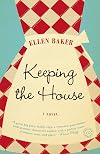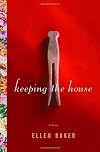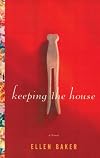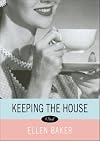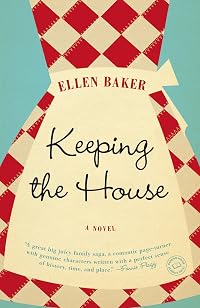
Keeping the House
by Ellen Baker
On This Page
Description
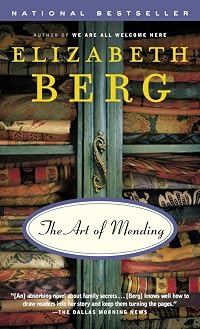
Set in the conformist 1950s and reaching back to span two world wars, Ellen Baker's superb novel is the story of a newlywed who falls in love with a grand abandoned house and begins to unravel dark secrets woven through the generations of a family. Like Whitney Otto's How to Make an American Quilt in its intimate portrayal of women's lives, and reminiscent of novels by Elizabeth Berg and Anne Tyler, Keeping the House is a rich tapestry of a novel that introduces a wonderful new fiction show more writer.When Dolly Magnuson moves to Pine Rapids, Wisconsin, in 1950, she discovers all too soon that making marriage work is harder than it looks in the pages of the Ladies' Home Journal. Dolly tries to adapt to her new life by keeping the house, supporting her husband's career, and fretting about dinner menus. She even gives up her dream of flying an airplane, trying instead to fit in at the stuffy Ladies Aid quilting circle. Soon, though, her loneliness and restless imagination are seized by the vacant house on the hill. As Dolly's life and marriage become increasingly difficult, she begins to lose herself in piecing together the story of three generations of Mickelson men and women: Wilma Mickelson, who came to Pine Rapids as a new bride in 1896 and fell in love with a man who was not her husband; her oldest son, Jack, who fought as a Marine in the trenches of World War I; and Jack's son, JJ, a troubled veteran of World War II, who returns home to discover Dolly in his grandparents' house.
As the crisis in Dolly's marriage escalates, she not only escapes into JJ's stories of his family's past but finds in them parallels to her own life. As Keeping the House moves back and forth in time, it eloquently explores themes of wartime heroism and passionate love, of men's struggles with fatherhood and war, and of women's conflicts with issues of conformity, identity, forbidden dreams, and love.
Beautifully written and atmospheric, Keeping the House illuminates the courage it takes to shape and reshape a life and the difficulty of ever knowing the truth about another person's desires. Keeping the House is an unforgettable novel about small-town life and big matters of the heart.
. show less
Tags
Recommendations
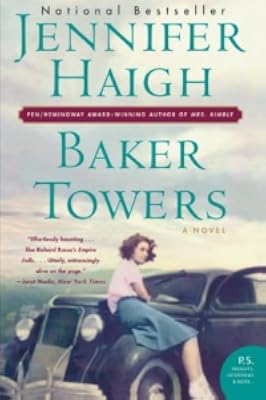
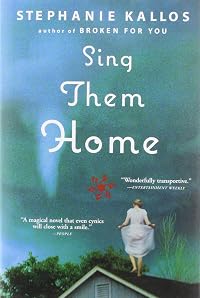
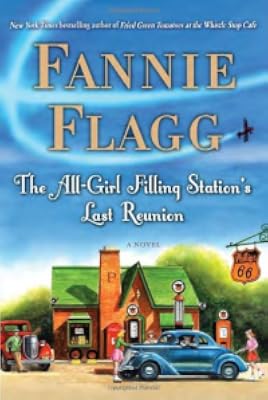
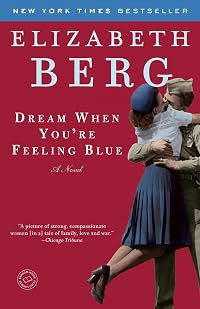




Member Reviews
When a young bride moves to a small Wisconsin town in the 1950s, she becomes obsessed with the vacant mansion that once belonged to the town's most prominent family.
Baker uses the character's fascination with the house to tell the story of its inhabitants from 1897, when another young bride arrived on the scene, moving through the generations as they grow up and deal with two world wars, the family's changing fortunes, and the restrictive view of women prevalent in the era.
Using quotes pulled from actual women's magazines, cookbooks, and marriage-advice manuals of the era, Baker paints a quaint and almost laughable picture of the advice being peddled to 50's women; yet a careful reading has to bring up the question of whether all that show more much has changed. Yes, women have made advances in legal equality and wage equality (sometimes in a two steps forward, one step backward pattern), but many still look outside themselves for approval or direction. Is today's young woman, struggling to advance her career, nurture her personal relationships, and rear her children in the effortless way presented by the media really any better off than the 1950s housewife who was instructed to always and only put her husband's wishes first? Is wanting a career but being told you can't have one any more stressful than being told you must have a career when you would prefer to take the Mommy Track?
Most of Baker's female characters manage to find a balance (though that balance is not the same for all of them, nor does it arrive at the same point in each one's life). Meanwhile, most of the men in the book seem to have a bit of difficulty keeping it in their pants. There's plenty of fence-jumping, unwise hookups, and rash decisions to complicate the already-Byzantine relationships set out over half a century.
It's an interesting read for all of that, even if this reader particularly wanted to smack a couple of the male characters upside the head, and occasionally became a bit impatient at the number of love-at-first-sight romances folded into the book's 500+ pages. (Hint: Some of them turn out better than others.) show less
Baker uses the character's fascination with the house to tell the story of its inhabitants from 1897, when another young bride arrived on the scene, moving through the generations as they grow up and deal with two world wars, the family's changing fortunes, and the restrictive view of women prevalent in the era.
Using quotes pulled from actual women's magazines, cookbooks, and marriage-advice manuals of the era, Baker paints a quaint and almost laughable picture of the advice being peddled to 50's women; yet a careful reading has to bring up the question of whether all that show more much has changed. Yes, women have made advances in legal equality and wage equality (sometimes in a two steps forward, one step backward pattern), but many still look outside themselves for approval or direction. Is today's young woman, struggling to advance her career, nurture her personal relationships, and rear her children in the effortless way presented by the media really any better off than the 1950s housewife who was instructed to always and only put her husband's wishes first? Is wanting a career but being told you can't have one any more stressful than being told you must have a career when you would prefer to take the Mommy Track?
Most of Baker's female characters manage to find a balance (though that balance is not the same for all of them, nor does it arrive at the same point in each one's life). Meanwhile, most of the men in the book seem to have a bit of difficulty keeping it in their pants. There's plenty of fence-jumping, unwise hookups, and rash decisions to complicate the already-Byzantine relationships set out over half a century.
It's an interesting read for all of that, even if this reader particularly wanted to smack a couple of the male characters upside the head, and occasionally became a bit impatient at the number of love-at-first-sight romances folded into the book's 500+ pages. (Hint: Some of them turn out better than others.) show less
Dolly, a new mid-century housewife, meets with some marriage disappointments in Pine Rapids, Wisconsin. She becomes captivated by the once-grand Mickelson house, confident that possessing it will solve her ever-growing series of problems and dissatisfactions. She collects bits of the history and mysteries of the family that once lived there, and uncovers some rather stunning revelations in the end.
Generally, I tend not to be a fan of stories that flit back and forth between decades, but here it's been skillfully rendered, and I only took slight pause a couple of times to re-orient myself in time when returning to the book after a break. The device became irrelevant; after a few chapters I found myself almost as determined to reveal the show more secrets of the Mickelsons as Dolly was.
I've seen references made to the style of Anne Tyler several times. True, Baker's characters are nearly as dimensional, timeless, and engaging, if not as purposefully quirky. And there are elements both bitter and sweet, but, where Tyler's work often leaves the reader with a strong aftertaste of the former, Baker's ending emphasizes the latter. Which, in the case of Dolly Magnuson and Wilma Mickelson, is just fine with me. show less
Generally, I tend not to be a fan of stories that flit back and forth between decades, but here it's been skillfully rendered, and I only took slight pause a couple of times to re-orient myself in time when returning to the book after a break. The device became irrelevant; after a few chapters I found myself almost as determined to reveal the show more secrets of the Mickelsons as Dolly was.
I've seen references made to the style of Anne Tyler several times. True, Baker's characters are nearly as dimensional, timeless, and engaging, if not as purposefully quirky. And there are elements both bitter and sweet, but, where Tyler's work often leaves the reader with a strong aftertaste of the former, Baker's ending emphasizes the latter. Which, in the case of Dolly Magnuson and Wilma Mickelson, is just fine with me. show less
 This review was written for LibraryThing Early Reviewers.
As other reviewers have pointed out, this is a family saga that begins at the turn of the century and ends in the 1950's. The reader watches the effect of decisions made down through generations as ripples in the story. As is so often the case in fiction, characters make decisions that make the reader want to scream, "Don't do it!" Without those decisions, though, there is no story and there is no life.
Ms. Baker's story is definitely one of what happens when the truth is hidden and lies are allowed to fester. Ever present is the "curse" that is said to hang over the beautiful house, but the curse is, if anything, the "roads not taken", the truth that isn't spoken, and people who hesitate to act because of fear of authority.
Another show more reviewer has pointed out the frustrating aspect of women who are too passive. It's true--their lack of assertiveness is very frustrating, but until relatively recently, women were expected to be passive and faced truly tragic ends if they tried to resist the decisions of the men in their lives.
I enjoyed the parts of the story set in WWII, and I enjoyed the few strong female characters in the story. Wilma's ultimate decisions reinforced the idea that it isn't too late "to become what you might have been". show less
Ms. Baker's story is definitely one of what happens when the truth is hidden and lies are allowed to fester. Ever present is the "curse" that is said to hang over the beautiful house, but the curse is, if anything, the "roads not taken", the truth that isn't spoken, and people who hesitate to act because of fear of authority.
Another show more reviewer has pointed out the frustrating aspect of women who are too passive. It's true--their lack of assertiveness is very frustrating, but until relatively recently, women were expected to be passive and faced truly tragic ends if they tried to resist the decisions of the men in their lives.
I enjoyed the parts of the story set in WWII, and I enjoyed the few strong female characters in the story. Wilma's ultimate decisions reinforced the idea that it isn't too late "to become what you might have been". show less
I lked this more than I expected. Reading it for book club I was interested in the observations Baker made regarding marriage. How people often don't really know the person they marry. Their notion of who this person is more a product of their dreams rather than reality.
She uses the character Dolly and her facination with the Mansion on the hill to challenge the notion our materialistic values.
The marital crimes and misdemeanors commited by the matriach and patriarch of the family pose important questions. Are actions or attitudes more important. or equally important?
I would recommend it for a book club. Good for discusion.
She uses the character Dolly and her facination with the Mansion on the hill to challenge the notion our materialistic values.
The marital crimes and misdemeanors commited by the matriach and patriarch of the family pose important questions. Are actions or attitudes more important. or equally important?
I would recommend it for a book club. Good for discusion.
This book is very hot and cold for me.
I appreciate the historical fiction component of this book. It's interesting to hear about roles of particular groups--women, vets, daughters, moms. But I do find all the decade switching to be a little distracting and difficult to follow
I appreciate the historical fiction component of this book. It's interesting to hear about roles of particular groups--women, vets, daughters, moms. But I do find all the decade switching to be a little distracting and difficult to follow
This book was sent to me by the publisher as an early reviewer copy. I dove into the book and immediately got dragged into the stories of three women, in the same town but in different times, spanning the early 1900s into the 1950s. Baker touches on a few themes in the book including war, love, and the lives of women during these changing times.
However, about 3/4 of the way through the book, I started to lose interest. First off, some characters come across as stock characters (think John Irving's issue with female characters in most of his books; Baker does this with her male characters). I find them unbelievable and static. Secondly, the hinting at something HUGE happening at Thanksgiving time, 1945, got old rather quickly. Yes, I show more know foreshadowing. I don't need to be told repeatedly.
Normally, I like the jumping of time in a book. This time, I got tired of it quickly. The chapters are short, but sometimes you wonder why they're necessary. Easily, this book could have been half as long as twice as impactful.
All that said, I think Ellen Baker will work these issues out in later novels. I look forward to seeing what else she has to write. show less
However, about 3/4 of the way through the book, I started to lose interest. First off, some characters come across as stock characters (think John Irving's issue with female characters in most of his books; Baker does this with her male characters). I find them unbelievable and static. Secondly, the hinting at something HUGE happening at Thanksgiving time, 1945, got old rather quickly. Yes, I show more know foreshadowing. I don't need to be told repeatedly.
Normally, I like the jumping of time in a book. This time, I got tired of it quickly. The chapters are short, but sometimes you wonder why they're necessary. Easily, this book could have been half as long as twice as impactful.
All that said, I think Ellen Baker will work these issues out in later novels. I look forward to seeing what else she has to write. show less
Moving back and forth in time between 1897, the World Wars, and 1950, this is the story of Dolly striving to be the perfect housewife in 1950 while trying to discover the mysterious history of the Mickelson house that has captured her fascination. There were a couple of dull parts, but the characters were interesting, and the story kept me hooked. The bits of advice gleaned from the Ladies' Home Journal and other decades-old publications were a fantastic addition.
http://fingersandprose.blogspot.com/2010/06/keeping-house.html
http://fingersandprose.blogspot.com/2010/06/keeping-house.html
Members
- Recently Added By
Lists

Family Drama
56 works; 14 members

Best family sagas
244 works; 34 members

Dysfunctional Families
133 works; 7 members

Books Read in 2009
464 works; 11 members
Author Information

4 Works 794 Members
Awards and Honors
Common Knowledge
- Canonical title
- Keeping the House
- Original publication date
- 2007-07-10
- People/Characters
- John Mickleson; Wilma Mickleson; Dolly Magnuson; Byron Magnuson; Jack Mickleson; Chase Mickleson (show all 14); Gust Mickleson; Cecilia Fryt; Elissa Mickleson; Nick Overby; JJ Mickleson; Harry Mickleson; Anne Wallace; Ty Loftgren
- Important places
- Superior, Wisconsin, USA; Pine Rapids, Wisconsin, USA
- First words
- Dolly, her brand-new sewing basket hanging from the crook of her arm, set out for Cecilia Fryt's bearing a fresh plate of Lacy Raisin Wafers, clutching a note in her fist that read "412 W. 1st."
- Blurbers
- Flagg, Fannie
Classifications
Statistics
- Members
- 392
- Popularity
- 79,610
- Reviews
- 34
- Rating
- (3.64)
- Languages
- English
- Media
- Paper, Audiobook, Ebook
- ISBNs
- 12
- ASINs
- 2