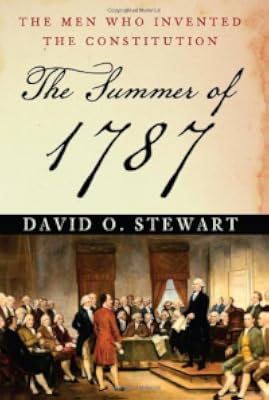
The Summer of 1787: The Men Who Invented the Constitution
by David O. Stewart
On This Page
Description
The successful creation of the Constitution is a suspense story. This book takes us into the sweltering room in which delegates struggled for four months to produce the flawed but enduring document that would define the nation. George Washington presided, James Madison kept the notes, Benjamin Franklin offered wisdom and humor at crucial times. At different points, more than half of the delegates threatened to walk out, and some actually did. It was a desperate balancing act. Revolutionary show more principles required that the people have power, but could the people be trusted? Would a stronger central government leave room for the states? And what of slavery? The supercharged debates over America's original sin led to the most creative and most disappointing political deals of the Convention. In a country continually arguing over the document's original intent, it is fascinating to watch these powerful characters struggle toward consensus.--From publisher description. show lessTags
Recommendations
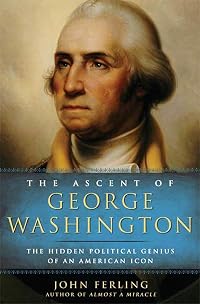
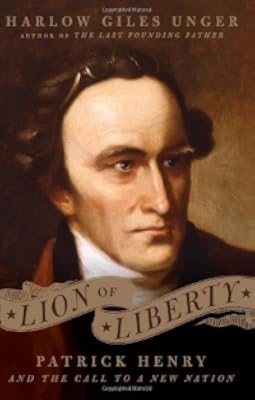
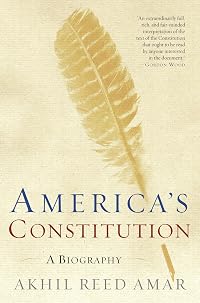
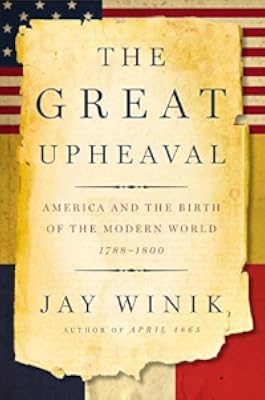


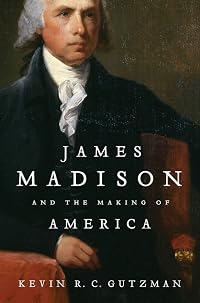
Member Recommendations
wildbill An excellent volume about the writing of the Constitution
Member Reviews
David Stewart, a lawyer who has argued before the Supreme Court and become an expert on the impeachment of Andrew Johnson, has written a marvelously detailed account of the constitutional Convention of 1787.
We really only have Madison's notes for what went on and he edited those, some suspect for political considerations, after the fact, but it appears to be a fairly accurate account of what happened in that stuffy and stifling room in Philadelphia in 1787.
Benjamin Franklin remarked that he wasn't sure if the carving of the sun on the back of Washington's chair was rising or setting, and indeed, there was a lot of antagonism to a system that gave more power to a central government. However, it was necessary as states were constantly show more squabbling among each other about tariffs on each other's goods, militias, paying debts, honoring each other's money, and a myriad of other issues.
George Washington was particularly concerned after Shay's Rebellion that pitted one colony (they weren't really states yet) against another: “I am mortified beyond expression,” Washington wrote in October 1786, “when I view the clouds that have spread over the brightest morn that ever dawned upon any country.” Without “some alteration in our political creed,” he declared, “the superstructure we have been seven years raising at the expense of so much blood and treasure, must fall. We are fast verging to anarchy and confusion!”
Slave states worried about their slave trade and feared that a central power would create a centralized army that could shut it down. Indeed, Patrick Henry in his tirade against the ratification of the new Constitution in Virginia's House of Delegates was heard to exclaim, "They're coming to get your niggers." Slavery was the elephant in the room throughout the discussions. It was intertwined with what to do with the "West." No one was quite sure how to parcel it out and westerners were considered treacherous, fickle, and not to be trusted. It was even feared they might form their own government and secede. Land titles were unclear and several of the delegates, including Washington, were speculating on land values beyond the Appalachians, which formed the boundary between east and west.* Native American "ownership" was never considered, but there were many squatters and it took years to resolve the claims. **
I was humbled to realize how much I had forgotten from high school and surprised to learn (relearn?) of the role of John Rutledge and the Committee of five who were tasked with the job of summarizing and codifying the work of the larger Committee of the Whole that had slugged its way to some unanimity during the summer. Rutledge and the committee rewrote and even changed much of what had been agreed upon. Most importantly, Rutledge was intent on weakening the central government and providing protections for slavery. He was, after all, from South Carolina, and owned as many as 60 slaves, a number that had decreased to only one by the time of his death in 1800. The Committee, which had excluded Madison -- perhaps the members tiring of his pedantic allocutions -- made clear that the Supreme Court was to decide issues and not just offer advisory opinions. As a judge who went on to become the second chief justice, after John Jay, a position of great importance to him. He didn't last long in that position. He had begged for the job and Washington gave it to him as a recess appointment, but then he turned around and gnawed on the hand that tried to help him by vitriolically attacking the treaty that John Jay had concluded for Washington with Great Britain. Rutledge reportedly said in the speech "that he had rather the President should die than sign that puerile instrument"– and that he "preferred war to an adoption of it." His appointment was rejected by the Senate, a first. Rutledge remains the only Supreme Court justice unseated involuntarily by the Senate, serving the shortest term of any justice, 138 days.
In a fit of depression he walked into a river, but as the level reached his neck he was spotted by some slaves who managed to save him from drowning in spite of his kicking and screaming. The great defender of slavery was prevented from taking his life by those whom he wanted to keep enslaved. Several other delegates did not fare well after the convention: two duels and several bankruptcies among their downfalls.
Stewart has told a great story.
*Aaron Burr was heavily involved in speculation. He was accused of conspiring to foment a war with Spain (Andrew Jackson and General Wilkenson were in on it) in order to increase the value of his property in the west. Ultimately, having seriously irritated the Jefferson administration, he was tried for treason, Justice Marshall presiding, but was acquitted.
**Native American rights were nicely eliminated by the Discovery Doctrine, a colonial technique to void aboriginal ownership of lands conquered. It said that any land "discovered" by a European power was owned by that power. This doctrine was a major factor in the Lewis & Clark expedition. It gave the Jefferson administration rights to all the lands they explored. Justice Marshall, in one of his more notorious decisions, validated the doctrine writing, "As a corollary, the "discovering" power gains the exclusive right to extinguish the "right of occupancy" of the Indigenous occupants, which otherwise survived the assumption of sovereignty. " See Miller, Robert J. Discovering Indigenous Lands: The Doctrine of Discovery in the English Colonies. New York: Oxford University Press, 2010 and https://en.wikipedia.org/wiki/Discovery_doctrine show less
We really only have Madison's notes for what went on and he edited those, some suspect for political considerations, after the fact, but it appears to be a fairly accurate account of what happened in that stuffy and stifling room in Philadelphia in 1787.
Benjamin Franklin remarked that he wasn't sure if the carving of the sun on the back of Washington's chair was rising or setting, and indeed, there was a lot of antagonism to a system that gave more power to a central government. However, it was necessary as states were constantly show more squabbling among each other about tariffs on each other's goods, militias, paying debts, honoring each other's money, and a myriad of other issues.
George Washington was particularly concerned after Shay's Rebellion that pitted one colony (they weren't really states yet) against another: “I am mortified beyond expression,” Washington wrote in October 1786, “when I view the clouds that have spread over the brightest morn that ever dawned upon any country.” Without “some alteration in our political creed,” he declared, “the superstructure we have been seven years raising at the expense of so much blood and treasure, must fall. We are fast verging to anarchy and confusion!”
Slave states worried about their slave trade and feared that a central power would create a centralized army that could shut it down. Indeed, Patrick Henry in his tirade against the ratification of the new Constitution in Virginia's House of Delegates was heard to exclaim, "They're coming to get your niggers." Slavery was the elephant in the room throughout the discussions. It was intertwined with what to do with the "West." No one was quite sure how to parcel it out and westerners were considered treacherous, fickle, and not to be trusted. It was even feared they might form their own government and secede. Land titles were unclear and several of the delegates, including Washington, were speculating on land values beyond the Appalachians, which formed the boundary between east and west.* Native American "ownership" was never considered, but there were many squatters and it took years to resolve the claims. **
I was humbled to realize how much I had forgotten from high school and surprised to learn (relearn?) of the role of John Rutledge and the Committee of five who were tasked with the job of summarizing and codifying the work of the larger Committee of the Whole that had slugged its way to some unanimity during the summer. Rutledge and the committee rewrote and even changed much of what had been agreed upon. Most importantly, Rutledge was intent on weakening the central government and providing protections for slavery. He was, after all, from South Carolina, and owned as many as 60 slaves, a number that had decreased to only one by the time of his death in 1800. The Committee, which had excluded Madison -- perhaps the members tiring of his pedantic allocutions -- made clear that the Supreme Court was to decide issues and not just offer advisory opinions. As a judge who went on to become the second chief justice, after John Jay, a position of great importance to him. He didn't last long in that position. He had begged for the job and Washington gave it to him as a recess appointment, but then he turned around and gnawed on the hand that tried to help him by vitriolically attacking the treaty that John Jay had concluded for Washington with Great Britain. Rutledge reportedly said in the speech "that he had rather the President should die than sign that puerile instrument"– and that he "preferred war to an adoption of it." His appointment was rejected by the Senate, a first. Rutledge remains the only Supreme Court justice unseated involuntarily by the Senate, serving the shortest term of any justice, 138 days.
In a fit of depression he walked into a river, but as the level reached his neck he was spotted by some slaves who managed to save him from drowning in spite of his kicking and screaming. The great defender of slavery was prevented from taking his life by those whom he wanted to keep enslaved. Several other delegates did not fare well after the convention: two duels and several bankruptcies among their downfalls.
Stewart has told a great story.
*Aaron Burr was heavily involved in speculation. He was accused of conspiring to foment a war with Spain (Andrew Jackson and General Wilkenson were in on it) in order to increase the value of his property in the west. Ultimately, having seriously irritated the Jefferson administration, he was tried for treason, Justice Marshall presiding, but was acquitted.
**Native American rights were nicely eliminated by the Discovery Doctrine, a colonial technique to void aboriginal ownership of lands conquered. It said that any land "discovered" by a European power was owned by that power. This doctrine was a major factor in the Lewis & Clark expedition. It gave the Jefferson administration rights to all the lands they explored. Justice Marshall, in one of his more notorious decisions, validated the doctrine writing, "As a corollary, the "discovering" power gains the exclusive right to extinguish the "right of occupancy" of the Indigenous occupants, which otherwise survived the assumption of sovereignty. " See Miller, Robert J. Discovering Indigenous Lands: The Doctrine of Discovery in the English Colonies. New York: Oxford University Press, 2010 and https://en.wikipedia.org/wiki/Discovery_doctrine show less
James Madison is known to history as the "Father of the Constitution." For all his political influence and genius, which were on display throughout his political career, though, author David Stewart shows that the moniker greatly overstates Madison's role at the Constitutional Convention of 1787. While he has shaped the understanding of that gathering, due to his copious notes describing the proposals by and debates among the delegates, others had more significant impact on the compromises that ultimately shaped the Constitution.
Indeed, as Stewart capably shows in "The Summer of 1787," much of the important work in producing a frame of government satisfactory to those gathered in Philadelphia happened outside of Madison's observation in show more countless committee meetings and informal gatherings at dinners and boardinghouses. With the conviction that something drastic needed to be done to save the fledgling republic, the men who gathered in Philadelphia spent most of their waking hours strategizing, schmoozing, and methodically working through the issues facing the reorganization of the federal government.
Multiple issues threatened to prevent agreement. Slaveholders demanded certain protections, particularly given the consensus that the importation of slaves must soon end, which ultimately became the infamous 3/5 compromise. Small states feared that their interests would be trampled by the largest states, which led to seemingly unending debates about representation in Congress, ultimately solved by allocating representatives by population and senators evenly by state.
In fact, the key debates were over the structure and powers of the legislative branch. The national executive was important, but the overwhelming assumption was that Gen. George Washington, who was elected president of the Constitutional Convention, would serve as the first executive. The man who had retired from the army and returned home after winning independence for the United States was trusted to rule well. Whether from exhaustion or disinterest, the particulars of the judicial branch were left to the first Congress to decide.
Given how heated were certain debates and how inflexible the demands of certain coalitions, it is a wonder that the delegates were able to agree on a government charter. (Indeed, Stewart's book might be called, "Miracle at Philadelphia," but that is the title of Catherine Bowen's classic book about the Convention, written about a half century ago.) One of Stewart's main arguments, necessarily circumstantial, is the key role played by senior statesmen like Washington and Benjamin Franklin in encouraging the delegates to persevere and accept compromises to produce a workable Constitution. Indeed, more than some other historians, Stewart suggests that Washington staked his reputation on this effort to save the country from the untenable Articles of Confederation.
With a background in law, Stewart has an strong grasp on the technical arguments and debates surrounding the Constitution (which he also demonstrates in his excellent book on the impeachment of Andrew Johnson). His writing style offers clarity and vigor, even when incorporating quotations using the stilted cadences of 18th Century English. Ultimately, he has produced a dramatic and compelling account of the men, many all but forgotten, who deliberately struggled to produce the frame that still guides the US government more than two centuries later. show less
Indeed, as Stewart capably shows in "The Summer of 1787," much of the important work in producing a frame of government satisfactory to those gathered in Philadelphia happened outside of Madison's observation in show more countless committee meetings and informal gatherings at dinners and boardinghouses. With the conviction that something drastic needed to be done to save the fledgling republic, the men who gathered in Philadelphia spent most of their waking hours strategizing, schmoozing, and methodically working through the issues facing the reorganization of the federal government.
Multiple issues threatened to prevent agreement. Slaveholders demanded certain protections, particularly given the consensus that the importation of slaves must soon end, which ultimately became the infamous 3/5 compromise. Small states feared that their interests would be trampled by the largest states, which led to seemingly unending debates about representation in Congress, ultimately solved by allocating representatives by population and senators evenly by state.
In fact, the key debates were over the structure and powers of the legislative branch. The national executive was important, but the overwhelming assumption was that Gen. George Washington, who was elected president of the Constitutional Convention, would serve as the first executive. The man who had retired from the army and returned home after winning independence for the United States was trusted to rule well. Whether from exhaustion or disinterest, the particulars of the judicial branch were left to the first Congress to decide.
Given how heated were certain debates and how inflexible the demands of certain coalitions, it is a wonder that the delegates were able to agree on a government charter. (Indeed, Stewart's book might be called, "Miracle at Philadelphia," but that is the title of Catherine Bowen's classic book about the Convention, written about a half century ago.) One of Stewart's main arguments, necessarily circumstantial, is the key role played by senior statesmen like Washington and Benjamin Franklin in encouraging the delegates to persevere and accept compromises to produce a workable Constitution. Indeed, more than some other historians, Stewart suggests that Washington staked his reputation on this effort to save the country from the untenable Articles of Confederation.
With a background in law, Stewart has an strong grasp on the technical arguments and debates surrounding the Constitution (which he also demonstrates in his excellent book on the impeachment of Andrew Johnson). His writing style offers clarity and vigor, even when incorporating quotations using the stilted cadences of 18th Century English. Ultimately, he has produced a dramatic and compelling account of the men, many all but forgotten, who deliberately struggled to produce the frame that still guides the US government more than two centuries later. show less
Informative and just plain good fun.
While MIRACLE AT PHILADELPHIA will probably always remain the so-called "definitive" book about the convention, this one is a much more entertaining read. Stewart proceeds chronologically through the convention, yet organizes each chapter around a key theme, issue, or debate. You'll spend one chapter watching the South try to work its will over the horrid 3/5s clause, another listening to grumbling about the election of the President, and another mediating the wrangling over small state rights. Rather than read speeches or pore over the finer points of debate, you'll instead be treated to something of a historical suspense novel -- will they reach an agreement? Will the crafty Luther Martin bog down show more proceedings? Will John Rutledge work his will? And will George Washington ever say anything?
Stewart also brings to life some of the unsung, and previously unknown, heroes of the Consitution, not only inside the Philadelphia State House, but beyond. You'll read about the "Ipswich Miracle" -- the story of (perhaps) America's first truly successful lobbyist -- that mirrored the debates on slavery in Philadelphia so closely that some suspected a conspiracy. You'll get to know David Brearley, the still largely unknown delegate from new Jersey who solved the problems of the presidency, and the quiet Nathaniel Gorham of Massachusetts who, technically, presided over much of the session -- as it sat as "Committee of the Whole" -- while the even more silent George Washington sat with the Virginia delegation.
Jefferson once called those at the convention an "assembly of demigods." But in Stewart's hands, they become something more compelling: human beings. They bicker, they politick, they call each other names, they rush through work when they want to go home, and -- just as politicians do today -- they posture and swagger, even behind closed doors. But they could also listen, compromise, see the greater good, argue persuasively, and write beautifully -- and those qualities, ultimately, are what make the Constitution such a wonderful human -- and, in this case, uniquely American -- invention. show less
While MIRACLE AT PHILADELPHIA will probably always remain the so-called "definitive" book about the convention, this one is a much more entertaining read. Stewart proceeds chronologically through the convention, yet organizes each chapter around a key theme, issue, or debate. You'll spend one chapter watching the South try to work its will over the horrid 3/5s clause, another listening to grumbling about the election of the President, and another mediating the wrangling over small state rights. Rather than read speeches or pore over the finer points of debate, you'll instead be treated to something of a historical suspense novel -- will they reach an agreement? Will the crafty Luther Martin bog down show more proceedings? Will John Rutledge work his will? And will George Washington ever say anything?
Stewart also brings to life some of the unsung, and previously unknown, heroes of the Consitution, not only inside the Philadelphia State House, but beyond. You'll read about the "Ipswich Miracle" -- the story of (perhaps) America's first truly successful lobbyist -- that mirrored the debates on slavery in Philadelphia so closely that some suspected a conspiracy. You'll get to know David Brearley, the still largely unknown delegate from new Jersey who solved the problems of the presidency, and the quiet Nathaniel Gorham of Massachusetts who, technically, presided over much of the session -- as it sat as "Committee of the Whole" -- while the even more silent George Washington sat with the Virginia delegation.
Jefferson once called those at the convention an "assembly of demigods." But in Stewart's hands, they become something more compelling: human beings. They bicker, they politick, they call each other names, they rush through work when they want to go home, and -- just as politicians do today -- they posture and swagger, even behind closed doors. But they could also listen, compromise, see the greater good, argue persuasively, and write beautifully -- and those qualities, ultimately, are what make the Constitution such a wonderful human -- and, in this case, uniquely American -- invention. show less
Told from David O. Stewart's point of view, the Constitution was really born out of a kerfuffle between Virginia and Maryland over access to the Potamac River. It's a unique, if dryer, point of view.
Stewart also distinguishes himself by simultaneously tearing down any illusions about the founding fathers and the Convention while treating both with a wide-eyed, hushed awe and respect. Humanizing the fathers was clearly a necessary chore in Stewart's eyes, as his portrayals of the delegates are destined to leave the men as glossy, two-dimensional, formal painted portraits in the reader's eyes.
Benjamin's Franklin, for example, is explained to have been "ill," but the fact that he had syphilis after whoring around France is never even show more hinted at. Rather, we are to envision him as an infirm, accomplished and elderly statesman, benevolently diffusing conflicts on occasion.
Likewise, Washington -- who Stewart insists on referring to frequently as "The General"-- and his complete lack of participation is also commented on, belatedly, with awe. More knowledgeable historians know better, and perhaps that is why this aspect of the book left a bad taste in my mouth.
At the same time, Stewart is an attorney, one who has argued before the Supreme Court no less, and his crisp, clear prose reflects what must be his skill for distillation in the interest of proving a point. The book is peppered with a sharp-edged wit that often shows in the form of a delightfully unexpected zinger at the end of a paragraph.
Preventing the book becoming too dry, Stewart is oddly obsessed with what the weather was like on a given day that summer in Philadelphia. Though at first uses this information rather well to convey the atmosphere of the time, it becomes evident after a few chapters that this is the only trick up his sleeve and it wears rather thin towards the end.
Stewart's obviously brilliant legal mind is also his downfall. Rather than being a book about the Constitutional Convention, the majority of book examines the Three-Fifths Compromise and the epic Small-State v. Big States battle over Congressional representation. So much so, in fact, that I feel that this book should be re-titled and is actually a bit misleading.
Part of this is due to Stewart's arranging the book in chronological order. It is in fact true that most of the work on the executive branch was hashed out in committees during the last few weeks of the Convention. It is equally true the slave question, without ever really being mentioned exactly, dominated the debates due to its monstrous impact on representation.
Other historians have opted for consolidation of the issues over chronology, and Stewart's book serves as a good example as to why this is a better approach.Good historical writing takes facts and shapes them into something different, though not inaccurate or unrehearsed, to look at. Stewart, instead, acts more like a modern Madison, transcribing everything clearly but with little life left in the narrative.
Still, this would be a wonderful book for a reader looking to learn more about the Constitution's formation. Stewart is merciless in his disabusing of modern-day falsely held notions, even meticulously chronicling every delegate's end, even the most undignified and sordid.
By underplaying Roger Sherman's role and expanding more on lesser-known delegates, such as Mason and Rutledge, Stewart shows that the Constitution, as disillusioning as it may be, was hammered out by committees and subcommittees, in deals brokered after hours in pubs and by men with ambitions that are not so lofty as we Americans want to believe. He even quotes Madison saying as much.
Stewart also does a wonderful job of illustrating that (contrary to current popular belief), the Convention was held to strengthen the government and most delegates -- though not all -- found the prospect of direct influence on the government a horrifying prospect. The point that the Bill of Rights is, essentially, a rider to ensure ratification by small states left vulnerable by the Three-Fifths Compromise, is well illustrated.
Finally, readers will be firmly disabused of the notion that Jefferson wrote the Constitution, since Stewart points out that -- at the last minute, really -- Alexander Hamilton, John Madison and Goveneur Morris wrote the final draft (Morris, known for his ability to express complicated ideas clearly, took the lead).
Returning again and again to the question of slavery and its overall implications on representation, Stewart argues that it was one of the most detrimental decisions the founders made, and that they knew it at the time, too. The problem is, having won his argument, Stewart goes on about it.
As a result, the formation of the executive, sundry Congressional powers and of course the Elector System get rather short shrift. They feel crammed into the last few chapters and unjustly glossed over.
Still, Stewart's scholarship can not fairly be faulted and his idealism can be forgiven, if for no other reason than the notion of a lawyer with such obvious genuine respect for the Founders arguing before the Supreme Court is a comforting thought.
If someone I knew wanted to know more about the Constitutional Convention, this is without hesitation the book I would recommend to them. If a Con Law geek like me was looking for a good read about the delegates and their debates, I would recommend my personal favorite, Joe Ellis' "Founding Brothers."
Finally, I'd like to make a note on this particular edition. It is a beautiful book. There are wonderful illustrations and the font selection for chapter headings is gorgeous. The illustrations are well-placed and well-chosen. All of which helps, perhaps more than Stewart's weather notes, to set the tone exceedingly well. show less
Stewart also distinguishes himself by simultaneously tearing down any illusions about the founding fathers and the Convention while treating both with a wide-eyed, hushed awe and respect. Humanizing the fathers was clearly a necessary chore in Stewart's eyes, as his portrayals of the delegates are destined to leave the men as glossy, two-dimensional, formal painted portraits in the reader's eyes.
Benjamin's Franklin, for example, is explained to have been "ill," but the fact that he had syphilis after whoring around France is never even show more hinted at. Rather, we are to envision him as an infirm, accomplished and elderly statesman, benevolently diffusing conflicts on occasion.
Likewise, Washington -- who Stewart insists on referring to frequently as "The General"-- and his complete lack of participation is also commented on, belatedly, with awe. More knowledgeable historians know better, and perhaps that is why this aspect of the book left a bad taste in my mouth.
At the same time, Stewart is an attorney, one who has argued before the Supreme Court no less, and his crisp, clear prose reflects what must be his skill for distillation in the interest of proving a point. The book is peppered with a sharp-edged wit that often shows in the form of a delightfully unexpected zinger at the end of a paragraph.
Preventing the book becoming too dry, Stewart is oddly obsessed with what the weather was like on a given day that summer in Philadelphia. Though at first uses this information rather well to convey the atmosphere of the time, it becomes evident after a few chapters that this is the only trick up his sleeve and it wears rather thin towards the end.
Stewart's obviously brilliant legal mind is also his downfall. Rather than being a book about the Constitutional Convention, the majority of book examines the Three-Fifths Compromise and the epic Small-State v. Big States battle over Congressional representation. So much so, in fact, that I feel that this book should be re-titled and is actually a bit misleading.
Part of this is due to Stewart's arranging the book in chronological order. It is in fact true that most of the work on the executive branch was hashed out in committees during the last few weeks of the Convention. It is equally true the slave question, without ever really being mentioned exactly, dominated the debates due to its monstrous impact on representation.
Other historians have opted for consolidation of the issues over chronology, and Stewart's book serves as a good example as to why this is a better approach.Good historical writing takes facts and shapes them into something different, though not inaccurate or unrehearsed, to look at. Stewart, instead, acts more like a modern Madison, transcribing everything clearly but with little life left in the narrative.
Still, this would be a wonderful book for a reader looking to learn more about the Constitution's formation. Stewart is merciless in his disabusing of modern-day falsely held notions, even meticulously chronicling every delegate's end, even the most undignified and sordid.
By underplaying Roger Sherman's role and expanding more on lesser-known delegates, such as Mason and Rutledge, Stewart shows that the Constitution, as disillusioning as it may be, was hammered out by committees and subcommittees, in deals brokered after hours in pubs and by men with ambitions that are not so lofty as we Americans want to believe. He even quotes Madison saying as much.
Stewart also does a wonderful job of illustrating that (contrary to current popular belief), the Convention was held to strengthen the government and most delegates -- though not all -- found the prospect of direct influence on the government a horrifying prospect. The point that the Bill of Rights is, essentially, a rider to ensure ratification by small states left vulnerable by the Three-Fifths Compromise, is well illustrated.
Finally, readers will be firmly disabused of the notion that Jefferson wrote the Constitution, since Stewart points out that -- at the last minute, really -- Alexander Hamilton, John Madison and Goveneur Morris wrote the final draft (Morris, known for his ability to express complicated ideas clearly, took the lead).
Returning again and again to the question of slavery and its overall implications on representation, Stewart argues that it was one of the most detrimental decisions the founders made, and that they knew it at the time, too. The problem is, having won his argument, Stewart goes on about it.
As a result, the formation of the executive, sundry Congressional powers and of course the Elector System get rather short shrift. They feel crammed into the last few chapters and unjustly glossed over.
Still, Stewart's scholarship can not fairly be faulted and his idealism can be forgiven, if for no other reason than the notion of a lawyer with such obvious genuine respect for the Founders arguing before the Supreme Court is a comforting thought.
If someone I knew wanted to know more about the Constitutional Convention, this is without hesitation the book I would recommend to them. If a Con Law geek like me was looking for a good read about the delegates and their debates, I would recommend my personal favorite, Joe Ellis' "Founding Brothers."
Finally, I'd like to make a note on this particular edition. It is a beautiful book. There are wonderful illustrations and the font selection for chapter headings is gorgeous. The illustrations are well-placed and well-chosen. All of which helps, perhaps more than Stewart's weather notes, to set the tone exceedingly well. show less
The Summer of 1787: The Men Who Invented the Constitution (2007, Simon & Schuster) is an updated narrative account of the Constitutional Convention and its participants. Like Catherine Drinker Bowen's classic Miracle at Philadelphia and Clinton Rossiter's The Grand Convention (both 1966 originally), David Stewart's book breaks little new ground, but is a useful introduction to the Convention for the general reader.
I didn't find myself in agreement with every characterization Stewart makes: I don't believe that Hamilton's famed "monarchy speech" was much more than a foil to make the Virginia plan more palatable, and I think his treatment of the Convention's construction of the executive branch is far too conclusion-driven (he doesn't show more like the electoral college). Nonetheless, I think on the whole Stewart's captured the people, mood and importance of that summer quite well.
Recommended as an adequate starting point. As usual with Simon & Schuster I must comment on the non-optimal citation style (though the notes are fairly good) and the unfortunate lack of a bibliography.
http://philobiblos.blogspot.com/2007/05/book-review-summer-of-1787.html show less
I didn't find myself in agreement with every characterization Stewart makes: I don't believe that Hamilton's famed "monarchy speech" was much more than a foil to make the Virginia plan more palatable, and I think his treatment of the Convention's construction of the executive branch is far too conclusion-driven (he doesn't show more like the electoral college). Nonetheless, I think on the whole Stewart's captured the people, mood and importance of that summer quite well.
Recommended as an adequate starting point. As usual with Simon & Schuster I must comment on the non-optimal citation style (though the notes are fairly good) and the unfortunate lack of a bibliography.
http://philobiblos.blogspot.com/2007/05/book-review-summer-of-1787.html show less
David Stewart has given us a very readable and in accessible history of our country’s critical framework the Constitution. Many concepts we have glossed over and take for granted and it’s worth reading if for no other reason to inform ourselves how this young country struggled with some of its most difficult issues arrived at a Constitution that still holds together today. He tells a story of deep division and dissension among representatives from the southern states the northern states this small states the big states. Somehow the representatives stayed together that summer to conclude and agree on a final document. As I read this in January 2021 it is a timely read and I think one that others should look back to to help us show more understand and solve our current divisions. show less
At the time that our Constitution was written, there were many issues that were regionally at odds and numerous compromises were required before this magnificent document was complete. This book dealt with the historical events that the state delegations eventually agreed to and how the compromises were arrived at.
The most contentious issues were slavery (protection of this institution was a must for the southern states), fair representation (a monumental issue for the small states) and how the executive branch would be structured(no one wanted a monarch).
The personalities that took part in this momentous effort are not always remembered as they actually performed. For instance, James Madison, known as the Father of the Constitution was show more not selected for many of the significant committees and over 50% of the issues that he supported were not approved by the other delegates. George Mason refused to sign the Constitution. Few remember him as a founding father even though he spurred the revolution with the Fairfax Resolves in 1774, much of his writings for the Virginia Declaration of Rights were used in the Declaration of Independence, his compact with Maryland on behalf of Virginia started the Constitutional momentum, and his demand for amendments to the Constitution resulted in the Bill of Rights.
Gouverneur Morris actually was the delegate who took all the approved articles and amendments, and consolidated them into what we now know as the US Constitution. His concise style clarified issues that had been muddled from thousands of words to hundreds. Yet few know of his contribution.
Unfortunately our founding fathers would never know that the seeds that they sowed with compromise concerning the issue of slavery would eventually contribute to the Civil War.
A very good history lesson is provided in this account of the start of our nation. show less
The most contentious issues were slavery (protection of this institution was a must for the southern states), fair representation (a monumental issue for the small states) and how the executive branch would be structured(no one wanted a monarch).
The personalities that took part in this momentous effort are not always remembered as they actually performed. For instance, James Madison, known as the Father of the Constitution was show more not selected for many of the significant committees and over 50% of the issues that he supported were not approved by the other delegates. George Mason refused to sign the Constitution. Few remember him as a founding father even though he spurred the revolution with the Fairfax Resolves in 1774, much of his writings for the Virginia Declaration of Rights were used in the Declaration of Independence, his compact with Maryland on behalf of Virginia started the Constitutional momentum, and his demand for amendments to the Constitution resulted in the Bill of Rights.
Gouverneur Morris actually was the delegate who took all the approved articles and amendments, and consolidated them into what we now know as the US Constitution. His concise style clarified issues that had been muddled from thousands of words to hundreds. Yet few know of his contribution.
Unfortunately our founding fathers would never know that the seeds that they sowed with compromise concerning the issue of slavery would eventually contribute to the Civil War.
A very good history lesson is provided in this account of the start of our nation. show less
Members
- Recently Added By
Lists

French and Indian War through the War of 1812 (non-fiction)
31 works; 3 members
Author Information

12+ Works 1,641 Members
David O. Stewart turned to writing after a career practicing law in Washington, DC, defending accused criminals and challenging government actions as unconstitutional. He is a national bestselling and award winning author of four previous books on American history. He is formerly the president of the Washington Independent Review of Books.
Common Knowledge
- Canonical title
- The Summer of 1787: The Men Who Invented the Constitution
- People/Characters
- George Washington; James Madison; George Mason; Benjamin Franklin; Luther, Martin, 1483-1546
- Important places
- Philadelphia, Pennsylvania, USA; Pennsylvania, USA; Mount Vernon, Virginia, USA; Gunston Hall, Virginia, USA; Annapolis, Maryland, USA; Virginia, USA
- Important events
- Constitutional Convention (1787)
- Dedication
- For Nancy
- First words
- Snow was falling outside as George Washington mulled over the problem with his neighbor, George Mason.
- Last words
- (Click to show. Warning: May contain spoilers.)Born in secrecy, the child of lofty idealism and rough political bargins, the Constitution is a story that will continue as long as the nation does.
- Blurbers
- Segall, Barrie
Classifications
- Genres
- Politics and Government, History, Nonfiction, General Nonfiction, Biography & Memoir
- DDC/MDS
- 342.7302 — Society, government, & culture Law U.S. Constitution - Bill of Rights, Amendments North America Constitutional law--United States Basic instruments of Government, the US constitution
- LCC
- KF4510 .S74 — Law Law of the United States Law of the United States (Federal) Constitutional law Sources
- BISAC
Statistics
- Members
- 603
- Popularity
- 48,574
- Reviews
- 13
- Rating
- (4.06)
- Languages
- English
- Media
- Paper, Audiobook, Ebook
- ISBNs
- 9
- ASINs
- 7