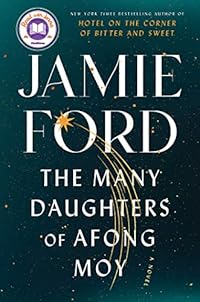
The Many Daughters of Afong Moy
by Jamie Ford
On This Page
Description
"From the New York Times bestselling author of Hotel on the Corner of Bitter and Sweet comes a powerful novel about the love that binds one family of women across generations. Dorothy Moy breaks her own heart for a living. As Seattle's former poet laureate, that's how she describes channeling her dissociative episodes and mental breakdowns into her art. But when her five-year-old daughter, Annabel, exhibits the same behavior and begins remembering things and events she has never experienced, show more Dorothy believes the past has truly come to haunt the present. If she doesn't take radical steps, her daughter will be doomed to face the same debilitating depression that has marked her life. Through epigenetic therapy-an experimental treatment designed to mitigate inherited trauma-Dorothy intimately connects with the past generations of women in her family: Faye Moy, a nurse in Burma serving with the Flying Tigers; Afong Moy, the first Chinese woman to set foot in America; Zoe Moy, a student in England at a famous school with no rules; Lai King Moy, a girl quarantined in San Francisco during a plague epidemic; and Greta Moy, a tech executive with a unique dating app. Through reliving their painful stories, Dorothy comes to understand the true cost of inherited pain. As the past bleeds into the present, Dorothy discovers that trauma isn't the only thing she's inherited. A stranger is searching for her in each time period. A stranger who's loved her through all of her genetic memories. And that person is most certainly not her current husband, Louis. To protect her daughter's future, Dorothy must break the cycle and find a way to cross time and resolve all past traumas, to find the love that has long been waiting, and find peace for Annabel. Even if it means she must sacrifice her only chance at life and happiness"-- show lessTags
Recommendations




Member Reviews
Nicely done multi-generational historical fiction—weirdly, the second book in a row I read discussing epigenetics and ancestor wellness, which I had never heard of prior to the previous book—a cool convergence. This one was strange and fun, a little bit Cloud Atlas–y, and very entertaining—the story of the generations of descendants of Afong Moy, the (allegedly) first Chinese woman to set foot in the United States in the early19th century, and how her trauma and harsh treatment reverberated down matrilineal lines into an imagined mid-21st. There’s a little magical realism, but it worked—an offbeat concept executed well, and I enjoyed it.
The Many Daughters of Afong Moy - Jamie Ford
4 stars
It’s a fascinating concept, the possibility of inherited trauma. Imagine the overwhelming burden of carrying not only personal scars, but also the pain of our ancestors. (I’d definitely prefer to believe that we inherit their resilience.) Jamie Ford has provided the historical Afong Moy with a series of female ancestors who carry the burden of her sad, lonely story.
I liked the women in this book. They were brave, strong and creative. They were also troubled, abused, and fragile. Their lives were a template for more than a century's worth of racial and gender discrimination. It was a bit depressing as the book hopped from one storyline to another. In the mid-twenty first century show more Dorothy Moy forges a psychic connection with her ancestors in an effort to relieve the accumulated trauma. I was grateful for the positive uptick of the magical realism which allowed Dorothy to repair the past while resolving her personal issues. It did require some substantial suspension of disbelief.
This book suffered from my ongoing split-timeline fatigue. The multiple storylines of this book are actually presented expertly, connecting to each other in ways that are interesting. Ford created a series of very believable female characters. I just don’t think the book was improved by the disjointed timelines. It would have made just as much sense if it was told mostly sequentially. Although there is a good audiobook production with multiple performers, I stayed mostly with the printed text. (I found one or two of the voices annoying, not really the voice actors fault.) show less
4 stars
It’s a fascinating concept, the possibility of inherited trauma. Imagine the overwhelming burden of carrying not only personal scars, but also the pain of our ancestors. (I’d definitely prefer to believe that we inherit their resilience.) Jamie Ford has provided the historical Afong Moy with a series of female ancestors who carry the burden of her sad, lonely story.
I liked the women in this book. They were brave, strong and creative. They were also troubled, abused, and fragile. Their lives were a template for more than a century's worth of racial and gender discrimination. It was a bit depressing as the book hopped from one storyline to another. In the mid-twenty first century show more Dorothy Moy forges a psychic connection with her ancestors in an effort to relieve the accumulated trauma. I was grateful for the positive uptick of the magical realism which allowed Dorothy to repair the past while resolving her personal issues. It did require some substantial suspension of disbelief.
This book suffered from my ongoing split-timeline fatigue. The multiple storylines of this book are actually presented expertly, connecting to each other in ways that are interesting. Ford created a series of very believable female characters. I just don’t think the book was improved by the disjointed timelines. It would have made just as much sense if it was told mostly sequentially. Although there is a good audiobook production with multiple performers, I stayed mostly with the printed text. (I found one or two of the voices annoying, not really the voice actors fault.) show less
It takes a while to settle into The Many Daughters of Afong Moy by Jamie Ford and its different timelines. It takes a longer while to settle into the fact that this book is more the presentation of an idea than a plot line beginning to end. It is about trauma compounded through generations. It is about efforts to counter that trauma. It is about hope for the future in science. The book leaves me thinking, and I will remember it.
Read my complete review at http://www.memoriesfrombooks.com/2023/10/the-many-daughters-of-afong-moy.html
Reviewed for NetGalley.
Read my complete review at http://www.memoriesfrombooks.com/2023/10/the-many-daughters-of-afong-moy.html
Reviewed for NetGalley.
The Many Daughters of Afong Moy was an incredibly emotional story. Each chapter is dedicated to a different female descendant of Afong Moy, the first Chinese woman to set foot in America in 1834, with bound feet and a slave. She endured horrific pain and trauma and the book brilliantly shows how that intergenerational trauma has been inherited by each of the descendants. Different time periods, different trauma, but all echoing backward to Afong's experience. I was completely fascinated by this concept and it brought up many questions for me around inheritance of not only pain, but also strength, hope and love. Beautifully written and will be a great book club read.
Disclaimer: I received an ARC from the publishers.
Memory is funny. What we remember can pop up at strange times, and sometimes we don’t quite know where that memory comes from, that one that flashes and gives that weird, unreal sense. We also know that there is intergenerational trauma and memory. We are sum of ourselves and our forebears.
Ford’s new novel is a about those intergenerational memories and trauma. Starting with Afong Moy, the first Chinese woman in America (and a real historical figure) and running though her female descendants. The novel’s time periods range from pre-Civil to the near future. It is at once historical fiction and science fiction.
This type of book succeeds or fails on the weight of its casts – in show more this case Afong and her daughters- and the ability of the writer to make not only the women stand out from each other but not to repeat, what in essence would be the same story. While there are some similarities in the stories of the daughters -a desire to find a loved one, to know what happened to a loved one (and it is possible that these loved ones are descendants of a lost love of Afong Moy herself) – there is enough difference in character for the women to stand. Dorothy and Faye might be related but there are thousands of miles from each other, and not just in a geographic and time sense.
While some of the women find themselves caught in events of international or national importance – Faye works as a nurse in China during the Second World War II, Lai King Moy is in San Francisco during an outbreak of plague – but also during less important, though no less real historical events. For instance, Zoe is attending a radical school in England. The tragedies the women go though are not the same tragedy and one could argue that some are more tragic than others. Yet, at no point does on feel that Ford is simply manipulating or try to manipulate the reader emotionally. There is no sallowness to the stories or to the characters.
The connections between the characters outside of the bloodline is though Dorothy who starts experimental therapy to come to terms with the trauma that her genetic bloodline endured, and in many ways reconcile the various threads that run though the family. What exactly Dorothy does to bring herself peace from the intergenerational trauma was handled masterfully. Ford does not sugarcoat or give the pat endings.
Ford, should be noted, writes women very well. Faye is written extremely well, and Ford hands a mixture satisfaction and regret extremely well.
The book moves quickly, and the story does give one hope for a type of peace. show less
Memory is funny. What we remember can pop up at strange times, and sometimes we don’t quite know where that memory comes from, that one that flashes and gives that weird, unreal sense. We also know that there is intergenerational trauma and memory. We are sum of ourselves and our forebears.
Ford’s new novel is a about those intergenerational memories and trauma. Starting with Afong Moy, the first Chinese woman in America (and a real historical figure) and running though her female descendants. The novel’s time periods range from pre-Civil to the near future. It is at once historical fiction and science fiction.
This type of book succeeds or fails on the weight of its casts – in show more this case Afong and her daughters- and the ability of the writer to make not only the women stand out from each other but not to repeat, what in essence would be the same story. While there are some similarities in the stories of the daughters -a desire to find a loved one, to know what happened to a loved one (and it is possible that these loved ones are descendants of a lost love of Afong Moy herself) – there is enough difference in character for the women to stand. Dorothy and Faye might be related but there are thousands of miles from each other, and not just in a geographic and time sense.
While some of the women find themselves caught in events of international or national importance – Faye works as a nurse in China during the Second World War II, Lai King Moy is in San Francisco during an outbreak of plague – but also during less important, though no less real historical events. For instance, Zoe is attending a radical school in England. The tragedies the women go though are not the same tragedy and one could argue that some are more tragic than others. Yet, at no point does on feel that Ford is simply manipulating or try to manipulate the reader emotionally. There is no sallowness to the stories or to the characters.
The connections between the characters outside of the bloodline is though Dorothy who starts experimental therapy to come to terms with the trauma that her genetic bloodline endured, and in many ways reconcile the various threads that run though the family. What exactly Dorothy does to bring herself peace from the intergenerational trauma was handled masterfully. Ford does not sugarcoat or give the pat endings.
Ford, should be noted, writes women very well. Faye is written extremely well, and Ford hands a mixture satisfaction and regret extremely well.
The book moves quickly, and the story does give one hope for a type of peace. show less
The word is: epigenetics. I had to google it: the study of how your behaviors and environment can cause changes that affect the way your genes work. The book starts with the Author’s Note which embraces the idea that traits such as trauma and depression may be passed down from generation to generation like physical features one inherits.
In 2045, Dorothy was suffering from mental anguish. She noticed that her five-year-old daughter, Annabel, exhibited some of the same traits which caused concern. She learned about an experimental treatment plan to clear up the undesirable patterns and heal her inherited trauma -- and ultimately help Annabel. “They inject you with a virus that alters tissues in the brain.” She was anxious to get show more started and review the link of trauma with her past ancestors.
The story follows Dorothy’s past from 1834 with Afong May who came to NYC from China. Shortly after arriving, she sadly was put on display with her bound feet in front of an audience. “A woman carries her fear inside of her.”
Afong Moy had a daughter and there were three other daughters in the lineage that were highlighted in the book. Yet, it was a bit confusing with Audible as the lives weren’t in chronological order and parts of the women’s stories were woven in here and there. As I listened, I was so engaged for what was happening to one of Dorothy’s past relatives and then the author would switch to another one of her ancestors. Yet, it all came together with a satisfactory ending.
The story is original and the brave women were described with such passion, I just wanted to give each of them a hug. I especially enjoyed learning more about the aspects of how genetics plays a role in someone’s live. But I found the most interesting part was when Dorothy visited a monk to ask for spiritual guidance. It’s a book readers will either love or find aspects of it to be too farfetched from their beliefs. show less
In 2045, Dorothy was suffering from mental anguish. She noticed that her five-year-old daughter, Annabel, exhibited some of the same traits which caused concern. She learned about an experimental treatment plan to clear up the undesirable patterns and heal her inherited trauma -- and ultimately help Annabel. “They inject you with a virus that alters tissues in the brain.” She was anxious to get show more started and review the link of trauma with her past ancestors.
The story follows Dorothy’s past from 1834 with Afong May who came to NYC from China. Shortly after arriving, she sadly was put on display with her bound feet in front of an audience. “A woman carries her fear inside of her.”
Afong Moy had a daughter and there were three other daughters in the lineage that were highlighted in the book. Yet, it was a bit confusing with Audible as the lives weren’t in chronological order and parts of the women’s stories were woven in here and there. As I listened, I was so engaged for what was happening to one of Dorothy’s past relatives and then the author would switch to another one of her ancestors. Yet, it all came together with a satisfactory ending.
The story is original and the brave women were described with such passion, I just wanted to give each of them a hug. I especially enjoyed learning more about the aspects of how genetics plays a role in someone’s live. But I found the most interesting part was when Dorothy visited a monk to ask for spiritual guidance. It’s a book readers will either love or find aspects of it to be too farfetched from their beliefs. show less
Dorothy Moy lives in Seattle in 2045 with her partner Louis and daughter Annabel. She's a poet and has dealt with depression and trauma, not all of which is her own. Interspersed with her story is that of Afong Moy, Lai King, Faye, and Zoe, four women ancestors that went back to the first Chinese woman to come to the United States. Utilizing a technique to tap into memories, Dorothy starts seeing these women and understanding how their experience made her into who she is.
I started out enjoying the complex storyline and multiple characters, but in the end the book fell a little flat for me. Taking the idea of epigenetics, as well as the history of Afong Moy (a real person) and philosophies of Buddhism, Jamie Ford writes a story he likens show more to using a crayon box. And I think that is a little how I felt in the end, that he played with a lot of ideas and I didn't always follow everything he was doing. Were the stories of the women in the past their real histories, or some sort of reliving that Dorothy does? Implanted memories? Something else? I did not understand why Dorothy stayed with Louis, who treats her with contempt and questions her every move. And finally, I think I wanted a little more about each of the women, with a clearer end to each of their stories. show less
I started out enjoying the complex storyline and multiple characters, but in the end the book fell a little flat for me. Taking the idea of epigenetics, as well as the history of Afong Moy (a real person) and philosophies of Buddhism, Jamie Ford writes a story he likens show more to using a crayon box. And I think that is a little how I felt in the end, that he played with a lot of ideas and I didn't always follow everything he was doing. Were the stories of the women in the past their real histories, or some sort of reliving that Dorothy does? Implanted memories? Something else? I did not understand why Dorothy stayed with Louis, who treats her with contempt and questions her every move. And finally, I think I wanted a little more about each of the women, with a clearer end to each of their stories. show less
Members
- Recently Added By
Lists

Fiction: Historical
288 works; 3 members

Indie Next Picks
196 works; 4 members

Asian American Literature
46 works; 6 members

Read with Jenna
91 works; 2 members
Author Information

10+ Works 10,212 Members
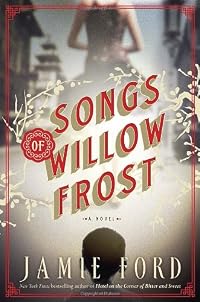
Jamie Ford graduated from the Art Institute of Seattle in 1988 and worked as an art director and as a creative director in advertising. He is also an alumnus of the Squaw Valley Community of Writers and the Orson Scott Card's Literary Boot Camp. His books include Hotel on the Corner of Bitter and Sweet and Songs of Willow Frost. (Bowker Author show more Biography) show less
Some Editions
Awards and Honors
Awards
Distinctions
Common Knowledge
- Canonical title
- The Many Daughters of Afong Moy
- Original publication date
- 2022
- People/Characters
- Afong Moy; Lai King Moy; Zou yi “Zoe” Moy; Fei-jin “Faye” Moy; Margaret “Greta” Moy; Dorothy Margaret Moy (show all 18); Annabel; Nanchoy Eu Tong; Louis; Louise; Samsara “Sam”; Albert “Alby”; Alyce Bidwell; Augustus “Guto”; John Garland; Dr. Shedhorn; Carter Brandon; Yao Han
- Important places
- Seattle, Washington, USA; Kunming, Yunnan, China; San Francisco, California, USA; Baltimore, Maryland, USA; Summerhill School, England, UK
- Epigraph
- “We all have some experience of a feeling, of what we are saying and doing having been said and done before, in a remote time—of our having been surrounded, dim ages ago, by the same faces, objects, and circumstances.”<... (show all)br>
—CHARLES DICKENS
“As far back as I can remember I have unconsciously referred to the experiences of a previous state of existence.”
—HANRY DAVID THOREAU
“I saw that.”
—KARMA - Dedication
- This book is for anyone
with a complicated origin story.
I feel you. - First words
- Faye Moy signed a contract stating that she would never marry.
- Quotations
- In America, a lie becomes the truth with sufficient repetition.
“We don’t have to grieve only those we know. Sometimes we grieve for that which was lost, that which was never allowed to be.”
“…Sometimes I think we just learn to forget bad things.”
“What goes around comes around.”
The older woman nodded as though she were a parent explaining basic math to a toddler. “You’re thinking in terms of crime and punishment, which I’m afraid is a bit reductive. Karm... (show all)a is more like a suitcase. You have to be unafraid to open it up and look at what’s inside, to unpack the things you don’t need. Karma is the climate of the past, which shapes how much leeway we have in the future.”
Strangers are the people we forgot we needed in this life. - Last words
- (Click to show. Warning: May contain spoilers.)Once inside, Annabel collapsed on the bed. She felt the softness of the downy comforter. She wrapped herself in its warmth as she stared up at the ceiling and whispered, “. . . that was more than love.”
- Blurbers
- Quinn, Kate; Kline, Christina Baker; Urrea, Luis Alberto; Wang, Qian Julie; Howey, Hugh
Classifications
Statistics
- Members
- 741
- Popularity
- 37,817
- Reviews
- 32
- Rating
- (3.92)
- Languages
- English
- Media
- Paper, Audiobook, Ebook
- ISBNs
- 13
- ASINs
- 3