On This Page
Description
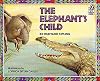
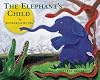
Because of his "satiable curtiosity" about what the crocodile has for dinner, the elephant's child and all elephants thereafter have long trunks.Tags
Recommendations



Member Reviews
When you are halfway listening to someone read a book to a group of kids, you certainly do not expect to hear “And they spanked him for a very long time” to come out of the readers mouth, But that is exactly what happened this morning. As a daycare provider I expect to get a surprise every day, some are good and some are bad. I’m considering this book, today’s surprise and it is UNBELIEVABLE!
After I snatched the book away from my assistant and read it to myself I was shocked! How could this be a children’s book? The Elephant’s Child is the book I’m talking about, copyright 1989. It’s a story about a curious little elephant who asks a lot of questions. He asks why the ostrich’s feathers grow just so, and why the show more giraffe has spots, The animal’s reply? They SPANK him! So the curious little elephant sets off to find out what crocodiles eat for dinner. He gets spanked along the way by random animals and almost eaten by the crocodile, who just ends up stretching out the elephants nose into a trunk. When the elephant returns home, the animals try to spank him again but I guess he has had enough because he fights back and throws a monkey into a beehive! Another elephant notices his nose is different and tells him “It is very ugly”, so our curious little elephant says” yes, but it useful” and he spanks all the animals with it for a long time! End of the story, all the other elephants want trunks too, so they hurry off to get them from the crocodile.
WOW! I can’t even believe this book! I guess back in 1989 it was normal to spank kids for asking questions? Can you even imagine? If you are looking for a book to teach your kids that physical violence this would be the one, bullying someone who looks different is acceptable, and that the saying “an eye for an eye” is the way to do things, then this is the book you are looking for!
Considering I was four years old when this was published, maybe I do not remember how people were raising up their children, but this just goes to show how the times have changed! The worst part, this book is a “Read With Me” book, and it has tips for parents in the beginning to have your child follow along and say the word when they see the pictures!
Next time I get a box of books from a garage sale, I will make sure to actually read each and every one before they go on my bookshelf. I wouldn’t want my daycare kids to turn into a bunch of crazy spanking machines! show less
After I snatched the book away from my assistant and read it to myself I was shocked! How could this be a children’s book? The Elephant’s Child is the book I’m talking about, copyright 1989. It’s a story about a curious little elephant who asks a lot of questions. He asks why the ostrich’s feathers grow just so, and why the show more giraffe has spots, The animal’s reply? They SPANK him! So the curious little elephant sets off to find out what crocodiles eat for dinner. He gets spanked along the way by random animals and almost eaten by the crocodile, who just ends up stretching out the elephants nose into a trunk. When the elephant returns home, the animals try to spank him again but I guess he has had enough because he fights back and throws a monkey into a beehive! Another elephant notices his nose is different and tells him “It is very ugly”, so our curious little elephant says” yes, but it useful” and he spanks all the animals with it for a long time! End of the story, all the other elephants want trunks too, so they hurry off to get them from the crocodile.
WOW! I can’t even believe this book! I guess back in 1989 it was normal to spank kids for asking questions? Can you even imagine? If you are looking for a book to teach your kids that physical violence this would be the one, bullying someone who looks different is acceptable, and that the saying “an eye for an eye” is the way to do things, then this is the book you are looking for!
Considering I was four years old when this was published, maybe I do not remember how people were raising up their children, but this just goes to show how the times have changed! The worst part, this book is a “Read With Me” book, and it has tips for parents in the beginning to have your child follow along and say the word when they see the pictures!
Next time I get a box of books from a garage sale, I will make sure to actually read each and every one before they go on my bookshelf. I wouldn’t want my daycare kids to turn into a bunch of crazy spanking machines! show less
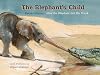
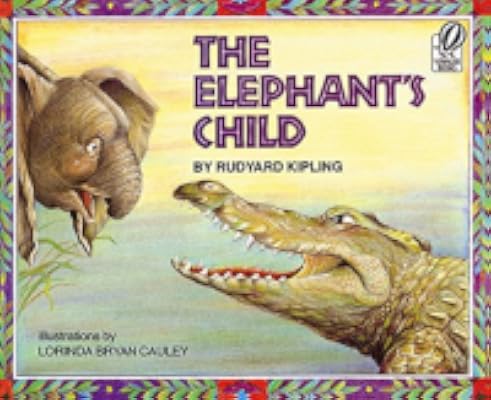
This is a hilarious take on the traditional lessons-learned children's stories. The Elephant's Child was a short-nosed creature that was always curious, but for every question he asked of a relative he got spanked. At one point he wants to know what crocodiles are and what one would have for dinner, gets spanked, but finds out where to go to find a crocodile. He journeys across Africa and finds one. As illustrated on the story's cover, the Elephant's child had a tug-of-war with the hungry crocodile. He returns home with a new, stretched out nose and can spank everyone else as they had spanked him. For a change the child isn't the one who needed to learn a lesson. I could almost laugh, imagining a child going around spanking all the show more adults that spanked him for asking any kind of question. Talk about setting an example that came around and got you in the butt. show less
This was a cute book. The version I have is shorter and redesigned for children. This book was about a very curious elephant that wanted to know why why why. One day he asked what the Crocodile ate for breakfast and embarked on his own journey to find out. His aunts, uncles, and parents all spanked him for not being obedient but he continued to ask questions and wonder. This book could be used when teaching on discipline and consequences. Also, you could introduce this book when teaching about outcomes and how sometimes they are good and sometimes they aren't so good. This book would be for appropriate for lower elementary students. The words aren't very difficult and the pictures are fun to look at.
A short and cute book. It was well illustrated. A little short on the scientific basis but it is a children's book. Thus, we lie to them.
This is my favorite of Kipling's animal stories, and the illustrations are excellent.
This book has great illustrations. They are actually painting that introduce the story well. This book is great when a child is dealing with fitting in and developing a sense of belonging.
http://www.kirjasto.sci.fi/kipling.htm
http://www.kirjasto.sci.fi/kipling.htm
Summary: There were a group of animals including elephants with short stubby noses instead of trunks. The young elephant named the Elephant's Child was very curious and asked many questions which always resulted in him getting spankings. The child really wanted to know what the crocodile ate, so he sat out towards the river only to find that the crocodile wanted to eat him! The crocodile grabbed the child by his nose and it began to stretch and stretch until finally the crocodile gave up. The Elephant's Child sat around for a few days waiting on his nose to shrink back, but it never did, so the Python was able to show him all the cool advantages to his new trunk. The child was happy that his trunk was good for spanking with, and went show more back home to use it for just that. The rest of his elephant family went to the river so they could get trunks when they saw how useful the young elephant's trunk was.
Classroom Extension Idea:
1. Have a classroom discussion about how being curious and asking questions is a good thing and can work to ones advantage.
2. The students could paint a picture of their own elephant with a stubby nose, or any of the other cool animals mentioned in the book. show less
Classroom Extension Idea:
1. Have a classroom discussion about how being curious and asking questions is a good thing and can work to ones advantage.
2. The students could paint a picture of their own elephant with a stubby nose, or any of the other cool animals mentioned in the book. show less
Members
- Recently Added By
Lists

Elephants in Books
55 works; 5 members
Author Information

2,459+ Works 91,036 Members
Kipling, who as a novelist dramatized the ambivalence of the British colonial experience, was born of English parents in Bombay and as a child knew Hindustani better than English. He spent an unhappy period of exile from his parents (and the Indian heat) with a harsh aunt in England, followed by the public schooling that inspired his "Stalky" show more stories. He returned to India at 18 to work on the staff of the Lahore Civil and Military Gazette and rapidly became a prolific writer. His mildly satirical work won him a reputation in England, and he returned there in 1889. Shortly after, his first novel, The Light That Failed (1890) was published, but it was not altogether successful. In the early 1890s, Kipling met and married Caroline Balestier and moved with her to her family's estate in Brattleboro, Vermont. While there he wrote Many Inventions (1893), The Jungle Book (1894-95), and Captains Courageous (1897). He became dissatisfied with life in America, however, and moved back to England, returning to America only when his daughter died of pneumonia. Kipling never again returned to the United States, despite his great popularity there. Short stories form the greater portion of Kipling's work and are of several distinct types. Some of his best are stories of the supernatural, the eerie and unearthly, such as "The Phantom Rickshaw," "The Brushwood Boy," and "They." His tales of gruesome horror include "The Mark of the Beast" and "The Return of Imray." "William the Conqueror" and "The Head of the District" are among his political tales of English rule in India. The "Soldiers Three" group deals with Kipling's three musketeers: an Irishman, a Cockney, and a Yorkshireman. The Anglo-Indian Tales, of social life in Simla, make up the larger part of his first four books. Kipling wrote equally well for children and adults. His best-known children's books are Just So Stories (1902), The Jungle Books (1894-95), and Kim (1901). His short stories, although their understanding of the Indian is often moving, became minor hymns to the glory of Queen Victoria's empire and the civil servants and soldiers who staffed her outposts. Kim, an Irish boy in India who becomes the companion of a Tibetan lama, at length joins the British Secret Service, without, says Wilson, any sense of the betrayal of his friend this actually meant. Nevertheless, Kipling has left a vivid panorama of the India of his day. In 1907, Kipling became England's first Nobel Prize winner in literature and the only nineteenth-century English poet to win the Prize. He won not only on the basis of his short stories, which more closely mirror the ambiguities of the declining Edwardian world than has commonly been recognized, but also on the basis of his tremendous ability as a popular poet. His reputation was first made with Barrack Room Ballads (1892), and in "Recessional" he captured a side of Queen Victoria's final jubilee that no one else dared to address. (Bowker Author Biography) show less

Rudyard Kipling has a Legacy Library. Legacy libraries are the personal libraries of famous readers, entered by LibraryThing members from the Legacy Libraries group.
Some Editions
Awards and Honors
Series

Belongs to Publisher Series
Work Relationships
Is contained in
Common Knowledge
- Alternate titles
- The Elephant’s Child: A Just So Story
- People/Characters
- Elephant’s Child; Ostrich; Giraffe; Hippopotamus; Baboon; Kolokolo Bird (show all 8); Bi-Coloured-Python-Rock-Snake; Crocodile
- Important places
- Africa
- First words
- In the High and Far-Off Times the Elephant, O Best Beloved, had no trunk.
- Last words
- (Click to show. Warning: May contain spoilers.)When they came back nobody spanked anybody any more; and ever since that day, O Best Beloved, all the Elephants you will ever see, besides all those that you won’t, have trunks precisely like the trunk of the ’satiable Elephant’s Child.
Classifications
Statistics
- Members
- 667
- Popularity
- 43,043
- Reviews
- 10
- Rating
- (3.64)
- Languages
- 9 — Danish, English, Hungarian, Japanese, Norwegian (Bokmål), Portuguese, Russian, Spanish, Swedish
- Media
- Paper, Audiobook, Ebook
- ISBNs
- 75
- ASINs
- 12