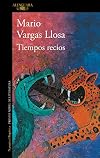
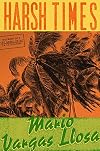
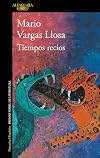
Harsh Times: A Novel
by Mario Vargas Llosa
On This Page
Description
"The true story of Guatemala's political turmoil of the 1950s as only a master of fiction can tell it"--Tags
Recommendations





Member Reviews
Metafiction is fun to read because it brings history alive with a mix of real and imagined characters and situations that frame what some might otherwise be dry facts. Llosa is a master of the genre. In HARSH TIMES, he relates the complex events surrounding the 1954 US-backed Guatemalan coup with a mix of historical and fictitious characters. President Jacobo Árbenz led a progressive administration aimed at land reform and taxing corporations. This was understandably opposed by the country’s most powerful corporation, the United Fruit Company. At the time, it was the largest worldwide distributer of bananas. I’m not sure if Guatemala was the origin of the term “banana republic” but United Fruit’s reach into its government show more clearly make it a candidate for the title.
With the support of the Eisenhower administration, notably the Dulles brothers and Guatemala’s creepy U.S. ambassador (John Peurifoy), a propaganda campaign was built around a “big lie” (i.e., that Guatemala was about to provide a foothold in the Western Hemisphere for Russian communism). Llosa claims there was little evidence for this. The marginally competent Lt. Col. Carlos Castillo Armas was installed as the successor to Árbenz and the bulk of the novel revolves around a successful conspiracy to remove Armas by assassination.
Llosa puts a human face on the Armas assassination by following the activities of largely fictitious coup plotters. Martita Borrero Parra is a particularly intriguing figure. Known as Miss Guatemala, despite never actually holding that title, she was impregnated at 14 by one of her father’s best friends. Papa disowned her and arranged a shotgun wedding. The marriage subsequently failed, Martita abandoned her child and eventually became Armas’ mistress. Her involvement in the murder is murky, but following the assassination, she sought safe harbor in Trujillo’s Dominican Republic. Llosa ends his novel with a fascinating epilogue where he interviews Martita at her home in Florida as a septuagenarian. He is too good a writer to answer every question surrounding Miss Guatemala, so much is left to the reader’s imagination.
Another fascinating creation is Johnny Abbes García. He is installed by Trujillo as chief of his military intelligence service and sent to Guatemala to orchestrate the Armas assassination. Trujillo’s motives for this are unclear but seem to involve perceived slights. Johnny and a “gringo who probably was not called Mike” worked to accomplish the task and eventually to extricate Martita from the country.
Llosa also describes the gruesome fate of Enrique Trinidad Oliva, Armas’ director of security, following the assassination. Oliva may (or may not?) have been implicated in the plot, but clearly was a scapegoat. He, along with Garcia and Peurifoy, eventually get their just deserts.
The novel is a wild ride filled with lots of dirty deeds along with some important insights. In point of fact, Llosa believes that the two most dastardly figures in the whole sorry saga were Sam Zemurray and Edward L. Bernays. The former was the founder of United Fruit, and the latter was a PR guru he hired to spread the big lie. More importantly, he believes that this act likely hindered democratization and contributed to corrupt, violent and undemocratic systems that persist to this day in the region.
Despite some murkiness resulting from the inherent complexity of the story, as well as Llosa’s use of a non-linear timeline and multiple perspectives in his often ironic and sexy narrative, the novel moves along at a swift pace and is a satisfying read. show less
With the support of the Eisenhower administration, notably the Dulles brothers and Guatemala’s creepy U.S. ambassador (John Peurifoy), a propaganda campaign was built around a “big lie” (i.e., that Guatemala was about to provide a foothold in the Western Hemisphere for Russian communism). Llosa claims there was little evidence for this. The marginally competent Lt. Col. Carlos Castillo Armas was installed as the successor to Árbenz and the bulk of the novel revolves around a successful conspiracy to remove Armas by assassination.
Llosa puts a human face on the Armas assassination by following the activities of largely fictitious coup plotters. Martita Borrero Parra is a particularly intriguing figure. Known as Miss Guatemala, despite never actually holding that title, she was impregnated at 14 by one of her father’s best friends. Papa disowned her and arranged a shotgun wedding. The marriage subsequently failed, Martita abandoned her child and eventually became Armas’ mistress. Her involvement in the murder is murky, but following the assassination, she sought safe harbor in Trujillo’s Dominican Republic. Llosa ends his novel with a fascinating epilogue where he interviews Martita at her home in Florida as a septuagenarian. He is too good a writer to answer every question surrounding Miss Guatemala, so much is left to the reader’s imagination.
Another fascinating creation is Johnny Abbes García. He is installed by Trujillo as chief of his military intelligence service and sent to Guatemala to orchestrate the Armas assassination. Trujillo’s motives for this are unclear but seem to involve perceived slights. Johnny and a “gringo who probably was not called Mike” worked to accomplish the task and eventually to extricate Martita from the country.
Llosa also describes the gruesome fate of Enrique Trinidad Oliva, Armas’ director of security, following the assassination. Oliva may (or may not?) have been implicated in the plot, but clearly was a scapegoat. He, along with Garcia and Peurifoy, eventually get their just deserts.
The novel is a wild ride filled with lots of dirty deeds along with some important insights. In point of fact, Llosa believes that the two most dastardly figures in the whole sorry saga were Sam Zemurray and Edward L. Bernays. The former was the founder of United Fruit, and the latter was a PR guru he hired to spread the big lie. More importantly, he believes that this act likely hindered democratization and contributed to corrupt, violent and undemocratic systems that persist to this day in the region.
Despite some murkiness resulting from the inherent complexity of the story, as well as Llosa’s use of a non-linear timeline and multiple perspectives in his often ironic and sexy narrative, the novel moves along at a swift pace and is a satisfying read. show less
Much of the time the narrator gives information on the history. I feel like I learned a lot about the situation that happened in Guatemala.
Too much infodump. Feels like reading a history textbook at times.
Guatemala, 1954. El golpe militar perpetrado por Carlos Castillo Armas y auspiciado por Estados Unidos a través de la CIA derroca el gobierno de Jacobo Árbenz. Detrás de este acto violento se encuentra una mentira que pasó por verdad y que cambió el devenir de América Latina: la acusación por parte del gobierno de Eisenhower de que Árbenz alentaba la entrada del comunismo soviético en el continente.
Tiempos recios es una historia de conspiraciones internacionales e intereses encontrados, en los años de la Guerra Fría, cuyos ecos resuenan hasta la actualidad. Un suceso que involucró a varios países y en el que algunos verdugos acabaron convirtiéndose en víctimas de la misma trama que habían ayudado a construir.
En esta show more novela apasionante, que conecta con la aclamada La Fiesta del Chivo, Mario Vargas Llosa funde la realidad con dos ficciones: la del narrador que libremente recrea personajes y situaciones, y la diseñada por aquellos que quisieron controlar la política y la economía de un continente manipulando su historia. show less
Tiempos recios es una historia de conspiraciones internacionales e intereses encontrados, en los años de la Guerra Fría, cuyos ecos resuenan hasta la actualidad. Un suceso que involucró a varios países y en el que algunos verdugos acabaron convirtiéndose en víctimas de la misma trama que habían ayudado a construir.
En esta show more novela apasionante, que conecta con la aclamada La Fiesta del Chivo, Mario Vargas Llosa funde la realidad con dos ficciones: la del narrador que libremente recrea personajes y situaciones, y la diseñada por aquellos que quisieron controlar la política y la economía de un continente manipulando su historia. show less
Oct 18, 2019Spanish
“Eindelijk nog eens een goede roman van Vargas Llosa”, las ik in enkele krantenrecensies. Nou, ik weet het niet. Dit is eigenlijk amper een roman te noemen. Vargas Llosa schetst de geschiedenis van het Centraal-Amerikaanse land Guatemala in de periode tussen 1950 en 1960. Hij heeft er geen rechtlijnig historisch verhaal van gemaakt, eerder een docu-fictie, waarbij de focus ligt op presidenten, contrarevolutionairen, en samenzweerders, zowel uit Guatemala zelf als andere Centraal-Amerikaanse landen (onder meer de beruchte Trujillo van de Dominikaanse Republiek duikt weer op). En hij heeft zijn perspectief behoorlijk door elkaar geschud, met voortdurende verspringingen in tijd en ruimte, zodat je je hoofd er echt wel bij moet houden. show more Interessant, daar niet van, maar echt tot leven komen de diverse personages niet. Het lijkt me dat Vargas Llosa vooral zijn moralistische boodschap kwijt wou in dit boek. Namelijk, dat de nogal klunzige, anticommunistische politiek van de Verenigde Staten eigenlijk een omgekeerd effect had. Wel, daar had ik deze roman/docufictie eigenlijk niet voor nodig. show less
Jan 27, 2022Dutch
1951 gewinnt Jacobo Árbenz Guzmán die Wahlen in Guatemala. Er will die Demokratisierung und Modernisierung des Landes vorantreiben, doch seine Landreform ist der mächtigen United Fruit Company ein Dorn im Auge. Als man ihn deshalb fälschlicherweise der Anhängerschaft des Kommunismus bezichtigt, beginnen die USA seinen Sturz zu betreiben und verändern so die guatemaltekische Geschichte.
Vargas Llosas politischer Roman umfasst einen Zeitraum von fast 15 Jahren, beginnend mit den ersten demokratischen Wahlen in Guatemala 1945 bis zur von Trujillisten geplanten Ermordung des 1954 an die Macht geputschten Diktators Carlo Castillo Armas. Insbesondere untersucht der Autor, angereichert mit fiktiven Elementen und aus den jeweiligen show more Blickwinkeln der Hauptprotagonisten die Operation PBSUCCESS, sohin die erste Geheimdienstoperation der USA im Rahmen derer Rollback-Politik im kalten Krieg. Vargas Llosas Werk fast ist fast mehr politisch-historisches Essay und Anklage, die Handlung verlässt den eigentlichen Schauplatz Guatemala und bietet einen Ausblick auf die Auswirkungen der antikommunistischen Rollback-Politik auf ganz Zentralamerika.
"Harte Jahre hat allerdings auch Schwächen: Anders als bei seinem Meisterwerk "Das Fest des Ziegenbocks", dessen Handlung in derselben Region angesiedelt ist und dessen Hauptprotagonisten in beiden Romanen auftreten, gelingt es Vargas Llosa nicht ganz so gut, die unterschiedlichen Perspektiven und Zeitebenen zu verknüpfen. Wie andere Werke Vargas Llosas besteht auch der vorliegende Roman aus einer Konstruktion verschiedener Blickwinkeln und Zeitebenen. Doch im vorliegenden Fall fehlt das sonst so meisterhaft betriebene Zusteuern dieser unterschiedlichen Perspektiven auf einen gemeinsamen Höhepunkt. "Harte Jahre" ist nichtsdestotrotz fesselnd, lehrreich, gut recherchiert und kurzweilig, kann es jedoch nicht dem vorgenannten Roman "Das Fest des Ziegenbocks" und anderen Meisterwerken des Autors aufnehmen. show less
Vargas Llosas politischer Roman umfasst einen Zeitraum von fast 15 Jahren, beginnend mit den ersten demokratischen Wahlen in Guatemala 1945 bis zur von Trujillisten geplanten Ermordung des 1954 an die Macht geputschten Diktators Carlo Castillo Armas. Insbesondere untersucht der Autor, angereichert mit fiktiven Elementen und aus den jeweiligen show more Blickwinkeln der Hauptprotagonisten die Operation PBSUCCESS, sohin die erste Geheimdienstoperation der USA im Rahmen derer Rollback-Politik im kalten Krieg. Vargas Llosas Werk fast ist fast mehr politisch-historisches Essay und Anklage, die Handlung verlässt den eigentlichen Schauplatz Guatemala und bietet einen Ausblick auf die Auswirkungen der antikommunistischen Rollback-Politik auf ganz Zentralamerika.
"Harte Jahre hat allerdings auch Schwächen: Anders als bei seinem Meisterwerk "Das Fest des Ziegenbocks", dessen Handlung in derselben Region angesiedelt ist und dessen Hauptprotagonisten in beiden Romanen auftreten, gelingt es Vargas Llosa nicht ganz so gut, die unterschiedlichen Perspektiven und Zeitebenen zu verknüpfen. Wie andere Werke Vargas Llosas besteht auch der vorliegende Roman aus einer Konstruktion verschiedener Blickwinkeln und Zeitebenen. Doch im vorliegenden Fall fehlt das sonst so meisterhaft betriebene Zusteuern dieser unterschiedlichen Perspektiven auf einen gemeinsamen Höhepunkt. "Harte Jahre" ist nichtsdestotrotz fesselnd, lehrreich, gut recherchiert und kurzweilig, kann es jedoch nicht dem vorgenannten Roman "Das Fest des Ziegenbocks" und anderen Meisterwerken des Autors aufnehmen. show less
Nov 29, 2021German
Guatemala, 1954. El, golpe militar perpetrado por Carlos castillo Armas y auspiciado por EEUU a través de la CIA derroca al gobierno De Jacobo Arbanez Detrás de este acto se encuentra una gran mentira que pasó por verdad y que cambio el devenir de América Latina: la acusación por parte de Eiseenhower de que Árbanez alentaba la entrada del comunismo soviético en el continente.
Oct 21, 2019Spanish
Members
- Recently Added By
Published Reviews
ThingScore 75
This is the kind of novel that mocks the give-it-10-pages, I-need-to-be-grabbed-because-life-is-too-short school of reading. Even those of the trust-the-artist, persevere-and-stand-fast persuasion should prepare to be tested. I confess: I was confused, bewildered, lost. I wrote down the names of the characters. I backtracked. I cross-tracked. I re-tracked. The shape of the narrative only show more really began to declare itself around page 90. But then … oh, what an engaging education Harsh Times turned out to be, and how I came to look forward to my time in its company. show less
added by kidzdoc
There were two powers running Guatemala after the Second World War, and only one of them was the government. The other, an American corporation called the United Fruit Company, was known inside the country as the Octopus, because it had tentacles everywhere. It was Guatemala’s largest employer and landowner, and it controlled the country’s only Atlantic port, almost every mile of the show more railroads, and the nation’s sole telephone and telegraph facilities. U.S. State Department officials had siblings in the upper ranks of the company. Senators held stock. Running United Fruit’s publicity department, in New York, was a legendary adman who claimed to have a list of twenty-five thousand journalists, editors, and public figures at his beck and call. They formed, in his words, “an invisible government” with “true ruling power” over the U.S., to say nothing of the countries under American sway.
By 1952, the President of Guatemala, Jacobo Árbenz, was fighting a battle he couldn’t win. He was trying to get United Fruit to pay taxes on its vast holdings. Not only had the company been exempt for decades—it had also secured a guarantee that it would never have to pay its employees more than fifty cents a day. To address the country’s rampant inequalities, including its feudal labor system, Árbenz passed an agrarian reform law to convert unused private land into smaller plots for peasants. A moderate institutionalist, he argued that the law reflected his capitalist bona fides. Weren’t monopolies considered anathema in the U.S., too?
In response, United Fruit unleashed a relentless lobbying campaign to persuade journalists, lawmakers, and the U.S. government that Árbenz was a Communist sympathizer who needed to be overthrown. It was the start of the Cold War, which made American officials into easy marks. “We should regard Guatemala as a prototype area for testing means and methods of combating Communism,” a member of Dwight Eisenhower’s National Security Council said, in 1953. Over the following year, the C.I.A. and the United Fruit Company auditioned figures to lead a “Liberation” force against the government. They eventually landed on Carlos Castillo Armas, a rogue Guatemalan military officer with dark, diminutive features and a toothbrush mustache, who came across as flighty and dim. (“He looked like he had been packaged by Bloomingdale’s,” one commentator said at the time.) His chief qualification was his willingness to do whatever the Americans told him. In June, 1954, after an invasion staged with American bombers and choreographed by the U.S. Ambassador, he was rewarded with the Presidency. Árbenz was flown into Mexican exile, but not before Castillo Armas forced him to strip to his underwear for the cameras as he boarded the plane.
The 1954 C.I.A. coup and its aftermath are the subject of “Harsh Times” (Farrar, Straus & Giroux), a new novel by Mario Vargas Llosa, the Peruvian Nobel laureate, which has been translated by Adrian Nathan West. show less
By 1952, the President of Guatemala, Jacobo Árbenz, was fighting a battle he couldn’t win. He was trying to get United Fruit to pay taxes on its vast holdings. Not only had the company been exempt for decades—it had also secured a guarantee that it would never have to pay its employees more than fifty cents a day. To address the country’s rampant inequalities, including its feudal labor system, Árbenz passed an agrarian reform law to convert unused private land into smaller plots for peasants. A moderate institutionalist, he argued that the law reflected his capitalist bona fides. Weren’t monopolies considered anathema in the U.S., too?
In response, United Fruit unleashed a relentless lobbying campaign to persuade journalists, lawmakers, and the U.S. government that Árbenz was a Communist sympathizer who needed to be overthrown. It was the start of the Cold War, which made American officials into easy marks. “We should regard Guatemala as a prototype area for testing means and methods of combating Communism,” a member of Dwight Eisenhower’s National Security Council said, in 1953. Over the following year, the C.I.A. and the United Fruit Company auditioned figures to lead a “Liberation” force against the government. They eventually landed on Carlos Castillo Armas, a rogue Guatemalan military officer with dark, diminutive features and a toothbrush mustache, who came across as flighty and dim. (“He looked like he had been packaged by Bloomingdale’s,” one commentator said at the time.) His chief qualification was his willingness to do whatever the Americans told him. In June, 1954, after an invasion staged with American bombers and choreographed by the U.S. Ambassador, he was rewarded with the Presidency. Árbenz was flown into Mexican exile, but not before Castillo Armas forced him to strip to his underwear for the cameras as he boarded the plane.
The 1954 C.I.A. coup and its aftermath are the subject of “Harsh Times” (Farrar, Straus & Giroux), a new novel by Mario Vargas Llosa, the Peruvian Nobel laureate, which has been translated by Adrian Nathan West. show less
added by kidzdoc
Lists

FT Best books of 2021: Fiction
12 works; 1 member

Anticipated 2021 Reads
231 works; 7 members

Books Read in 2022
5,164 works; 113 members
Author Information

380+ Works 34,352 Members
Mario Vargas Llosa was born in Arequipa, Peru on March 28, 1936. He studied literature and law at the National University of San Marcos and received a Ph.D from the University of Madrid in 1959. He is a writer, politician, and journalist. His works vary in genre from literary criticism and journalism to comedies, murder mysteries, historical show more novels, and political thrillers. His books include The Time of the Hero, The Green House, Conversation in the Cathedral, Aunt Julia and the Scriptwriter, The Feast of the Goat, and The War of the End of the World. He has received numerous awards including the Rómulo Gallegos International Novel Prize, the Premio Leopoldo Alas in 1959, the Premio Biblioteca Breve in 1962, the Premio Planeta in 1993, the Miguel de Cervantes Prize in 1994, the Jerusalem Prize in 1995, and the Nobel Prize in Literature in 2010. (Bowker Author Biography) show less
Some Editions
Awards and Honors
Series
Belongs to Publisher Series
Common Knowledge
- Canonical title*
- Temps sauvages
- Original title
- Tiempos recios
- Alternate titles*
- Tempos Asperos
- Original publication date
- 2019
- People/Characters
- Marta Borrero Parra; Jacobo Arbenz (Jacobo Árbenz Guzmán); María Cristina Vilanova; Carlos Castillo Armas; Rafael Trujillo; Johnny Abbes García (show all 11); Efrén García Ardiles; Carlos Gacel Castro; Enrique Trinidad Oliva; Héctor Trujillo; John Emil Peurifoy
- Important places
- Guatemala; Guatemala City, Guatemala
- Important events
- Cold War; Guatemalan Revolution; Guatemalan Civil War
- Epigraph*
- ¡Eran tiempos recios! SANTA TERESA DE ÁVILA
- Dedication*
- A tres amigos:
Soledad Álvarez,
Tony Raful y
Bernardo Vega - First words*
- Aunque desconocidos del gran público y pese a figurar de manera muy poco ostentosa en los libros de historia, probablemente las dos personas más influyentes en el destino de Guatemala y, en cierta forma, de toda Centroamér... (show all)ica en el siglo XX fueron Edward L. Bernays y Sam Zemurray, dos personajes que no podían ser más distintos uno del otro por su origen, temperamento y vocación.
- Original language*
- Español
*Some information comes from Common Knowledge in other languages. Click "Edit" for more information.
Classifications
- Genres
- General Fiction, Fiction and Literature, Historical Fiction
- DDC/MDS
- 863.64 — Literature & rhetoric Spanish, Portuguese, Galician literatures Spanish fiction 20th Century 1945-2000
- LCC
- PQ8498.32 .A65 .T54 — Language and Literature French, Italian, Spanish and Portuguese literatures Spanish literature Provincial, local, colonial, etc. Spanish America
- BISAC
Statistics
- Members
- 404
- Popularity
- 76,512
- Reviews
- 10
- Rating
- (3.76)
- Languages
- 15 — Arabic, Dutch, English, French, German, Hungarian, Italian, Farsi/Persian, Polish, Portuguese (Brazil), Portuguese (Portugal), Romanian, Serbian, Croatian, Spanish
- Media
- Paper, Audiobook, Ebook
- ISBNs
- 34
- ASINs
- 8