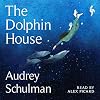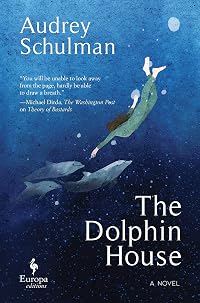
The Dolphin House
by Audrey Schulman
On This Page
Description
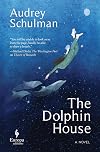
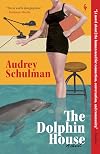
It is 1965, and Cora, a young, hearing impaired woman, buys a one-way ticket to the island of St. Thomas, where she discovers four dolphins held in captivity as part of an experiment led by the obsessive Dr. Blum. Drawn by a strong connection to the dolphins, Cora falls in with the scientists and discovers her need to protect the animals. Recognizing Cora's knack for communication, Blum uses her for what will turn into one of the most fascinating experiments in modern science: an attempt to show more teach the dolphins human language by creating a home in which she and a dolphin can live together. As the experiment progresses, Cora forges a remarkable bond with the creatures, until her hard-won knowledge clashes with the male-dominated world of science. As a terrible scandal threatens to engulf the experiment, Cora's fight to save the dolphins becomes a battle to save herself. show lessTags
Recommendations

































Member Reviews
Make no mistake about it – this novel is primarily about communication and behavior modification across species barriers. The question, however, increasingly becomes … who’s in control here, and who is modifying whom?
The Dolphin House is based on a real mid-1960s experiment in which researchers attempted to teach dolphins to communicate via human speech. If that sounds a bit over-the edge, be aware that the era also held experiments in rearing infant chimps in a human family environment and teaching other apes to use ASL to communicate with their human caretakers. Most ended in failure, as this one ultimately did.
In any case, the novelization follows Cora, a young woman who has just left her last job in Tampa as a Playboy Bunny, show more in disgust, and who has repaired to St. Thomas, in the Virgin Islands, to regroup. Almost by accident, she stumbles onto a small house adjacent to a large pool which holds four dolphins, and is ordered rather peremptorily by a man taking notes about their behavior, to watch and write things down while he disappears into the house, possibly to deal with a hangover. It’s not long before she trades her waitress job for a nebulously-defined position with the dolphin experiment, starting out as little more than a gofer and ending up making significant progress with one of the dolphins in particular. To further this part of the experiment, the team constructs living quarters dubbed a “homearium”, which Cora and the dolphin dubbed Junior share 24/7.
This is one of those books for which one should read the end material first. There, Schulman clearly sets out just what is fact and what is fiction, and the former is frequently far more unbelievable than the latter.
One bit of particularly inspired invention is to make Cora hearing-impaired. This allows Schulman to develop a character whose senses are uniquely tuned to body language and other behavioral clues rather than to the spoken word as a primary communication channel. While it makes her highly qualified to interpret the behavior of the four dolphins, it also allows her to pick up on the subtle and not-so-subtle sexism within the team. At one point early in the experiment, one of the male researchers refers to her as “the dolphins’ maid”, since she feeds them and takes care of maintenance issues like pool cleaning. Sensitized, perhaps, by the female-as-commodity attitude of her Playboy Bunny experience, Cora quickly finds she has to stand up for herself and her charges, and to educate herself in order to function in the field of academia. She also learns how to maneuver concessions from the increasingly unstable head of the research team. He’s attempting a bit of behavior modification of his own, dangling before her the possibility of becoming the first “woman researcher” in the field.
Whether or not he sincerely intends to acknowledge her contributions – though it seems doubtful – is a moot point. When the legitimate press (and then the more salacious publications of the era) become fascinated by the shapely young woman running around in a bikini top and swim trunks, and who lives with dolphins, the whole thing blows up in scandal.
This is a fast-moving and fascinating read. Schulman’s style can sometimes be a bit choppy, and she’s overly fond of sentence fragments, but the interactions among the characters – human and piscine, is thought-provoking and rings true to the era. Definitely worth the read. show less
The Dolphin House is based on a real mid-1960s experiment in which researchers attempted to teach dolphins to communicate via human speech. If that sounds a bit over-the edge, be aware that the era also held experiments in rearing infant chimps in a human family environment and teaching other apes to use ASL to communicate with their human caretakers. Most ended in failure, as this one ultimately did.
In any case, the novelization follows Cora, a young woman who has just left her last job in Tampa as a Playboy Bunny, show more in disgust, and who has repaired to St. Thomas, in the Virgin Islands, to regroup. Almost by accident, she stumbles onto a small house adjacent to a large pool which holds four dolphins, and is ordered rather peremptorily by a man taking notes about their behavior, to watch and write things down while he disappears into the house, possibly to deal with a hangover. It’s not long before she trades her waitress job for a nebulously-defined position with the dolphin experiment, starting out as little more than a gofer and ending up making significant progress with one of the dolphins in particular. To further this part of the experiment, the team constructs living quarters dubbed a “homearium”, which Cora and the dolphin dubbed Junior share 24/7.
This is one of those books for which one should read the end material first. There, Schulman clearly sets out just what is fact and what is fiction, and the former is frequently far more unbelievable than the latter.
One bit of particularly inspired invention is to make Cora hearing-impaired. This allows Schulman to develop a character whose senses are uniquely tuned to body language and other behavioral clues rather than to the spoken word as a primary communication channel. While it makes her highly qualified to interpret the behavior of the four dolphins, it also allows her to pick up on the subtle and not-so-subtle sexism within the team. At one point early in the experiment, one of the male researchers refers to her as “the dolphins’ maid”, since she feeds them and takes care of maintenance issues like pool cleaning. Sensitized, perhaps, by the female-as-commodity attitude of her Playboy Bunny experience, Cora quickly finds she has to stand up for herself and her charges, and to educate herself in order to function in the field of academia. She also learns how to maneuver concessions from the increasingly unstable head of the research team. He’s attempting a bit of behavior modification of his own, dangling before her the possibility of becoming the first “woman researcher” in the field.
Whether or not he sincerely intends to acknowledge her contributions – though it seems doubtful – is a moot point. When the legitimate press (and then the more salacious publications of the era) become fascinated by the shapely young woman running around in a bikini top and swim trunks, and who lives with dolphins, the whole thing blows up in scandal.
This is a fast-moving and fascinating read. Schulman’s style can sometimes be a bit choppy, and she’s overly fond of sentence fragments, but the interactions among the characters – human and piscine, is thought-provoking and rings true to the era. Definitely worth the read. show less
There was a time when a male-dominated, rigidly hierarchical scientific community conducted experiments with little regard for animal welfare. This led to the development of ethical guidelines for the use of animals in research. Today, scientists are forced to consider alternatives to the use of animals in research, reducing their numbers, minimizing suffering and especially recognizing the dignity of sentient experimental animals. This novel is a fictionalized account of an actual research project that took place in the 60’s when such guidelines did not exist. A lay person, hired by a scientist, becomes appalled by the horrifying and exploitative nature his research project. With little recourse, she is forced to make a profound show more compromise to mitigate the damages. The outcome stands as a powerful example of communication and trust that can develop between humans and animals.
Cora quits her waitressing job in Florida and moves to St. Thomas with no goals in mind. Her hearing impairment has given her a special talent for communication. Recognizing this, Blum, a Harvard professor studying dolphins, hires her to oversee their welfare. However, he seems more interested in obtaining funding for his ill-conceived research and experimenting with psychedelic experiences than conducting real science. Blum’s male collaborators have similar shortcomings characterized by excessive alcohol consumption and casual sexism. They see Cora as unqualified because of her lack of formal training in research and, especially her failure to quantify her observations.
The plot involves Cora’s growing appreciation of dolphin behavior. She slowly begins bonding with four captive dolphins. Clearly, this becomes joyous for both Cora and the dolphins. After observing brutal surgeries with little obvious rationale or concern for the dolphins, Cora agrees to a compromise. The scientists will cease the surgeries if she assumes a mothering role for Junior, an adolescent male dolphin. The goal is to teach him to mimic human language. Obviously, Blum sees this plan as his ticket to fame and fortune. Cora and Junior are thus isolated together in a makeshift structure referred to as a “homearium.”
Schulman’s rambling narrative details the playful and mutual relationship that Cora develops with the dolphins, especially with Junior. Along the way, Schulman imparts some fascinating information about dolphin behaviors, like mating, sleeping, communicating, and even breathing. However, the most touching scenes come from the dolphins’ more human-like behaviors. The alpha male dies from something like “suicide” by deciding to just stop breathing. Junior has the need to suck on Cora’s toe before he can fall asleep. After Cora convinces Blum to free two females, their joy is wonderful. And especially Junior manipulates Cora into messaging his gums by assuring her that he will not bite by holding his mouth open using a ball. Notwithstanding its many strengths, this story suffers from its unfair characterization of the scientists and their families. They come across as self-involved, inhumane and lacking in the curiosity that is so evident in successful scientists. show less
Cora quits her waitressing job in Florida and moves to St. Thomas with no goals in mind. Her hearing impairment has given her a special talent for communication. Recognizing this, Blum, a Harvard professor studying dolphins, hires her to oversee their welfare. However, he seems more interested in obtaining funding for his ill-conceived research and experimenting with psychedelic experiences than conducting real science. Blum’s male collaborators have similar shortcomings characterized by excessive alcohol consumption and casual sexism. They see Cora as unqualified because of her lack of formal training in research and, especially her failure to quantify her observations.
The plot involves Cora’s growing appreciation of dolphin behavior. She slowly begins bonding with four captive dolphins. Clearly, this becomes joyous for both Cora and the dolphins. After observing brutal surgeries with little obvious rationale or concern for the dolphins, Cora agrees to a compromise. The scientists will cease the surgeries if she assumes a mothering role for Junior, an adolescent male dolphin. The goal is to teach him to mimic human language. Obviously, Blum sees this plan as his ticket to fame and fortune. Cora and Junior are thus isolated together in a makeshift structure referred to as a “homearium.”
Schulman’s rambling narrative details the playful and mutual relationship that Cora develops with the dolphins, especially with Junior. Along the way, Schulman imparts some fascinating information about dolphin behaviors, like mating, sleeping, communicating, and even breathing. However, the most touching scenes come from the dolphins’ more human-like behaviors. The alpha male dies from something like “suicide” by deciding to just stop breathing. Junior has the need to suck on Cora’s toe before he can fall asleep. After Cora convinces Blum to free two females, their joy is wonderful. And especially Junior manipulates Cora into messaging his gums by assuring her that he will not bite by holding his mouth open using a ball. Notwithstanding its many strengths, this story suffers from its unfair characterization of the scientists and their families. They come across as self-involved, inhumane and lacking in the curiosity that is so evident in successful scientists. show less
it's wild that the main parts of this story are true. well imagined as far as the science, the sexism, what it must have been liked to live through this period and with the dolphins.
Ratings
Members
- Recently Added By
Lists

Science: Zoology
107 works; 1 member

Top Five Books of 2023
767 works; 317 members

Which house?
423 works; 16 members
Author Information

6 Works 738 Members
Some Editions
Common Knowledge
- People/Characters
- Cora; Blum; Junior
- Important places
- St. Thomas, U.S. Virgin Islands
- First words
- At the age of 21, Cora got a job as a waitress in a club in Tampa.
Classifications
- Genres
- Fiction and Literature, General Fiction, Historical Fiction, Science Fiction
- DDC/MDS
- 813.6 — Literature & rhetoric American literature in English American fiction in English 2000-
- LCC
- PS3569 .C5367 .D65 — Language and Literature American literature American literature Individual authors 1961-
- BISAC
Statistics
- Members
- 41
- Popularity
- 716,647
- Reviews
- 3
- Rating
- (3.67)
- Languages
- English
- Media
- Paper, Audiobook, Ebook
- ISBNs
- 6
- ASINs
- 3