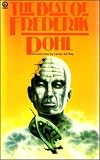
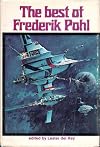
The Best of Frederik Pohl
by Frederik Pohl
On This Page
Tags
Recommendations


















Member Reviews
Frederik Pohl, who died in 2013, was an old-school science fiction writer whom I've run across in countless anthologies. This is a collection of his best stories (according to the editor, Lester del Rey. I found it a mixed bag). There are a number of good ones here, including "The Midas Plague", set in a future where robotic technology has made production so efficient that it is every person's civic duty to consume as much gross national product as possible, and the wealthy are those who have earned the right to live simply. This is the exact theme of a similar story by Clarke or Asimov; I'm not sure which and I'm not sure which came first. My favorite was a short one, "Punch", about aliens of superior technology who have been bestowing show more upon mankind much of their advanced knowledge, including space weaponry. The last line is a true punchline that transforms the story, and makes me wonder if an "Outer Limits" episode of a similar theme was inspired by this. Pohl includes a not-too-tedious informative piece about the benefits of counting using base 2, almost in the style of the expository master, Isaac Asimov. A few clunkers, but over all, Pohl was a highly respected science fiction writer who came by his rep honestly. show less
Going in, I was pretty sure that I liked Frederik Pohl. But do I? I liked Man Plus and Slave Ship. And Starburst and Gateway were pretty good. These stories seemed wildly inconsistent. Some like "The Day the Icicle Works Closed," "The Hated," and "We Never Mention Aunt Nora." Other stories were just plain bizarre ... crazy notions without cause or any real reason for being written about. Other stories (including "The Hated" which is liked) were weirdly dark and pessimistic. That just doesn't do it for me.
Frederik Pohl is prolific. He handles so many diverse ideas with great skill. I was completely intrigued by nearly every one of the tales contained in this collection. Here, then, is an accounting.
"The Tunnel Under the World" - A man wakes up to find everything very different from the way he remembered it the day before. The next day he finds the date the same as the one before. What is going on? -- This one is a little bit like the Truman Show, except with a very different and startling twist at the end.
"Three Portraits and a Prayer" - About a dying scientist, his doctor, and an evil millionaire. -- This wasn't my favorite. I didn't really see the point.
"Day Million" - How much will human beings differ from us in the far, far future? show more Here is one imagining. -- This was very short and quite poetic.
"Happy Birthday, Dear Jesus" - A department store head falls in love with an employee against a backdrop of rampant consumerism. -- I have read this one before, I know. It wasn't a trial to read again.
"We Never Mention Aunt Nora" - Something happened to Aunt Nora that was unspeakable. It may be poised to happen again. -- This one was a little maddening.
"Father of the Stars" - Elderly, nearly-dead Marchand spent his entire fortune on colony ships, and sent them to the stars. He is disheartened when someone invents a much faster ship. -- This was so poignant. I loved it.
"The Day the Martians Came" - Regarding a hotelier near Cape Canaveral on said day. -- Such an interesting twist. What societal caste would Martians inhabit?
"The Midas Plague" - In a world where notions of prosperity are turned upside-down, how does one "poor" man cope with marriage to a "wealthy" woman? -- This is the most memorable story in the collection. At first, I couldn't figure out what was going on, but once I caught on, I was completely enthralled.
"The Snowmen" - I'm still not sure what this was about.
"How to Count on Your Fingers" - A non-fiction essay on binary mathematics. -- I still can't count in binary, but I understand it a little better.
"Grandy Devil" - I'm not going to tell you anything about this one because everything I can think of to say is a complete spoiler.
"Speed Trap" - A man is beleaguered by meetings and conferences, never really getting anything done. He develops a way to revolutionize modern communication and free up time for brilliant people to spend more time inventing important things. - Another story with a very interesting twist toward the end. Even though you kind of see it coming, it's still pretty rewarding.
"The Richest Man in Levittown" - A guy who's inherited big is drowning in request for a piece of his windfall. An old friend shows up with a proposition that will let them rule the world. His visit ends in very unexpected consequences. - The twist on this one is a little far-fetched, but it's well-written and entertaining.
"The Day the Icicle Works Closed" - A planet whose sole industry has gone defunct leaves a very depressed population. The only remaining profitable business, or way for anyone to make any money, is outrageously intrusive and ethically bankrupt. A lawyer sets out to expose the directors. -- This was depressing as well as scary. The ending is a catharsis.
"The Hated" - A former astronaut is consumed with murderous thoughts towards his fellow ship-mates. -- Darkly disturbing.
"The Martian in the Attic" - Our narrator is a grubby slime trying to blackmail a rich slime with a big secret as to how he came to invent so many wonderful things. - The title is kind of a spoiler, but the characterization was superb.
"The Census Takers" - Showcases one way a bureaucracy might deal with overpopulation. - Also disturbing, but also funny. Quite a feat.
"The Children of Night" - A PR troubleshooter takes on the cause of a group of aliens from Arcturus who'd like to build a compound in a town where the people are very much "not in my backyard!" - Extremely compelling. Pohl has a lot to say on the subjects of PR and advertising and he has such a fascinating perspective.
At the end Pohl reflects upon the selections Del Rey has made for the collection and has some engaging tidbits to divulge. show less
"The Tunnel Under the World" - A man wakes up to find everything very different from the way he remembered it the day before. The next day he finds the date the same as the one before. What is going on? -- This one is a little bit like the Truman Show, except with a very different and startling twist at the end.
"Three Portraits and a Prayer" - About a dying scientist, his doctor, and an evil millionaire. -- This wasn't my favorite. I didn't really see the point.
"Day Million" - How much will human beings differ from us in the far, far future? show more Here is one imagining. -- This was very short and quite poetic.
"Happy Birthday, Dear Jesus" - A department store head falls in love with an employee against a backdrop of rampant consumerism. -- I have read this one before, I know. It wasn't a trial to read again.
"We Never Mention Aunt Nora" - Something happened to Aunt Nora that was unspeakable. It may be poised to happen again. -- This one was a little maddening.
"Father of the Stars" - Elderly, nearly-dead Marchand spent his entire fortune on colony ships, and sent them to the stars. He is disheartened when someone invents a much faster ship. -- This was so poignant. I loved it.
"The Day the Martians Came" - Regarding a hotelier near Cape Canaveral on said day. -- Such an interesting twist. What societal caste would Martians inhabit?
"The Midas Plague" - In a world where notions of prosperity are turned upside-down, how does one "poor" man cope with marriage to a "wealthy" woman? -- This is the most memorable story in the collection. At first, I couldn't figure out what was going on, but once I caught on, I was completely enthralled.
"The Snowmen" - I'm still not sure what this was about.
"How to Count on Your Fingers" - A non-fiction essay on binary mathematics. -- I still can't count in binary, but I understand it a little better.
"Grandy Devil" - I'm not going to tell you anything about this one because everything I can think of to say is a complete spoiler.
"Speed Trap" - A man is beleaguered by meetings and conferences, never really getting anything done. He develops a way to revolutionize modern communication and free up time for brilliant people to spend more time inventing important things. - Another story with a very interesting twist toward the end. Even though you kind of see it coming, it's still pretty rewarding.
"The Richest Man in Levittown" - A guy who's inherited big is drowning in request for a piece of his windfall. An old friend shows up with a proposition that will let them rule the world. His visit ends in very unexpected consequences. - The twist on this one is a little far-fetched, but it's well-written and entertaining.
"The Day the Icicle Works Closed" - A planet whose sole industry has gone defunct leaves a very depressed population. The only remaining profitable business, or way for anyone to make any money, is outrageously intrusive and ethically bankrupt. A lawyer sets out to expose the directors. -- This was depressing as well as scary. The ending is a catharsis.
"The Hated" - A former astronaut is consumed with murderous thoughts towards his fellow ship-mates. -- Darkly disturbing.
"The Martian in the Attic" - Our narrator is a grubby slime trying to blackmail a rich slime with a big secret as to how he came to invent so many wonderful things. - The title is kind of a spoiler, but the characterization was superb.
"The Census Takers" - Showcases one way a bureaucracy might deal with overpopulation. - Also disturbing, but also funny. Quite a feat.
"The Children of Night" - A PR troubleshooter takes on the cause of a group of aliens from Arcturus who'd like to build a compound in a town where the people are very much "not in my backyard!" - Extremely compelling. Pohl has a lot to say on the subjects of PR and advertising and he has such a fascinating perspective.
At the end Pohl reflects upon the selections Del Rey has made for the collection and has some engaging tidbits to divulge. show less
The first thing to recognize about this collection is that it is del Rey’s selection. Unlike some of the other entries in the Ballantine Classic Library of Science Fiction, we do not get an author’s first story or author favorites they regard as overlooked. His first published fiction appeared in 1940, but the date range of stories in this 1975 collection is only from 1954 to 1967.
Like his friend and sometimes collaborator Jack Williamson, who had his own entry in the Ballantine series three years later, Pohl had a lot of years left in his career. Thus, Platinum Pohl: The Collected Best Stories from 2005 (Pohl was still publishing short fiction as late as 2010) is heavily weighted towards his later years with only four stories show more appearing in both collections.
For Pohl admirers, most of this book is of interest.
For those unfamiliar with Pohl, there are some classic stories. But there’s also a lot of stuff that is skillful but not outstanding, exhibits of Pohl’s acerbic wit and cynicism and some characteristic elements of his work.
“Punch” is the slightest of the lot. In looking over my 1988 notes, I see nothing that stood out, and I did not reread it. Evidently, my 1988 self only noted that “Three Portraits and a Prayer” had a muted tone and was grim. I noted the only unusual thing about “We Never Mention Aunt Nora” was reversal of the stereotypical no-good man deserting a pregnant woman in financial straits plot device.
One doesn’t usually think of Pohl as a horror writer but there is a jokey, sardonic biter-bitten element in two of these stories. “The Martian in the Attic” is pretty much the secret a hapless blackmailer threatens to reveal about the world’s richest and most powerful man. “Grandy Devil” has an immortal deciding to murder his grandfather, also one of the world’s secret immortals, after the latter nags him one too many times about having too many kids.
Overpopulation has long been a Pohl theme. “The Census Takers” is one of those twist stories, the firemen of Ray Bradbury’s Fahrenheit 451 being the most famous example, of a familiar institution being inverted and perverted to a new end.
Overpopulation is only one variation on environmental themes that have long run through the work of Pohl and his collaborations with Kornbluth. So, it’s not surprising that the man who co-wrote 1991′s Our Angry Earth with Isaac Asimov would give us “The Snowmen”. In the future of this 1959 story, the extensive use of heat pumps has reduced the temperature of Earth’s atmosphere to seven or eight degrees above absolute zero. Beneath the frozen mass of what was once the Earth’s atmosphere, the population resents the Feds telling them there’s a problem.
The Pohl who wrote a non-fiction work subtitled “science as a spectator sport” suggests, in a 1967 story set contemporaneously at a scientific conference, that there may be a conspiracy to inhibit, by sucking scientists into academic administrative duties, the advance of science and technology. The promulgation of scientific knowledge and theory has changed a fair amount since “Speed Trap”, but it’s still a fun story.
“The Hated”, from 1961, stands as part of a tradition of science fiction going back to at least the 1930s with Edmond Hamilton’s “What’s It Like Out There?” (though Homilton’s story wasn’t published until 1952), a tradition that emphasizes the difficulties and suffering of space travel and colonization. Here the psychic trauma of years in very tight quarters have rendered former crew mates literally murderous towards each other.
“Father to the Stars” is another story centering on the difficulties of interstellar travel though it also features brain transplants into chimps. It’s story of a man who gave away a fortune to promote space travel via slower than light ships. At the end of his life, he fears, when he learns of a possible faster than light drive, that he has duped thousands into wasting their lives in those voyages. Slow ships overtaken by later, faster ones to welcome colonists to their new homes reminded me of the ending of A. E. van Vogt’s famous “Far Centaurus”, and the hero’s dying wish to have his dream of space travel realized reminded me of Robert A. Heinlein’s “Requiem”. But the story also has a weird resonance with the bitter, but plausible, “What Dreams Remain” from Pohl 31 years later in Future Quartet. In that story, a young opportunist betrays an old politician’s efforts to revive space travel.
“Children of the Night” from 1964 is, says Pohl, the only attempt (at least as of 1975) to use his specialist knowledge of politics and running a campaign. Its first person account of a political operative getting approval for a base to be used in the American Midwest by a very unpopular (and formerly enemy) alien race seems prescient in its depiction of political focus groups using biometric data. It’s also very cynical about the lack of rationality the voting public shows.
In his comments about “The Day the Martians Came”, Pohl surprisingly says he has almost as much interest in war as science though I’ve never noticed that in anything I’ve read of his, and the story itself concerns race relations and the seeming need for there always to be some kind of minority to despise.
“The Day the Icicle Works Closed” is a near classic. It’s not just a lawyer trying to win an acquittal for some charged kidnappers who most definitely committed their crime. It’s a plausible look at how an interplanetary economy of slower than light speed trade would work, an account of small town machine politics, recorded personalities renting bodies, economic desperation when a company town no longer has a market for its product, and even underwater mining.
And then there are the classic stories.
“The Tunnel Under the World” is Pohl’s avowed belief of what advertising agencies would do to us if they had the power. That 1955 story got a memorable updating with Andrew Weiner’s “The News from D Street” in 1986.
“The Midas Plague” is the famous — an internet search will provide many references to it in economic and sociology contexts — story of an upside down world where the poor are forced to consume an ever escalating amount of goods and services and the rich get to step off the treadmill of frenzied consumption. Now, the obvious argument against this idea is that economic growth does not have to consist of an ever speeding conveyor belt of production matched by that treadmill of consumption. There’s capital investments to be made in new technologies and development of new sectors of the economy.
And Pohl himself seems not to have really believed in this satire. It was the idea of editor H. L. Gold, and Pohl initially scoffed at the idea as implausible, but his mind kept exploring the notion, and, eventually, he relented and produced this masterpiece of satiric science fiction. I doubt he changed his mind, though, on the validity of its premise.
Finally, there is the widely anthologized “Day Million”. Pohl’s story, the one he once said he wanted on his tombstone (though, as far as I know, it didn’t make it there), is rightly celebrated as an early work on the Singularity and transhumanism. Pohl’s notes says he wanted, in this 1966 story, to explore notions of choosing your gender and recorded minds show less
Like his friend and sometimes collaborator Jack Williamson, who had his own entry in the Ballantine series three years later, Pohl had a lot of years left in his career. Thus, Platinum Pohl: The Collected Best Stories from 2005 (Pohl was still publishing short fiction as late as 2010) is heavily weighted towards his later years with only four stories show more appearing in both collections.
For Pohl admirers, most of this book is of interest.
For those unfamiliar with Pohl, there are some classic stories. But there’s also a lot of stuff that is skillful but not outstanding, exhibits of Pohl’s acerbic wit and cynicism and some characteristic elements of his work.
“Punch” is the slightest of the lot. In looking over my 1988 notes, I see nothing that stood out, and I did not reread it. Evidently, my 1988 self only noted that “Three Portraits and a Prayer” had a muted tone and was grim. I noted the only unusual thing about “We Never Mention Aunt Nora” was reversal of the stereotypical no-good man deserting a pregnant woman in financial straits plot device.
One doesn’t usually think of Pohl as a horror writer but there is a jokey, sardonic biter-bitten element in two of these stories. “The Martian in the Attic” is pretty much the secret a hapless blackmailer threatens to reveal about the world’s richest and most powerful man. “Grandy Devil” has an immortal deciding to murder his grandfather, also one of the world’s secret immortals, after the latter nags him one too many times about having too many kids.
Overpopulation has long been a Pohl theme. “The Census Takers” is one of those twist stories, the firemen of Ray Bradbury’s Fahrenheit 451 being the most famous example, of a familiar institution being inverted and perverted to a new end.
Overpopulation is only one variation on environmental themes that have long run through the work of Pohl and his collaborations with Kornbluth. So, it’s not surprising that the man who co-wrote 1991′s Our Angry Earth with Isaac Asimov would give us “The Snowmen”. In the future of this 1959 story, the extensive use of heat pumps has reduced the temperature of Earth’s atmosphere to seven or eight degrees above absolute zero. Beneath the frozen mass of what was once the Earth’s atmosphere, the population resents the Feds telling them there’s a problem.
The Pohl who wrote a non-fiction work subtitled “science as a spectator sport” suggests, in a 1967 story set contemporaneously at a scientific conference, that there may be a conspiracy to inhibit, by sucking scientists into academic administrative duties, the advance of science and technology. The promulgation of scientific knowledge and theory has changed a fair amount since “Speed Trap”, but it’s still a fun story.
“The Hated”, from 1961, stands as part of a tradition of science fiction going back to at least the 1930s with Edmond Hamilton’s “What’s It Like Out There?” (though Homilton’s story wasn’t published until 1952), a tradition that emphasizes the difficulties and suffering of space travel and colonization. Here the psychic trauma of years in very tight quarters have rendered former crew mates literally murderous towards each other.
“Father to the Stars” is another story centering on the difficulties of interstellar travel though it also features brain transplants into chimps. It’s story of a man who gave away a fortune to promote space travel via slower than light ships. At the end of his life, he fears, when he learns of a possible faster than light drive, that he has duped thousands into wasting their lives in those voyages. Slow ships overtaken by later, faster ones to welcome colonists to their new homes reminded me of the ending of A. E. van Vogt’s famous “Far Centaurus”, and the hero’s dying wish to have his dream of space travel realized reminded me of Robert A. Heinlein’s “Requiem”. But the story also has a weird resonance with the bitter, but plausible, “What Dreams Remain” from Pohl 31 years later in Future Quartet. In that story, a young opportunist betrays an old politician’s efforts to revive space travel.
“Children of the Night” from 1964 is, says Pohl, the only attempt (at least as of 1975) to use his specialist knowledge of politics and running a campaign. Its first person account of a political operative getting approval for a base to be used in the American Midwest by a very unpopular (and formerly enemy) alien race seems prescient in its depiction of political focus groups using biometric data. It’s also very cynical about the lack of rationality the voting public shows.
In his comments about “The Day the Martians Came”, Pohl surprisingly says he has almost as much interest in war as science though I’ve never noticed that in anything I’ve read of his, and the story itself concerns race relations and the seeming need for there always to be some kind of minority to despise.
“The Day the Icicle Works Closed” is a near classic. It’s not just a lawyer trying to win an acquittal for some charged kidnappers who most definitely committed their crime. It’s a plausible look at how an interplanetary economy of slower than light speed trade would work, an account of small town machine politics, recorded personalities renting bodies, economic desperation when a company town no longer has a market for its product, and even underwater mining.
And then there are the classic stories.
“The Tunnel Under the World” is Pohl’s avowed belief of what advertising agencies would do to us if they had the power. That 1955 story got a memorable updating with Andrew Weiner’s “The News from D Street” in 1986.
“The Midas Plague” is the famous — an internet search will provide many references to it in economic and sociology contexts — story of an upside down world where the poor are forced to consume an ever escalating amount of goods and services and the rich get to step off the treadmill of frenzied consumption. Now, the obvious argument against this idea is that economic growth does not have to consist of an ever speeding conveyor belt of production matched by that treadmill of consumption. There’s capital investments to be made in new technologies and development of new sectors of the economy.
And Pohl himself seems not to have really believed in this satire. It was the idea of editor H. L. Gold, and Pohl initially scoffed at the idea as implausible, but his mind kept exploring the notion, and, eventually, he relented and produced this masterpiece of satiric science fiction. I doubt he changed his mind, though, on the validity of its premise.
Finally, there is the widely anthologized “Day Million”. Pohl’s story, the one he once said he wanted on his tombstone (though, as far as I know, it didn’t make it there), is rightly celebrated as an early work on the Singularity and transhumanism. Pohl’s notes says he wanted, in this 1966 story, to explore notions of choosing your gender and recorded minds show less
This is a great collection of what I call early scifi. Real imagination without the collected scifi perspectives of the last 50 years. A fresh virgin exploration of technological possibilities in the future from a cultural/historical experience that from today's pespectives were primitive. Stories range from 1954 to 1964, from the rise of Christmas consumption as a belief system transposed against classical religion to long term space travel with cryogenics and body replacement solutions for longevity. Cool stuff
The Tunnel under the World (1955) - 'custom' ads on websites are blockable, but What If??
Punch (1961) - short sharp, what does man look like to an advance race?
Three Portraits and a Prayer (1962) - The Christy Girl, Artzybasheff, and Gilbert Stuart... all commercial artists, sold out(?).. but the main theme is one that is resonant whenever we face a megalomaniac like Trump.
Day Million (1966) - What If? humans evolve a certain way; can the oldest story still be told?
Happy Birthday, Dear Jesus (1956) - Smart satire against the Christmas dreams of capitalist retailers, with a nice little romance thrown in.
We Never Mention Aunt Nora (1958) - um... something happened, but I can't quite figure it out
Father of the Stars (1964) - homage to show more those ambitiously working to expand the scope of humanity... I can't help wondering what Pohl would have thought of Elon Musk.
The Day the Martians Came (1967) - short sharp commentary on the 'isms.
The Midas Plague (1954) - no matter how one defines 'wealth' or even 'plenty' there will never be equity.
The Snowmen (1959) - no matter how close the end of the world, there are those who think the portents irrelevant.
How to Count on Your Fingers (1956) essay - very cool introduction to binary math; I would have loved it when my brain was young and plastic.
Grandy Devil (1955) - short, odd twist on the immortality question
Speed Trap (1967) - are virtual meetings saving you time, now that you spend less time in the office or going to conventions? Can you actually get any work done?
The Richest Man in Levittown (1959) - was Pohl expecting a child when he wrote this?
The Day the Icicle Works Closed (1960) - good What If? and interesting mystery
The Hated (1958) - Thank goodness this prediction about astronauts hasn't come true.
The Martian in the Attic (1960) - lame, depends on genetic memory being a thing & has other problems.
The Census Takers (1956) - frenetic, bleak & funny both, as Pohl does.
The Children of Night (1964) - About PR men/ spin doctors: "No, we don't have to change any minds... because most people don't have enough mind to change!" ... but then there's the ending, and the reason this is the last story in the book.
The extra matter by del Rey and Pohl is skippable, imo. show less
Punch (1961) - short sharp, what does man look like to an advance race?
Three Portraits and a Prayer (1962) - The Christy Girl, Artzybasheff, and Gilbert Stuart... all commercial artists, sold out(?).. but the main theme is one that is resonant whenever we face a megalomaniac like Trump.
Day Million (1966) - What If? humans evolve a certain way; can the oldest story still be told?
Happy Birthday, Dear Jesus (1956) - Smart satire against the Christmas dreams of capitalist retailers, with a nice little romance thrown in.
We Never Mention Aunt Nora (1958) - um... something happened, but I can't quite figure it out
Father of the Stars (1964) - homage to show more those ambitiously working to expand the scope of humanity... I can't help wondering what Pohl would have thought of Elon Musk.
The Day the Martians Came (1967) - short sharp commentary on the 'isms.
The Midas Plague (1954) - no matter how one defines 'wealth' or even 'plenty' there will never be equity.
The Snowmen (1959) - no matter how close the end of the world, there are those who think the portents irrelevant.
How to Count on Your Fingers (1956) essay - very cool introduction to binary math; I would have loved it when my brain was young and plastic.
Grandy Devil (1955) - short, odd twist on the immortality question
Speed Trap (1967) - are virtual meetings saving you time, now that you spend less time in the office or going to conventions? Can you actually get any work done?
The Richest Man in Levittown (1959) - was Pohl expecting a child when he wrote this?
The Day the Icicle Works Closed (1960) - good What If? and interesting mystery
The Hated (1958) - Thank goodness this prediction about astronauts hasn't come true.
The Martian in the Attic (1960) - lame, depends on genetic memory being a thing & has other problems.
The Census Takers (1956) - frenetic, bleak & funny both, as Pohl does.
The Children of Night (1964) - About PR men/ spin doctors: "No, we don't have to change any minds... because most people don't have enough mind to change!" ... but then there's the ending, and the reason this is the last story in the book.
The extra matter by del Rey and Pohl is skippable, imo. show less
Members
- Recently Added By
Author Information

641+ Works 42,938 Members
Frederik Pohl was born in New York City on November 26, 1919. More interested in writing than in school, he dropped out of high school in his senior year and took a job with a publishing company. After serving as a public relations officer in the United States Army from 1943 to 1945, he returned to publishing as copywriter for Popular Science, a show more literary agent for several sci-fi writers, and the editor for the magazines Galaxy and If from 1959 until 1969, with If winning three successive Hugo awards. His first published work, a poem entitled Elegy to a Dead Satellite: Luna, was printed in Amazing Stories magazine in 1937 under the pen name Elton Andrews. His first science fiction novels were published in the mid 1960's, some written in collaboration with other writers, others created alone. During his lifetime, he won over 16 major awards for his writing (much of which was published pseudonymously) including six Hugo Awards and three Nebula Awards. His works include Gateway, which won the Campbell Memorial, Hugo, Locus SF, and Nebula Awards, Beyond the Blue Event Horizon, and Jem, which won the National Book Award in 1979. He also embraced blogging in his later years, using his online journal as an ongoing sequel to his autobiography, The Way the Future Was. He died on September 2, 2013 at the age 93. (Bowker Author Biography) show less
Some Editions
Awards and Honors
Notable Lists
Series
Belongs to Publisher Series
Work Relationships
Is contained in
Contains
Is abridged in
Common Knowledge
- Canonical title
- The Best of Frederik Pohl
- Original title
- The Best of Frederik Pohl
- Original publication date
- 1975
- Blurbers
- Amis, Kingsley
Classifications
Statistics
- Members
- 446
- Popularity
- 68,924
- Reviews
- 8
- Rating
- (3.60)
- Languages
- English
- Media
- Paper
- ISBNs
- 4
- ASINs
- 12