On This Page
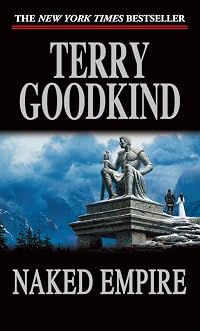
Description
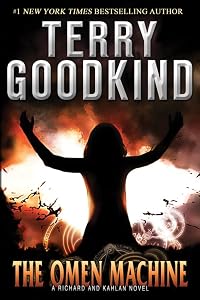
A poisoned Richard Rahl faces a difficult choice when he is promised an antidote and the salvation of an endangered empire if he will surrender his beloved wife, Kahlan Amnell, to his enemy.Tags
Recommendations


Member Reviews
5/10
Well, hooray for no sexual sadism but boo-hiss for all the haranguing about the supremacy of reason, the value of life and free will, and the importance of the individual.
When Goodkind concentrated on telling the story, really telling the story, this book was interesting and enjoyable. Most of the familiar characters were back and much of the action was well-paced and moved the plot forward. The lectures by Richard (and others, unfortunately) disrupted that pace but, overall, this book hung together pretty well.
The big climax was a bit of a letdown.
Well, hooray for no sexual sadism but boo-hiss for all the haranguing about the supremacy of reason, the value of life and free will, and the importance of the individual.
When Goodkind concentrated on telling the story, really telling the story, this book was interesting and enjoyable. Most of the familiar characters were back and much of the action was well-paced and moved the plot forward. The lectures by Richard (and others, unfortunately) disrupted that pace but, overall, this book hung together pretty well.
The big climax was a bit of a letdown.
En mi pueblo se llama "marear la perdiz". O sea, andarse por las ramas explicando las tramas hasta la saciedad. Esto es lo que hace Terry Goodkind en los volúmenes 15 y 16 de la saga 'La Espada de la Verdad' (Timun Mas le ha cogido el gustillo a dividir los originales en dos para "rentabilizar" la historia; en realidad se trata del octavo libro de la serie).
La novela va cual pollo sin cabeza hasta un final demasiado previsible y anodino. En realidad no sucede nada hasta pasadas las 500 páginas, de un total de 660 (150 del segundo volumen en España). Es decir, que la historia podría haberse quedado en unas 300 páginas y hubiese sido mucho más disfrutable.
(No entiendo esa manía de ciertos escritores de fantasía en querer engordar show more sus libros. ¿Acaso creen que la calidad se mide en gramos? ¿O que sus seguidores, al ver un libro con menos páginas se van a sentir engañados porque si no tiene más de 500 páginas va a parecer mediocre? Unas preguntas retóricas que dejo en el aire.)
La historia es sencilla: Richard y Kahlan, junto a algunos compañeros más, caen en una trampa de unos habitantes de un pueblo perdido del Viejo Mundo. Entonces se ven abocados a una misión con la que no contaban, cuando su mayor prioridad es regresar al Nuevo Mundo para seguir combatiendo a Jagang y su Orden Imperial.
El hecho es que el libro se lee bien, pero llega un momento en que se hace pesado e incluso aburrido, lo que tratándose de fantasía épica es casi un pecado. Me parece que si Goodkind no quiere matar a la gallina de los huevos de oro, deberá esforzarse algo más. Sin lugar a dudas, se trata del libro más flojo de la saga. show less
La novela va cual pollo sin cabeza hasta un final demasiado previsible y anodino. En realidad no sucede nada hasta pasadas las 500 páginas, de un total de 660 (150 del segundo volumen en España). Es decir, que la historia podría haberse quedado en unas 300 páginas y hubiese sido mucho más disfrutable.
(No entiendo esa manía de ciertos escritores de fantasía en querer engordar show more sus libros. ¿Acaso creen que la calidad se mide en gramos? ¿O que sus seguidores, al ver un libro con menos páginas se van a sentir engañados porque si no tiene más de 500 páginas va a parecer mediocre? Unas preguntas retóricas que dejo en el aire.)
La historia es sencilla: Richard y Kahlan, junto a algunos compañeros más, caen en una trampa de unos habitantes de un pueblo perdido del Viejo Mundo. Entonces se ven abocados a una misión con la que no contaban, cuando su mayor prioridad es regresar al Nuevo Mundo para seguir combatiendo a Jagang y su Orden Imperial.
El hecho es que el libro se lee bien, pero llega un momento en que se hace pesado e incluso aburrido, lo que tratándose de fantasía épica es casi un pecado. Me parece que si Goodkind no quiere matar a la gallina de los huevos de oro, deberá esforzarse algo más. Sin lugar a dudas, se trata del libro más flojo de la saga. show less
Naked Empire continues from where the Pillars of Creation left off. As Richard and Kahlan seek to escape their unknown tracker, they meet a stranger and wind up in a previously isolated culture, and race against the clock to solve three deadly challenges.
While the storyline is interesting, it is hampered by poor writing way below the standard exhibited in earlier books in the series.
The deux ex machina concept is used in a heavy handed fashion. As the series progress, it appears that Richard's intuitive gift intervenes more and more to resolve any deadly impasse. This removes any sense of suspense as the reader becomes to expect that, no matter the odds, the gift will manifest itself in some unexpected way to resolve the impasse. show more Richard as a human being becomes irrelevant: his subconscious is in control at critical moments, leaving a sense of frustration and of being cheated by Goodkind.
Goodkind's attempts at philosophical rants are heavy handed, long winded and repetitive. While I did not agree with the philosophical views of good and evil presented by Richard Rahl, I could have gone along and still enjoyed the story. In fact, it made Richard Rahl more believable by being a bit of a radical in some areas. What became frustrating was the constant repetition of the same speeches, over and over, with no variance, which could have been summed up after the first iteration, either shortening the book's length or providing room for more material. And let's not talk about the supposed logic of the argument, which brings me to my next point. Goodkind is inconsistent. While Richard Rahl is completely unforgiving for any member of the order and advocates for a zero tolerance policy (kill them all - you can't compromise with evil), he did forgive the D'Haran empire minions, many of which did horrible things under the rule of Panis Rahl and Darkhen Rahl. He never explains why Richard's attitude toward the Order is different than towards D'Hara.
The best moments definitely come when the preaching takes a back seat to action. There's a great sequence with Zedd and Adie that is genuinely exciting, funny, and not at all preachy.
Furthermore, Goodkind seems to be re-using the same old plot line over and over - Kahlan and Richard start together, then they are split up because of some foe, then one of them looses the ability to use their power and so on, and so on. While the circumstances differ, it is becoming tedious to see Richard and Kahlan's actions centre around where their beloved has been taken when they are supposed to be the leaders of the fight for life and freedom.
Then the second half of this book really picks up. The same kind of action which made the first book (and, okay, Blood of the Fold had some good movement in it as well) so good. The best thing is that some old characters reappear...I won't spoil the surprise and tell you who (but, no, Darken Rahl doesn't come back from the Underworld again). If only Goodkind hadn't filled the middle of the book with a lecture on freedom and evil it might have rated higher.
Having said that, all the niggles I’ve outlined will not prevent me from reading the next instalment in this series. I really want to see how he wraps it up. show less
While the storyline is interesting, it is hampered by poor writing way below the standard exhibited in earlier books in the series.
The deux ex machina concept is used in a heavy handed fashion. As the series progress, it appears that Richard's intuitive gift intervenes more and more to resolve any deadly impasse. This removes any sense of suspense as the reader becomes to expect that, no matter the odds, the gift will manifest itself in some unexpected way to resolve the impasse. show more Richard as a human being becomes irrelevant: his subconscious is in control at critical moments, leaving a sense of frustration and of being cheated by Goodkind.
Goodkind's attempts at philosophical rants are heavy handed, long winded and repetitive. While I did not agree with the philosophical views of good and evil presented by Richard Rahl, I could have gone along and still enjoyed the story. In fact, it made Richard Rahl more believable by being a bit of a radical in some areas. What became frustrating was the constant repetition of the same speeches, over and over, with no variance, which could have been summed up after the first iteration, either shortening the book's length or providing room for more material. And let's not talk about the supposed logic of the argument, which brings me to my next point. Goodkind is inconsistent. While Richard Rahl is completely unforgiving for any member of the order and advocates for a zero tolerance policy (kill them all - you can't compromise with evil), he did forgive the D'Haran empire minions, many of which did horrible things under the rule of Panis Rahl and Darkhen Rahl. He never explains why Richard's attitude toward the Order is different than towards D'Hara.
The best moments definitely come when the preaching takes a back seat to action. There's a great sequence with Zedd and Adie that is genuinely exciting, funny, and not at all preachy.
Furthermore, Goodkind seems to be re-using the same old plot line over and over - Kahlan and Richard start together, then they are split up because of some foe, then one of them looses the ability to use their power and so on, and so on. While the circumstances differ, it is becoming tedious to see Richard and Kahlan's actions centre around where their beloved has been taken when they are supposed to be the leaders of the fight for life and freedom.
Then the second half of this book really picks up. The same kind of action which made the first book (and, okay, Blood of the Fold had some good movement in it as well) so good. The best thing is that some old characters reappear...I won't spoil the surprise and tell you who (but, no, Darken Rahl doesn't come back from the Underworld again). If only Goodkind hadn't filled the middle of the book with a lecture on freedom and evil it might have rated higher.
Having said that, all the niggles I’ve outlined will not prevent me from reading the next instalment in this series. I really want to see how he wraps it up. show less
The people of Bandakar believe violence is abhorrent no matter their situation. So when Imperial Order soldiers invade their land to murder, rape, and enslave them, they do nothing to resist. They wait for Richard Rahl, Seeker of Truth, who is prophesied to be both their destroyer and their redeemer. But not content to rely on Richard’s cooperation, they poison him, thus forcing him to come to their land to seek the antidote.
Richard’s magic is failing him too, and it’s a race as to which plight will kill him first. Besides the poison and his gift that are derailing him, he also has to dodge the assassins of Emperor Jagang plus the evil soul stealer, Nicholas the Slide. But worse is their intent to capture the Mother Confessor, show more his wife and beloved Kahlan. Will he prevail to save them all? And if he succeeds, will he die at the moment of triumph?
While political lessons are inherent in this story, the action is gripping and the characters compelling. I’m ready to start the next book in this engrossing series. show less
Richard’s magic is failing him too, and it’s a race as to which plight will kill him first. Besides the poison and his gift that are derailing him, he also has to dodge the assassins of Emperor Jagang plus the evil soul stealer, Nicholas the Slide. But worse is their intent to capture the Mother Confessor, show more his wife and beloved Kahlan. Will he prevail to save them all? And if he succeeds, will he die at the moment of triumph?
While political lessons are inherent in this story, the action is gripping and the characters compelling. I’m ready to start the next book in this engrossing series. show less
Know the phrase "jumping the shark?" It's that moment in a series, book or television or feature film, where a once-loved franchise moves into a point of no return. With almost all the series I had read before Sword of Truth, I had been lucky if I liked it to keep liking it. This and L.K. Hamilton's Anita Blake are what ended that happy streak, and ended my practice of sticking it out to the end no matter what. With Hamilton, I finally quit some time ago mid Book 17, and am happier for it. With Goodkind I stuck to the (very) bitter end. And I'm not alone in feeling disappointed with a series that at first enthralled me.
A lot of people feel Goodkind lost it when he began to insert more and more of his political philosophy into his books. show more It certainly helps if, like me, you're basically sympathetic to a libertarian philosophy. The first dividing point seems to come from the reviews I've seen with Soul of the Fire, the fifth book, where people first notice some preachiness. Goodkind's philosophy becomes much more overt in the plot with Faith of the Fallen, with its clanging anvils about the evils of socialism, but for the record, I still was greatly enjoying the series there. I hated The Pillars of Creation; I wanted to strangle Jennsen by the end, and her little goat too! But all was well I thought when here the focus returned to Richard. Well, except in this novel the preachiness did become nigh unbearable even to me here in the choir. If anything did annoy me in Faith of the Fallen it was how Richard had become a Marty Stu. OK, great tracker, leader, general, magician. But now a sculptor to rival Michelangelo in greatness? In Naked Empire I thought I saw another trait of Marty Stu-ness. Or maybe just authorial ego amok? Richard is never wrong. He never even thinks he might be wrong. And this is where I thought Richard's adversaries truly were straw men I couldn't believe could ever be encountered outside fiction.
I did enjoy this novel much, much more than The Pillars of Creation though or would the concluding Chainfire Trilogy. There was still life in the series, and characters I still enjoyed like Cara. That's why I'm rating it as high as I am. Probably also helped Naked Empire came out in paperback just as I was reading through the series. Sheer momentum propelled me forward I'm sure. It was a very different case when Chainfire came out in hardcover after I had to wait for it. Naked Truth was the last book in the series I could (barely) enjoy at all. show less
A lot of people feel Goodkind lost it when he began to insert more and more of his political philosophy into his books. show more It certainly helps if, like me, you're basically sympathetic to a libertarian philosophy. The first dividing point seems to come from the reviews I've seen with Soul of the Fire, the fifth book, where people first notice some preachiness. Goodkind's philosophy becomes much more overt in the plot with Faith of the Fallen, with its clanging anvils about the evils of socialism, but for the record, I still was greatly enjoying the series there. I hated The Pillars of Creation; I wanted to strangle Jennsen by the end, and her little goat too! But all was well I thought when here the focus returned to Richard. Well, except in this novel the preachiness did become nigh unbearable even to me here in the choir. If anything did annoy me in Faith of the Fallen it was how Richard had become a Marty Stu. OK, great tracker, leader, general, magician. But now a sculptor to rival Michelangelo in greatness? In Naked Empire I thought I saw another trait of Marty Stu-ness. Or maybe just authorial ego amok? Richard is never wrong. He never even thinks he might be wrong. And this is where I thought Richard's adversaries truly were straw men I couldn't believe could ever be encountered outside fiction.
I did enjoy this novel much, much more than The Pillars of Creation though or would the concluding Chainfire Trilogy. There was still life in the series, and characters I still enjoyed like Cara. That's why I'm rating it as high as I am. Probably also helped Naked Empire came out in paperback just as I was reading through the series. Sheer momentum propelled me forward I'm sure. It was a very different case when Chainfire came out in hardcover after I had to wait for it. Naked Truth was the last book in the series I could (barely) enjoy at all. show less
After having read this novel, I'm pretty sure Terry Goodkind gets paid by the word. He could have cut this novel in half, and it would still be entirely too long. In Naked Empire, Richard Rahl has been poisoned, and he needs to find an antidote. In the meantime, the Empire that he rules is being invaded by barbarians.
This novel was absolutely dreadful in many ways. Someone should tell Mr. Goodkind that he's writing a fantasy novel, not a dissertation. He went on and on about the philosophy of magic and people who aren't receptive to it. I felt like stabbing myself in the eye about halfway through it. I have no idea how he can have many readers. Among popular fantasy writers, he is among the worst I have read. His characters are poorly show more drawn out and not remotely interesting. His plot goes nowhere, and is not particularly imaginative. After reading Naked Empire, I have no interest in reading any further novels from Terry Goodkind.
Carl Alves - author of Blood Street show less
This novel was absolutely dreadful in many ways. Someone should tell Mr. Goodkind that he's writing a fantasy novel, not a dissertation. He went on and on about the philosophy of magic and people who aren't receptive to it. I felt like stabbing myself in the eye about halfway through it. I have no idea how he can have many readers. Among popular fantasy writers, he is among the worst I have read. His characters are poorly show more drawn out and not remotely interesting. His plot goes nowhere, and is not particularly imaginative. After reading Naked Empire, I have no interest in reading any further novels from Terry Goodkind.
Carl Alves - author of Blood Street show less
More interesting than the previous tome of the series, with once again a dissertation on morality, good, evil and the justification of acting against evil. The suspense of the plot keeps you wanting to tell Richard 'no, you are wrong, what you think is false', but of course we cannot and we keep wondering whether he will die at the end or not.
Members
- Recently Added By
Lists

Best Fantasy Novels
821 works; 361 members

NPRs your picks: top 100 Sci-Fi/Fantasy books
297 works; 80 members
Author Information

123+ Works 82,412 Members
Writer Terry Goodkind was born in Omaha, Nebraska in 1949. As a child, he had trouble reading and writing because he suffered from a form of dyslexia. It wasn't until high school that a composition teacher recognized his writing talent. Before becoming a writer, he worked as a carpenter, violin-maker, hypnotherapist, wildlife artist and restorer show more of rare artifacts. Goodkind's first novel, "Wizards First Rule" (1994), took a year for him to write and had a record-breaking debut. It became an international bestseller and won the praise of many writers in the fantasy genre. The sequels "Stone of Tears" (1995) and "Blood of the Fold" (1996) experienced equal success. His fourth book, "Temple of the Winds" was published in 1997. His other books include The Pillars of Creation, Naked Empire, Confessor, The Omen Machine, Severed Souls, and Shroud of Eternity. His series included Sword of Truth; Richard and Kahlan; Jack Raines; Nicci Chronicles; and Children of D'Hara. Terry Goodkind, author of over 35 books, novellas, and short stories, died on September 17, 2020. He was 72. (Bowker Author Biography) show less
Some Editions
Awards and Honors
Awards
Distinctions
Series


Belongs to Publisher Series
Il libro d'oro [Fanucci] (149)
Work Relationships
Common Knowledge
- Canonical title
- Naked Empire
- Original title
- Naked Empire
- Original publication date
- 2003-07-23
- People/Characters
- Richard Rahl; Kahlan Amnell; Jensen Rahl; Nathan Rahl; Annalina Aldurren
- Dedication
- To Tom Doherty, always a champion in the struggle of good against evil
- First words
- "You knew they were there, didn't you?" Kahlan asked in a hushed tone as she leaned closer.
- Last words
- (Click to show. Warning: May contain spoilers.)Cara couldn't hold out, and as she turned back to the trail, Richard saw the smile spread across her face.
- Publisher's editor
- Nielsen Hayden, Patrick
- Original language*
- Englisch
*Some information comes from Common Knowledge in other languages. Click "Edit" for more information.
Classifications
Statistics
- Members
- 4,923
- Popularity
- 2,851
- Reviews
- 34
- Rating
- (3.56)
- Languages
- 8 — Czech, Dutch, English, French, German, Italian, Polish, Swedish
- Media
- Paper, Audiobook, Ebook
- ISBNs
- 42
- UPCs
- 1
- ASINs
- 21