On This Page
Description
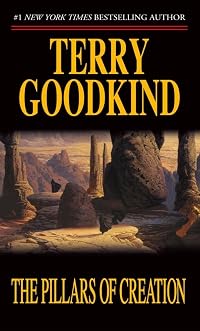
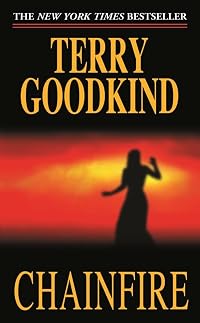
Richard desperately searches for his long-lost, amnesiac beloved, Kahlan Amnell, racing against time to find her before she can uncover the secrets of her lost identity, thereby making her vulnerable to evil.Tags
Recommendations


Member Reviews
Séptimo volumen de la serie La Espada de la Verdad (decimocuarto en la edición española, todo un robo por parte de la editorial, ya que de cada volumen original hacen dos y por lo tanto cobran casi el doble), en el que los protagonistas no son, aunque parezca mentira, Richard y Kahlan. Sí amigos, un libro sin los protagonistas habituales de la serie, que no hacen acto de presencia hasta los capítulos finales.
Pero esto no va en detrimento de la calidad, ni mucho menos. Terry Goodkind sabe dosificar la acción, las aventuras y la trama perfectamente. Los protagonistas clave esta vez son los hermanastros de Richard, los hijos bastardos de Rahl el Oscuro: Jennsen, una joven pelirroja que vive con su madre, ambas escondidas y en show more constante temor de que el actual Lord Rahl, que no es otro que Richard, dé con ellas para matarlas y acabar con todo rastro de aquellos bastardos que no poseen el don. Y el otro protagonista, Oba, un sociópata y asesino, envidioso de lo que cree suyo por derecho de descendencia.
La historia va in crescendo y no decae en ningún momento en cuanto te das cuenta de por dónde nos quiere llevar Goodkind. Un final demasiado precipitado y cogido con pinzas, hasta cierto punto surrealista, le resta una estrella a mi puntuación. Da la sensación de que Goodkind ha utilizado este libro como un paréntesis en su saga para emociones más fuertes.
Una historia apasionante, nada que ver con dragonadas ni cosas por el estilo. Fantasía de la buena. Demos gracias por tener a Terry Goodkind. show less
Pero esto no va en detrimento de la calidad, ni mucho menos. Terry Goodkind sabe dosificar la acción, las aventuras y la trama perfectamente. Los protagonistas clave esta vez son los hermanastros de Richard, los hijos bastardos de Rahl el Oscuro: Jennsen, una joven pelirroja que vive con su madre, ambas escondidas y en show more constante temor de que el actual Lord Rahl, que no es otro que Richard, dé con ellas para matarlas y acabar con todo rastro de aquellos bastardos que no poseen el don. Y el otro protagonista, Oba, un sociópata y asesino, envidioso de lo que cree suyo por derecho de descendencia.
La historia va in crescendo y no decae en ningún momento en cuanto te das cuenta de por dónde nos quiere llevar Goodkind. Un final demasiado precipitado y cogido con pinzas, hasta cierto punto surrealista, le resta una estrella a mi puntuación. Da la sensación de que Goodkind ha utilizado este libro como un paréntesis en su saga para emociones más fuertes.
Una historia apasionante, nada que ver con dragonadas ni cosas por el estilo. Fantasía de la buena. Demos gracias por tener a Terry Goodkind. show less
For 6 books, Goodkind builds these fascinating characters whom we grow to love. Then in this book, we don't see any of those characters for the first 50 chapters! Instead, we are given two new ones: the mildly entertaining Jensen Rahl and the completely boring, one-dimensional Oba Rahl.
Oba is one of the worst characters I've read in a long time. Not only is he a complete psycho, but unlike Drefan, he has no depth and constantly repeats the same things ad nauseum.
The last book left us with Richard gaining the aid of one of the most powerful beings in the world and one of the few that can teach him how to use subtractive magic. This book failed to follow up on that. And if I have to read about Richard's raptor gaze or Jagang's nightmare show more eyes one more time, I'm going to stab my own eyes out. show less
Oba is one of the worst characters I've read in a long time. Not only is he a complete psycho, but unlike Drefan, he has no depth and constantly repeats the same things ad nauseum.
The last book left us with Richard gaining the aid of one of the most powerful beings in the world and one of the few that can teach him how to use subtractive magic. This book failed to follow up on that. And if I have to read about Richard's raptor gaze or Jagang's nightmare show more eyes one more time, I'm going to stab my own eyes out. show less
Jennsen Rahl and Oba Rahl, half-siblings to Richard Rahl, navigate their pasts and converge on a dangerous, magic-dead valley. Jennsen, believing Richard is evil, is manipulated by the Imperial Order to kill him, while Oba is guided by dark forces, leading to a climactic confrontation where secrets about their father are revealed.
Jennsen is an ungifted hole in the world, undetectable to magic. She flees assassins sent by Lord Richard Rahl for years until Sebastian, an Imperial Order strategist, convinces her to fight back.
Richard's other half-brother, Oba, is a ruthless psychopath raised by an abusive mother. He kills his mother and a local sorceress, journeying toward the Pillars of Creation guided by the Keeper.
The Pillars of Creation show more are located in a deadly, extremely hot, and barren valley where magic does not function.
Richard and Kahlan are lured into the Pillars, where they are trapped by the Imperial Order. Jennsen eventually realizes she has been manipulated, and Richard is not the villain she was told. Jennsen finally realizes the truth about her heritage, that she is not evil, and is forced to confront her choices. show less
Jennsen is an ungifted hole in the world, undetectable to magic. She flees assassins sent by Lord Richard Rahl for years until Sebastian, an Imperial Order strategist, convinces her to fight back.
Richard's other half-brother, Oba, is a ruthless psychopath raised by an abusive mother. He kills his mother and a local sorceress, journeying toward the Pillars of Creation guided by the Keeper.
The Pillars of Creation show more are located in a deadly, extremely hot, and barren valley where magic does not function.
Richard and Kahlan are lured into the Pillars, where they are trapped by the Imperial Order. Jennsen eventually realizes she has been manipulated, and Richard is not the villain she was told. Jennsen finally realizes the truth about her heritage, that she is not evil, and is forced to confront her choices. show less
Book number seven of this thrilling series is one that is heavily debated over. I found the change in the storyline to be, as many have said, 'A breath of fresh air.' I both loved and hated Jennsen's character at different points in the novel. This is my second time reading the novel and I am finding more and more secrets which are cleverly hidden from us as I re-delve into this brilliant work. Terry Goodkind does not capture my attention as well, but more in a different way than with the other books of the series. This book really makes me stop and think every time about the fragility of human life and how our perspectives are effected by those we surround ourselves with and choose to follow in life. I would give this novel at least show more four stars. For those who would be put off by some of the other less favourable reviews, I whole-heartedly urge you to read this for yourself and to form your own individual opinion. :) show less
I am thankful I have finally finished the 7th book in the Sword of Truth series. They have become progressively laughable in how poorly written they are. On the plus side it is a respite from the previous diatribe against communism that Goodkind produced.
The plot was wholly predictable from the beginning straight to the end, but Goodkind has such a despicable way of writing down to his readers. In the interviews I have read of him, he thinks himself something quite great and that he is so much better than any typical fantasy reader. Of course he doesn't fancy himself a fantasy writer, but a novelist of the human condition. If it were true, I think he would be a better writer. His foreshadowing is so forced it makes me groan. In common show more writing advice it is said to show the gun before it is to be used. Well not only does Goodkind show the gun, but he waves it in the readers face, paints it neon and repeats, "oh, here's the gun and this is the gun just in case you missed the gun here." Not only that, but it is commonly misplaced, which makes it stick out that much more. He also foreshadows the intent of the main character, Jensen, so much that she wants to kill the Lord Rahl that it becomes obvious that she will in time actually do exactly the opposite.
The characters are all quite stereotypical from the self-righteous and psychotic Oba to the innocent and lost Jensen. She is so lost that she falls in love with Sebastien, who is quite obviously the one that is pushing her direction. Not for a second did I ever think that he was actually just helping her. But of course it is all revealed in truth in the end in a very James Bond evil villain sort of way.
The one thing I did like was a look into the Imperial Order's point of view. It was nice to see how they reacted to what hit them without knowing first what the side of good was doing. The bad side of this is Goodkind's characterization again. He says that Emperor Jagang is this absolute genius, yet he makes such pathetically dull decisions. Maybe that is an insight into the writer, hmm?? But truthfully he has completely generic dialogue like, "Let's flank her and flush her into the open!" and in a scene where they are first speaking silently through hand signals he suddenly shouts, "There she is, let's get her!" Not only that, but he leads by his emotions without any logical discourse. His advisers, a sorceress in particular, states that they are being attacked by magic they don't nor can't understand because they have never seen it as it's millennia old, he replies with "Magic is magic, deal with it." At least with Goodkind's books there are different kinds of magic, which does make it a little more interesting. Then there is such brilliant military strategy that comes from his super brilliant strategist Sebastien that says, "Maybe we should fall back," after they just lost thousands of men trying to attack Aydindril. The funny thing is that again Jagang just says, "The only way to win is to push forward," simply because he is angry he loses any wits. Maybe not quite such a genius after all?
Then the end was very much like Goodkind's other books. Somehow, as a deus ex machina, everyone ends up in the exact same place happy as clams, well except for the bad guys of course! Oba had a disappointing end that was rather unsatisfying, mostly because his character, having been written about for so many pages, ended up seeming so utterly pointless. Maybe I missed it but the whole final scene environment, the actual Pillars of Creation seemed rather pointless too. This whole scene could have happened anywhere. The only link was that it shared its name with the book (in the book) that was about the 'holes in the world.' Again, Jensen was completely predictable as was the Sister of the Dark and Sebastien. The whole scene with Tom showing up with Jensen's goat was just ridiculous, oh but he's a Rahl protector too of course so that explains that, right? Right?! The other thing I can't stand in Goodkind's books is when there is a group of people in a scene and two people argue essential points to the story as seemingly everyone else leaves the stage. The conversations just don't run very natural, there is no butting in or mention of the other characters at all. They just disappear. That is until the entire plot line has been repeated ad nauseum to the reader, who so obviously just. can't. get it!
I listened to this book in the audio form narrated by Jim Bond. He certainly didn't help matters. He is a terrible voice actor. He either sounds semi-robotic or if a female is talking then the voice sounds pleading and whiny. Bad guys have a slight deepening to the voice. Those are pretty much his three forms. I went from a George Orwell book produced by Blackstone Audio to this and I thought my brain was going to melt.
Despite all of this, it was somewhat entertaining, if not for the poor plot, bad characters, and terrible dialog, then for the thought of what not to do in writing. The environments were OK at times too. I will listen to the next Sword of Truth book, but I certainly wouldn't pay money for it if I couldn't get it from the library. Lets just hope that no one starts into the series by picking this one up. Despite Goodkind claiming that all of the books are standalone, the reader wouldn't have any base to like or even understand the point to any of the characters. It's a good one to listen to when you don't need to set aside any of your brain power while listening. 2.5 out of 5 stars. show less
The plot was wholly predictable from the beginning straight to the end, but Goodkind has such a despicable way of writing down to his readers. In the interviews I have read of him, he thinks himself something quite great and that he is so much better than any typical fantasy reader. Of course he doesn't fancy himself a fantasy writer, but a novelist of the human condition. If it were true, I think he would be a better writer. His foreshadowing is so forced it makes me groan. In common show more writing advice it is said to show the gun before it is to be used. Well not only does Goodkind show the gun, but he waves it in the readers face, paints it neon and repeats, "oh, here's the gun and this is the gun just in case you missed the gun here." Not only that, but it is commonly misplaced, which makes it stick out that much more. He also foreshadows the intent of the main character, Jensen, so much that she wants to kill the Lord Rahl that it becomes obvious that she will in time actually do exactly the opposite.
The characters are all quite stereotypical from the self-righteous and psychotic Oba to the innocent and lost Jensen. She is so lost that she falls in love with Sebastien, who is quite obviously the one that is pushing her direction. Not for a second did I ever think that he was actually just helping her. But of course it is all revealed in truth in the end in a very James Bond evil villain sort of way.
The one thing I did like was a look into the Imperial Order's point of view. It was nice to see how they reacted to what hit them without knowing first what the side of good was doing. The bad side of this is Goodkind's characterization again. He says that Emperor Jagang is this absolute genius, yet he makes such pathetically dull decisions. Maybe that is an insight into the writer, hmm?? But truthfully he has completely generic dialogue like, "Let's flank her and flush her into the open!" and in a scene where they are first speaking silently through hand signals he suddenly shouts, "There she is, let's get her!" Not only that, but he leads by his emotions without any logical discourse. His advisers, a sorceress in particular, states that they are being attacked by magic they don't nor can't understand because they have never seen it as it's millennia old, he replies with "Magic is magic, deal with it." At least with Goodkind's books there are different kinds of magic, which does make it a little more interesting. Then there is such brilliant military strategy that comes from his super brilliant strategist Sebastien that says, "Maybe we should fall back," after they just lost thousands of men trying to attack Aydindril. The funny thing is that again Jagang just says, "The only way to win is to push forward," simply because he is angry he loses any wits. Maybe not quite such a genius after all?
Then the end was very much like Goodkind's other books. Somehow, as a deus ex machina, everyone ends up in the exact same place happy as clams, well except for the bad guys of course! Oba had a disappointing end that was rather unsatisfying, mostly because his character, having been written about for so many pages, ended up seeming so utterly pointless. Maybe I missed it but the whole final scene environment, the actual Pillars of Creation seemed rather pointless too. This whole scene could have happened anywhere. The only link was that it shared its name with the book (in the book) that was about the 'holes in the world.' Again, Jensen was completely predictable as was the Sister of the Dark and Sebastien. The whole scene with Tom showing up with Jensen's goat was just ridiculous, oh but he's a Rahl protector too of course so that explains that, right? Right?! The other thing I can't stand in Goodkind's books is when there is a group of people in a scene and two people argue essential points to the story as seemingly everyone else leaves the stage. The conversations just don't run very natural, there is no butting in or mention of the other characters at all. They just disappear. That is until the entire plot line has been repeated ad nauseum to the reader, who so obviously just. can't. get it!
I listened to this book in the audio form narrated by Jim Bond. He certainly didn't help matters. He is a terrible voice actor. He either sounds semi-robotic or if a female is talking then the voice sounds pleading and whiny. Bad guys have a slight deepening to the voice. Those are pretty much his three forms. I went from a George Orwell book produced by Blackstone Audio to this and I thought my brain was going to melt.
Despite all of this, it was somewhat entertaining, if not for the poor plot, bad characters, and terrible dialog, then for the thought of what not to do in writing. The environments were OK at times too. I will listen to the next Sword of Truth book, but I certainly wouldn't pay money for it if I couldn't get it from the library. Lets just hope that no one starts into the series by picking this one up. Despite Goodkind claiming that all of the books are standalone, the reader wouldn't have any base to like or even understand the point to any of the characters. It's a good one to listen to when you don't need to set aside any of your brain power while listening. 2.5 out of 5 stars. show less
I didn't really like this one as much as the others in the series. This book is more of a filler, to get to know the other side of the war, and learn about pillars of creation, I guess. This one follows Jennsen Rahl and her attempt to rid Richard of the world. She mistakenly believes that Richard is out to get her so she wants to kill him first. In a side story, Oba Rahl is introduced. He's another son of Darken Rahl and is a total psycho.
There were some good moments, and I do like Jennsen. I guess I just wanted more of the main characters. I understand the point of the book though, we need to know what pillars of creation are so that the story can progress. Im thankful for that. Terry Goodkind could have easily skidded over the topic, show more but instead wrote a whole book about it.
Not my favorite in the series, but at least we get a new adorable character (Jennsen).
I still think it was a pretty good read though. show less
There were some good moments, and I do like Jennsen. I guess I just wanted more of the main characters. I understand the point of the book though, we need to know what pillars of creation are so that the story can progress. Im thankful for that. Terry Goodkind could have easily skidded over the topic, show more but instead wrote a whole book about it.
Not my favorite in the series, but at least we get a new adorable character (Jennsen).
I still think it was a pretty good read though. show less
Definitely my least favourite of the entire series. Instead of sticking with the characters I've grown so attached to, The Pillars of Creation follows an obscure character who we initially know nothing about. Eventually, her connection to Richard is made clear, however she is one of the most boring and tedious characters I have read. Her stubborness to keep her view of an 'evil' Richard Rahl, is absolutely infuriating. I understand the importance of her character, and those that are like her, to the rest of the story, but I still can't help dreading reading this book. To be honest, I always end up skimming through it just to get to the next Richard and Kahlan story.
Members
- Recently Added By
Lists

Best Fantasy Novels
821 works; 357 members

NPRs your picks: top 100 Sci-Fi/Fantasy books
297 works; 80 members
Author Information

124+ Works 82,638 Members
Writer Terry Goodkind was born in Omaha, Nebraska in 1949. As a child, he had trouble reading and writing because he suffered from a form of dyslexia. It wasn't until high school that a composition teacher recognized his writing talent. Before becoming a writer, he worked as a carpenter, violin-maker, hypnotherapist, wildlife artist and restorer show more of rare artifacts. Goodkind's first novel, "Wizards First Rule" (1994), took a year for him to write and had a record-breaking debut. It became an international bestseller and won the praise of many writers in the fantasy genre. The sequels "Stone of Tears" (1995) and "Blood of the Fold" (1996) experienced equal success. His fourth book, "Temple of the Winds" was published in 1997. His other books include The Pillars of Creation, Naked Empire, Confessor, The Omen Machine, Severed Souls, and Shroud of Eternity. His series included Sword of Truth; Richard and Kahlan; Jack Raines; Nicci Chronicles; and Children of D'Hara. Terry Goodkind, author of over 35 books, novellas, and short stories, died on September 17, 2020. He was 72. (Bowker Author Biography) show less
Some Editions
Awards and Honors
Awards
Distinctions
Series


Belongs to Publisher Series
Work Relationships
Common Knowledge
- Canonical title
- The Pillars of Creation
- Original title
- The Pillars of Creation
- Original publication date
- 2001-11-20
- People/Characters
- Richard Cypher; Kahlan Amnell
- Dedication
- Dedicated to the people in the United States Intelligence Community who, for decades, have valiantly fought to preserve life and liberty, while being ridiculed, condemned, demonized, and shackled by the jackals of evil.
- First words
- Picking through the dead man's pockets, Jennsen Daggett came across the last thing in the world she would ever have expected to find.
- Last words
- (Click to show. Warning: May contain spoilers.)The two of them laughed all the harder.
- Publisher's editor
- Nielsen Hayden, Patrick
- Blurbers*
- Bradley, Marion Zimmer
- Original language*
- Englisch
*Some information comes from Common Knowledge in other languages. Click "Edit" for more information.
Classifications
Statistics
- Members
- 5,378
- Popularity
- 2,524
- Reviews
- 44
- Rating
- (3.36)
- Languages
- 8 — Czech, Dutch, English, French, German, Italian, Polish, Spanish
- Media
- Paper, Audiobook, Ebook
- ISBNs
- 50
- UPCs
- 1
- ASINs
- 22