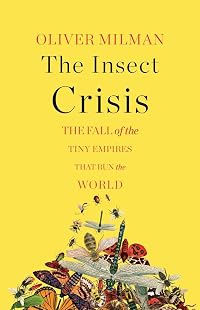
The Insect Crisis: The Fall of the Tiny Empires That Run the World
by Oliver Milman
On This Page
Description
"A devastating exploration of how the collapse in insect populations around the world threatens everything from wild birds to the food on our plate. From the ants scurrying under leaf litter to the bees able to fly higher than Mount Kilimanjaro, insects are seemingly everywhere. Three out of four of the planet's known species are insects, but a torrent of recent evidence suggests this kaleidoscopic group of creatures is suffering the greatest existential crisis in its remarkable show more 400-million-year history. Oliver Milman delves into why insect numbers are plummeting and outlines the dire consequences of losing the tiny empires that hold life aloft on Earth. Along the way, readers encounter a researcher who collects insect guts from the windshields of cars, the bees sent on long-haul truck journeys to prop up our food supply, and a desperate attempt to move trees up mountains to save an iconic butterfly. The mounting losses threaten to unpick the web of life we rely upon. Illuminating and inspiring, The Insect Crisis is a wake-up call for all of us"-- show lessTags
Recommendations



Member Reviews
nonfiction - science. Mass extinction event likely (pesticides, pollution, climate change) that will severely impact produce crop yields (especially those living in poorer countries) as well as the food chain (noticeable declines are already affecting birds that eat bugs), and the quality of the soil that bugs help us break down.
I didn't find out exactly why I keep finding lost ladybugs on the beach (I'm guessing neurotoxins in pesticides), but reading this did make me realize how dramatically fewer bugs I am seeing these days-- I can think of plenty of anecdotal (but still astonishing) evidence just within my own experiences-- the number of fireflies has noticeably gone down in my lifetime (I only see them when I travel east, but I show more know there used to be a lot more), the number of butterflies in the neighborhood is a lot fewer than when I was a kid (despite having the same plants and the neighbors even planting butterfly bushes), even the number of bugstrikes on the windshield does seem to have decreased.
This book compiles many of the hundreds of studies from all over the world that document the huge drops in population sizes among various insects--even allowing for gaps in the research and acknowledging the need for more research, none of it is looking positive. (It's also not heartening to learn that the big 6 pesticides companies have combined into a multinational big 3.)
This needs to be made into a PBS/BBC special to reach a wider audience of people. We also need a responsive US Congress, but... well. show less
I didn't find out exactly why I keep finding lost ladybugs on the beach (I'm guessing neurotoxins in pesticides), but reading this did make me realize how dramatically fewer bugs I am seeing these days-- I can think of plenty of anecdotal (but still astonishing) evidence just within my own experiences-- the number of fireflies has noticeably gone down in my lifetime (I only see them when I travel east, but I show more know there used to be a lot more), the number of butterflies in the neighborhood is a lot fewer than when I was a kid (despite having the same plants and the neighbors even planting butterfly bushes), even the number of bugstrikes on the windshield does seem to have decreased.
This book compiles many of the hundreds of studies from all over the world that document the huge drops in population sizes among various insects--even allowing for gaps in the research and acknowledging the need for more research, none of it is looking positive. (It's also not heartening to learn that the big 6 pesticides companies have combined into a multinational big 3.)
This needs to be made into a PBS/BBC special to reach a wider audience of people. We also need a responsive US Congress, but... well. show less
Every once in a while, I find a book that changes the way I view the world. This is certainly one of them. I've been a lifelong environmentalist but somehow missed the importance of insects till now. And I had just pulled some dandelions from my yard but, fortunately, didn't finish the job. I will now leave the remainder to feed the pollinators. California poppies are also emerging all over my yard after the rains. When they bloom, they will also feed the pollinators.
A few notable quotes:
Page 214: The vast tracts of land we've turned into biodiversity deserts are in many cases not even directly feeding people -- a third of all viable cropland is used to produce feed for livestock, which themselves take up a quarter of the planet's show more ice-free habitat. Mealworms and crickets, both excellent sources of protein that can multiply to enormous numbers in tight spaces, are a less destructive alternative to traditional Western diets and would help ease agricultural-driven pressures that blight insects, such as climate change, chemical use, and land degradation. "They are also delicious," says ... an entomologist.
My comment: Years ago, I raised mealworms and fried them in butter. They were crunchy with a nutty flavor. Even one of my kids dared to eat some.
Page 219: It's an arrogant presumption that we will sail unscathed through the sixth mass extinction without the diversity of insect life we are laying to waste. We need them far more than they need us. The insect crisis is, from our own self-interested point of view, a human emergency.
Highly recommended to all! show less
A few notable quotes:
Page 214: The vast tracts of land we've turned into biodiversity deserts are in many cases not even directly feeding people -- a third of all viable cropland is used to produce feed for livestock, which themselves take up a quarter of the planet's show more ice-free habitat. Mealworms and crickets, both excellent sources of protein that can multiply to enormous numbers in tight spaces, are a less destructive alternative to traditional Western diets and would help ease agricultural-driven pressures that blight insects, such as climate change, chemical use, and land degradation. "They are also delicious," says ... an entomologist.
My comment: Years ago, I raised mealworms and fried them in butter. They were crunchy with a nutty flavor. Even one of my kids dared to eat some.
Page 219: It's an arrogant presumption that we will sail unscathed through the sixth mass extinction without the diversity of insect life we are laying to waste. We need them far more than they need us. The insect crisis is, from our own self-interested point of view, a human emergency.
Highly recommended to all! show less
A truly fascinating read about the problems of insects that will mirror what many of the rest of us have noticed, at least if we're paying attention. The author details the decline of insects and the potential problems for all species as a result. He sandwiches scientific information with stories of what it was like when drivers used to have to stop to clean the insects off their windows before they could keep going. He has a good way with a phrase, and I found myself reading passages aloud to my husband. Definitely worth a look.
This book is very welcome as there is clearly a major global crisis in class insecta that needs to be publicized. But unfortunately this book, with one or two exceptions, is unable to bring much order or perspective to it. Part of the problem is the author's anecdotal rather than analytical method: as the notes show, nearly everything is taken from secondary sources the author found online. The result is a jumble of excisions and loose summaries from mostly popular sources. I sometimes had the unpleasant feeling that he was cribbing from other people's reportage.
The only insects treated in detail are honeybees and monarch butterflies. The most interesting takeaway about bees was the way people's attempts to save them backfire: by show more introducing them into new areas where they can displace other pollinators vital to plants the bees don't visit; or by enabling the spread of bee diseases far and wide. Not surprisingly, humans come off as fecklessly clueless when it comes to side-effects of their virtuous eco-projects.
The best chapter in the book is the one on monarch butterflies. Their storied migrations, each thousand- or so miles of which involves multiple metamorphic life cycles (!) boggles the mind. The author does an exemplary job itemizing the environmental degradations that progressively disrupt the migration routes and that will likely annihilate this amazing species by mid-century. Yes, the book is depressing; it needs to be.
A much better book, in my opinion, is 2022's Silent Earth. by Dave Goulson, who, aside from being a fine writer and researcher, draws on decades of his own front-line entomological research in the U.K. and around the globe. show less
The only insects treated in detail are honeybees and monarch butterflies. The most interesting takeaway about bees was the way people's attempts to save them backfire: by show more introducing them into new areas where they can displace other pollinators vital to plants the bees don't visit; or by enabling the spread of bee diseases far and wide. Not surprisingly, humans come off as fecklessly clueless when it comes to side-effects of their virtuous eco-projects.
The best chapter in the book is the one on monarch butterflies. Their storied migrations, each thousand- or so miles of which involves multiple metamorphic life cycles (!) boggles the mind. The author does an exemplary job itemizing the environmental degradations that progressively disrupt the migration routes and that will likely annihilate this amazing species by mid-century. Yes, the book is depressing; it needs to be.
A much better book, in my opinion, is 2022's Silent Earth. by Dave Goulson, who, aside from being a fine writer and researcher, draws on decades of his own front-line entomological research in the U.K. and around the globe. show less
Sobering look at how important insects are and how human activity is harming many insect species.
Excerpt from longer article...
Timely Take-Aways for Life-Long Learners: Insects
Insects are critical to healthy ecology systems. Unfortunately, these essential creatures are sometimes overlooked and often maligned. From wasps and moths to bees and beetles, several new and upcoming books explore the world of entomology and the important role of these tiny creatures. These titles invite readers to even respect cockroaches and crickets.
...
The Insect Crisis: The Fall of the Tiny Empires that Run the World
Oliver Milman, Mar 2022, W.W. Norton Themes: Science, Life science, Nature, Entomology
From bees to beetles, THE INSECT CRISIS explores the impact of collapsing insect populations around the world. Of particular note is the wide range of show more examples and situations used to provide evidence of the crisis.
Take-aways: Educators will find the many examples useful in discussing the consequences of insect loss.
...
Whether helping educators keep up-to-date in their subject-areas, promoting student reading in the content-areas, or simply encouraging nonfiction leisure reading, teacher librarians need to be aware of the best new titles across the curriculum and how to activate life-long learning. - Annette Lamb show less
Timely Take-Aways for Life-Long Learners: Insects
Insects are critical to healthy ecology systems. Unfortunately, these essential creatures are sometimes overlooked and often maligned. From wasps and moths to bees and beetles, several new and upcoming books explore the world of entomology and the important role of these tiny creatures. These titles invite readers to even respect cockroaches and crickets.
...
The Insect Crisis: The Fall of the Tiny Empires that Run the World
Oliver Milman, Mar 2022, W.W. Norton Themes: Science, Life science, Nature, Entomology
From bees to beetles, THE INSECT CRISIS explores the impact of collapsing insect populations around the world. Of particular note is the wide range of show more examples and situations used to provide evidence of the crisis.
Take-aways: Educators will find the many examples useful in discussing the consequences of insect loss.
...
Whether helping educators keep up-to-date in their subject-areas, promoting student reading in the content-areas, or simply encouraging nonfiction leisure reading, teacher librarians need to be aware of the best new titles across the curriculum and how to activate life-long learning. - Annette Lamb show less
No hace falta ser muy mayor para recordar viajes en coche que terminaban con el parabrisas emborronado por las huellas de los insectos voladores que se estrellaban contra él, las luces cubiertas por un bullicio de mosquitos y polillas en las noches de verano o jardines animados por un sinfín de laboriosas y a veces amenazantes abejas. Sin embargo, todas estas escenas cotidianas resultan cada vez más extraordinarias a medida que pasan los años: quizá para alivio de algunos, los insectos han desaparecido de nuestras vidas. Sin embargo, los insectos son un actor fundamental en el mantenimiento de nuestros ecosistemas y la biodiversidad que los sustenta, e incluso en el correcto funcionamiento de la industria agroalimentaria que pone show more la comida en nuestros platos (y que también supone, paradójicamente, una de las principales amenazas para la existencia de estos animales). Aunque no gocen de la popularidad de mamíferos entrañables como los osos panda, el reino de los insectos constituye una pieza clave para la sostenibilidad de nuestro planeta y de las condiciones que garantizan la existencia de nuestra propia especie. En "La crisis de los insectos", Oliver Milman lanza un grito de advertencia sobre esta terrible situación al tiempo que celebra la sorprendente diversidad que define a este bullicioso y gigantesco pequeño mundo. show less
Sep 20, 2024Spanish
Members
- Recently Added By
Lists

Habitat Hero books
37 works; 1 member
Author Information
1 Work 166 Members
Awards and Honors
Common Knowledge
- Original publication date
- 2022; 2022-03-01
Classifications
Statistics
- Members
- 166
- Popularity
- 197,703
- Reviews
- 7
- Rating
- (3.75)
- Languages
- 5 — Dutch, English, French, Portuguese, Spanish
- Media
- Paper, Audiobook, Ebook
- ISBNs
- 16
- ASINs
- 3