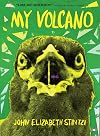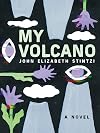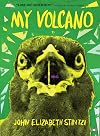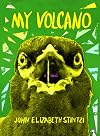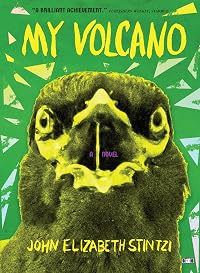
My Volcano
by John Elizabeth Stintzi
On This Page
Description
* Winner of the Sator New Works Award.* New York Public Library's "Best Books of 2022"
* Kirkus Reviews' "Best Fiction Books of 2022"
* 2022 Brooklyn Public Library Book Prize, Longlist.
* "A Most Anticipated Book" —Lambda Literary, Vol. 1 Brooklyn, Tor.com, The Chicago Review of Books, LGBTQReads, Ms. Magazine, The Mary Sue
My Volcano is a kaleidoscopic portrait of a menagerie of characters, as they each undergo personal eruptions, while the Earth itself is constantly shifting. Parable, show more myth, science-fiction, eco-horror, My Volcano is a radical work of literary art, emerging as a subversive, intoxicating artistic statement by John Elizabeth Stintzi.
On June 2, 2016, a protrusion of rock growing from the Central Park Reservoir is spotted by a jogger. Three weeks later, when it finally stops growing, it's nearly two-and-a-half miles tall, and has been determined to be an active volcano.
As the volcano grows and then looms over New York, an eight-year-old boy in Mexico City finds himself transported 500 years into the past, where he witnesses the fall of the Aztec Empire; a Nigerian scholar in Tokyo studies a folktale about a woman of fire who descends a mountain and destroys an entire village; a white trans writer in Jersey City struggles to write a sci-fi novel about a thriving civilization on an impossible planet; a nurse tends to Syrian refugees in Greece while grappling with the trauma of living through the bombing of a hospital in Kunduz, Afghanistan; a nomadic farmer in Mongolia is stung by a bee, magically transforming him into a green, thorned, flowering creature that aspires to connect every living thing into its consciousness.
With its riveting and audacious vision, My Volcano is a tapestry on fire, a distorted and cinematic new work from the fiercely talented John Elizabeth Stintzi.
. show less
Tags
Recommendations








Member Reviews
Rating: 4.5* of five
The Publisher Says: My Volcano is a kaleidoscopic portrait of a menagerie of characters, as they each undergo personal eruptions, while the Earth itself is constantly shifting. Parable, myth, science-fiction, eco-horror, My Volcano is a radical work of literary art, emerging as a subversive, intoxicating artistic statement by John Elizabeth Stintzi.
On June 2, 2016, a protrusion of rock growing from the Central Park Reservoir is spotted by a jogger. Three weeks later, when it finally stops growing, it’s nearly two-and-a-half miles tall, and has been determined to be an active volcano.
As the volcano grows and then looms over New York, an eight-year-old boy in Mexico City finds himself transported 500 years into the show more past, where he witnesses the fall of the Aztec Empire; a Nigerian scholar in Tokyo studies a folktale about a woman of fire who descends a mountain and destroys an entire village; a white trans writer in Jersey City struggles to write a sci-fi novel about a thriving civilization on an impossible planet; a nurse tends to Syrian refugees in Greece while grappling with the trauma of living through the bombing of a hospital in Kunduz, Afghanistan; a nomadic farmer in Mongolia is stung by a bee, magically transforming him into a green, thorned, flowering creature that aspires to connect every living thing into its consciousness.
With its riveting and audacious vision, My Volcano is a tapestry on fire, a distorted and cinematic new work from the fiercely talented John Elizabeth Stintzi.
I RECEIVED A DRC FROM THE PUBLISHER VIA EDELWEISS+. THANK YOU.
My Review: Remember Cloud Atlas? How people fussed and fumed over its interlocking time-narratives, and complained that they were "obscurantist divagations unequaled since Pynchon took the stylus away from Gertrude Stein"? (Okay, okay, I'm quoting myself from Goodreads. Sue me.)
But really, this is a challenge for linear readers to get any information or pleasure from reading it. If you'll give Author Stintzi a lot of rope, you can lasso a meaning from all two hundred-plus chapters. (I lost track at two-hundred four, and was reading way after that.) There's something...overwhelming...about that many voices coming at you, no matter what story they're telling. I don't think for an instant that was accidental. It was a choice, a decision to make the polyphony (babble to some of us) of the modern info-saturated landscape into an experiential reality. In that aim, it feels like Author Stintzi is channeling Annihilation with the entire Earth as Area X. People become something Other, as in a spiky plant; the things they pass by casually turn into that same spiky plant; what better visualization of the radicalizing effect of social media?
One character even says, I didn't want to say anything because someone would tell me they knew, about the appearance of a freakin' VOLCANO in Manhattan! That utter break in the fabric of reality wasn't worth commenting on in case it was "old news" and you'd look like you were out of touch for saying anything about it! This also echoes the storytelling hook Author Stintzi uses of beginning each character's section (they're too short for me to call them "chapters" with a straight (!) face) with a now-commonplace personal disaster...a body transformed, a police shooting, a homeless person being violated...that simply, numbingly, takes place. Nothing is made of this. In a world where Sandy Hook didn't result in stringent gun-control laws, that's a given. Sadly.
Which, I think, nicely makes their point for them: The story's set in 2016, the year a giant volcano appeared and took over every aspect of our lives and has shaped the vile, reprehensible political and social landscape of 2022. Too many of us live inside echo chambers, bubbles of resounding agreement with any willingness to agree to disagree. I certainly do...and I'm stayin' in here. In placing the action in that before-and-after year, Author Stintzi remodels reality to punish Humankind for its unkindness and carelessness and concupiscence.
The real question I see emerging from the immensity of Author Stintzi's imagination is not can Humankind be saved...should Humankind be saved? We can exist in a world where the weirdest, awfulest, cruelest (one section deals with the Spanish conquest of the Aztecs, another historical inflection point) disasters elicit nothing, not a single impulse, towards others' needs, but only our own.
One character, called only "the white trans writer", is seen writing away...feedback of the most bracing honesty (read: the truth hurts) foremost in their mind, trying to make a story about an alien planet work. (Author Stintzi's nonbinary, not trans, but the point is made.) They're in some kind of existential despair. Writing will, in fact, do that to you. And listing the forty-nine names of the victims of 2016's Pulse nightclub shooting will reinforce that despair if you're One of Us...but the character speaks for the whole world when they say:
That is what Author Stintzi's accomplished with My Volcano, and it's either a cathartic emesis or a wracking, heaving hurl of the toxic crap you took in to make everything okay for a few hours. show less
The Publisher Says: My Volcano is a kaleidoscopic portrait of a menagerie of characters, as they each undergo personal eruptions, while the Earth itself is constantly shifting. Parable, myth, science-fiction, eco-horror, My Volcano is a radical work of literary art, emerging as a subversive, intoxicating artistic statement by John Elizabeth Stintzi.
On June 2, 2016, a protrusion of rock growing from the Central Park Reservoir is spotted by a jogger. Three weeks later, when it finally stops growing, it’s nearly two-and-a-half miles tall, and has been determined to be an active volcano.
As the volcano grows and then looms over New York, an eight-year-old boy in Mexico City finds himself transported 500 years into the show more past, where he witnesses the fall of the Aztec Empire; a Nigerian scholar in Tokyo studies a folktale about a woman of fire who descends a mountain and destroys an entire village; a white trans writer in Jersey City struggles to write a sci-fi novel about a thriving civilization on an impossible planet; a nurse tends to Syrian refugees in Greece while grappling with the trauma of living through the bombing of a hospital in Kunduz, Afghanistan; a nomadic farmer in Mongolia is stung by a bee, magically transforming him into a green, thorned, flowering creature that aspires to connect every living thing into its consciousness.
With its riveting and audacious vision, My Volcano is a tapestry on fire, a distorted and cinematic new work from the fiercely talented John Elizabeth Stintzi.
I RECEIVED A DRC FROM THE PUBLISHER VIA EDELWEISS+. THANK YOU.
My Review: Remember Cloud Atlas? How people fussed and fumed over its interlocking time-narratives, and complained that they were "obscurantist divagations unequaled since Pynchon took the stylus away from Gertrude Stein"? (Okay, okay, I'm quoting myself from Goodreads. Sue me.)
But really, this is a challenge for linear readers to get any information or pleasure from reading it. If you'll give Author Stintzi a lot of rope, you can lasso a meaning from all two hundred-plus chapters. (I lost track at two-hundred four, and was reading way after that.) There's something...overwhelming...about that many voices coming at you, no matter what story they're telling. I don't think for an instant that was accidental. It was a choice, a decision to make the polyphony (babble to some of us) of the modern info-saturated landscape into an experiential reality. In that aim, it feels like Author Stintzi is channeling Annihilation with the entire Earth as Area X. People become something Other, as in a spiky plant; the things they pass by casually turn into that same spiky plant; what better visualization of the radicalizing effect of social media?
One character even says, I didn't want to say anything because someone would tell me they knew, about the appearance of a freakin' VOLCANO in Manhattan! That utter break in the fabric of reality wasn't worth commenting on in case it was "old news" and you'd look like you were out of touch for saying anything about it! This also echoes the storytelling hook Author Stintzi uses of beginning each character's section (they're too short for me to call them "chapters" with a straight (!) face) with a now-commonplace personal disaster...a body transformed, a police shooting, a homeless person being violated...that simply, numbingly, takes place. Nothing is made of this. In a world where Sandy Hook didn't result in stringent gun-control laws, that's a given. Sadly.
Which, I think, nicely makes their point for them: The story's set in 2016, the year a giant volcano appeared and took over every aspect of our lives and has shaped the vile, reprehensible political and social landscape of 2022. Too many of us live inside echo chambers, bubbles of resounding agreement with any willingness to agree to disagree. I certainly do...and I'm stayin' in here. In placing the action in that before-and-after year, Author Stintzi remodels reality to punish Humankind for its unkindness and carelessness and concupiscence.
The real question I see emerging from the immensity of Author Stintzi's imagination is not can Humankind be saved...should Humankind be saved? We can exist in a world where the weirdest, awfulest, cruelest (one section deals with the Spanish conquest of the Aztecs, another historical inflection point) disasters elicit nothing, not a single impulse, towards others' needs, but only our own.
One character, called only "the white trans writer", is seen writing away...feedback of the most bracing honesty (read: the truth hurts) foremost in their mind, trying to make a story about an alien planet work. (Author Stintzi's nonbinary, not trans, but the point is made.) They're in some kind of existential despair. Writing will, in fact, do that to you. And listing the forty-nine names of the victims of 2016's Pulse nightclub shooting will reinforce that despair if you're One of Us...but the character speaks for the whole world when they say:
Eventually, sitting down to write the novel felt like sitting down to watch the end of the world. As if they were simply waiting to watch the planet finally spill its fetid, destructive insides out.
That is what Author Stintzi's accomplished with My Volcano, and it's either a cathartic emesis or a wracking, heaving hurl of the toxic crap you took in to make everything okay for a few hours. show less
In 2016, a geologically impossible volcano rises up through New York's Central Park Reservoir, two cataclysmic miles tall. From John Elizabeth Stintzi's fragmented eco-horror novel "My Volcano" bursts the molten matter of subplots and characters. Each are directly or randomly rooted to each other in history, geography, identity, vocation, or even indiscriminate psychic telepathy. A New York homeless man is gifted a magic jewell that represents the choice between material wealth and knowledge of the volcano's supernatural secrets. A Nigerian scholar, in Japan, discovers the ethnological origins of a global folktale about an angry demigod descending from a volcano to destroy the world. A shadowy immortal woman in Alaska builds a diorama show more of the volcano with altering miniatures that tableaux the oscillations of time. And each of the dozen or more interwoven narratives are directly or tenuously rooted to the experience or meaning of volcanoes, each person's volcano. Perhaps most poignantly, a nomadic farmer in the Gobi Desert is stung by an enchanted bee and transformed into a humanoid green wild thistle, and he rhizosphereically grows into a zone the size of a new continent, cultivating every organic existence as part of his single consciousness. In Botany, a rhizome is the stem system that connects the subterranean roots to the surface parts of a plant, and in French theorists Deleuze and Guattari's monograph "A Thousand Plateaus," they use rhizome as a symbol to describe modes of decentered creativity, language, and thinking which, like the composition of this of novel, are non-linear, non-spacial, and non-hierarchical. "My Volcano" approximates the characteristics of a postmodern rhizomatic text. The stories are simultaneously diverse and entirely connected. The complex structure models Deleuze's concept of multiplicity, characters do not represent a greater whole and have no prior unity. There are asignifying ruptures, the rhizome is broken by the death of characters and the seeming termination of plotlines, but these characters start again on lines old and new. And the earth of the novel is only an experimental contact with the real, its open map can be reversed, torn, or adapted by any individual, group, or social formation, and the multiple volcanoes are both entryways and exits. But what does this novel's rhizome mean philosophically? Stintzi, describing the consciousness of the farmer transformed into the humanoid plant in the center of the herd of billions, writes that the expansion made him feel more whole, as if every single being on the planet had been something missing. Women, men, pets, queer people; cattle, camels, bees, birds. Every human, animal, and plant the throng touches joins a state of being pieced together in a network of green and moving information. Everything in the world finally working in sync. Every creature sharing one same want. In one of My Volcano's several simultaneous endings, perhaps the one where lava from the volcano flows down the avenues of New York City at 100 miles per hour, a differently-abled astronomer in Chile concludes the earth remains the same as it always existed, that the current nonsense was no less ordinary than the nonsense found in the whole of human history. In the world's chaos, many people defect to the continent of the new green herd. They see peace, beauty, connection, and the relative oblivion of an inescapable community. Stintzi is proposing this network, this everything, this ecological connection, this volcano, is the true face of the world rising to the surface. show less
This is a weirdo of a book. Jumping among a large collection of characters, most of whom do not interact with each other, the novel jumps back and forth through time, or maybe through alternate fates, most of which are bizarre, but some are very normal.
One day, a mountain begins to grow in Central Park. It grows at a rapid rate, sending scientists, tourists and New York residents into a frenzy, and then things calm down and the mountain becomes background, or it takes out a large part of the tri-state area, sending millions into refugee camps hastily erected in neighboring states. This is a novel about ecological disaster and the end of the world, where a malevolent golem-like creature does battle with an entity composed of foliage and show more bees. There's a guy who flies back to New York from his family home in Hawai'i only to find that he also stayed in Hawai'i. Meanwhile, a young writer deals with an ant problem, and buildings, from tents to apartment buildings, grow animal legs and go places. And everything is fine, or the world ends; it's kind of hard to tell.
This is experimental fiction that follows the exuberant imagination of Stintzi's brain. There's a real fondness for all of the characters and a steadfast hope in the resiliency of the human spirit that grounds this truly bizarre novel. Each character gets a short chapter (there are hundreds of chapters) then the book moves on to the next character, only to circle back to an earlier character, who may or may not be in the same situation they were when their previous chapter ended. Sometimes, dead characters return, having never died at all. I liked Stintzi's love for their characters and the sheer audacity of their imagination, even as I was reminded that I like a little more grounding in reality and a more cohesive kind of novel. show less
One day, a mountain begins to grow in Central Park. It grows at a rapid rate, sending scientists, tourists and New York residents into a frenzy, and then things calm down and the mountain becomes background, or it takes out a large part of the tri-state area, sending millions into refugee camps hastily erected in neighboring states. This is a novel about ecological disaster and the end of the world, where a malevolent golem-like creature does battle with an entity composed of foliage and show more bees. There's a guy who flies back to New York from his family home in Hawai'i only to find that he also stayed in Hawai'i. Meanwhile, a young writer deals with an ant problem, and buildings, from tents to apartment buildings, grow animal legs and go places. And everything is fine, or the world ends; it's kind of hard to tell.
This is experimental fiction that follows the exuberant imagination of Stintzi's brain. There's a real fondness for all of the characters and a steadfast hope in the resiliency of the human spirit that grounds this truly bizarre novel. Each character gets a short chapter (there are hundreds of chapters) then the book moves on to the next character, only to circle back to an earlier character, who may or may not be in the same situation they were when their previous chapter ended. Sometimes, dead characters return, having never died at all. I liked Stintzi's love for their characters and the sheer audacity of their imagination, even as I was reminded that I like a little more grounding in reality and a more cohesive kind of novel. show less
A chaotic, creative, confusing, surrealistic jumble that seems, I think, to center ideas of trans-ness, of discomfort inside one’s body, of alienation from the reality one is expected to inhabit by outside forces. It’s frustrated and apocalyptic, yet without a misanthropic outlook, and hopeful that we can do better. Not everything about this novel works for me but it’s a memorable and surprising read.
The weird and wacky entrant to the Morning News Tournament of Books for 2023! I liked it -- I might not have understood all of it, but I liked it. But the imagery and ideas are interesting. There are quite a number of characters here but they are somehow easy to keep track of (something that might usually be a problem for me). There are a number of Out There books I could compare this to, but I won't.
*Book #133/322 I have read of the shortlisted Morning News Tournament of Books
*Book #133/322 I have read of the shortlisted Morning News Tournament of Books
I didn't love this one, and I didn't hate it, but I think I get what Stintzi is trying to do, and I appreciate it. The repetition and the multiple realities capture well the feeling of "where do we go from here?" that seems to be pervading life for a lot of us and especially for those in my children's generation (poor GenZ...y'all don't even get the hope of the late 80s/early 90s before you have to face serious crap. At least you have YouTube).
A genre-defying novel full of memorably surreal occurrences. It was a wild reading experience, with moments of terror and laugh-out-loud funny satire that made our own reality scarier and more stark, but not entirely hopeless. In the end, I’m not sure what else to say beyond praising its existence.
Members
- Recently Added By
Published Reviews
"It’s a brilliant achievement."
added by jagraham684
Lists

2023 Tournament of Books
18 works; 13 members
Author Information

7 Works 189 Members
Some Editions
Awards and Honors
Common Knowledge
- Canonical DDC/MDS
- 813.6
- Canonical LCC
- PS3619.T575
Classifications
Statistics
- Members
- 111
- Popularity
- 292,905
- Reviews
- 9
- Rating
- (3.37)
- Languages
- English
- Media
- Paper, Ebook
- ISBNs
- 3
- ASINs
- 1