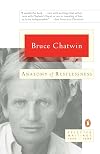
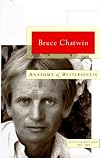
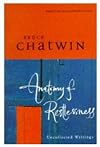
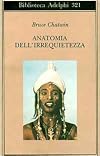
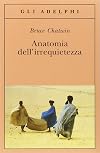
Anatomy of Restlessness: Selected Writings 1969-1989
by Bruce Chatwin
On This Page
Description
It is commonly supposed that Bruce Chatwin was an ingenuous latecomer to the profession of letters, a misapprehension given apparent credence by that now famous passage in his lyrical, autobiographical "I Always Wanted to Go to Patagonia," in which we are told that this indefatigable traveler's literary career began in midstride, almost on a whim, with a telegram announcing his departure for the farthest-flung corner of the globe: "Have gone to Patagonia." Such a view overlooks the fact that show more from the late 1960s onward Chatwin was already fashioning the tools of his future trade in the columns of a variety of magazines and journals. And that he continued to do so through every twist and turn of his career, from art expert to archaeologist, to journalist and author, right up until his death in 1989. These previously neglected or unpublished pieces - short stories, travel sketches, essays, articles, and criticism - gathered together here for the first time, cover every period and aspect of the writer's career, and reflect the abiding themes of his work: roots and rootlessness, exile and the exotic, possession and renunciation. show lessTags
Recommendations
































Member Recommendations


Member Reviews
This grab-bag of literary disjecta confirms my impression that Chatwin isn't my kind of travel-writer (he's the kind who travels with his eyes more than his ears), but since none of it is actual travel writing, I quite enjoyed it. There are five sections:
1. Pieces about places or traveling to/from them — I liked A Tower in Tuscany because said tower turns out to belong to one of my fave literary oddballs, Gregor von Rezzori, and his glam wife, and Chatwin chats winningly about hanging out with them. The short piece on Timbuctoo is good, too.
2. Stories. Nothing special here, and Chatwin's embarrassing Orientalism is on full view.
3. Pieces about "nomadism". These are mostly pretentious nonsense, unfocused notes for a book that show more unsurprisingly never materialised.
4. Reviews. I especially dug his review of a biography of R.L. Stevenson and the one about an outbreak of anarchism in Patagonia.
5. Writings on art. Only two of these, but they're the highlight of the book imo. I loved Among the Ruins, a leisurely look at the enchanted isle of Capri and three of the myriad eccentrics who've taken up residence there over the centuries — Jacques d'Adelswärd-Fersen (of whom I'd never heard), Axel Munthe, and Curzio Malaparte — with nods in the direction of the emperor Tiberius and Norman Douglas, whose novel of Capri South Wind has a special place in my heart. The other piece is all about objets d'art and our relationship to them, kinda abstract but interesting stuff. show less
1. Pieces about places or traveling to/from them — I liked A Tower in Tuscany because said tower turns out to belong to one of my fave literary oddballs, Gregor von Rezzori, and his glam wife, and Chatwin chats winningly about hanging out with them. The short piece on Timbuctoo is good, too.
2. Stories. Nothing special here, and Chatwin's embarrassing Orientalism is on full view.
3. Pieces about "nomadism". These are mostly pretentious nonsense, unfocused notes for a book that show more unsurprisingly never materialised.
4. Reviews. I especially dug his review of a biography of R.L. Stevenson and the one about an outbreak of anarchism in Patagonia.
5. Writings on art. Only two of these, but they're the highlight of the book imo. I loved Among the Ruins, a leisurely look at the enchanted isle of Capri and three of the myriad eccentrics who've taken up residence there over the centuries — Jacques d'Adelswärd-Fersen (of whom I'd never heard), Axel Munthe, and Curzio Malaparte — with nods in the direction of the emperor Tiberius and Norman Douglas, whose novel of Capri South Wind has a special place in my heart. The other piece is all about objets d'art and our relationship to them, kinda abstract but interesting stuff. show less
This is one for the Chatwin completist, as it comprises a selection of essays, many of which will ring familiar to those, like me, who have read everything else that is published under Chatwin's name today. Some are reworkings, or inspired what came later; for me, there's nothing much wrong with that, and some of the pieces here are magnificent. But for others, reading the other books - and "What Am I Doing Here" - might suffice.
I actually enjoyed this, especially the chapters relating more closely to the nomadic world. I did feel sometimes that Chatwin was telling us only half the story and some of his conclusions were consequently a bit unconvincing. This may partly stem from the fact that the excerpts were written over a wide timespan and therefore reflect his beliefs and attitudes at various times in his life. Thought provoking.
Anatomia dell'irrequietezza soffre del medesimo problema di Che ci faccio qui?, ossia la mancanza di continuità. L'interesse del libro si concentra sui tre estratti del famoso "libro nomade" che Chatwin scrisse prima di tutti gli altri e che poi distrusse di fronte all'impossibilità di vederlo pubblicato. Una sorta di archeologia letteraria dunque. Per completare il quadro sull'autore, da sconsigliare come primo approccio
Anatomia dell'irrequietezza soffre del medesimo problema di Che ci faccio qui?, ossia la mancanza di continuità. L'interesse del libro si concentra sui tre estratti del famoso "libro nomade" che Chatwin scrisse prima di tutti gli altri e che poi distrusse di fronte all'impossibilità di vederlo pubblicato. Una sorta di archeologia letteraria dunque. Per completare il quadro sull'autore, da sconsigliare come primo approccio
Too pretentious ... but did make me think hard about my vision of the house I will live in in the future.
Eh. It has its ups and downs. This is a lot of pieces of his work including a lot of research and passages for a book he never finished on nomadic culture and human identity. Pieces of it are really cool, some of it could have used a little more selecting.
Members
- Recently Added By
Published Reviews
So it's a bit sad that this latest collection of his literary souvenirs has such a claustrophobic feel. Chatwin died in 1989, and a good deal of his previously unpublished work has already been pulled together in book form, leaving a few magazine articles, autobiographical snippets, book reviews and sketchy short stories for this one. Fodder for a biographer, perhaps. But mostly a goad to the show more reader's own restlessness. show less
added by John_Vaughan
Author Information

54+ Works 14,588 Members
Work Relationships
Is contained in
Common Knowledge
- Canonical title*
- Anatomia dell'irrequietezza
- Original title
- The Anatomy of Restlessness
- Original publication date
- 1997
*Some information comes from Common Knowledge in other languages. Click "Edit" for more information.
Classifications
Statistics
- Members
- 585
- Popularity
- 50,279
- Reviews
- 15
- Rating
- (3.61)
- Languages
- 9 — Danish, Dutch, English, French, German, Italian, Portuguese, Spanish, Swedish
- Media
- Paper, Ebook
- ISBNs
- 23
- ASINs
- 3