The Restless Republic
by Anna Keay
On This Page
Description
In 1649 Britain was engulfed by revolution. On a raw January afternoon, the Stuart king, Charles I, was executed for treason. Within weeks the English monarchy had been abolished and the 'useless and dangerous' House of Lords discarded. The people, it was announced, were now the sovereign force in the land. What this meant, and where it would lead, no one knew. The Restless Republic is the story of the extraordinary decade that followed. It takes as its guides the people who lived through show more those years. Among them is Anna Trapnel, the daughter of a Deptford shipwright whose visions transfixed the nation. John Bradshaw, the Cheshire lawyer who found himself trying the King. Marchamont Nedham, the irrepressible newspaper man and puppet master of propaganda. Gerrard Winstanley, who strove for a Utopia of common ownership where no one went hungry. William Petty, the precocious scientist whose mapping of Ireland prefaced the dispossession of tens of thousands. And the indomitable Countess of Derby who defended to the last the final Royalist stronghold on the Isle of Man. The Restless Republic ranges from London to Leith, Cornwall to Connacht, from the corridors of power to the common fields and hillsides. Gathering her cast of trembling visionaries and banished royalists, dextrous mandarins and bewildered bystanders, Anna Keay brings to vivid life the most extraordinary and experimental decade in Britain's history. It is the story of how these tempestuous years set the British Isles on a new course, and of what happened when a conservative people tried revolution. show lessTags
Recommendations










Member Reviews
You Say You Want a Revolution
Review of the William Morrow hardcover edition (March 3, 2022)
I will sometimes travel the road not taken, when signs point to it, and get off my main course of genre fiction mixed with the occasional literary fiction and the reading in my heritage language of Estonian. So when signs appeared such as GR Friend Gumble's Yard's 5 star review of Restless Republic along with the daily news leading up to the coronation of King Charles III, I turned off the main road to delve into the time when England was a Republic between the execution of Charles I (1649) and the restoration of the monarchy with Charles II (1660).
See print graphic at https://i.gr-assets.com/images/S/compressed.photo.goodreads.com/hostedimages/168...
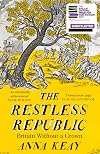
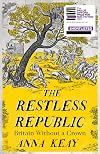
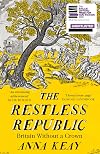
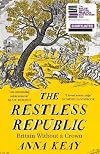
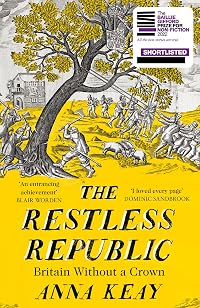
The dustcover image of the book is cropped from the print 'Oliver Cromwell and the Royall Oake of Brittayne' (1649) by Clement Walker, which shows the Lord Protector directing the destruction of a tree representing the British Monarchy.
Keay's history is not a chronological story of the Interregnum, but instead focuses on 9 individuals who played significant roles during that time (you can see them listed in the Gumble's Yards' review linked above, so I won't relist them here). Aside from those featured characters there were plenty of curious side-paths to take as well.
I ended up reading further on such things as the brutal execution by hanging of condemned murderess Anne Greene (who was likely innocent of the accused infanticide) who came back to life before being dissected on the examination table of William Petty, whose mapping of Ireland was the main reason for his inclusion in the 9.
The savagery of the time is further displayed in the conquest of Ireland by Oliver Cromwell's New Model Army when an estimated half million of Irish (out of an estimated population of 2 million) died through war or starvation. It was the 'war that finished Ireland' (from the Irish: an cogadh do chriochnaigh Eire) according to the poet Seán Ó Conaill aka John O'Connell in his Tuireamh na hÉireann (English: Ireland's Lament (1657?).
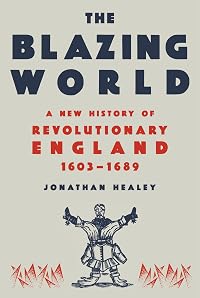
This was a well written and fascinating history of a time which I knew little about. While reading, I also noted the recent publication of Jonathan Healey's The Blazing World: A New History of Revolutionary England, 1603-1689 (published April 11, 2023) which covers an even greater portion of that era. I may follow-up further with that reading as well. show less
Review of the William Morrow hardcover edition (March 3, 2022)
The 1650s was a time of extraordinarily ambitious political, social, economic and intellectual innovation, and it was not a foregone conclusion that the British republic would fail. But it was also a time about which a characterisation in the negative, ‘Britain without a Crown’, is relevant. The decade was defined to a significant degree by what was being rejected. Indeed part of the reason for the fall of the republic was that its protagonists agreed far more on what they did not want than what they sought in its place. Furthermore one of the republic of Britain’s enduring legacies has been as a historical cautionary tale, a ghoul summonedshow more
up at times of turmoil to deter later generations from a course of radicalism. That the United Kingdom remains a monarchy to this day is due in no small part to the events and experiences described in this book. - excerpt from the Introduction by Anna Keay.
I will sometimes travel the road not taken, when signs point to it, and get off my main course of genre fiction mixed with the occasional literary fiction and the reading in my heritage language of Estonian. So when signs appeared such as GR Friend Gumble's Yard's 5 star review of Restless Republic along with the daily news leading up to the coronation of King Charles III, I turned off the main road to delve into the time when England was a Republic between the execution of Charles I (1649) and the restoration of the monarchy with Charles II (1660).
See print graphic at https://i.gr-assets.com/images/S/compressed.photo.goodreads.com/hostedimages/168...
The dustcover image of the book is cropped from the print 'Oliver Cromwell and the Royall Oake of Brittayne' (1649) by Clement Walker, which shows the Lord Protector directing the destruction of a tree representing the British Monarchy.
Keay's history is not a chronological story of the Interregnum, but instead focuses on 9 individuals who played significant roles during that time (you can see them listed in the Gumble's Yards' review linked above, so I won't relist them here). Aside from those featured characters there were plenty of curious side-paths to take as well.
I ended up reading further on such things as the brutal execution by hanging of condemned murderess Anne Greene (who was likely innocent of the accused infanticide) who came back to life before being dissected on the examination table of William Petty, whose mapping of Ireland was the main reason for his inclusion in the 9.
The savagery of the time is further displayed in the conquest of Ireland by Oliver Cromwell's New Model Army when an estimated half million of Irish (out of an estimated population of 2 million) died through war or starvation. It was the 'war that finished Ireland' (from the Irish: an cogadh do chriochnaigh Eire) according to the poet Seán Ó Conaill aka John O'Connell in his Tuireamh na hÉireann (English: Ireland's Lament (1657?).
This was a well written and fascinating history of a time which I knew little about. While reading, I also noted the recent publication of Jonathan Healey's The Blazing World: A New History of Revolutionary England, 1603-1689 (published April 11, 2023) which covers an even greater portion of that era. I may follow-up further with that reading as well. show less
I have been reading a lot of histories of seventeenth century England/Britain in the past year and this book concentrates on the twelve years from about 1648 to 1660 by exploring the lives of individuals who lived through that time and recorded their experiences, or for whom historical records can be reconstructed. Keay accepts that this is necessarily selective and also appreciates that their lives extended before and after this period, but seeks to provide a history of the period through her selected individuals’ experiences.
For me, this is history as it should be written: wide ranging, thoughtful, thought provoking and a fun read. Keay has chosen a handful of individuals to represent this period, and has made a gloriously show more imaginative selection.
Portrayed are:
• John Bradshaw, a solicitor from Cheshire who became president of the parliamentary commission to try king Charles I in 1649.
• Gerrard Winstanley, a failed London businessman who became the “leader” of the Digger movement (proto-communists) in 1650.
• Charlotte, Countess of Derby and her husband who was a Royalist initially withstanding seiges of their Cheshire castle, Lathom House in 1644, and later Castle Rushen on the Isle of Man in 1651.
• Marchamont Nedham, a journalist of the Royalist publication Mercurius Pragmaticus, who when imprisoned for his writings by the Republic, accepted the job of public relations for Parliament, publishing Mercurius Politicus. He became the first famous political journalist. This covers the period up to Cromwell’s military coup of Parliament in April 1653.
• Anna Trapnel, a Puritan evangelical (Fifth Monarchist), who became politicised against Cromwell’s regime despite it allowing religious toleration, as it still didn’t go far enough
• Sir Hamon L’Estrange, a country squire and owner of Norfolk’s Hunstanton House. Initially siding with the Royalists and commanding King’s Lynn, he had subsequently retired from politics and with his industrious and practical wife, had sought to buy back his estates lost through Parliamentary fines.
• William Petty, an Oxford doctor, convener of the Oxford Experimental Philosophy Society, which became the Royal Society. By being doctor to the Major General of Ireland, he learns of the plan for a survey of Ireland by professional surveyors which is to take seven years. As a practical thinker, he offers to use untrained but experienced army personnel to complete the process in thirteen months, and he successfully delivers on his commission.
• Oliver Cromwell, Lord Protector. I haven’t read a biography, so the two chapters about Cromwell’s rejection of the crown and duality between his country gentleman upbringing and epiphany of radical religious convictions were succinct but enlightening.
• George Monck, a professional soldier, initially fighting for the Royalists, but after capture and imprisonment, for the Parliamentarians. After Cromwell’s death and a military takeover of Parliament (again), Monck used the army in Scotland to “defeat” by diplomacy and threat, the London military and re-establish Parliament, then the return of the monarchy.
Brilliant history. show less
For me, this is history as it should be written: wide ranging, thoughtful, thought provoking and a fun read. Keay has chosen a handful of individuals to represent this period, and has made a gloriously show more imaginative selection.
Portrayed are:
• John Bradshaw, a solicitor from Cheshire who became president of the parliamentary commission to try king Charles I in 1649.
• Gerrard Winstanley, a failed London businessman who became the “leader” of the Digger movement (proto-communists) in 1650.
• Charlotte, Countess of Derby and her husband who was a Royalist initially withstanding seiges of their Cheshire castle, Lathom House in 1644, and later Castle Rushen on the Isle of Man in 1651.
• Marchamont Nedham, a journalist of the Royalist publication Mercurius Pragmaticus, who when imprisoned for his writings by the Republic, accepted the job of public relations for Parliament, publishing Mercurius Politicus. He became the first famous political journalist. This covers the period up to Cromwell’s military coup of Parliament in April 1653.
• Anna Trapnel, a Puritan evangelical (Fifth Monarchist), who became politicised against Cromwell’s regime despite it allowing religious toleration, as it still didn’t go far enough
• Sir Hamon L’Estrange, a country squire and owner of Norfolk’s Hunstanton House. Initially siding with the Royalists and commanding King’s Lynn, he had subsequently retired from politics and with his industrious and practical wife, had sought to buy back his estates lost through Parliamentary fines.
• William Petty, an Oxford doctor, convener of the Oxford Experimental Philosophy Society, which became the Royal Society. By being doctor to the Major General of Ireland, he learns of the plan for a survey of Ireland by professional surveyors which is to take seven years. As a practical thinker, he offers to use untrained but experienced army personnel to complete the process in thirteen months, and he successfully delivers on his commission.
• Oliver Cromwell, Lord Protector. I haven’t read a biography, so the two chapters about Cromwell’s rejection of the crown and duality between his country gentleman upbringing and epiphany of radical religious convictions were succinct but enlightening.
• George Monck, a professional soldier, initially fighting for the Royalists, but after capture and imprisonment, for the Parliamentarians. After Cromwell’s death and a military takeover of Parliament (again), Monck used the army in Scotland to “defeat” by diplomacy and threat, the London military and re-establish Parliament, then the return of the monarchy.
Brilliant history. show less
I’m glad I didn’t live in the 17th century amidst the turbulence of religiious differences; The certainty everyone had in their own belief or, at least, their certainty that others had the wrong beliefs. The book examines this through a number of individual stories that all come together at some point. Beautifully written always interesting.
Excellent series of portraits of real characters ' fringing' the Civil War. Inc William Petty who mapped Ireland. Several of the stories interweave. Set at time of immense change and upheavals. NB Landmark Trust Director
Ratings
Members
- Recently Added By
Lists

Books Read in 2023
5,547 works; 145 members

Top Five Books of 2023
767 works; 317 members

Club Read's Recommended Nonfiction Written by Women
618 works; 30 members
Author Information
10+ Works 528 Members
Anna Keay is Properties Presentation Director at English Heritage.
Awards and Honors
Common Knowledge
- Canonical title
- The Restless Republic
- People/Characters
- John Bradshaw; Gerrard Winstanley; Oliver Cromwell; Thomas Fairfax; Charlotte Stanley, Countess of Derby; Marchamont Nedham (show all 14); Anna Trapnel; Hamon L'Estrange; Alice L'Estrange; Roger L'Estrange; William Petty; Henry Cromwell; George Monck, 1st Duke of Albemarle; Anne Monck, Duchess of Albemarle
- Important places
- Great Britain; Isle of Man; Ireland
- Important events
- Execution of Charles I; Commonwealth (1649 | 1653); Cromwellian conquest of Ireland; Down Survey; Decimation tax; Restoration of the Monarchy
Classifications
- Genres
- History, Nonfiction, General Nonfiction, Biography & Memoir
- DDC/MDS
- 941.063 — History & geography History of Europe British Isles Historical periods of British Isles 1603-1714, House of Stuart and Commonwealth periods
- LCC
- DA425 .K43 — History of Europe, Asia, Africa and Oceania Great Britain History of Great Britain England History By period Modern, 1485- Civil War and Commonwealth, 1642-1660
- BISAC
Statistics
- Members
- 255
- Popularity
- 127,010
- Reviews
- 4
- Rating
- (4.37)
- Languages
- English
- Media
- Paper, Audiobook, Ebook
- ISBNs
- 4
- ASINs
- 4