On This Page
Description
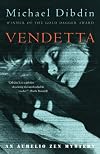
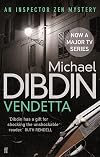
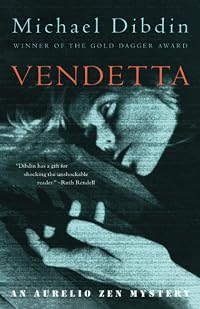
Inspector Zen has a problem: an impossible murder, recorded on the closed-circuit video of Oscar Burolo's top-security Sardinian fortress. As Zen gets to work, he is once again plunged into a menacing and violent world where his own life is soon at risk.Tags
Recommendations

















Member Reviews
This was my first Aurelio Zen novel, and it won't be the last. I picked up on a recommendation of sorts from Masterpiece Mystery, which will be showing the (apparently only three-episode) TV adaptation of the Zen books. The novels being adapted are this one, Cabal and Ratking, so I am reading them in broadcast order instead of series order.
Even with this being the second novel in the series, I was very easily immersed in Zen's world. Dibdin's writing is well crafted and he is not afraid to use longer, more complex sentences to tell his story. Zen comes across as a very amusing character, with plenty of cunning and street smarts but also very real insecurities and flaws. His relationship with his mother provides a good source of show more entertainment -- she's moved into his apartment in Rome because she can't live on her own in Venice anymore, and naturally conflict will ensue, especially when his mum acts selectively deaf and stubborn.
I loved the details of life in Rome as well: shoving one's way onto the back of a crowded bus, standing in the doorway of a bar drinking a very young wine, going to coffee bars, and everyone cutting out of work on Friday at noon. I also liked the descriptions of the other cops' conversations about cars and the part about Zen's driving style, as it is very much mine as well:
"Zen's style behind the wheel was that of an elderly peasant farmer phut-phutting along at 20 kph in a worn-out Fiat truck with bald tyres and no acceleration, blithely oblivious to the hooting, light-flashing hysteria building up in his wake." (p. 152 of the edition I read)
The only thing I didn't really like in this book was the italicized interludes, which kind of made sense at first but then I got confused about them and am not sure whether my initial assessment was correct. But that was the only quibble I had. Zen is a great character, Dibdin an excellent writer and I am very much looking forward to reading the rest of the series. This one's a keeper. show less
Even with this being the second novel in the series, I was very easily immersed in Zen's world. Dibdin's writing is well crafted and he is not afraid to use longer, more complex sentences to tell his story. Zen comes across as a very amusing character, with plenty of cunning and street smarts but also very real insecurities and flaws. His relationship with his mother provides a good source of show more entertainment -- she's moved into his apartment in Rome because she can't live on her own in Venice anymore, and naturally conflict will ensue, especially when his mum acts selectively deaf and stubborn.
I loved the details of life in Rome as well: shoving one's way onto the back of a crowded bus, standing in the doorway of a bar drinking a very young wine, going to coffee bars, and everyone cutting out of work on Friday at noon. I also liked the descriptions of the other cops' conversations about cars and the part about Zen's driving style, as it is very much mine as well:
"Zen's style behind the wheel was that of an elderly peasant farmer phut-phutting along at 20 kph in a worn-out Fiat truck with bald tyres and no acceleration, blithely oblivious to the hooting, light-flashing hysteria building up in his wake." (p. 152 of the edition I read)
The only thing I didn't really like in this book was the italicized interludes, which kind of made sense at first but then I got confused about them and am not sure whether my initial assessment was correct. But that was the only quibble I had. Zen is a great character, Dibdin an excellent writer and I am very much looking forward to reading the rest of the series. This one's a keeper. show less
This is the second Aurelio Zen mystery/crime novel, and is as good or better than the first (Ratking). Dibdin paints the bureaucracy and political games of Rome in such cynical terms that you wonder how anything gets done. And Zen wonders this, too. But the real wonder is how everything bad that happens to Zen—and a lot of bad happens—turns into good luck for him in the end. You are left chuckling and shaking your head at the farce of it all. While reading this novel, notice that the word “vendetta” shows up multiple times; there are in fact several vendettas occurring, some criminal, some professional, and some very personal. Which ones will Zen foil, or will he be the victim? Even if the mystery is not necessarily that, Dibdin show more writes so beautifully that it is hard to put the book aside. I love to read certain sentences three or four times just for the sheer delight in his choice of words. His sentences can be long and complex, but the imagery evoked by his word choice is wonderful. show less
Probably a 3.75. Paints a rich picture or Italy, warts and all, and Zen is a wonderfully painted character even if rather flawed and not necessarily that likable.
Vendetta is the second novel in Michael Dibdin's Aurelio Zen series. Once again the transplanted Venetian is sent from Rome to a remote corner of Italy, in this case Sardinia. A wealthy construction magnate and his wife and guests have been brutally murdered at his ostentatious (and hyper-secure) villa, a massacre that was caught by one of the ubiquitous camera that his security team had set all over the property; yet the perpetrator managed to remain out of camera sight throughout the event. A suspect is quickly arrested, but that individual has close ties to one of the political parties currently in (coalition) power and members of that outfit arrange for Zen to go out to the island and pin the crime on another potential suspect. In show more the meantime, Zen's colleagues mostly resent him and one in particular has it in for him, and it's quite possible that this colleague can ruin his life - assuming he survives Sardinia, that is.... As with the first novel in this series, Ratking, there is a huge amount of tension building throughout Vendetta; although Zen has more support this time than he did previously, he is still essentially thrown into a very dangerous situation with little information and with the awareness that the people who sent him there don't really care if he lives or dies. I found his character more fleshed out than in the first book, which makes sense as we readers are getting to know him a little bit better with each book in the series; I would have liked there to have been perhaps a few more characters who are friendly to him, as in this novel it seems almost everybody is outright hostile toward our hero, but other than that quibble, I found the novel quite absorbing and tense. Recommended! show less
Billionaire building contractor Oscar Burolo, along with his wife and some guests, is gunned down in his apparently impregnable fortress like villa on Sardinia. Seedy political fixer Renato Favelloni, a go-between for Burolo and prominent Italian politicians, is languishing in jail awaiting trial for the murders. Zen is tasked with filing a report on the investigation thus far when he is approached by an agent of a Government coalition member, fearful of the political repercussions should Favelloni go to court, who wants Zen to travel to Sardinia to frame somebody else (preferably a young man who has been videotaped by Burolo having wild sex with the billionaire's wife) instead in the process getting Favelloni released.
Zen is struggling show more to fit in with his new work colleagues who don't seem to trust him, he has been pick-pocketed recently and someone has broken into his flat making a veiled death threat. He is having problems on an emotional level as well. His mother who seems to be suffering from some sort of dementia is living with him, his American girlfriend has left him and he is falling for another police officer, Tania Biacis, only she is married. So Zen travels to Sardinia without telling anyone what he is doing to try and break the case without irritating his superiors. Once on the island Zen is confronted by a killer he mistakenly put in jail, based on a police informant's lying testimony, 20 years previously who is now out for revenge.
Despite this being only the second book of the series and he has only recently been promoted to the prestigious Criminalpol division Zen is already disillusioned. He has realised that getting a result might not be the same thing as catching an actual culprit. But he is also a pragmatist who realises that this is how the game is to be played if he wants to survive or even get ahead.
In fact this element of the book is it's real strength. Dibdin portrays well the differing rivalries between both individuals and organisations, the petty bureaucracy and back scratching that seems so prevalent in Italian society even is these match only stereotypes rather than reality.
What lets the book down for me was the actual investigation such as it is. Zen seemed like an ass being led around by it's nose who seemed incapable of actually uncovering any real facts himself despite some pretty loaded hints for the reader. Nor is Zen particularly likeable. He seems shallow and self interested, even his infatuation with Tania seems to be down to the fact that she is simply there rather than any real emotional capacity.
This is my first Zen novel and whilst I haven't been totally put off reading more of them neither will I be rushing out to grab them all. show less
Zen is struggling show more to fit in with his new work colleagues who don't seem to trust him, he has been pick-pocketed recently and someone has broken into his flat making a veiled death threat. He is having problems on an emotional level as well. His mother who seems to be suffering from some sort of dementia is living with him, his American girlfriend has left him and he is falling for another police officer, Tania Biacis, only she is married. So Zen travels to Sardinia without telling anyone what he is doing to try and break the case without irritating his superiors. Once on the island Zen is confronted by a killer he mistakenly put in jail, based on a police informant's lying testimony, 20 years previously who is now out for revenge.
Despite this being only the second book of the series and he has only recently been promoted to the prestigious Criminalpol division Zen is already disillusioned. He has realised that getting a result might not be the same thing as catching an actual culprit. But he is also a pragmatist who realises that this is how the game is to be played if he wants to survive or even get ahead.
In fact this element of the book is it's real strength. Dibdin portrays well the differing rivalries between both individuals and organisations, the petty bureaucracy and back scratching that seems so prevalent in Italian society even is these match only stereotypes rather than reality.
What lets the book down for me was the actual investigation such as it is. Zen seemed like an ass being led around by it's nose who seemed incapable of actually uncovering any real facts himself despite some pretty loaded hints for the reader. Nor is Zen particularly likeable. He seems shallow and self interested, even his infatuation with Tania seems to be down to the fact that she is simply there rather than any real emotional capacity.
This is my first Zen novel and whilst I haven't been totally put off reading more of them neither will I be rushing out to grab them all. show less
It was not my usual crime/detective novel read. Maybe that's why it took me longer to get to the last pages. I missed the fast-paced style of most contemporary crime novels. Though, the slow development of the case is not a disadvantage, the story gradually builds and eventually picks up speed as the case is solved.
I might pick up another book by Michael Dibdin - though I am not in a hurry.
I might pick up another book by Michael Dibdin - though I am not in a hurry.
Multiple vendettas play out in this crime novel that at times is more action thriller than police procedural. Aurelio Zen is caught up in events triggered by the death of a billionaire at his remote Sardinian compound. The fast-paced action somewhat masks a plot that relies a little too much on coincidence.
Zen has to contend with the politics of Italy's power structure as well as with the crimes he is assigned to investigate. Zen always seems to be reacting to events, rather than in control of them. He gets credit not so much for solving crimes as for successfully picking his way through a minefield. The book has a bit of a retro feel since it was written before cell phones came into widespread use.
Zen has to contend with the politics of Italy's power structure as well as with the crimes he is assigned to investigate. Zen always seems to be reacting to events, rather than in control of them. He gets credit not so much for solving crimes as for successfully picking his way through a minefield. The book has a bit of a retro feel since it was written before cell phones came into widespread use.
Members
- Recently Added By
Lists

The Guardian's 1000 Novels Everyone Must Read
1,005 works; 547 members

Books Set in Italy
167 works; 19 members
Author Information

31+ Works 9,642 Members
Michael Dibdin is the author of thirteen previous novels. A native of England, he now lives in Seattle, Washington, with his wife, the mystery writer Katherine Beck. (Bowker Author Biography)
Some Editions
Awards and Honors
Series

Belongs to Publisher Series
Adey's Locked Room Murders (0596)
Work Relationships
Is contained in
Has the adaptation
Common Knowledge
- Canonical title
- Vendetta
- Original title
- Vendetta
- Original publication date
- 1990
- People/Characters
- Aurelio Zen
- Important places
- Sardinia, Italy; Rome, Italy; Venice, Veneto, Italy
- Related movies
- Zen (2011 | IMDb)
- Dedication
- to Moselle
- First words
- Aurelio Zen lounged on the sofa like a listless god, bringing the dead back to life.
- Quotations
- The brief journey did nothing to alleviate his fears that a major fiasco was in the offing.
- Last words
- (Click to show. Warning: May contain spoilers.)Better than money in the bank!
- Disambiguation notice
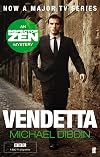
- Just a caveat to readers that the 2011 British TV series departs considerably from Michael Dibdin's texts.
Classifications
Statistics
- Members
- 765
- Popularity
- 36,606
- Reviews
- 25
- Rating
- (3.54)
- Languages
- 12 — Czech, Danish, Dutch, English, Finnish, French, German, Greek, Italian, Portuguese, Spanish, Swedish
- Media
- Paper, Audiobook, Ebook
- ISBNs
- 41
- UPCs
- 1
- ASINs
- 4