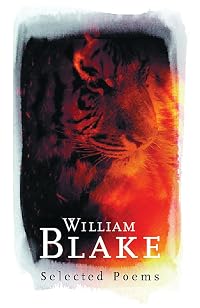
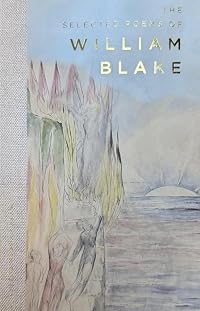
William Blake: Selected Poems (Phoenix Poetry)
by William Blake
On This Page
Description
This edition presents Blake's poems in their literary categories and genres to which they belong: his much-loved lyrics, ballads, comic and satirical verse, descriptive and discursive poems, verse epistles, and, finally, his remarkable 'prophetic' poems, including the whole of his two diffuse epics, Milton and Jerusalem. Blake's poetry is intellectually challenging as well as formally inventive, and this edition has a substantial critical introduction which places his ideas in the show more contemporary context of the Enlightenment and the artistic reaction against its key assumptions. show lessTags
Recommendations









Member Reviews
A great selection of William Blake's poetical works. 'The Tyger' is, of course, present, as is 'And Did Those Feet in Ancient Time', which was later set to music as the patriotic hymn 'Jerusalem'. Even though I tired of all the God stuff and disliked Blake's explicit refutation of the teachings of the Enlightenment, there was much I enjoyed here. The 'Proverbs of Hell' are extremely quotable and entertaining, as are the 'Auguries of Innocence'. 'The Garden of Love' was a choice condemnation of organised religion, despite Blake's overt theism. I also appreciated the cynical approach to romantic love, shown in 'Love to Faults is Always Blind' and 'The Look of Love Alarms'. All told, this was much more engrossing than I expected and the show more selection is recommended for those wanting a taste of the work of this influential poet. show less
Ratings
Members
- Recently Added By
Author Information

501+ Works 20,199 Members
William Blake's poems, prophecies, and engravings represent his strong vision and voice for rebellion against orthodoxy and all forms of repression. Born in London in November 1757; his father, a hosier of limited means, could do little for the boy's education. However, when the young Blake's talent for design became apparent, his wise father sent show more him to drawing school at the age of 10. In 1771 Blake was apprenticed to an engraver. Blake went on to develop his own technique, a method he claimed that came to him in a vision of his deceased younger brother. In this, as in so many other areas of his life, Blake was an iconoclast; his blend of printing and engraving gave his works a unique and striking illumination. Blake joined with other young men in support of the Revolutions in France and America. He also lived his own revolt against established rules of conduct, even in his own home. One of his first acts after marrying his lifetime companion, Catherine Boucher, was to teach her to read and write, rare for a woman at that time. Blake's writings were increasingly styled after the Hebrew prophets. His engravings and poetry give form and substance to the conflicts and passions of the elemental human heart, made real as actual characters in his later work. Although he was ignored by the British literary community through most of his life, interest and study of his work has never waned. Blake's creativity and original thinking mark him as one of the earliest Romantic poets, best known for his Songs of Innocence (1789) and Songs of Experience (1794) and The Tiger. Blake died in London in 1827. (Bowker Author Biography) show less
Common Knowledge
- First words
- Introduction: Blake's genius is like nobody else's in English literature.
- Last words
- (Click to show. Warning: May contain spoilers.)To the Accuser Who is the God of this World:
Tho' thou art Worship'd by the Names Divine
Of Jesus & Jehovah: thou art still
The Son of Morn in weary Night's decline,
The lost Traveller's Dream under the Hill.
Classifications
Statistics
- Members
- 97
- Popularity
- 331,908
- Reviews
- 1
- Rating
- (4.10)
- Languages
- English
- Media
- Paper, Ebook
- ISBNs
- 2
- ASINs
- 1