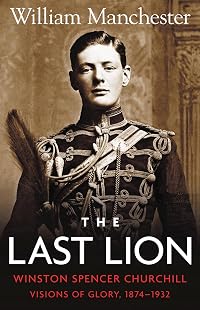
The Last Lion, Winston Spencer Churchill, Volume I: Visions of Glory, 1874-1932
by William Manchester
The Last Lion: Winston Spencer Churchill (Volume I)
On This Page
Description
The first volume in William Manchester's masterful, magnum opus account of Winston Churchill's life. The Last Lion: Visions of Glory follows the first fifty-eight years of Churchill's life--the years that mold him into the man who will become one of the most influential politicians of the twentieth century. In this, the first volume, Manchester follows Churchill from his birth to 1932, when he began to warn against the re-militarization of Germany. Born of an American mother and the gifted show more but unstable son of a duke, his childhood was one of wretched neglect. He sought glory on the battlefields of Cuba, Sudan, India, South Africa and the trenches of France. In Parliament he was the prime force behind the creation of Iraq and Jordan, laid the groundwork for the birth of Israel, and negotiated the independence of the Irish Free State. Yet, as Chancellor of the Exchequer he plunged England into economic crisis, and his fruitless attempt to suppress Gandhi's quest for Indian independence brought political chaos to Britain. Throughout, Churchill learned the lessons that would prepare him for the storm to come, and as the 1930's began, he readied himself for the coming battle against Nazism--an evil the world had never before seen. show lessTags
Recommendations

















Member Reviews
I love reading about Churchill, but man, those Britons were screwed up, and Jennie Churchill, though American, fit right in with her distance from her son. Manchester paints a vivid portrait of the bustle of Imperial Britain at its height, including exploitation of the Queen’s image to sell products (for example, Hudson’s Dry Soap, “The Subject’s Best Friend”). Lillie Langtry sold her signed endorsement for a product, and a forger copied her signature and “cleaned her out.” And there were the battles: “The British soldier was given a small island for his birthplace and the whole world as his grave.” The Victorian army Churchill entered was equally insular in culture and global in reach. It followed the gentleman’s show more code, by which gambling debts must be settled promptly, but Churchill didn’t pay his tailor for over six years. Churchill led an objectively wild life: he was in a Boer prison camp, bullied his way into an escape attempt planned by two other prisoners, was the only one who actually escaped, but unbeknownst to him his release had already been ordered due to strings pulled by his mother (one of the Prince of Wales’s lovers). Also he conceived of the tank and pushed its adoption in WWI. Also flak and several other military innovations, not all of them good ideas. And you’ve got to admit, it’s pretty baller to end the first volume of a multivolume biography with a 1932 anecdote in which Stalin asks Lady Astor about British politicians; she tells him Chamberlain is the coming man. “What about Churchill?” he asks. She gives a scornful little laugh and replies: “Oh, he’s finished.” show less
Dad gave me the whole series for my promotion to Major in October 2021. Started reading during WTI 2-22, read in the London airport on my way to the NF22 FPC, finished on my way home from the FPC while delayed for 24 hours in Chicago. Was not an easy read as it is a very long book with very few chapters.
Very detailed account of his life all prior to his election as Prime Minister. Learned a lot more about British politics than I will ever be interested to learn...thoroughly enjoyed the sections on WWI and his role during that conflict. Book does an excellent job setting the stage for WWII and his clash with Hitler once he becomes Prime Minister. His early childhood years reminded me a lot of Teddy Roosevelt and how he seemed like such show more an unlikely future leader that he became. His adult life reminded me in some ways of Donald Trump in terms of his strong personality. The author does a great job of tying in the details of his life with the culture of Great Britain at that time and especially highlights a lot of the promiscuity of his mother throughout his life. The post WWI section on the internal conflict with Ireland finally gave me the desire to watch Peaky Blinders. Eager to read the next book, but definitely need to take a break before jumping in. Recommended to anyone with a great interest in Winston Churchill or British politics, otherwise I recommend a shorter, less detailed account. show less
Very detailed account of his life all prior to his election as Prime Minister. Learned a lot more about British politics than I will ever be interested to learn...thoroughly enjoyed the sections on WWI and his role during that conflict. Book does an excellent job setting the stage for WWII and his clash with Hitler once he becomes Prime Minister. His early childhood years reminded me a lot of Teddy Roosevelt and how he seemed like such show more an unlikely future leader that he became. His adult life reminded me in some ways of Donald Trump in terms of his strong personality. The author does a great job of tying in the details of his life with the culture of Great Britain at that time and especially highlights a lot of the promiscuity of his mother throughout his life. The post WWI section on the internal conflict with Ireland finally gave me the desire to watch Peaky Blinders. Eager to read the next book, but definitely need to take a break before jumping in. Recommended to anyone with a great interest in Winston Churchill or British politics, otherwise I recommend a shorter, less detailed account. show less
Amazing - and long for us slow / distracted readers. It provides detailed insight to the younger Churchill. It's perfect to understand the formative years and wonderful if you like to read about famous children, but not nearly as interesting to me as the events in his life. (Similar to McCullough's disappointing 'Mornings on Horseback' about Teddy Roosevelt.)
Churchill's events were big. My recommendation: go directly to the years of the Boer War, WWI, or the independence movement in India if that interests you. If WWII is your thing, read the 40 page preamble and the remarkable last 18 pages.
At the very least, read the absolutely fabulous first two pages of the preamble. It is an inspiring example of Manchester's writing. Warning: show more after reading those first two pages you may feel compelled to read the remaining 881. show less
Churchill's events were big. My recommendation: go directly to the years of the Boer War, WWI, or the independence movement in India if that interests you. If WWII is your thing, read the 40 page preamble and the remarkable last 18 pages.
At the very least, read the absolutely fabulous first two pages of the preamble. It is an inspiring example of Manchester's writing. Warning: show more after reading those first two pages you may feel compelled to read the remaining 881. show less
Before he became the face of the dogged determination in World War II and the voice of inspiration for the British people, Winston Churchill was a scion of a noble family looking to make his mark and coming close on many occasions. The Last Lion: Winston Spencer Churchill: Visions of Glory, 1874-1932 is the first volume of William Manchester’s biographical trilogy which deals with Churchill’s early life and his adventurous political career until he was shunned by power and entered the political wilderness.
A scion of the ducal Marlborough family, Winston Spencer-Churchill was the eldest son of a second son and his American wife. Before even getting to Winston’s birth and life, Manchester paints the social, cultural, and political show more landscape he would be born into, be indoctrinated to believe in, and defend his entire life. Throughout his life, Winston would use the connections of his parent’s friends and acquaintances to advance himself early in his career while a boon to his military and early political careers it hardly made up for the fact that both his parents were aloof to his existence even for the times of the British upper class. Manchester relates Winston’s school misadventures and horrible academic record for the classical education expected off one of his station, but while he failed to understand Greek or Latin his “remedial” studies of English year after year would serve him the rest of his life as a journalist, author, and speaking in Parliament. While he served in wars in the frontier of the Empire, first in India then in Sudan, and afterwards in South Africa he initially went there as a “journalist” but used his military rank to join battles or was recruited by the commander on the spot to lead men. Upon the completion of the Boer War, during which he was taken prisoner and escaped, Winston entered politics in his eyes to take up his late father’s torch. Once on the floor of the House, Winston’s speeches were events to be listened to and to be written about in the papers. His familial connections got him in touch with the high circles of the Conservative party, but the issue of Free Trade and his own “radical” views on issues made him become a Liberal and soon found him apart of the new government the party form and would be until after the events connected with Gallipoli during the First World War resulted in him taking to the trenches on the Western Front. After a return to a position in the Government, Winston soon found him edging away from the Liberal Party that was dying in the face for the rise of the Labour Party and soon returned the Conservatives to be among their new Government. Yet the same tensions that made Winston leave the Party in the first place were still there but with more animosity but it was the issue of India sent Winston still a Conservative into the political wilderness that many of his political adversaries believed him to be finished, especially at his age.
In nearly 900 pages of text, Manchester not only details the first 58 years of Winston’s life but also the times he lived in while slowly setting things up for the final volume for the events in which he is most well-known to the public today. There seems to be a bias by Manchester towards Winston that does make it through to the page instead of a little more balanced writing in places, however Manchester does not shy away that Winston’s views and words around the India issue essentially were racist even though at the time it was common thought by many in Britain. Manchester gives balanced view of Winston’s relations with the working class while at the same time revealing why Labour and the press said he was against them. The account of the Dardanelles and Gallipoli campaign that is always blamed on Winston is given fully fleshed out including what actions Winston were accountable for and those he was not and why it was he that the failure was attached to.
Visions of Glory, 1874-1932 reveals the times and environment in which Winston Churchill was brought up and how they shaped him as he entered politics and attempted to rise to power. William Manchester gives a full picture of a young then middle-aged politician whose life was a roller coaster that influenced the British Empire its domestic and foreign affairs, but never held ultimate power and seemed never to. If one wants to know Churchill this book is a great place to start. show less
A scion of the ducal Marlborough family, Winston Spencer-Churchill was the eldest son of a second son and his American wife. Before even getting to Winston’s birth and life, Manchester paints the social, cultural, and political show more landscape he would be born into, be indoctrinated to believe in, and defend his entire life. Throughout his life, Winston would use the connections of his parent’s friends and acquaintances to advance himself early in his career while a boon to his military and early political careers it hardly made up for the fact that both his parents were aloof to his existence even for the times of the British upper class. Manchester relates Winston’s school misadventures and horrible academic record for the classical education expected off one of his station, but while he failed to understand Greek or Latin his “remedial” studies of English year after year would serve him the rest of his life as a journalist, author, and speaking in Parliament. While he served in wars in the frontier of the Empire, first in India then in Sudan, and afterwards in South Africa he initially went there as a “journalist” but used his military rank to join battles or was recruited by the commander on the spot to lead men. Upon the completion of the Boer War, during which he was taken prisoner and escaped, Winston entered politics in his eyes to take up his late father’s torch. Once on the floor of the House, Winston’s speeches were events to be listened to and to be written about in the papers. His familial connections got him in touch with the high circles of the Conservative party, but the issue of Free Trade and his own “radical” views on issues made him become a Liberal and soon found him apart of the new government the party form and would be until after the events connected with Gallipoli during the First World War resulted in him taking to the trenches on the Western Front. After a return to a position in the Government, Winston soon found him edging away from the Liberal Party that was dying in the face for the rise of the Labour Party and soon returned the Conservatives to be among their new Government. Yet the same tensions that made Winston leave the Party in the first place were still there but with more animosity but it was the issue of India sent Winston still a Conservative into the political wilderness that many of his political adversaries believed him to be finished, especially at his age.
In nearly 900 pages of text, Manchester not only details the first 58 years of Winston’s life but also the times he lived in while slowly setting things up for the final volume for the events in which he is most well-known to the public today. There seems to be a bias by Manchester towards Winston that does make it through to the page instead of a little more balanced writing in places, however Manchester does not shy away that Winston’s views and words around the India issue essentially were racist even though at the time it was common thought by many in Britain. Manchester gives balanced view of Winston’s relations with the working class while at the same time revealing why Labour and the press said he was against them. The account of the Dardanelles and Gallipoli campaign that is always blamed on Winston is given fully fleshed out including what actions Winston were accountable for and those he was not and why it was he that the failure was attached to.
Visions of Glory, 1874-1932 reveals the times and environment in which Winston Churchill was brought up and how they shaped him as he entered politics and attempted to rise to power. William Manchester gives a full picture of a young then middle-aged politician whose life was a roller coaster that influenced the British Empire its domestic and foreign affairs, but never held ultimate power and seemed never to. If one wants to know Churchill this book is a great place to start. show less
There are few political leaders that have captured my imagination like Winston Churchill does. William Manchester not only tells the story of what is perhaps Britain's greatest prime minister, he does it in fantastic detail. I've read complaints that Manchester uses perhaps too much detail, but I could not have enjoyed it more.
Manchester paints a picture of life at the end of one era--the Victorian--and beginning of the next, the Edwardian. Churchill's life straddled change in eras, and Manchester doesn't just write Churchill's biography, but a history of the time that is full and vibrant. Churchill isn't just a great leader, but a product of both the past and the future. His lived as colorfully and dangerously as any writer could have show more imagined, in spite of a beginning that was marked by comfort and wealth.
Born to a wealthy aristocratic family, Winston was raised by a nanny while his father and mother (an American) were off gallivanting with the nobles of England. Along the way, Winston proved to be a poor student and got himself kicked out of several schools. Never close to his father--if at all--Winston would write pleading letters to his mother to come visit him during the years he would spend at prep school. His father died young after being marginalized from a career that put him on the threshold of England's prime minister-ship.
The family's wealth mostly squandered, Winston was required to find a career, unique from his aristocratic peers who were used to living off of their families' wealth. He had always had an interest in the military, and he pursued a career that combined writing and military action, utilizing his mother's influence in the aristocracy to go where the action was. He saw action in Afghanistan and Sudan, and he sent home breathtaking accounts to the newspapers that catapulted him into the nation's consciousness. When he was taken as a POW in the Boer War, and escaped, he became a celebrity.
And it only gets better. Winston would feed himself by his pen for the rest of his life, writing articles, stories, books, and even publishing an entire newspaper during a nationwide general strike. He served as First Lord of the Admiralty at a time when Britain ruled the waives and the British Navy was unrivaled on the seas. Though later blamed for the disastrous Gallipoli campaign, Winston would be a remain force to reckoned with in the House of Commons through out his life. Winston would levy powerful rhetoric in defense of his allies and against his enemies, giving "impromptu" speeches after hours of preparation the night before.
This first volume of the biography covers the first fifty eight years of Churchill's life, up to a time when many politicians would be entering the twilight of their careers. Faced with setbacks and defeats, Churchill himself switched parties twice over the course of his career. With yet, his greatest hour, and Britain's, would come later with World War II.
I look forward reading the next volume in Manchester's trilogy. show less
Manchester paints a picture of life at the end of one era--the Victorian--and beginning of the next, the Edwardian. Churchill's life straddled change in eras, and Manchester doesn't just write Churchill's biography, but a history of the time that is full and vibrant. Churchill isn't just a great leader, but a product of both the past and the future. His lived as colorfully and dangerously as any writer could have show more imagined, in spite of a beginning that was marked by comfort and wealth.
Born to a wealthy aristocratic family, Winston was raised by a nanny while his father and mother (an American) were off gallivanting with the nobles of England. Along the way, Winston proved to be a poor student and got himself kicked out of several schools. Never close to his father--if at all--Winston would write pleading letters to his mother to come visit him during the years he would spend at prep school. His father died young after being marginalized from a career that put him on the threshold of England's prime minister-ship.
The family's wealth mostly squandered, Winston was required to find a career, unique from his aristocratic peers who were used to living off of their families' wealth. He had always had an interest in the military, and he pursued a career that combined writing and military action, utilizing his mother's influence in the aristocracy to go where the action was. He saw action in Afghanistan and Sudan, and he sent home breathtaking accounts to the newspapers that catapulted him into the nation's consciousness. When he was taken as a POW in the Boer War, and escaped, he became a celebrity.
And it only gets better. Winston would feed himself by his pen for the rest of his life, writing articles, stories, books, and even publishing an entire newspaper during a nationwide general strike. He served as First Lord of the Admiralty at a time when Britain ruled the waives and the British Navy was unrivaled on the seas. Though later blamed for the disastrous Gallipoli campaign, Winston would be a remain force to reckoned with in the House of Commons through out his life. Winston would levy powerful rhetoric in defense of his allies and against his enemies, giving "impromptu" speeches after hours of preparation the night before.
This first volume of the biography covers the first fifty eight years of Churchill's life, up to a time when many politicians would be entering the twilight of their careers. Faced with setbacks and defeats, Churchill himself switched parties twice over the course of his career. With yet, his greatest hour, and Britain's, would come later with World War II.
I look forward reading the next volume in Manchester's trilogy. show less
The Last Lion, William Manchester’s three-volume biography of Winston Churchill, has been called one of the greatest biographies of the 20th century. Having just completed the first volume (Visions of Glory, 1874-1932), I must eagerly agree. Three elements especially stand out to me. First, Manchester paints a brilliant picture of Great Britain during Churchill’s early years, when the Empire was at its peak of power and apparent security. This is vital because Churchill must be judged according to his own time and circumstances. Second, Manchester includes vast amounts of first-hand sources such as personal letters, memoranda, journals, and newspaper accounts, which bring great detail to the story. This material is always woven into show more the text in an engaging way that captures Churchill’s many astounding traits. The depth of the author’s study is evident here. Third, Manchester treats the reader to the entire breadth of Churchill’s public life. Some of Churchill’s less well-known activities are brought to life, such as his negotiation of peace in Ireland, his passionate speech against a powerful British general who had needlessly slaughtered hundreds of Indians, and his staunch position against Indian independence that led to his ostracism from the British government in the 1930s. If a weakness must be found, it would have to be the lack of background information regarding the Irish conflict. This book is the place to start if you are interested in Churchill. I look forward to reading the next volume in the set. show less
One down, two to go. These books have been on my list for a while, but due to their length (41 hours for the first audiobook), I had been hesitant to start. I listened to the Audible version of the book, which was really well narrated.
This book is best described as a general history of political and patrician England from 1874 - 1932 with a focus on the vast detail's of Winston Churchill's life during this time. My favorite parts were the letters between him and his wife Clementine. As a person in which any and every emotion brings tears to my eyes, I loved the tidbit that Churchill was also a cryer. The letters to his parents when he was a young boy were heartbreaking. It is easy to see how other people would have found Churchill show more during this time both exasperating and loveable, admirable and confounding. Truly his strength was an ability to follow his vision with conviction and determination, but also willing to change his perceptions when new evidence or circumstances were presented -- which is a difficult path to take as a politician in which people want to label you so as to know where you stand. show less
This book is best described as a general history of political and patrician England from 1874 - 1932 with a focus on the vast detail's of Winston Churchill's life during this time. My favorite parts were the letters between him and his wife Clementine. As a person in which any and every emotion brings tears to my eyes, I loved the tidbit that Churchill was also a cryer. The letters to his parents when he was a young boy were heartbreaking. It is easy to see how other people would have found Churchill show more during this time both exasperating and loveable, admirable and confounding. Truly his strength was an ability to follow his vision with conviction and determination, but also willing to change his perceptions when new evidence or circumstances were presented -- which is a difficult path to take as a politician in which people want to label you so as to know where you stand. show less
Members
- Recently Added By
Lists

Best Biographies
216 works; 26 members

Top Five Books of 2013
1,562 works; 721 members

Top Five Books of 2014
1,064 works; 398 members

The Art of Manliness' 100+ Books Every Man Should Read
108 works; 2 members

The Complete Rory Gilmore Reading List
506 works; 5 members

Books We Couldn't Put Down
443 works; 197 members
Awards and Honors
Distinctions
Series

Work Relationships
Common Knowledge
- Canonical title
- The Last Lion, Winston Spencer Churchill, Volume I: Visions of Glory, 1874-1932
- Original publication date
- 1983
- People/Characters
- Winston Churchill
- Important places
- Transvaal, South Africa; Gallipoli, Turkey
- Important events
- Second Boer War (1899-10-11 | 1902-05-31); World War I (1914 | 1918); Gallipoli Campaign
- Epigraph
- The credit belongs to the man who is actually in the arena, whose face is marred by dust and sweat and blood, who knows the great enthusiasms, the great devotions, and spends himself in a worthy cause; who at best, if he wins... (show all), knows the thrills of high achievement, and, if he fails, at least fails daring greatly, so that his place shall never be with those cold and timid souls who know neither victory nor defeat.
- Dedication
- To MARY and CHARTWELL
- First words
- The French had collapsed. The Dutch had been overwhelmed. The Belgians had surrendered. The British army, trapped, fought free and fell back toward the Channel ports, converging on a fishing town whose name was then spelle... (show all)d Dunkerque.
- Quotations
- "No lesson seems to be so deeply inculcated by experience of life as that you should never trust experts. If you believe doctors, nothing is wholesome; if you believe theologians, nothing is innocent; if you believe soldiers... (show all), nothing is safe."
"A race which has suffered defeat can be rescued by restoring its self-confidence." - Last words
- (Click to show. Warning: May contain spoilers.)[Lady Astor's] eyes widened. "Churchill?" she said. She gave a scornful little laugh and replied, "Oh, he's finished."
- Original language
- English
- Disambiguation notice
- There seems to be a mistake here. Alone is volume 2. If your copy is in this work, please correct the title so that it can be properly combined.
Classifications
- Genres
- Biography & Memoir, History, General Nonfiction, Nonfiction
- DDC/MDS
- 941.084 — History & geography History of Europe British Isles Historical periods of British Isles 1837- Period of Victoria and House of Windsor 1936-1945
- LCC
- DA566.9 .C5 .M26 — History of Europe, Asia, Africa and Oceania Great Britain History of Great Britain England History By period Modern, 1485- 20th century
- BISAC
Statistics
- Members
- 2,637
- Popularity
- 7,147
- Reviews
- 38
- Rating
- (4.46)
- Languages
- 5 — English, French, German, Italian, Japanese
- Media
- Paper, Audiobook, Ebook
- ISBNs
- 34
- ASINs
- 16
