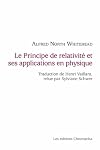
Principle of Relativity
by Alfred North Whitehead
56 Members (5.00)
On This Page
Description
An exposition of an alternative rendering of the theory of relativity, this volume is the work of the distinguished English mathematician and philosopher, Alfred North Whitehead. Suitable for upper-level undergraduates and graduate students, its three-part treatment begins with an overview of general principles that may be described as mainly philosophical in character. Part II is devoted to physical applications and chiefly concerns the particular results deducible from the formulas assumed show more for the gravitation and electromagnetic fields. The final part consists of an exposition of the elementary theory of tensors.The author notes that the text's order proceeds naturally from general principles to particular applications, concluding with a general exposition of the mathematical theory, special examples of which have occurred in the discussion of the applications. Physicists,Whitehead suggests, may prefer to start with Part II, referring back to a few formulas mentioned at the end of Part I, and mathematicians may start with Part III. The whole evidence, he adds, requires a consideration of all three parts. show lessTags
Recommendations



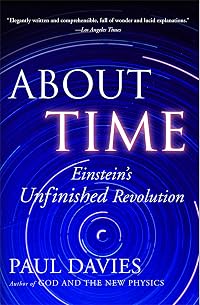
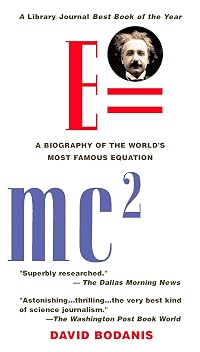

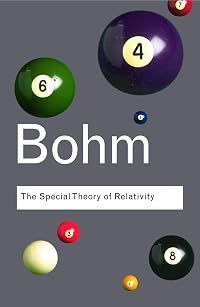




Member Reviews
Members
- Recently Added By
Author Information

64+ Works 6,250 Members
Alfred North Whitehead, who began his career as a mathematician, ranks as the foremost philosopher in the twentieth century to construct a speculative system of philosophical cosmology. After his graduation from Cambridge University, he lectured there until 1910 on mathematics. Like Bertrand Russell (see also Vol. 5), his most brilliant pupil, show more Whitehead viewed philosophy at the start from the standpoint of mathematics, and, with Russell, he wrote Principia Mathematica (1910--13). This work established the derivation of mathematics from logical foundations and has transformed the philosophical discipline of logic. From his work on mathematics and its logical foundations, Whitehead proceeded to what has been regarded as the second phase of his career. In 1910 he left Cambridge for the University of London, where he lectured until he was appointed professor of applied mathematics at the Imperial College of Science and Technology. During his period in London, Whitehead produced works on the epistemological and metaphysical principles of science. The major works of this period are An Enquiry Concerning the Principles of Natural Knowledge (1919), The Concept of Nature (1920), and The Principles of Relativity (1922). In 1924, at age 63, Whitehead retired from his position at the Imperial College and accepted an appointment as professor of philosophy at Harvard University, where he began his most creative period in speculative philosophy. In Science and the Modern World (1925) he explored the history of the development of science, examining its foundations in categories of philosophical import, and remarked that with the revolutions in biology and physics in the nineteenth and early twentieth centuries a revision of these categories was in order. Whitehead unveiled his proposals for a new list of categories supporting a comprehensive philosophical cosmology in Process and Reality (1929), a work hailed as the greatest expression of process philosophy and theology. Adventures of Ideas (1933) is an essay in the philosophy of culture; it centers on what Whitehead considered the key ideas that have shaped Western culture. (Bowker Author Biography) show less
Classifications
Statistics
- Members
- 56
- Popularity
- 548,911
- Rating
- (5.00)
- Languages
- English, French
- Media
- Paper, Ebook
- ISBNs
- 8