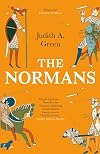
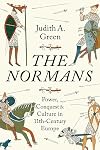
The Normans: Power, Conquest and Culture in 11th Century Europe
by Judith A. Green
On This Page
Description
A bold new history of the rise and expansion of the Norman Dynasty across Europe from Byzantium to England.Tags
Recommendations

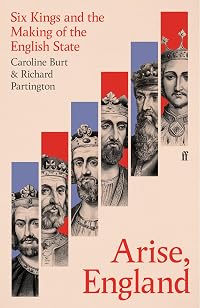
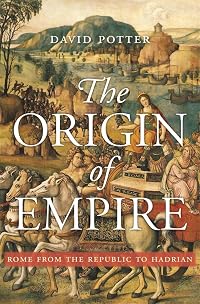
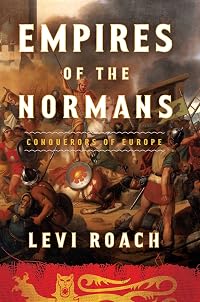
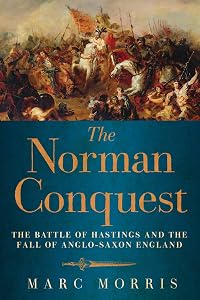








Member Reviews
Last year, when I was reading Trevor Rowley's "The Normans," I came away somewhat dissatisfied with Rowley's dated narrative style, and having further questions I wished that I had a more contemporary treatment at hand. I was therefor delighted to discover that Green's examination of the topic was out, and moved that to the head of the TBR queue. Unfortunately, I'm still left with some basic questions after reading this monograph.
Here's the thing, Prof. Green's real agenda seems to be the dismantling of the mystique various Norman rulers built for themselves, and critiquing the sources that have been left for us; not adding to the mystique. However, Green has to admit that, in their prime, the Normans generally did win their battles. show more This is unless they were just faced with insurmountable numbers, and some times not even then; victory does have a way of generating its own mystique. As for the questions I had about the sources of Norman military art, Green tends to emphasize a knack for logistics, but does make one passing observation that Norman armies do seem to have been more willing to trust in the full-fledged cavalry charge than most of their competition; again, the most romantic of all military maneuvers.
On the plus side, I was given food for thought when it came to Norman political maneuvering, but this really isn't a book with for the general reader, and they still might be happier reading Rowley or J.J. Norwich. show less
Here's the thing, Prof. Green's real agenda seems to be the dismantling of the mystique various Norman rulers built for themselves, and critiquing the sources that have been left for us; not adding to the mystique. However, Green has to admit that, in their prime, the Normans generally did win their battles. show more This is unless they were just faced with insurmountable numbers, and some times not even then; victory does have a way of generating its own mystique. As for the questions I had about the sources of Norman military art, Green tends to emphasize a knack for logistics, but does make one passing observation that Norman armies do seem to have been more willing to trust in the full-fledged cavalry charge than most of their competition; again, the most romantic of all military maneuvers.
On the plus side, I was given food for thought when it came to Norman political maneuvering, but this really isn't a book with for the general reader, and they still might be happier reading Rowley or J.J. Norwich. show less
I will preface this review by saying - reader beware.! This is not a casual and cursory look at the Normans that will appeal to the general masses; it is a more focused narrative that assumes that you - the reader - have done your due diligence and a sufficient enough grasp of the topic at hand to absorb the information contained therein.
The focus of Green's book is the Normans and their activities as related to a specific time period - the 11th Century - and is narrowed down to particular theatres of war - England, Normandy, Byzantium, Sicily & Southern Italy, Antioch & the Holy Land. It is also a look at how contemporary writers and chroniclers viewed them as well as their own perceptions of self.
Green notes that 11th Century Europe show more was swarming with armed men who for for wealth, land and prestige. So what made this particular group that much more successful than others - this is what is explored. Green includes a number of prominent families in her narrative, as well as some much lesser ones (which are the ones I am always on the look out for).
Their legacy, in the form of conquest, assimilation, government, religious and cultural developments, and their all important art of warfare are covered off. Green notes that they were - in essence - "... ruthless opportunists [who] were able to change the political history of Europe ...".
This is definitely one for my own library shelves, and my own personal collection of Norman literature.
see fuller review here @ Melisende's Library show less
The focus of Green's book is the Normans and their activities as related to a specific time period - the 11th Century - and is narrowed down to particular theatres of war - England, Normandy, Byzantium, Sicily & Southern Italy, Antioch & the Holy Land. It is also a look at how contemporary writers and chroniclers viewed them as well as their own perceptions of self.
Green notes that 11th Century Europe show more was swarming with armed men who for for wealth, land and prestige. So what made this particular group that much more successful than others - this is what is explored. Green includes a number of prominent families in her narrative, as well as some much lesser ones (which are the ones I am always on the look out for).
Their legacy, in the form of conquest, assimilation, government, religious and cultural developments, and their all important art of warfare are covered off. Green notes that they were - in essence - "... ruthless opportunists [who] were able to change the political history of Europe ...".
This is definitely one for my own library shelves, and my own personal collection of Norman literature.
see fuller review here @ Melisende's Library show less
Confusing at times. Having read the books written by John Julius Norwich and Marc Morris on the Normans and books on Bohemond, I bought this book following a review on a podcast. I hoped it would add to my knowledge but at times I found myself frustrated by what appeared to be a lack of attention to detail. I keep having to re-read sections to check that I have confused a son with a nephew or Peter Bartholomew with Peter the Hermit. The premise of the book appears to be just how influential were the Normans, who were they but what did they achieve? The book achieves this but in my opinion, not terribly well. I have nearly given up on it several times. A real pity as the author has put a lot of effort into the research but....
Ratings
Members
- Recently Added By
Lists

Library Non-Fiction
164 works; 1 member
Author Information
5+ Works 204 Members
Judith A. Green is Professor of Medieval History at the University of Edinburgh. She is the author of The Government of England under Henry I (1986) and The Aristocracy of Norman England (1997) and is a Fellow of the Royal Historical Society.
Common Knowledge
- Original publication date
- 2022
- People/Characters
- William the Conqueror; Robert Curthose, Duke of Normandy; Bohemond I of Antioch; Tancred; Robert Guiscard
- Important events
- Norman Conquest of England; First Crusade
Classifications
Statistics
- Members
- 99
- Popularity
- 326,069
- Reviews
- 3
- Rating
- (2.92)
- Languages
- English
- Media
- Paper, Ebook
- ISBNs
- 4
- ASINs
- 1