On This Page
Description
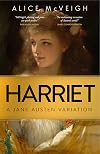
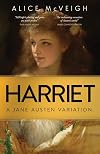
Emma, a privileged young heiress, decides to mentor Harriet Smith, a pretty boarding-school pupil, and to matchmake her as eligibly as she can... But how is she to guess that Harriet has a secret? Meanwhile, the brilliant, penniless Jane Fairfax consents to a clandestine engagement with Frank Churchill - though not daring to confess, even to him, that she is being relentlessly pursued by her best friend's husband. Harriet sidelines Emma herself in favour of the ingenious Harriet and the show more fascinating Jane Fairfax. It is Emma - but an Emma with a surprisingly believable twist in its tail. show lessTags
Recommendations




















Member Reviews
I can never resist a retelling of Emma but this weak - or perhaps 'woke' - style of putting Emma down to force another character into the spotlight is both unoriginal and pathetic. Alice McVeigh writes in the notes that she always wondered if sweet, simple Harriet was actually sharper than she seemed and merely playing Emma at her own game - but after battling through what is basically a rehash of the original book but with Harriet sneering at Emma and stating the obvious ('Was it possible that Mr Churchill was using his public devotion to Emma in order to blind his father to a far riskier, far less sanctioned, attachment?'), all the author succeeded in achieving was transferring some of Emma's less endearing qualities to Harriet and show more Jane Fairfax. Harriet becomes the schemer, rejecting Robert Martin in her quest to trap a 'gentleman' and move to the city, and Jane is suddenly a vicious snob, judging everyone from the Campbells to the Crawfords and Rushworths of Mansfield Park, who make a cameo appearance in Weymouth (to pad out Jane's narration, I'm guessing).
Harriet in this alternate Austen universe is a piece of work, but also very confused. If she is out to hook a gentleman, ANY gentleman, why is she offended by Elton and Frank Churchill? Why does she go along with Emma's matchmaking if she is aware of her misguided choices? Who the hell is she expecting to meet in Highbury better than Mr Knightley, even if she can't help but fawn over his 'not only burly but attractive' appearance?
Jane doesn't fair much better, assaulted by Mr Dixon - somebody was taking Emma's theory in Austen's novel way too literally, avoiding the Dixons isn't why Jane returns to Highbury - and awkwardly propositioned by Mr Knightley, because of course he's the only other man in Highbury. Harriet doesn't care about Robert Martin, Mr Knightley fancies Jane, Jane is tempted by Mr Knightley even while supposedly engaged to Frank ('in those powerful shoulders and confident presence I saw the perfect solution to my difficulty'), Emma is truly in love with Frank and more of a daughter or a sister to Mr Knightley - this book has all the emotional and romantic depth of an issue of Playboy! Are we supposed to care more about Harriet and Jane just because they can finally tell their life stories in the first person (both voices sounding exactly the same)?
And the author also seems determined to misread even the smallest background details from the original story, deciding that Emma and Isabella's mother died when Emma was thirteen (which was when Isabella married John Knightley and moved to London) and that Elton 'making violent love' to Emma in the carriage ride home from Randalls was some sort of physical attack ('Why, when we were alone in the carriage, in his moment of highest folly, he actually dared to catch me about the waist and to press his – but never mind that.') Suffering painfully through the experience of reading Austen being turned into the worst of Mills and Boon did go someway towards preparing me for the dreadful 'twist in the tale' in the final chapters, however - what else could I expect but some Victorian potboiler of a revelation about Mr Knightley and a fair, blue eyed maid of his mother's some eighteen years previously? FFS.
Recommended only for readers who take Austen's quote about her heroine literally and can't stand Emma Woodhouse. Or haven't actually read the book. Emma Tennant and Rachel Billington need to make room on the fan fiction shelf, there's a new literary assassin in town! show less
Harriet in this alternate Austen universe is a piece of work, but also very confused. If she is out to hook a gentleman, ANY gentleman, why is she offended by Elton and Frank Churchill? Why does she go along with Emma's matchmaking if she is aware of her misguided choices? Who the hell is she expecting to meet in Highbury better than Mr Knightley, even if she can't help but fawn over his 'not only burly but attractive' appearance?
Jane doesn't fair much better, assaulted by Mr Dixon - somebody was taking Emma's theory in Austen's novel way too literally, avoiding the Dixons isn't why Jane returns to Highbury - and awkwardly propositioned by Mr Knightley, because of course he's the only other man in Highbury. Harriet doesn't care about Robert Martin, Mr Knightley fancies Jane, Jane is tempted by Mr Knightley even while supposedly engaged to Frank ('in those powerful shoulders and confident presence I saw the perfect solution to my difficulty'), Emma is truly in love with Frank and more of a daughter or a sister to Mr Knightley - this book has all the emotional and romantic depth of an issue of Playboy! Are we supposed to care more about Harriet and Jane just because they can finally tell their life stories in the first person (both voices sounding exactly the same)?
And the author also seems determined to misread even the smallest background details from the original story, deciding that Emma and Isabella's mother died when Emma was thirteen (which was when Isabella married John Knightley and moved to London) and that Elton 'making violent love' to Emma in the carriage ride home from Randalls was some sort of physical attack ('Why, when we were alone in the carriage, in his moment of highest folly, he actually dared to catch me about the waist and to press his – but never mind that.') Suffering painfully through the experience of reading Austen being turned into the worst of Mills and Boon did go someway towards preparing me for the dreadful 'twist in the tale' in the final chapters, however - what else could I expect but some Victorian potboiler of a revelation about Mr Knightley and a fair, blue eyed maid of his mother's some eighteen years previously? FFS.
Recommended only for readers who take Austen's quote about her heroine literally and can't stand Emma Woodhouse. Or haven't actually read the book. Emma Tennant and Rachel Billington need to make room on the fan fiction shelf, there's a new literary assassin in town! show less
I have loved Jane Austen for over 60 years & have read all her books numerous times as well as many, many Jane Austen takeoffs. Alice McVeigh’s Harriet is the absolute best takeoff on Jane Austen I have ever read. She writes in a completely convincing Jane Austen style with never a misstep. Her take on Jane Austen’s Emma is so original and clever! To retell the story from the perspective of two of the minor characters allows her to fill in background that even makes Jane Austen’s Emma a deeper and more complex book. I loved the way she brought characters from other Austen novels for cameo appearances in Harriet.
I was so impressed with this book that I ordered Alice McVeigh’s three other books before I even finished Harriet. I show more only hope that Alice McVeigh will write books based on all the other Jane Austen novels. show less
I was so impressed with this book that I ordered Alice McVeigh’s three other books before I even finished Harriet. I show more only hope that Alice McVeigh will write books based on all the other Jane Austen novels. show less
 This review was written for LibraryThing Early Reviewers.
I received this book through LibraryThing's Early Reviewers.
"Harriet" by Alice McVeigh retells Jane Austen's "Emma" from the points of view of Harriet Smith and Jane Fairfax, mostly Harriet. It is very well done with the enigmatic Jane being beautifully well delineated and her actions and emotions portrayed vividly and realistically. Harriet is the revelation in this retelling, becoming much more than the airhead of the original "Emma". Some readers are going to react very negatively and viscerally to this version of Harriet (and her parentage) but that shouldn't detract from the skilful and thoughtful storytelling which captures the spirit of Jane Austen's writing much more than other "retellings" I have read. Well worth a read even show more for diehard Jane Austen fans. show less
"Harriet" by Alice McVeigh retells Jane Austen's "Emma" from the points of view of Harriet Smith and Jane Fairfax, mostly Harriet. It is very well done with the enigmatic Jane being beautifully well delineated and her actions and emotions portrayed vividly and realistically. Harriet is the revelation in this retelling, becoming much more than the airhead of the original "Emma". Some readers are going to react very negatively and viscerally to this version of Harriet (and her parentage) but that shouldn't detract from the skilful and thoughtful storytelling which captures the spirit of Jane Austen's writing much more than other "retellings" I have read. Well worth a read even show more for diehard Jane Austen fans. show less
This review was written for LibraryThing Early Reviewers.Alice McVeigh's clever twist on Jane Austen's 'Emma' is a delight to any reader who enjoys a wry take on early nineteenth-century English society - and indeed, on any group of people struggling to attain their own ends while attempting to meet the demands of the reigning social order. Purists might possibly take umbrage at the liberties taken with some of the characters, but as the author herself says: 'I wouldn't read it if you can't bear to have Austen's characters tweaked!' Despite one or two moments where the female characters seemed to be displaying a twenty-first century sensibility, the overall experience was one of being immersed most satisfyingly in that little world of '3 or 4 Families in a Country Village'. This novel is the show more second in a series based on Austen's novels, and I look forward to reading more. show less
This review was written for LibraryThing Early Reviewers.I typically enjoy retellings of Austen, but I was disappointed with this one. For a very long time, I really did not enjoy Emma. It was certainly my least favourite of Austen's works. After a recent reread, my opinion has softened, both of the book and of the characted Miss Emma Woodhouse.
I think if I had read this variation prior to my latest read, I would have enjoyed it more. The shallow motivations attributed to each character were more in line with my original impression. Everyone is self-serving, conniving, and bitter, it seems.
In my opinion, much of the charm of Emma rests in the widespread naivete of the characters. Harriet: A Jane Austen Variation strips away all the naivete. In its place is left manipulation and deliberate show more deceit.
I think readers looking for a grittier version of Austen's works might enjoy this variation, but anyone looking for Austen escapism would do well to look elsewhere. show less
I think if I had read this variation prior to my latest read, I would have enjoyed it more. The shallow motivations attributed to each character were more in line with my original impression. Everyone is self-serving, conniving, and bitter, it seems.
In my opinion, much of the charm of Emma rests in the widespread naivete of the characters. Harriet: A Jane Austen Variation strips away all the naivete. In its place is left manipulation and deliberate show more deceit.
I think readers looking for a grittier version of Austen's works might enjoy this variation, but anyone looking for Austen escapism would do well to look elsewhere. show less
This review was written for LibraryThing Early Reviewers.HARRIET a Jane Austen Variation by Alice McVeigh, is a retelling of Austen's classic novel Emma told from Harriet's point if view.
One would assume based on the title that the novel would be entirely from Harriet's view point, but it should have been titled Harriet & Jane. The perspective flips back & forth between the two characters, sometimes several chapters elapse before the switch and I felt that it could have been two novels entirely.
Of all of Jane's characters Emma is my least favorite, she is silly,vain, & totally oblivious. I could never understand why the admirable Mr. Knightly loved her. The Emma, author McVeigh, paints is almost spot on, but the Harriet of her world is miles apart from my perception of the original. Jane's show more Harriet, someone I always pitied, was a meek, simple girl easily run roughshod over by Emma who had power due to her elevated social status. McVeigh's Harriet on the other hand is an eye opener, she is smart, sly, & ambitious. She finds Emma amusing & is willing to play along with her schemes all while not taking then seriously & using them to her advantage. Definitely not a girl to be pitied.
I actually found the retelling from Jane Fairfax point of view more intriguing. Austen's Jane does not have a big part in the book, not much is known about her, save as a nemesis of sorts for Emma, her lauded example of perfect demeanor, perfect manners, & perfect music a constant thorn in flighty Emma's side. Her biggest role being the unknown love interest of Frank Churchill, who "snatches" him away from Emma. McVeigh starts her retelling of Jane's point of view far from Highbury, showing a shy, thoughtful, intelligent girl who is very aware of her precarious social status. Dependent on the goodwill of others for her living, she struggles to maintain her dignity & ideals while trying to ward off the unwanted advances of a unscrupulous man, find budding love & heartache with, the frankly unworthy, Frank Churchill, & the need, & dread of, becoming a governess as no other options seem open to her. This Jane is flawed, unsure, honest, & entirely human not just the Perfect Example to foil Emma, easily overlooked & forgettable, is now a character to wish well, hoping her perseverance will win her the day.
Overall, while the switches between perspectives could be jarring & I thought the title was misleading, Harriet was a great read. It felt very much part of Jane Austen's world, like an expansion of the picture she painted, keeping true to the original while expanding our ideas & views of the characters.
I received this book as part of the Librarything Early Reviews program for my fair & honest opinion. show less
One would assume based on the title that the novel would be entirely from Harriet's view point, but it should have been titled Harriet & Jane. The perspective flips back & forth between the two characters, sometimes several chapters elapse before the switch and I felt that it could have been two novels entirely.
Of all of Jane's characters Emma is my least favorite, she is silly,vain, & totally oblivious. I could never understand why the admirable Mr. Knightly loved her. The Emma, author McVeigh, paints is almost spot on, but the Harriet of her world is miles apart from my perception of the original. Jane's show more Harriet, someone I always pitied, was a meek, simple girl easily run roughshod over by Emma who had power due to her elevated social status. McVeigh's Harriet on the other hand is an eye opener, she is smart, sly, & ambitious. She finds Emma amusing & is willing to play along with her schemes all while not taking then seriously & using them to her advantage. Definitely not a girl to be pitied.
I actually found the retelling from Jane Fairfax point of view more intriguing. Austen's Jane does not have a big part in the book, not much is known about her, save as a nemesis of sorts for Emma, her lauded example of perfect demeanor, perfect manners, & perfect music a constant thorn in flighty Emma's side. Her biggest role being the unknown love interest of Frank Churchill, who "snatches" him away from Emma. McVeigh starts her retelling of Jane's point of view far from Highbury, showing a shy, thoughtful, intelligent girl who is very aware of her precarious social status. Dependent on the goodwill of others for her living, she struggles to maintain her dignity & ideals while trying to ward off the unwanted advances of a unscrupulous man, find budding love & heartache with, the frankly unworthy, Frank Churchill, & the need, & dread of, becoming a governess as no other options seem open to her. This Jane is flawed, unsure, honest, & entirely human not just the Perfect Example to foil Emma, easily overlooked & forgettable, is now a character to wish well, hoping her perseverance will win her the day.
Overall, while the switches between perspectives could be jarring & I thought the title was misleading, Harriet was a great read. It felt very much part of Jane Austen's world, like an expansion of the picture she painted, keeping true to the original while expanding our ideas & views of the characters.
I received this book as part of the Librarything Early Reviews program for my fair & honest opinion. show less
This review was written for LibraryThing Early Reviewers.[NOTE: Received a free ebook via LibraryThing Early Reviewers.]
For fans of Jane Austen and other comedies of manners - This book is a retelling of Emma, from the point of view of two characters - the eponymous Harriet Smith and Jane Fairfax. As the author mentions in the acknowledgements: "what if Harriet was just pretending?", in order to flatter her rich patron Emma?
Those inclined to compare adaptations and other derived works to the original will probably find much to like. Personally I found it well-written but more properly aimed at hard-core Austen fans who would like a re-read of the original (with a twist).
This is the second book in a "series" but in fact stand-alone: The author's first book in this series was a well-received show more prequel to Pride and Prejudice.
[NOTE: Received a free ebook via LibraryThing Early Reviewers.] show less
For fans of Jane Austen and other comedies of manners - This book is a retelling of Emma, from the point of view of two characters - the eponymous Harriet Smith and Jane Fairfax. As the author mentions in the acknowledgements: "what if Harriet was just pretending?", in order to flatter her rich patron Emma?
Those inclined to compare adaptations and other derived works to the original will probably find much to like. Personally I found it well-written but more properly aimed at hard-core Austen fans who would like a re-read of the original (with a twist).
This is the second book in a "series" but in fact stand-alone: The author's first book in this series was a well-received show more prequel to Pride and Prejudice.
[NOTE: Received a free ebook via LibraryThing Early Reviewers.] show less
This review was written for LibraryThing Early Reviewers.Members
- Recently Added By
Author Information

11+ Works 173 Members
Awards and Honors
Series

Work Relationships
Is a retelling of
Emma by Jane Austen
Common Knowledge
- Canonical title
- Harriet: A Jane Austen Variation
- People/Characters
- Harriet Smith; Jane Fairfax
Classifications
Statistics
- Members
- 33
- Popularity
- 860,448
- Reviews
- 8
- Rating
- (3.13)
- Languages
- English
- Media
- Paper, Ebook
- ISBNs
- 2
- ASINs
- 1