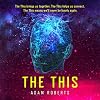
The This
by Adam Roberts
On This Page
Description
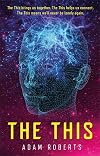
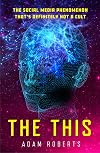
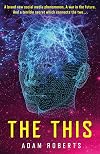
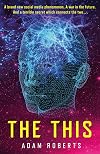
The This is the new social media platform everyone is talking about. Allow it to be injected into the roof of your mouth and it will grow into your brain, allow you to connect with others without even picking up your phone. Its followers are growing. Its detractors say it is a cult. But for one journalist, hired to do a puff-piece interview with their CEO, it will change the world forever. Adan just wants to stay at home with his smart-companion Elegy - phone, friend, confidante, sex toy. show more But when his mother flees to Europe and joins a cult, leaving him penniless, he has to enlist in the army. Sentient robots are invading America, but it seems Adan has a surprising ability to survive their attacks. He has a purpose, even if he doesn't know what it is. And in the far future, war between a hivemind of Ais and the remnants of humanity is coming to its inevitable end. But one woman has developed a weapon which might change the course of the war. It's just a pity she's trapped in an inescapable prison on a hivemind ship. show lessTags
Recommendations
















Member Reviews
In an afterword, Roberts says this is a kind of Hegelian companion-piece to The Thing Itself, his 2015 novel which roots its cosmic horror in Kantian metaphysics. Maybe it's because I at least didn't skip my first-year undergrad Kant class whereas I've studiously avoided all things Hegelian all my life, but The This didn't leave me as gruntled as its Kantian counterpart. I think also the philosophy is less embedded in the plot, but that could just be my lack of Hegel.
I don't think it's only that I didn't grok the underlying philosophy, though. The This was published 2022, so presumably written 2020-21, and it's a near-future framing of our escalating social media and phone infatuation. Any fiction trying to extrapolate today's tech even show more a few years risks — more like accepts — looking a bit silly in very short hindsight. In Roberts's near-future, for example — when people are starting to get brain implants to mediate their thoughts direct to their socials — blogs (I realise they're still a thing but most people live in total ignorance of them), "message-boards" and Skype are still things, and at one point the main character refers to his desktop as a "mainframe". Twitter, not Facebook or Insta, seems to be the dominant network. None of this is Roberts' fault, but it gives the book a stale smell even as early as 2025.
This is still a pretty great science fiction novel and I'll say why in a minute. But a couple other whinges first. This novel is stuffed full of bad puns, and I say this as a connoisseur of the bad pun who wishes there were more good bad puns in life and in social media. But Roberts serves up some gratuitous ones here. I wasn't going to mention this issue until I got hit with "Wilhelm it was really nothing" in the epilogue set in Hegel's deathchamber. What's also, I think, gratuitous are the scattershot literary references. Joyce ("The Dead" and the Wake), 2001: A Space Odyssey and The Waste Land are quoted (or should I say subtweeted) to no obvious purpose other than permitting the author to wink at his more edumacated readers. I'm sure I missed plenty. This kind of thing is OK in moderation but it has to serve the story and I don't think it does here; it comes off as showoffy.
But it's still a pretty great science fiction novel. SF is about ideas if it's about anything, and the ideas here, the development of the hive-mind that arises out of brain-embedded social media in Roberts' future, is convincing, scary, and thoroughly fleshed out. At times (like the later future when people's phones have evolved into biomechanical slaves, frequently of a sexual nature) it reads like satire, and I think it works on that level as well as on a high-falutin' Hegelian one which only one in a hundred readers will grasp. As I discovered when The Thing Itself eventually outran my cognitive capacity, Roberts is good at puckering buttholes by brandishing the dildo of philosophy. show less
I don't think it's only that I didn't grok the underlying philosophy, though. The This was published 2022, so presumably written 2020-21, and it's a near-future framing of our escalating social media and phone infatuation. Any fiction trying to extrapolate today's tech even show more a few years risks — more like accepts — looking a bit silly in very short hindsight. In Roberts's near-future, for example — when people are starting to get brain implants to mediate their thoughts direct to their socials — blogs (I realise they're still a thing but most people live in total ignorance of them), "message-boards" and Skype are still things, and at one point the main character refers to his desktop as a "mainframe". Twitter, not Facebook or Insta, seems to be the dominant network. None of this is Roberts' fault, but it gives the book a stale smell even as early as 2025.
This is still a pretty great science fiction novel and I'll say why in a minute. But a couple other whinges first. This novel is stuffed full of bad puns, and I say this as a connoisseur of the bad pun who wishes there were more good bad puns in life and in social media. But Roberts serves up some gratuitous ones here. I wasn't going to mention this issue until I got hit with "Wilhelm it was really nothing" in the epilogue set in Hegel's deathchamber. What's also, I think, gratuitous are the scattershot literary references. Joyce ("The Dead" and the Wake), 2001: A Space Odyssey and The Waste Land are quoted (or should I say subtweeted) to no obvious purpose other than permitting the author to wink at his more edumacated readers. I'm sure I missed plenty. This kind of thing is OK in moderation but it has to serve the story and I don't think it does here; it comes off as showoffy.
But it's still a pretty great science fiction novel. SF is about ideas if it's about anything, and the ideas here, the development of the hive-mind that arises out of brain-embedded social media in Roberts' future, is convincing, scary, and thoroughly fleshed out. At times (like the later future when people's phones have evolved into biomechanical slaves, frequently of a sexual nature) it reads like satire, and I think it works on that level as well as on a high-falutin' Hegelian one which only one in a hundred readers will grasp. As I discovered when The Thing Itself eventually outran my cognitive capacity, Roberts is good at puckering buttholes by brandishing the dildo of philosophy. show less
It has been suggested good Bruce Willis movies are the ones where he’s bald, and in bad ones he has hair. Obviously the same wouldn’t work for Adam Roberts’s novels, because, well, his hairline may be receding but it doesn’t vary by book. I did think, however, something similar might operate with the titles of his novels - those which start with the word “the” were excellent, those without are merely good. But, according to Wikipedia, of Roberts’ twenty-four novels, only three have the definite article as the first word in their title…
True, I liked two of them, including The This; but I’ve not read the third. And, to be honest, I did like some of the ones without an initial “the”. So, not a good theory then. I show more suppose I was trying to find a reason why I liked The Thing Itself and The This so much more than the other novels I’d read by Roberts. The answer was, of course, there in the books: they are explicitly explorations of the ideas of individual philosophers, Kant and Hegel, respectively. What I know about philosophy and philosophers can be written on a small post-it note, so perhaps it’s the discipline which hewing to the particular philosopher’s works has forced on Roberts - sort of like Oulipo, I guess - which has, to my mind, produced works of science fiction I find I much prefer.
On the other hand…
The title refers to a company which creates a hands-free app for social media. In the future, a war between Hive Mind Theta, the end-result of all those people having the hands-free social media client implanted in their brains, and the rest of humanity takes place in orbit about Venus, which HMΘ are intending to terraform.
The two main narratives are set around a century apart. In the very near future, Rich Rigby, a freelance journalist, interviews a PR person from The This. The company then sets out to recruit him to their network, so intently it draws the attention of, er, HMG. They persuade him to join The This, but he’ll have a computer virus embedded in his brain. This will allow the authorities to spy on the hive mind.
Then there’s Adan Vergara, a none-too-bright New Yorker of a century or so after Rigby, who is cut off by his mother and has to join the military. They’re fighting HMΘ, but Vergara seems to be able to shutdown HMΘ droids on the battlefield simply by uttering a single gnomic phrase. He was told this phrase by someone, or something, who hacked his Phene (a semi-aware sexbot, essentially), which Adan profoundly loves.
As the war ends, Adan is pulled into the far distant future, where he meets the embodiment of Hegelian world spirit, which was threatened by the existence of the hive mind. He is told how he, and Rich Rigby, helped put humanity back on track, so the universe would end with a Prime Mover as intended.
As I read the final section of The This, I was reminded of AE van Vogt’s The Universe Maker, where the hero is pulled into the far distant future to have the plot of the novel explained to him by a giant space brain. The This is, of course, considerably better written, and a “novelisation” of Hegel’s Phenomenology of Spirit is hardly the same as Van Vogt’s crackpot science and dream-inspired haphazard plotting.
To be honest, I was more taken with Rigby’s and Vergara’s narratives. The opening section, a piece of experimental prose, was good, but experimental prose is best in small doses. But Rigby and Vergana - it’s superior prose. I do wonder how much of Roberts’s The Black Prince project, the completion of an unfinished novel by Anthony Burgess, rubbed off on The This, because there’s a distinct Burgessian feel to the language. I also suspect one of the earlier sections, which features a string of social media posts as marginalia, was included only so Roberts could include some of his bad Twitter jokes - but perhaps that’s unkind.
The This is the best of Roberts’s novels I’ve read so far (which is around half of them). Recommended. show less
True, I liked two of them, including The This; but I’ve not read the third. And, to be honest, I did like some of the ones without an initial “the”. So, not a good theory then. I show more suppose I was trying to find a reason why I liked The Thing Itself and The This so much more than the other novels I’d read by Roberts. The answer was, of course, there in the books: they are explicitly explorations of the ideas of individual philosophers, Kant and Hegel, respectively. What I know about philosophy and philosophers can be written on a small post-it note, so perhaps it’s the discipline which hewing to the particular philosopher’s works has forced on Roberts - sort of like Oulipo, I guess - which has, to my mind, produced works of science fiction I find I much prefer.
On the other hand…
The title refers to a company which creates a hands-free app for social media. In the future, a war between Hive Mind Theta, the end-result of all those people having the hands-free social media client implanted in their brains, and the rest of humanity takes place in orbit about Venus, which HMΘ are intending to terraform.
The two main narratives are set around a century apart. In the very near future, Rich Rigby, a freelance journalist, interviews a PR person from The This. The company then sets out to recruit him to their network, so intently it draws the attention of, er, HMG. They persuade him to join The This, but he’ll have a computer virus embedded in his brain. This will allow the authorities to spy on the hive mind.
Then there’s Adan Vergara, a none-too-bright New Yorker of a century or so after Rigby, who is cut off by his mother and has to join the military. They’re fighting HMΘ, but Vergara seems to be able to shutdown HMΘ droids on the battlefield simply by uttering a single gnomic phrase. He was told this phrase by someone, or something, who hacked his Phene (a semi-aware sexbot, essentially), which Adan profoundly loves.
As the war ends, Adan is pulled into the far distant future, where he meets the embodiment of Hegelian world spirit, which was threatened by the existence of the hive mind. He is told how he, and Rich Rigby, helped put humanity back on track, so the universe would end with a Prime Mover as intended.
As I read the final section of The This, I was reminded of AE van Vogt’s The Universe Maker, where the hero is pulled into the far distant future to have the plot of the novel explained to him by a giant space brain. The This is, of course, considerably better written, and a “novelisation” of Hegel’s Phenomenology of Spirit is hardly the same as Van Vogt’s crackpot science and dream-inspired haphazard plotting.
To be honest, I was more taken with Rigby’s and Vergara’s narratives. The opening section, a piece of experimental prose, was good, but experimental prose is best in small doses. But Rigby and Vergana - it’s superior prose. I do wonder how much of Roberts’s The Black Prince project, the completion of an unfinished novel by Anthony Burgess, rubbed off on The This, because there’s a distinct Burgessian feel to the language. I also suspect one of the earlier sections, which features a string of social media posts as marginalia, was included only so Roberts could include some of his bad Twitter jokes - but perhaps that’s unkind.
The This is the best of Roberts’s novels I’ve read so far (which is around half of them). Recommended. show less
It is genuinely uncanny that I happened to read [b:Alexandria|52310896|Alexandria|Paul Kingsnorth|https://i.gr-assets.com/images/S/compressed.photo.goodreads.com/books/1583267977l/52310896._SY75_.jpg|73035795] by [a:Paul Kingsnorth|406864|Paul Kingsnorth|https://images.gr-assets.com/authors/1507092300p2/406864.jpg] and [b:The This|58950899|The This|Adam Roberts|https://i.gr-assets.com/images/S/compressed.photo.goodreads.com/books/1639950958l/58950899._SY75_.jpg|92907496] by [a:Adam Roberts|23023|Adam Roberts|https://images.gr-assets.com/authors/1222988832p2/23023.jpg] consecutively. From the blurbs and my prior familiarity with both authors, I expected them to be utterly different novels. In style, structure, and genre, they are. show more However, both have the same central theme: conflict between embodied individual humans and disembodied posthuman collective hiveminds. That is a little odd, but what I found really weird is that the two books have the same ending. After prolonged debate and conflict between the two sides, human and posthuman, the latter appears to triumph thanks to technological superiority and irresistible appeal. After all, it's hard to resist immortality, eternal companionship, and an escape from humanity's worst impulses. Then, at the end, the posthuman collectives discover that their immortality is antithetical to, for want of a better word, god. In both novels, this entity is an emergent property that appears at the very end of the book to explain why humans must die. [b:The This|58950899|The This|Adam Roberts|https://i.gr-assets.com/images/S/compressed.photo.goodreads.com/books/1639950958l/58950899._SY75_.jpg|92907496]:
[b:Alexandria|52310896|Alexandria|Paul Kingsnorth|https://i.gr-assets.com/images/S/compressed.photo.goodreads.com/books/1583267977l/52310896._SY75_.jpg|73035795], titled after a disembodied posthuman hivemind:
The same thing stated in two very different styles! This similarity would be less odd had I come across such an ending before these two novels; I had not. I'm tempted to ascribe some significance to it as an expression of contemporary existential and technological anxieties. The overlap may also stem from Hegel, whose work I know very little about (and that filtered through later philosophers). Roberts explicitly characterises [b:The This|58950899|The This|Adam Roberts|https://i.gr-assets.com/images/S/compressed.photo.goodreads.com/books/1639950958l/58950899._SY75_.jpg|92907496] as a 'Hegel-novel' to match his 'Kant-novel', [b:The Thing Itself|26187256|The Thing Itself|Adam Roberts|https://i.gr-assets.com/images/S/compressed.photo.goodreads.com/books/1440860820l/26187256._SY75_.jpg|46157684] (which I recommend). Either way, it's an extraordinary coincidence that I read the two adjacently. I love this type of reading serendipity.
Returning to [b:The This|58950899|The This|Adam Roberts|https://i.gr-assets.com/images/S/compressed.photo.goodreads.com/books/1639950958l/58950899._SY75_.jpg|92907496] itself, the title is awkward but the novel is excellent. I associate Roberts with well-executed high concept sci-fi and I think this is one of his best. I much preferred its more engaging, thorough, and thoughtful treatment of the theme to that of [b:Alexandria|52310896|Alexandria|Paul Kingsnorth|https://i.gr-assets.com/images/S/compressed.photo.goodreads.com/books/1583267977l/52310896._SY75_.jpg|73035795]. [b:The This|58950899|The This|Adam Roberts|https://i.gr-assets.com/images/S/compressed.photo.goodreads.com/books/1639950958l/58950899._SY75_.jpg|92907496] initially appears to be a satire and critique of social media, then becomes steadily more existential. Chapter two has a convincingly inane twitter feed as a footnote throughout, which was particularly amusing to read on a long weekend when I'd logged out of twitter for the first time in years.
The narrative extends forwards and sideways in time, as usual with Roberts novels via the perspective of Some Hapless Man. Although I wish he'd try a Some Hapless Woman protagonist for variety, I enjoyed the depiction of mundanity in a world where upload to an immortal posthuman hivemind is an option. This jaded angle on the future of technology is from a [b:Transmetropolitan, Vol. 1: Back on the Street|22416|Transmetropolitan, Vol. 1 Back on the Street|Warren Ellis|https://i.gr-assets.com/images/S/compressed.photo.goodreads.com/books/1320606005l/22416._SY75_.jpg|23442]-esque vision of the future:
A war between humans and posthumans is also shown strikingly via a grunt trooper. The last few chapters stand out as the highlights.I love the concept of there being exactly thirteen stable alternate universes, one of which is George Orwell's [b:Nineteen Eighty-Four|5471|Nineteen Eighty-Four|George Orwell|https://i.gr-assets.com/images/S/compressed.photo.goodreads.com/books/1617559981l/5471._SX50_.jpg|153313] with each continent as a posthuman hivemind. Chapter seven is the most original and interesting riff on Orwell's classic that I've come across for a very long time and my favourite part of the book. I think it would stand alone as an excellent short story, were the final line modified slightly. It begins just brilliantly:
[b:The This|58950899|The This|Adam Roberts|https://i.gr-assets.com/images/S/compressed.photo.goodreads.com/books/1639950958l/58950899._SY75_.jpg|92907496] constantly juxtaposes philosophical abstractions and human pettiness, to alternately funny and profound effect. There is nothing more mundane than death, I suppose, as it comes to us all. The plot is cleverly structured and the world-building full of arresting details. Novels by Roberts are always focused on exploring abstract ideas in a somewhat fantastical material context. I think [b:The This|58950899|The This|Adam Roberts|https://i.gr-assets.com/images/S/compressed.photo.goodreads.com/books/1639950958l/58950899._SY75_.jpg|92907496] does so in a particularly satisfying and memorable way. show less
"Permit me to explain how the world works, my friend. Human beings live. Then they die. That's the natural process, passing through life into death and again into life."
[...]
"Actually functioning material immortality is a big problem for me. I exist as the sum of the natural flow in which every individual consciousness passes through their myriad deaths. People opting out of that process, especially large numbers of people... Well, it blocks that flow, it prevents me even coming into my absolution. Do you see?"
[...]
"I'm Molochesque, I'm afraid. I must have my deaths. There can't be any exceptions."
[b:Alexandria|52310896|Alexandria|Paul Kingsnorth|https://i.gr-assets.com/images/S/compressed.photo.goodreads.com/books/1583267977l/52310896._SY75_.jpg|73035795], titled after a disembodied posthuman hivemind:
you know the world is minded
the universe is minded also
All we know is a great mind, a giant thought
when any conscious creature dies
its mind shifts to another part of the whole
mind is an energy which must circle
all of your small minds are part of the great thought
cells in the thinking body of the whole
by locking human minds away
i denied the great thought its fuel
i broke the cycle
the flow blocked, the balance skewed
Alexandria was a dam
blocking the great river
and so it is is dyin
it is not dying
it is dead
it has fallen?
in sorrow and in gentleness
i have broken the dam that sickened the river
i have made restitution
The same thing stated in two very different styles!
Returning to [b:The This|58950899|The This|Adam Roberts|https://i.gr-assets.com/images/S/compressed.photo.goodreads.com/books/1639950958l/58950899._SY75_.jpg|92907496] itself, the title is awkward but the novel is excellent. I associate Roberts with well-executed high concept sci-fi and I think this is one of his best. I much preferred its more engaging, thorough, and thoughtful treatment of the theme to that of [b:Alexandria|52310896|Alexandria|Paul Kingsnorth|https://i.gr-assets.com/images/S/compressed.photo.goodreads.com/books/1583267977l/52310896._SY75_.jpg|73035795]. [b:The This|58950899|The This|Adam Roberts|https://i.gr-assets.com/images/S/compressed.photo.goodreads.com/books/1639950958l/58950899._SY75_.jpg|92907496] initially appears to be a satire and critique of social media, then becomes steadily more existential. Chapter two has a convincingly inane twitter feed as a footnote throughout, which was particularly amusing to read on a long weekend when I'd logged out of twitter for the first time in years.
The narrative extends forwards and sideways in time, as usual with Roberts novels via the perspective of Some Hapless Man. Although I wish he'd try a Some Hapless Woman protagonist for variety, I enjoyed the depiction of mundanity in a world where upload to an immortal posthuman hivemind is an option. This jaded angle on the future of technology is from a [b:Transmetropolitan, Vol. 1: Back on the Street|22416|Transmetropolitan, Vol. 1 Back on the Street|Warren Ellis|https://i.gr-assets.com/images/S/compressed.photo.goodreads.com/books/1320606005l/22416._SY75_.jpg|23442]-esque vision of the future:
Toys everywhere. The toy event horizon. Adan had his toys. He had a library of seven thousand virtual virtual games he had played, some of which he returned to and replayed many times. He had hundreds of thousands of screen dramas to watch, and millions of songs he could listen to, and more online platforms on which he could pass his time arguing with strangers than he could ever visit. Most of all he had his phone, and in this he was like an increasing number of people. Because the iron law of the Toycene was this: kids want their toys to be their friends and adults want to fuck their toys.
A war between humans and posthumans is also shown strikingly via a grunt trooper. The last few chapters stand out as the highlights.
There are only three people alive in the world. Two of these are stronger and one of them is weaker. It's just the way things are. [...] The two people are called Oceania and Eurasia. We need not bother with the name of the third.
[b:The This|58950899|The This|Adam Roberts|https://i.gr-assets.com/images/S/compressed.photo.goodreads.com/books/1639950958l/58950899._SY75_.jpg|92907496] constantly juxtaposes philosophical abstractions and human pettiness, to alternately funny and profound effect. There is nothing more mundane than death, I suppose, as it comes to us all. The plot is cleverly structured and the world-building full of arresting details. Novels by Roberts are always focused on exploring abstract ideas in a somewhat fantastical material context. I think [b:The This|58950899|The This|Adam Roberts|https://i.gr-assets.com/images/S/compressed.photo.goodreads.com/books/1639950958l/58950899._SY75_.jpg|92907496] does so in a particularly satisfying and memorable way. show less
Social media has its discontents, but it's not such a departure from older modes of communication - or is it? Here we have Adam Roberts taking on social media through the lens of the German philosopher Hegel, plus the usual Roberts assortment of puns and clever flights of imagination.
In the near future, The This is the name of a new social media app. A seed is injected into the roof of the mouth, and sends tendrils into the brain. You the user can now read and write to Twitter without using your phone, no big deal! Except we know what's next: no person has ever left The This voluntarily. The network, normally indifferent to whether a particular person joins, is unusually interested in recruiting an ordinary man named Alan Rich.
In the show more farther future, humanity is under subtle attack by Hive Mind θ, a collective, immortal network of brain-linked humans. Adan, a man who's down on his financial luck, puts his beloved phone, sorry, "Phene", into storage and joins the war. Turns out he may have Hive-defeating powers. Is his story linked to Alan's?
I don't know enough about Hegel to follow how the old guy relates to the story. The Hive Mind does not see a distinction between subject and object, since they are both subject and object. Also, it seems that spirit is everything. God, or actually Roberts, provides some explanation near the end. There's one chapter that imagines the farther future of Orwell's 1984, and various amusing speculations on our fascination with our smartphones. And don't forget the bits about reincarnation.
Despite being a bit hard to follow, the book is quite refreshing, and unlike anything else I've encountered. show less
In the near future, The This is the name of a new social media app. A seed is injected into the roof of the mouth, and sends tendrils into the brain. You the user can now read and write to Twitter without using your phone, no big deal! Except we know what's next: no person has ever left The This voluntarily. The network, normally indifferent to whether a particular person joins, is unusually interested in recruiting an ordinary man named Alan Rich.
In the show more farther future, humanity is under subtle attack by Hive Mind θ, a collective, immortal network of brain-linked humans. Adan, a man who's down on his financial luck, puts his beloved phone, sorry, "Phene", into storage and joins the war. Turns out he may have Hive-defeating powers. Is his story linked to Alan's?
I don't know enough about Hegel to follow how the old guy relates to the story. The Hive Mind does not see a distinction between subject and object, since they are both subject and object. Also, it seems that spirit is everything. God, or actually Roberts, provides some explanation near the end. There's one chapter that imagines the farther future of Orwell's 1984, and various amusing speculations on our fascination with our smartphones. And don't forget the bits about reincarnation.
Despite being a bit hard to follow, the book is quite refreshing, and unlike anything else I've encountered. show less
A bunch of riffs on group consciousness as the next stage of/enemy of individual human consciousness. Wittily enough, it spreads as a social media platform embedded into a person’s skull—hands-free tweeting! There are different riffs on the concept, including Forever War-like interludes, a 1984 pastiche where Eurasia, Eastasia and Oceania are warring group consciousnesses, and weirder stuff. I am not even sure I liked it, but I thought it was interesting.
https://fromtheheartofeurope.eu/the-this-by-adam-roberts-brief-note/
I sometimes feel that Roberts is keener to show us how clever he is than to write a decent story, and this was yet another example. The chapter with a parallel narrative track running in a footnote killed my enthusiasm, and it’s pretty early in the book.
I sometimes feel that Roberts is keener to show us how clever he is than to write a decent story, and this was yet another example. The chapter with a parallel narrative track running in a footnote killed my enthusiasm, and it’s pretty early in the book.
I'm not sure why I ordered this book, or if I read it, so it gets the not-bad-neutral rating that can mean so many things and is my most common one.
Members
- Recently Added By
Published Reviews
ThingScore 75
... Memory also plays a part in The This by Adam Roberts, but the utility of an individual's identity itself is called into question in this mash-up of the sum of Nick Bostrom's worst fears in Superintelligence and the alien weirdness of Arthur C. Clarke's Childhood's End.
added by Cynfelyn
Lists

2023 Hugo Awards -- Eligible Works -- Novels
70 works; 21 members
Author Information

123+ Works 6,451 Members
Awards and Honors
Awards
Distinctions
Classifications
Statistics
- Members
- 107
- Popularity
- 303,237
- Reviews
- 8
- Rating
- (3.82)
- Languages
- English
- Media
- Paper, Audiobook, Ebook
- ISBNs
- 3
- ASINs
- 3