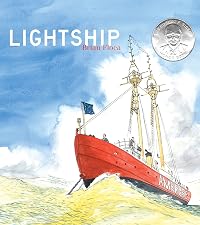
Lightship
by Brian Floca
On This Page
Description
Lightships once served where lighthouses could not be built. They helped to guide sailors safely through the fog.Tags
Recommendations



















Member Reviews
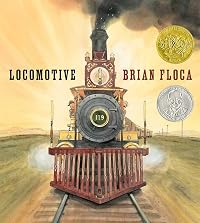
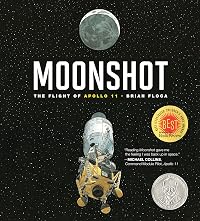
Author-artist Brian Floca, whose other non-fiction picture-books include the Caldecott Medal-winning Locomotive, as well as the gorgeous Moonshot, turns here to the subject of lightships, small vessels that held their place in the sea, functioning as lighthouses in places where lighthouses could not be built. The text explores life on board a lightship, and looks at the various crew members and their diverse tasks, while the watercolor artwork depicts the ship and crew performing their important function in circumstances both safe and dangerous.
I'd never heard of lightships before picking up Floca's picture-book, although it makes perfect sense, now that I think about it, that mariners would need such a service. Lightship is both show more educational and entertaining, pairing a simple but informative text that will keep young reader/listeners engaged with appealing artwork. For my part, my favorite 'character' was the ship's cat! The decorative end-papers provide a depiction of a lightship, with all the important parts labeled, while a foreword and afterword give more detailed information, both about lightships in general, and about the sources Floca used to create his book. Recommended to all young boat and seafaring enthusiasts, and to anyone looking for children's stories that explore interesting aspects of maritime history that might otherwise not have been addressed. show less
I'd never heard of lightships before picking up Floca's picture-book, although it makes perfect sense, now that I think about it, that mariners would need such a service. Lightship is both show more educational and entertaining, pairing a simple but informative text that will keep young reader/listeners engaged with appealing artwork. For my part, my favorite 'character' was the ship's cat! The decorative end-papers provide a depiction of a lightship, with all the important parts labeled, while a foreword and afterword give more detailed information, both about lightships in general, and about the sources Floca used to create his book. Recommended to all young boat and seafaring enthusiasts, and to anyone looking for children's stories that explore interesting aspects of maritime history that might otherwise not have been addressed. show less
Lightship is a wonderful informational book. I liked this book for two reasons. First, the language style was vivid and evoked emotion. For example, at the end of the book, the author writes, "Then other ships sail safely, because the lightship marks the way through fog and night, past rocks and shoals, past reefs and wrecks, past danger." The repetition of the word "past" gives the reader an image of a sturdy boat shedding light upon the ocean. This description allows readers to view the lightship as dependable and trustworthy. Although this book was primarily informational, the emotional descriptions provide engagement and add a deeper level of insight.
Second, the illustrator adds emotional depth to the characters. For example, on the show more second page, the author simply writes that the crew includes, " a helmsman, oiler, engineer, deckhand, fireman, radioman, messman, cook, and cat." The illustrations, however, flesh out these characters through facial expressions and manner of dress. By the end of the book, the reader feels as though he/she can really understand each member of the crew.
Overall, the big picture message of this book is that lightships are used to provide help and resources to other boats. show less
Second, the illustrator adds emotional depth to the characters. For example, on the show more second page, the author simply writes that the crew includes, " a helmsman, oiler, engineer, deckhand, fireman, radioman, messman, cook, and cat." The illustrations, however, flesh out these characters through facial expressions and manner of dress. By the end of the book, the reader feels as though he/she can really understand each member of the crew.
Overall, the big picture message of this book is that lightships are used to provide help and resources to other boats. show less
Brian Floca writing and watercolor paintings work together so beautifully and simply to evoke a noble air around the lightship, vessels anchored to the ground who never moved but lighted the way for others. The dignity of the ship, its crew and their purpose are created almost with suspense. Who ARE these people? What are they waiting for? The illustrations, at once playful and graceful, will keep students interested in this meditation on waiting and service.
A lightship is a small ship but it has a big responsibility. It stays in its place giving light to the other ships that come in. The crew play a big part in her care by making sure that she has enough energy (making sure that the engine works correctly). The lightship also takes care of the crew as well by giving them somewhere to sleep and food. The message I got in this story is not to count something out because of its size. You never know what it can do.
Ok, I'm officially a big fan of Floca's non-fiction. Sure they're picture books, but I learned so much from this gracefully told story that I never before even had heard about.
A wonderfully informative and richly illustrated story about lightships. The author and illustrator capture the power, resilliance and determination of the ship and crew. Not only does this give the reader understanding of the subject, but creates an emotional connection. It is an example of noble character as well. The author also provides an excellent history of the lightships in the Author's Note.
This was one of my favorite reads this term because the story of a boat was written in a way that captured most readers. The illustrations are beautiful and the text was interesting to hold the readers attention.
Members
- Recently Added By
Lists

Robert F. Sibert Informational Book Medal
102 works; 1 member

Books Read in 2025
4,091 works; 97 members
Author Information

9+ Works 3,878 Members
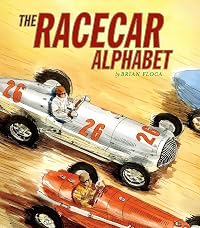
Brian Floca was born and raised in Temple, Texas. He graduated from Brown University and received his MFA from the School of Visual Arts. Brian Floca is the author and illustrator of Locomotive, winner of the 2014 Caldecott Medal. He has also written and illustrated Moonshot: The Flight of Apollo 11, Lightship, The Racecar Alphabet, and Five show more Trucks. He is the illustrator of the Poppy Stories series, by Avi; Ballet for Martha: Making Appalachian Spring, by Jan Greenberg and Sandra Jordan; Kate Messner's Marty McGuire novels; and Lynne Cox's forthcoming Elizabeth, Queen of the Seas. His books have received four Robert F. Sibert Honor awards, an Orbis Pictus Award, an Orbis Pictus Honor, a silver medal from the Society of Illustrators, and have twice been selected for The New York Times' annual 10 Best Illustrated Books list. (Bowker Author Biography) show less
Awards and Honors
Awards
Distinctions
Notable Lists
Classifications
Statistics
- Members
- 296
- Popularity
- 108,554
- Reviews
- 26
- Rating
- (3.92)
- Languages
- Chinese, English
- Media
- Paper, Ebook
- ISBNs
- 6
- ASINs
- 1